
Adopting a plant-based diet can markedly boost your heart health by providing nutrient-packed foods that help lower cholesterol levels, reduce blood pressure, and decrease inflammation. Filling your plate with fruits, vegetables, whole grains, nuts, and legumes replaces processed foods and animal products, leading to better cardiovascular health and healthier lipid profiles. By choosing more plant-based options, you’re supporting a sustainable food system while protecting your heart—discover more ways this diet benefits you and the planet.
Key Takeaways
- Plant-based diets are linked to lower LDL cholesterol and improved lipid profiles, reducing cardiovascular disease risk.
- Consuming fruits, vegetables, whole grains, and legumes supports blood pressure regulation and decreases inflammation.
- Replacing processed and animal-derived foods with nutrient-dense plants leads to better heart health markers.
- Evidence shows plant-based diets contribute to weight management and blood sugar control, benefiting cardiovascular health.
- Adopting plant-based eating habits reduces environmental impact, indirectly supporting overall population health outcomes.
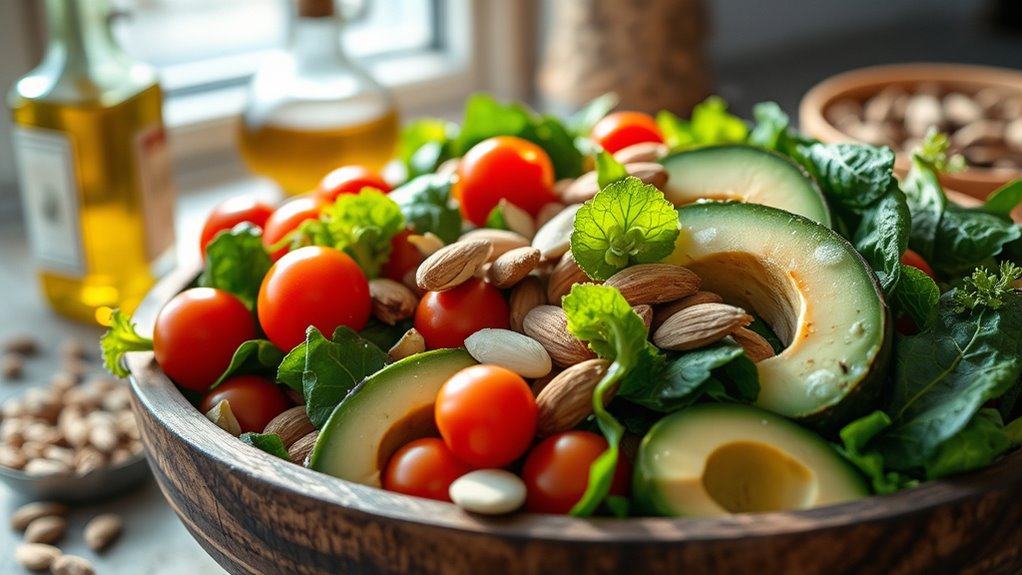
Plant-based diets have gained popularity for their potential to improve heart health, and many studies support their benefits. When you adopt a plant-based approach, you often include more fruits, vegetables, whole grains, nuts, and legumes in your meals. These foods are rich in essential nutrients, fiber, and antioxidants, which contribute to better overall health. The nutritional benefits of a plant-based diet are vital; they help lower cholesterol levels, reduce blood pressure, and decrease inflammation—all factors that protect your heart. By replacing processed foods and animal products with nutrient-dense plants, you can naturally improve your cardiovascular health while also gaining other health perks, like weight management and better blood sugar regulation.
Adopting a plant-based diet supports heart health through nutrient-rich foods that lower cholesterol and reduce inflammation.
Moreover, choosing a plant-based diet has a positive environmental impact. Producing plant foods generally requires less land, water, and energy compared to raising animals for meat. This means that shifting your diet to include more plant foods can considerably reduce your carbon footprint. Reduced greenhouse gas emissions from plant-based eating help combat climate change and preserve natural resources. If you’re mindful of environmental impact, adopting a plant-based diet aligns with sustainable living, making it a responsible choice not just for your health but for the planet as well.
As you explore plant-based options, you’ll notice how easy it is to create delicious, heart-healthy meals that are both satisfying and nutritious. Beans, lentils, and tofu are excellent protein sources that can replace meat without sacrificing flavor or texture. Whole grains like brown rice, quinoa, and oats provide fiber, which is essential for lowering LDL cholesterol and supporting healthy digestion. Incorporating a variety of colorful vegetables and fruits ensures you get a broad spectrum of vitamins and antioxidants, which help protect your cells from damage and reduce inflammation. These dietary choices are not only beneficial for your heart but also contribute to a more sustainable food system.
Switching to a plant-based diet might seem challenging initially, but the health and environmental benefits make it worthwhile. It’s an effective way to reduce your risk of heart disease while also supporting ecological balance. Emphasizing nutrient-rich, plant-based foods allows you to enjoy flavorful meals that nourish your body and reduce your ecological footprint. By choosing plants over animal products, you’re making a conscious decision to improve your heart health and contribute to a healthier planet—an empowering step towards long-term well-being.
Frequently Asked Questions
Can Plant-Based Diets Reverse Existing Heart Disease?
Yes, adopting a plant-based diet can aid in heart disease reversal. By focusing on whole, nutrient-rich foods, you reduce cholesterol and inflammation, which are key factors in heart disease. You should include plenty of fruits, vegetables, legumes, and whole grains. While individual results vary, consistently maintaining a plant-based diet can improve your cardiovascular health and potentially reverse some existing damage, leading to better long-term outcomes.
What Are the Best Plant Foods for Heart Health?
You should include superfood antioxidants like berries and leafy greens, which fight inflammation and protect your heart. Fiber-rich grains such as oats and whole wheat boost your cholesterol levels and improve circulation. Incorporate nuts, seeds, and legumes for healthy fats and added fiber. These foods work together to support your heart health, reduce risks, and keep your cardiovascular system strong and functioning ideally.
Are All Plant-Based Diets Equally Beneficial for Heart Health?
Not all plant-based diets are equally beneficial for heart health because they can vary in nutrient content and cultural relevance. You might risk nutrient deficiencies if your diet isn’t well-balanced, which can impact your heart. Consider cultural considerations to guarantee your diet fits your lifestyle and preferences. Focus on diverse, nutrient-rich plant foods to maximize heart benefits, and consult a healthcare professional to tailor your diet safely.
How Quickly Can Heart Health Improve With a Plant-Based Diet?
You can see heart health improvements in as little as a few weeks when you increase fiber intake and harness antioxidant effects. Within this time, your cholesterol levels can drop, blood pressure may stabilize, and arteries start to clear. Consistent plant-based eating boosts your heart’s resilience, improves circulation, and reduces inflammation — all happening quickly when you focus on nourishing your body with nutrient-rich, plant-powered foods.
Are There Any Risks Associated With Strict Plant-Based Diets?
Yes, strict plant-based diets can pose risks like nutrient deficiencies, especially in vitamin B12, iron, and omega-3 fatty acids. You might also struggle with diet adherence if the diet feels restrictive, increasing the chance of nutritional gaps. To stay healthy, you should plan carefully, consider supplements, and regularly monitor your nutrient levels. This way, you can enjoy the benefits without risking deficiencies.
Conclusion
Embracing a plant-based diet is like planting seeds for a healthier heart, nurturing your well-being from the ground up. By choosing whole foods over processed options, you steer your health away from turbulent waters and toward calmer seas. Remember, each mindful meal is a step toward a stronger, more vibrant you. So, take the leap—your heart’s future blossoms with every plant-based choice you make.