
Choosing between pizza steel and stone depends on your baking style, oven setup, and crust preference. Steel heats faster, conducts heat better, and creates crispier results, making it ideal for quick high-temp baking, while stones retain steady heat for a more even bake. Consider durability, cost, and compatibility with your oven. If you want to learn more about making the best choice, you’ll find helpful details below.
Key Takeaways
- Consider heat conduction: steel heats faster and provides a crisp crust, while stone offers steady heat retention for consistent baking.
- Evaluate durability and maintenance: steel resists cracking and is easier to clean, whereas stone is fragile and requires careful handling.
- Match material thickness to your baking style: thicker steel and stone improve heat transfer and crust texture, but also affect heating speed.
- Assess oven compatibility: ensure your oven can reach high temperatures (~500°F) and accommodates the size and weight of the pizza surface.
- Balance cost and long-term value: steel may cost more initially but offers greater durability and better heat performance over time.
What Are the Main Differences Between Pizza Steel and Pizza Stone?
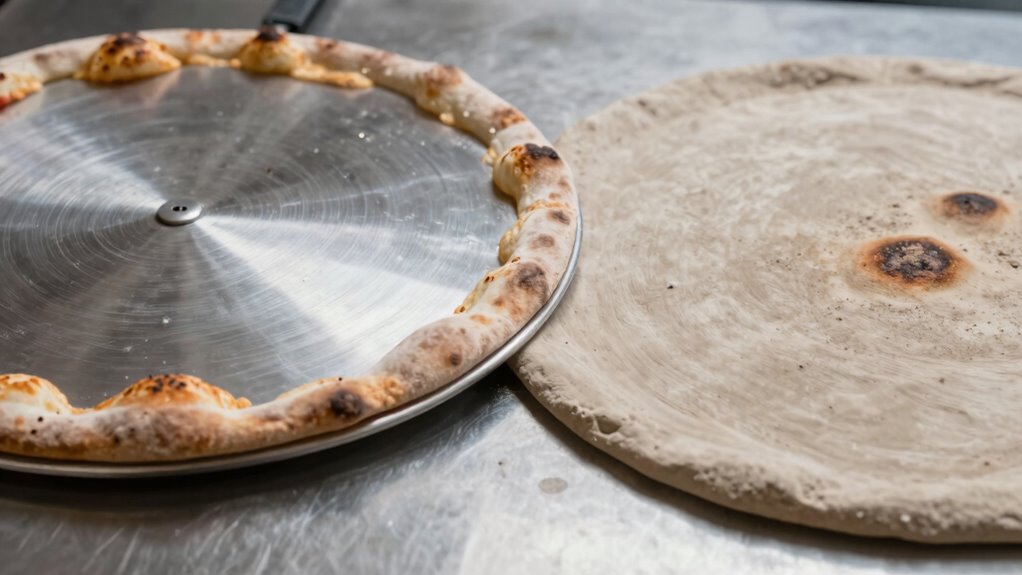
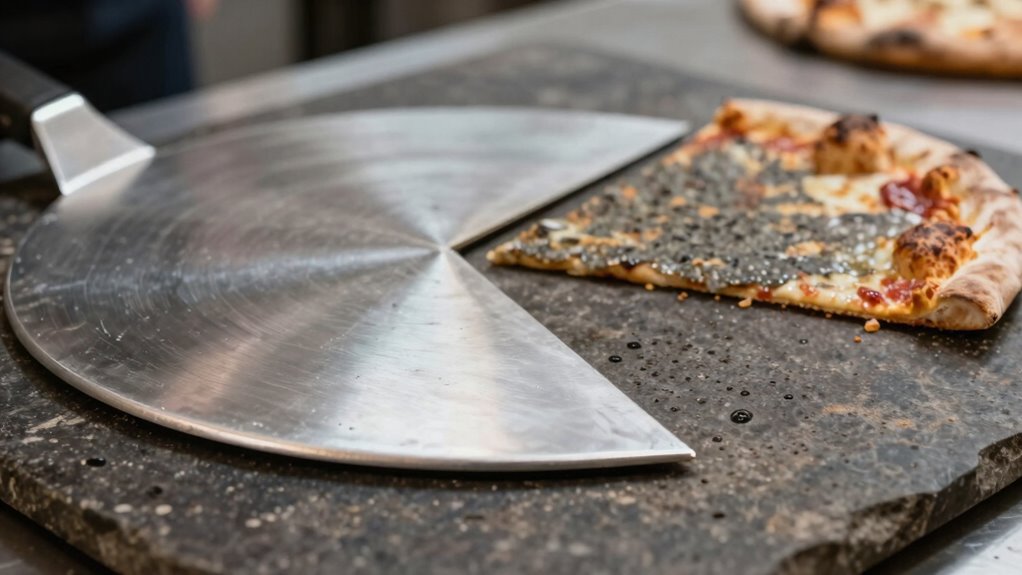
While both pizza steel and pizza stone are designed to help you make restaurant-quality pizza at home, they differ considerably in material and performance. The main differences lie in their material makeup and how they transfer heat. Pizza steel is made of solid steel, which conducts heat more efficiently due to its superior heat transfer properties. This means it heats up faster and provides a more even, crisp crust. In contrast, a pizza stone is typically made from ceramic or cordierite, which insulates better but transfers heat more slowly. The material differences impact cooking times and crust texture. Steel’s durability also makes it less prone to cracking, unlike stones, which can be fragile. Material conductivity plays a crucial role in how quickly and evenly your pizza cooks on each surface. Additionally, thermal mass influences how much heat each material can store, affecting overall cooking performance. Understanding these distinctions helps you choose the right tool for your preferred pizza style. Moreover, heat retention is essential for maintaining consistent baking temperatures throughout the cooking process.
How Do Steel and Stone Conduct and Retain Heat?

Steel heats up quickly and transfers heat efficiently, giving you a crisp crust faster. Efficient heat transfer helps achieve the perfect bake in less time. Steel’s ability to rapidly reach high temperatures makes it ideal for those seeking a crispy crust quickly. Stone retains heat longer, helping your pizza stay hot and cook evenly over time. The thickness of each material also affects how well they conduct and hold onto heat, influencing your baking results. Additionally, material thickness plays a crucial role in heat retention and transfer performance.
Heat Conduction Efficiency
Steel conducts heat much more efficiently than stone, meaning it transfers energy quickly and evenly when heated. This superior thermal transfer allows your pizza to cook faster and more uniformly, reducing hot spots and ensuring a crisp crust. Steel’s high thermal conductivity means it absorbs heat rapidly, so it reaches ideal cooking temperature sooner. In contrast, stone absorbs heat more slowly, which can delay the cooking process but may provide a more gradual, steady heat transfer. Your choice impacts how quickly and evenly heat moves from the oven to your pizza. If you want fast, consistent heat transfer for a crispy crust, steel is the better option. However, if you prefer a slower, more gradual heat absorption, stone can still deliver satisfying results. Additionally, the material’s horsepower of electric dirt bikes influences how quickly heat can be transferred, with higher horsepower models capable of reaching optimal temperatures faster, further enhancing cooking performance. Efficient heat transfer is essential for achieving perfect pizza results.
Heat Retention Properties
When it comes to heat retention, the key difference lies in how quickly and effectively each material holds onto heat after reaching the desired temperature. Steel has a high thermal mass and heat capacity, meaning it absorbs and retains heat efficiently. This allows it to stay hot longer, providing consistent heat transfer during baking. Stone, on the other hand, also has significant thermal mass but typically heats up more slowly. Its heat capacity enables it to store a lot of heat, but it takes longer to reach the ideal temperature. Once heated, stone can retain heat well, but it may cool down faster if not preheated properly. Your choice depends on how long you want the heat to last and how quickly you need the surface to be ready. Understanding thermal properties can help you choose the best material for your baking needs. Additionally, considering the heat conduction characteristics of each material can influence how evenly your food cooks.
Material Thickness Impact
The thickness of your pizza stone or steel substantially influences how they conduct and retain heat. Thicker material enhances heat transfer efficiency, allowing the surface to heat evenly and quickly. Steel’s high thermal conductivity means a thicker steel sheet will transfer heat rapidly to your pizza, promoting a crisp crust. Conversely, a thinner steel cools down faster but heats up quickly, offering quick results. Stone’s lower thermal conductivity means a thicker stone retains heat longer, maintaining a consistent bake environment. Thicker stones slow heat transfer but provide excellent heat retention, resulting in more even cooking. Ultimately, choosing the right material thickness depends on your baking style—thicker steels for quick, high-temperature cooks, and thicker stones for steady, consistent heat over time. Material thickness plays a crucial role in optimizing your baking performance and achieving professional-quality results. Additionally, heat retention is key to maintaining a stable baking environment, especially during longer cookings or multiple pizzas. Incorporating thermal mass into your setup can further improve heat distribution and baking consistency.
Which Is More Durable and Easier to Maintain?
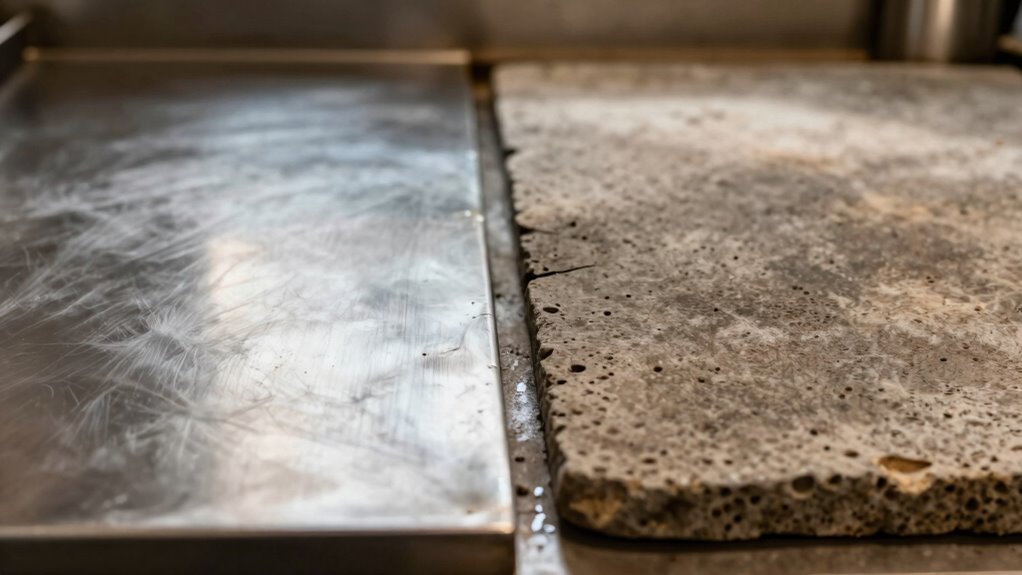
Determining which surface is more durable and easier to maintain depends on their material properties and how you use them. Pizza steels are highly durable, resisting warping or cracking with proper care, but they can be prone to metal corrosion if not cleaned and dried properly. Regular cleaning methods, like wiping with a damp cloth and avoiding harsh abrasives, help maintain their surface. Additionally, using appropriate cleaning techniques can extend their lifespan and prevent damage. Pizza stones, on the other hand, are more fragile—they can crack or break if dropped or subjected to thermal shock. They require gentle cleaning, often just scraping off residue and avoiding water soaking. Proper thermal shock resistance is a key factor in their longevity, making careful handling essential. Overall, steels tend to be more durable and low-maintenance, while stones need careful handling and specific cleaning methods to last longer. Additionally, understanding the material properties of each surface can help inform better maintenance practices and longevity. Knowing how heat distribution affects each material can also guide your care routines and usage.
How Do Cost and Value Compare for Pizza Steel and Stone?
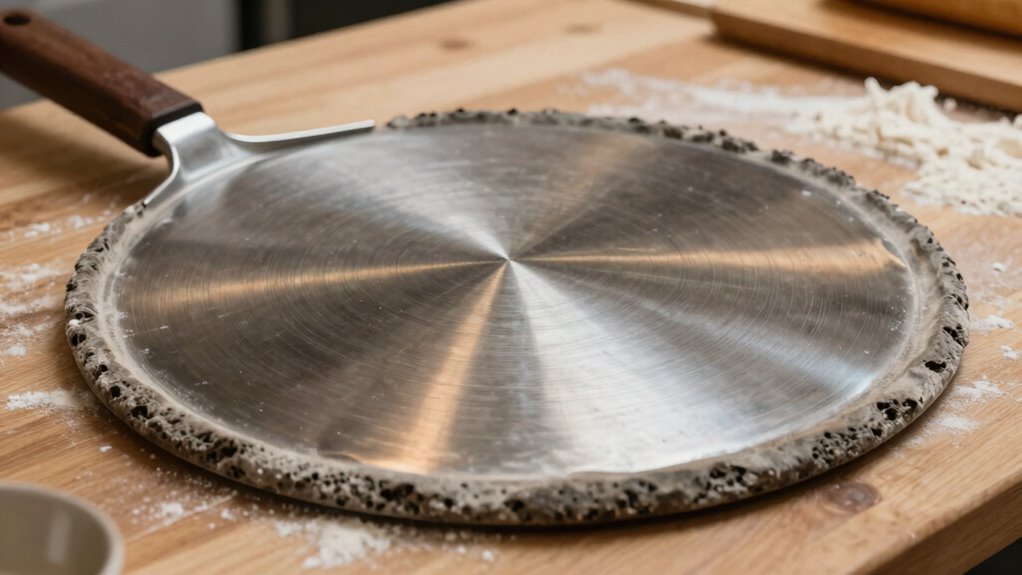
When comparing costs, pizza steels typically have higher manufacturing expenses but often last longer than stones. You’ll notice that their durability can lead to better long-term value, saving you money over time. Understanding these factors helps you choose the option that offers the best balance between upfront investment and lasting performance. Additionally, considering material sustainability can influence your decision if eco-friendly choices are a priority. Recognizing energy efficiency in materials can also impact your long-term savings and environmental footprint. Furthermore, some materials are designed with thermal conductivity in mind, which can enhance cooking performance and efficiency, especially when paired with insulation properties for better heat retention. Incorporating thermal performance into your decision can ensure optimal cooking results and energy use, making your investment more effective.
Manufacturing Costs Differences
Manufacturing costs for pizza steel tend to be higher initially because they require specialized metalworking processes, whereas stones are generally cheaper to produce due to simpler manufacturing methods. This difference impacts production expenses considerably. As a result, you’ll find that:
- Steel involves more complex fabrication, increasing manufacturing costs.
- Manufacturing high-quality pizza steel demands precise casting and finishing.
- Stones are produced using straightforward methods like shaping and firing, reducing production expenses.
- Incorporating technical expertise in manufacturing processes can further influence the cost and quality of pizza steel.
- Additionally, the choice of materials and their durability can affect long-term value and maintenance costs, influencing overall cost-effectiveness.
These cost differences influence the retail price but also reflect the quality and durability you can expect. While steel may cost more upfront, its manufacturing process justifies the investment through better heat conduction. Conversely, stones’ simpler production keeps costs lower, making them more budget-friendly.
Durability and Longevity
Although pizza stones are often praised for their affordability, their durability can vary markedly based on material quality and usage. High-quality stones made from ceramic or cordierite offer better material strength and resistance to thermal shock, extending their lifespan. However, lower-quality stones may crack or break more easily. Pizza steel, typically made from stainless steel, provides excellent corrosion resistance and superior durability, often lasting for years with minimal wear. Its toughness means it won’t crack or break under high heat. Here’s a comparison:
| Feature | Pizza Steel | Pizza Stone |
|---|---|---|
| Material Strength | High | Moderate to Low |
| Corrosion Resistance | Excellent | Varies (often lower) |
| Longevity | Long-lasting | Shorter lifespan |
| Resistance to Cracks | Very good | Prone to cracking |
| Overall Durability | Superior | Moderate |
Long-term Value Benefits
While pizza stones often come with a lower upfront cost, their long-term value depends on durability and how often you need replacements. Over time, a pizza steel can offer better investment value because it’s more durable and resistant to cracking. Consider these points:
- Steel heats up faster and retains heat longer, saving energy and time.
- Its durability means fewer replacements, reducing your long term cost.
- Better heat conduction results in superior pizza crusts, maximizing your investment.
Although the initial price for a steel might be higher, its longevity and performance make it a smarter choice for long-term value. You’ll spend less replacing equipment and enjoy consistently better results, making it a worthwhile investment for serious home pizza makers.
Are Pizza Steel and Stone Compatible With My Oven and Kitchen?
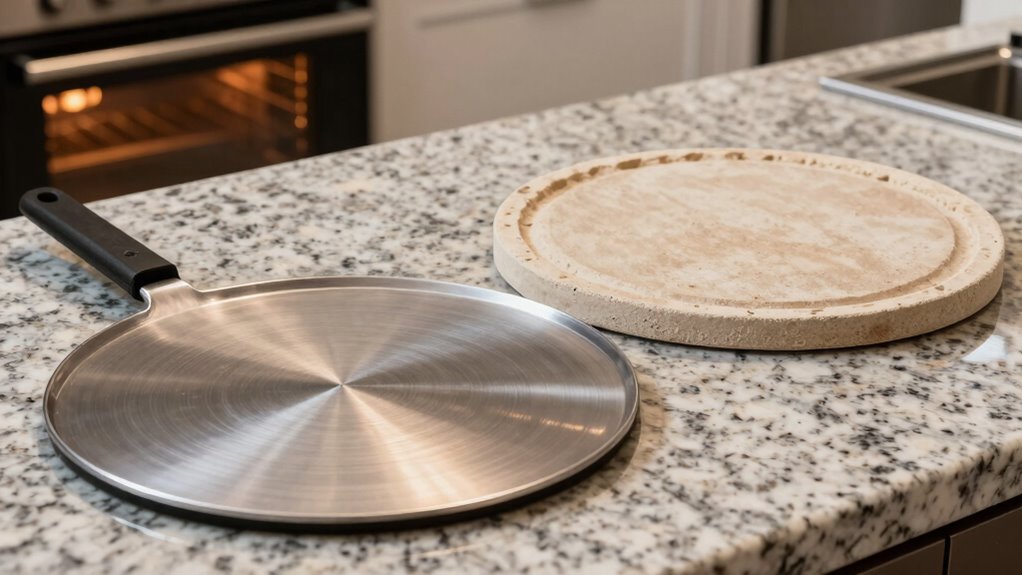
To determine if a pizza steel or stone will work in your kitchen, you need to contemplate your oven’s size, temperature limits, and overall compatibility. Check if your oven can reach and sustain the high temperatures required for pizza baking, typically around 500°F (260°C). Consider the oven’s interior dimensions to ensure the steel or stone fits comfortably without blocking airflow or door closure. Your kitchen requirements also include storage space and the ability to handle heavy materials, as pizza steels are usually heavier than stones. Some ovens may have limitations on inserting thick baking surfaces. By evaluating these factors, you can confidently choose equipment that integrates smoothly with your oven and meets your kitchen’s needs.
How Do These Tools Affect Pizza Crust Texture and Cooking Time?
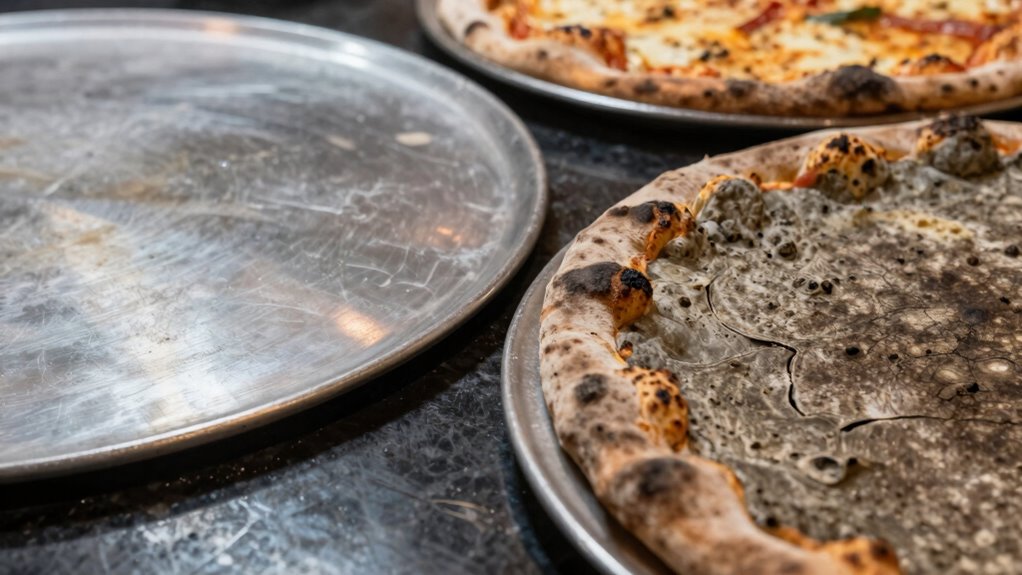
Using a pizza steel or stone substantially influences both the crust’s texture and the overall cooking time. A steel heats faster, leading to a crispier crust with better dough elasticity and improved topping adhesion. Conversely, a stone heats more evenly, producing a softer, more uniformly cooked crust.
Consider these effects:
Both tools enhance topping adhesion and promote even cooking.
- Steel’s rapid heat transfer creates a crunchier crust in less time, enhancing dough elasticity.
- Both tools promote better topping adhesion by providing consistent heat, preventing sogginess.
- Cooking times are shorter with steel due to its superior thermal conductivity, while stones may require a few extra minutes for a similar result.
Ultimately, your choice impacts how quickly your pizza cooks and the texture you achieve.
Which Pizza Baking Tool Is Right for Your Kitchen and Skill Level?
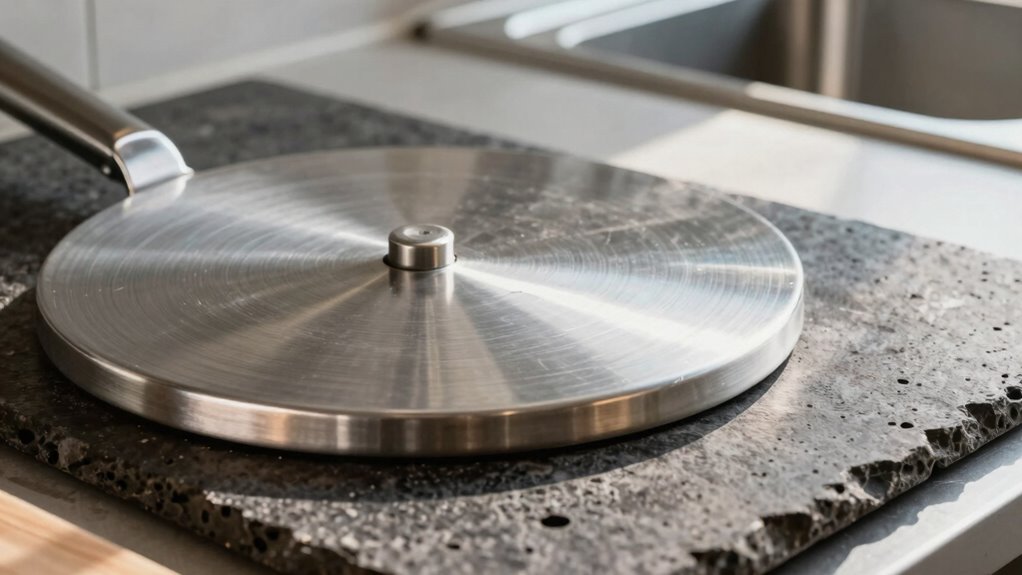
Choosing the right pizza baking tool depends on your kitchen space, budget, and skill level. If you’re a beginner, a pizza stone offers simplicity and even heat distribution, helping you achieve a crispy crust with minimal effort. However, if you have a high-temperature oven and want quicker results, a pizza steel heats faster and transfers heat more efficiently, perfect for experienced bakers. Consider your oven temperature capabilities—steel can handle higher temps for a charred crust, while stone performs well at moderate heat. Your available space also matters; steels are often thicker and heavier, requiring sturdy storage, while stones are more compact. Match your comfort with handling these tools to your cooking style, and you’ll make a choice that elevates your pizza game.
Frequently Asked Questions
Can Pizza Steel or Stone Be Used for Other Baking Purposes?
Yes, you can use pizza steel or stone for other baking purposes, thanks to their material versatility. They’re great for baking bread, cookies, or even roasting vegetables, as they provide even heat distribution. Alternative uses include making quesadillas or calzones. Just make certain you adjust baking times accordingly. Their durability and heat retention make them a handy addition to your kitchen beyond just pizza baking.
How Do I Clean and Store Pizza Steel and Stone Properly?
To clean your pizza steel or stone, use gentle cleaning techniques like wiping with a damp cloth or scraping off residues. Avoid soap on the stone, as it can absorb odors, but steel can be washed with mild soap if needed. For storage tips, make sure they’re completely dry to prevent rust or cracking. Store them in a dry, cool place, and avoid stacking heavy items on top to prevent damage.
What Are the Safety Considerations When Handling Hot Pizza Tools?
When handling hot pizza tools, always prioritize safety by wearing oven mitts to prevent handling burns. Be cautious when transferring or removing hot items, and never rush the process. After use, store your pizza steel or stone properly in a cool, dry place to avoid accidents and damage. Always allow the tools to cool completely before cleaning or storing, reducing the risk of burns and ensuring safety during your pizza-making adventures.
How Does Preheating Time Differ Between Steel and Stone?
You’ll notice that preheating duration for a pizza steel is typically shorter because it heats up quickly and retains heat well, often reaching ideal temperature in about 15-20 minutes. In contrast, a pizza stone requires a longer preheating time, usually around 30-45 minutes, to guarantee even heat distribution. Steel’s superior heat retention helps you achieve a crisp crust faster, so plan your preheat accordingly for the best results.
Are There Environmental Impacts Associated With Manufacturing These Tools?
You might wonder if manufacturing these tools impacts the environment. Generally, eco-friendly materials and sustainable manufacturing practices reduce their footprint. Steel often requires significant energy for extraction and processing, but some brands focus on recycling. Stones are natural but can involve quarrying impacts. Opt for products from companies committed to eco-friendly materials and sustainable methods, so you enjoy your pizza while minimizing environmental harm.
Conclusion
Choosing between a pizza steel and stone ultimately depends on your cooking style and needs. Remember, your decision shapes your pizza’s destiny—will it be a crispy masterpiece or a softer crust? By understanding their differences, you can pick the perfect tool to elevate your homemade pizza game. Don’t settle for guessing—make an informed choice today, and watch your pizza become legendary. After all, your kitchen is the canvas—craft your perfect pie with confidence.