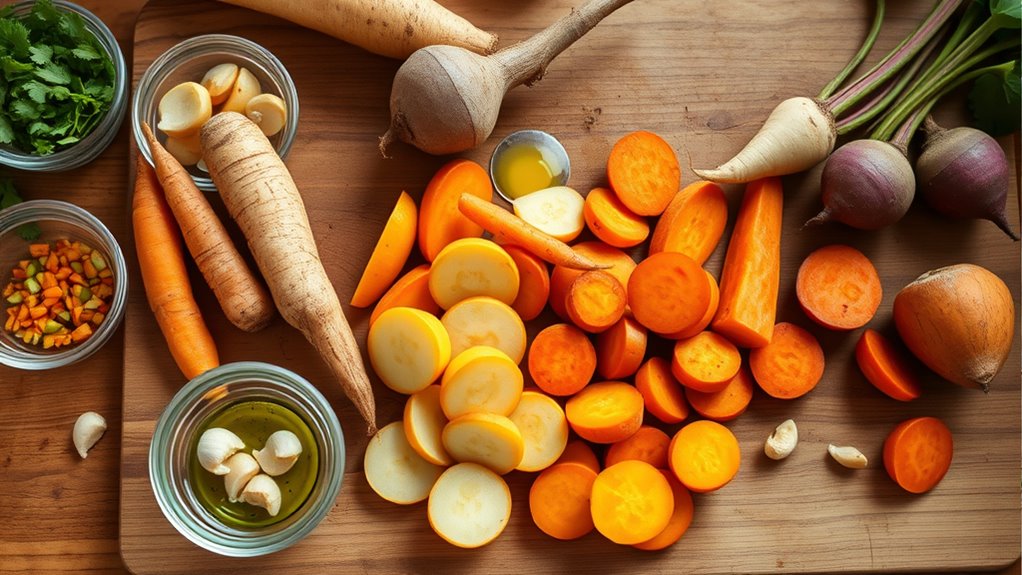

Beginner’s guide to root-to-stem cooking shows you how to use all edible parts of vegetables and roots, reducing waste and saving money. Start by washing and prepping parts like stems, tops, and skins, then incorporate them into soups, stocks, salads, or sautés. Experiment with different cooking methods to maximize flavor and texture. As you practice, you’ll find creative ways to make your meals more sustainable and delicious—keep exploring to discover even more tips and tricks.

Get kitchen staples and gadgets delivered free — and shop member deals
- Fast, free delivery on millions of items
- Access to Prime Big Deal Days deals on October 6–7
- Prime Video, Amazon Music and more included
Key Takeaways
- Identify common edible vegetable parts like tops, stems, and skins to maximize ingredient use.
- Wash and prepare all parts properly before cooking or incorporating into recipes.
- Use stems, leaves, and skins in stocks, soups, salads, or pestos to reduce waste.
- Experiment with simple cooking methods such as blanching, sautéing, or blending for flavor and texture.
- Store leftover vegetable parts correctly to maintain freshness and encourage sustainable cooking habits.
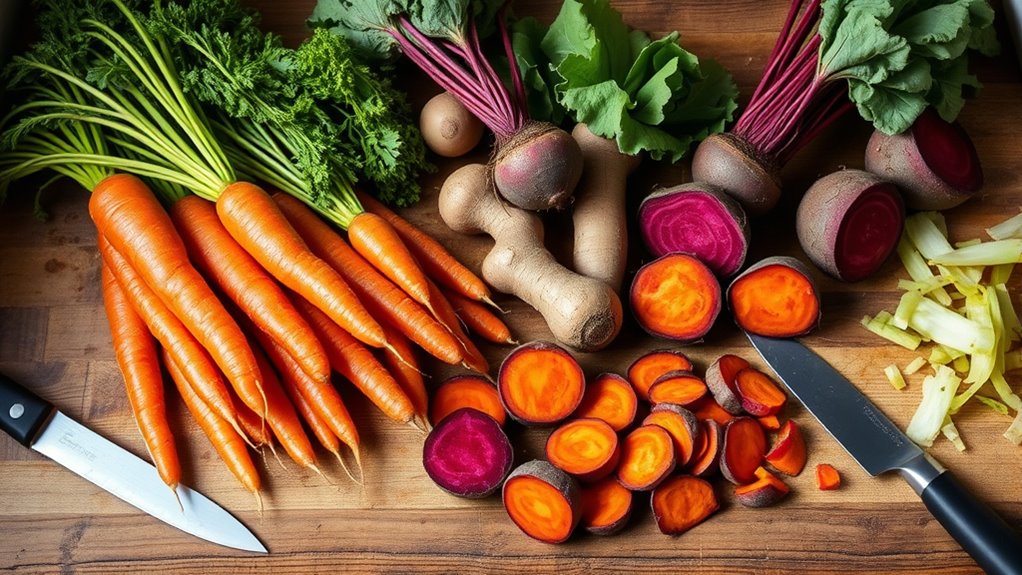
Have you ever considered how much food waste can be avoided by simply using every part of vegetables and roots? Root-to-stem cooking is a smart way to embrace sustainable practices while maximizing ingredient utilization. Instead of tossing away parts like beet greens, carrot tops, or potato skins, you can incorporate them into your meals, reducing waste and stretching your grocery budget. This approach not only benefits the environment but also introduces you to a variety of flavors and textures that you might overlook otherwise.
Getting started with root-to-stem cooking is easier than you might think. First, familiarize yourself with common vegetable parts that are often discarded but are perfectly edible and nutritious. For example, the leafy tops of carrots and radishes are rich in vitamins and can be sautéed, added to salads, or blended into pesto. Similarly, broccoli stems can be peeled and sliced into stir-fries or soups, offering a crunch and sweetness that’s often ignored. Using these parts not only minimizes waste but also adds depth and complexity to your dishes.
Familiarize yourself with often-discarded vegetable parts like greens and stems—they’re nutritious, versatile, and reduce waste.
Practicing ingredient utilization encourages you to think creatively and adapt recipes to include every usable piece. When preparing vegetables, wash everything thoroughly, then consider how each part can be repurposed. For instance, onion skins can be used to make flavorful vegetable stock, while the ends of celery can be simmered to create a base for soups. These small steps promote sustainable practices by reducing the need for store-bought broths and minimizing trash. Plus, they give you an opportunity to experiment with flavors and textures, making cooking more engaging and resourceful.
Incorporating root-to-stem cooking into your routine also means paying attention to proper storage and preparation. Keep vegetable tops and stems fresh by storing them in airtight containers or damp paper towels in the fridge. When using them, trim any tough or damaged parts and cook them appropriately—sautéing greens quickly or blanching stems before adding them to dishes helps retain their nutrients and flavor. Over time, you’ll develop an intuitive understanding of which parts are best suited for different recipes, boosting your confidence and skill in sustainable cooking.
vegetable scrap collector for composting
As an affiliate, we earn on qualifying purchases.
As an affiliate, we earn on qualifying purchases.
Frequently Asked Questions
How Do I Select the Best Vegetables for Root-To-Stem Cooking?
When choosing fresh produce for root-to-stem cooking, look for vegetables with firm, vibrant, and blemish-free skin. You want to identify edible parts like stems, leaves, and roots that are crisp and free from mold. Avoid wilted or soft spots, as they indicate age or spoilage. Your goal is to select vegetables that are healthy and flavorful, ensuring you can use the entire plant for a sustainable, delicious meal.
Are There Safety Concerns With Eating Certain Vegetable Stems and Roots?
Think of vegetable stems and roots as a garden of surprises—you need to know what’s safe. Generally, most are edible, but watch out for toxicity risks and pesticide concerns. You should thoroughly wash and peel roots and stems to reduce chemical residues. Avoid eating wild or unfamiliar plants unless you’re certain they’re safe. When in doubt, consult reliable sources or local experts to prevent any health issues from hidden dangers.
Can Root-To-Stem Cooking Reduce Food Waste Effectively?
Yes, root-to-stem cooking can effectively reduce food waste by using parts of vegetables that are often discarded. You’ll minimize waste, which directly benefits the environment by lowering landfill contributions and greenhouse gas emissions. By incorporating stems, roots, and leaves into your meals, you support food waste reduction and contribute to a more sustainable lifestyle. This simple shift makes a meaningful impact on both your kitchen and the planet.
What Are Some Quick Recipes for Beginners Using This Method?
Imagine turning carrot tops into pesto or using potato peels for crispy chips—these quick recipes are perfect for beginners. Start with simple tips like washing thoroughly and chopping efficiently. You can whip up a root vegetable stir-fry or a quick soup using scraps. These beginner tips help you save time and reduce waste, making root-to-stem cooking easy, fun, and a smart way to use every part of your produce.
How Do I Store Leftover Vegetable Scraps Safely for Future Use?
You should store leftover vegetable scraps in freezer storage to keep them fresh for future use. Place the scraps in airtight containers or resealable freezer bags, removing as much air as possible to prevent freezer burn. Label the containers with the date so you use them in order. When you’re ready to cook, simply thaw the scraps and add them to your broths, stocks, or compost pile.
Conclusion
By embracing root-to-stem cooking, you’re not just reducing waste—you’re nurturing a deeper connection to your food. Think of it like tending a garden: the more you care for every part, the richer the harvest. I started composting my vegetable scraps, and now I see how each peel and stem adds flavor and purpose. With each meal, you’re turning scraps into sustenance, proving that good things truly come from making the most of what you have.
Fall Picks
fall essentials
As an affiliate, we earn on qualifying purchases.






![Eating Out [Grickle]](https://thegracefulkitchen.net/wp-content/uploads/2026/10/eating-out-grickle-featured-260x140.jpg)