
🔍 Read the full analysis: Peposo: The Black-Pepper Beef Stew Of Impruneta on Mad Tasting

Get kitchen staples and gadgets delivered free with Prime
- Fast, free delivery on millions of items
- Prime Video, Amazon Music and more included
- Member-only deals all year
TL;DR
Peposo is a Tuscan beef stew associated with Impruneta, near Florence. Its short ingredient list—beef, dry red wine, garlic, salt and abundant black pepper—relies on several hours of gentle cooking to tenderize braising cuts and concentrate the liquid into a dark sauce. A popular story connects the dish to Impruneta’s terracotta workers, though that origin is difficult to verify.
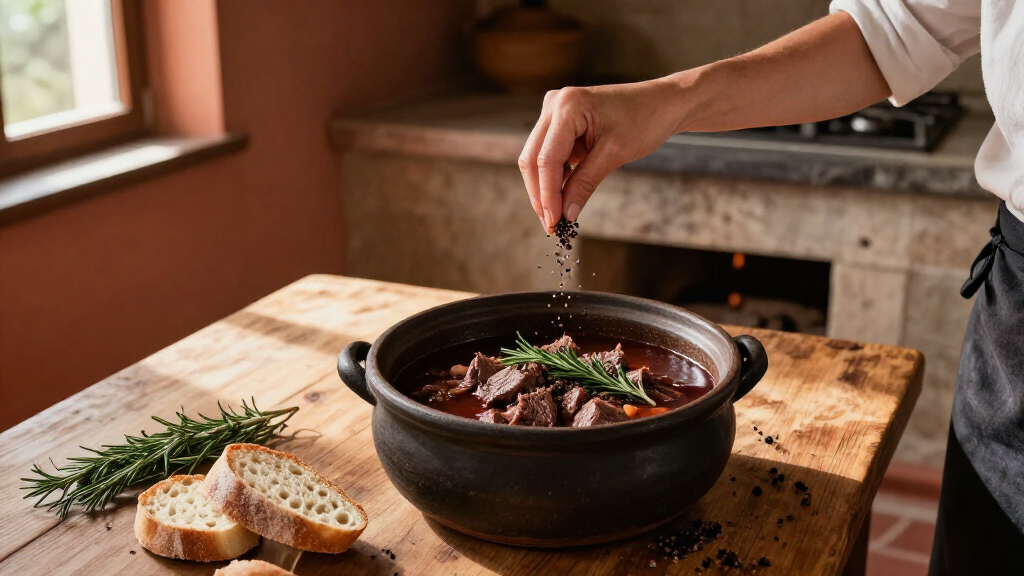
Peposo, a slow-cooked beef stew associated with Impruneta near Florence, is built around dry red wine, garlic, salt and a generous amount of black pepper. A food report from Mad Tasting describes how a collagen-rich cut such as chuck or shin becomes tender over several hours of gentle braising, while the wine and cooking juices form a concentrated sauce; the dish’s popular connection to local kiln workers remains a story rather than a verified history.
The stew’s defining feature is its prominent black pepper, which gives it warmth without relying on chile. Beef and dry red wine provide the savory base, with garlic and salt completing a deliberately short list. As the meat cooks, the wine and juices darken and thicken, carrying the pepper through the sauce. The name is linked to pepe, the Italian word for pepper.
Mad Tasting recommends cuts suited to a long braise, including chuck, shoulder or shin. Their connective tissue gradually softens in moist heat, helping the meat become tender and adding body to the liquid. Lean steak is less suitable for several hours of cooking and may become dry or stringy. Cutting the beef into similarly sized chunks—about two inches is offered as a home-cooking guide—can help the pieces cook at a similar pace.
A dry red wine, such as Chianti or another Tuscan red, is suggested; if that is unavailable, the source advises choosing a dry bottle suitable for drinking with dinner. Sweet wine may leave the reduced sauce tasting heavy. Recipes differ on whether to brown the beef first: browning can add roasted flavor, while putting the ingredients straight into the pot keeps the process simpler. Either approach depends on maintaining gentle heat and cooking until the beef yields easily to a fork.
Peposo: The Black-Pepper Beef Stew of Impruneta
This Tuscan stew turns beef, dry red wine and abundant black pepper into a tender meal through several hours of gentle braising. Its kiln-worker origin story remains unverified.
A short list, a bold flavor
Peposo’s character comes from pepper and slow cooking, not a long list of ingredients.
Black pepper leads
Pepper gives the stew its defining warmth. Beef, dry red wine, garlic and salt build the savory base.
Choose beef for braising
Chuck, shoulder or shin softens during a long, moist cook. Lean steak may turn dry or stringy.
Pair with something hearty
Bread, polenta or mashed potatoes can accompany the concentrated sauce.
A patient cooking method
The best guide is the beef’s texture, because cooking time varies with the cut, pieces, pot and heat.
Cut braising beef into evenly sized chunks so they cook at a similar pace.
Cook with dry red wine, garlic, salt and generous black pepper. Browning first is optional.
Keep enough liquid in the pot and cook until the beef yields easily to a fork.
What the origin story tells us
Peposo is associated with Impruneta, a town near Florence known for its terracotta kilns.
- A popular tale says kiln workers left beef and wine to cook near a furnace.
- The story fits the dish’s long, low-attention cooking method.
- The supplied material gives no date for the dish’s creation.
- It provides no documentary evidence confirming the workers’ tale.
A Patient Method for Braising Beef
Peposo shows how a small number of ingredients can produce a distinctive dish when the cut, heat and cooking time work together. A tougher, collagen-rich piece of beef can become tender through a long, moist braise, while the cooking liquid develops into a sauce. That makes the dish a practical example of using a less tender cut rather than relying on quick-cooking steak.
The method also offers a clear guide for home cooks: keep the simmer gentle, use a dry wine and judge doneness by the meat’s texture rather than a fixed clock. The source suggests serving peposo with bread, polenta or mashed potatoes, which can accompany the concentrated sauce. Its regional association gives the recipe a connection to Impruneta, but the account of how it originated should not be treated as established fact.
Products Worth Considering

Weber Q 1400 Portable Electric Grill, Gray

Instant Pot InstantChill Ice Cream Maker Plus Rolled, 2 Pint

Vitamix 5200 Blender with 64 oz. Container, Black
As an affiliate, we earn on qualifying purchases.
Impruneta’s Kilns and the Origin Tale
Impruneta is a town near Florence known for its terracotta kilns. A popular local story says kiln workers set a pot of beef and wine near a furnace and left it to cook while they worked. The long, low-attention cooking described in the tale is consistent with the method used for peposo, but the account is difficult to verify, according to the source material.
The story is best understood as local tradition, not a confirmed historical record. The available material does not provide documentary evidence, a date for the dish’s creation or a single authoritative recipe. What it does describe consistently is a pepper-forward beef stew associated with Impruneta and made by slowly braising beef in wine with garlic and salt.
“The exact history is difficult to confirm, so it’s best treated as a local tradition rather than a proven account.”
— Mad Tasting
What the Origin Story Can Establish
The source identifies peposo with Impruneta and reports the kiln-worker tale as a popular local account, but it does not establish when the dish originated or whether workers cooked it beside the kilns. No archival evidence or independent historical account is supplied. The story therefore remains unverified.
There is also no single cooking time or mandatory method in the material. Braising duration depends on the beef cut, the size of its pieces, the pot and the heat. Recipes may brown the meat or add it directly to the pot. The source’s reliable endpoint is practical rather than numerical: the beef should yield easily to a fork, and the sauce should not be allowed to cook away before the meat is tender.
Cook by Texture, Not the Clock
For cooks making peposo, the next step is to select a braising cut, cut it into evenly sized pieces and keep the pot at a gentle simmer for several hours. Check the liquid as it cooks and adjust the heat if it is boiling hard or reducing too quickly. The source does not specify a universal temperature or fixed duration, so tenderness—not an exact timetable—should determine when the beef is ready.
Serve the finished stew with bread, polenta or mashed potatoes. No new public announcement, event or historical finding is identified in the supplied material; the account presents the dish and its cooking guidance rather than reporting a developing news event.
Key Questions
What is peposo?
Peposo is a Tuscan beef stew associated with Impruneta, near Florence. It is made with beef, dry red wine, garlic, salt and plenty of black pepper, then slowly braised until tender.
How much black pepper should peposo have?
The source describes black pepper as generous and central to the dish, but provides no precise quantity. The intended result is a distinctly peppery, savory sauce, not simply an overwhelming taste of pepper.
Which beef cut works best?
Chuck, shoulder and shin are recommended because their connective tissue softens during a long braise. Shin can make the sauce richer and more gelatinous; chuck generally gives soft, distinct chunks.
Is peposo’s kiln-worker origin confirmed?
No. The story that Impruneta terracotta workers cooked beef and wine near a kiln is described as a popular local tradition, but the source says its details are difficult to verify.
How long should peposo cook?
Plan on several hours of gentle cooking, but the exact time varies with the cut, piece size, pot and heat. The source recommends cooking until the beef yields easily to a fork and checking that enough liquid remains to form a sauce.
Source: Mad Tasting