To make great pasta with your maker, get the dough hydration just right—neither too dry nor too sticky. Use your fingers to monitor dough feel, adjusting water or flour as needed based on your flour type. Proper kneading, resting, and consistent thickness are key to easy extrusion and shaping. If you face issues, checking hydration and machine settings can fix them. Keep exploring for more tips to perfect your pasta craft.
Key Takeaways
- Proper dough hydration ensures elasticity and prevents cracking or stickiness during shaping and extrusion.
- Measure water carefully based on flour type and desired pasta texture for consistent results.
- Resting the dough relaxes gluten, making shaping and extrusion easier and more uniform.
- Adjust hydration levels to create different pasta textures—softer for delicate sauces, firmer for hearty dishes.
- Regularly maintain and clean your pasta maker to ensure smooth extrusion and prevent dough buildup.
Why Proper Dough Hydration Is Critical for Perfect Pasta
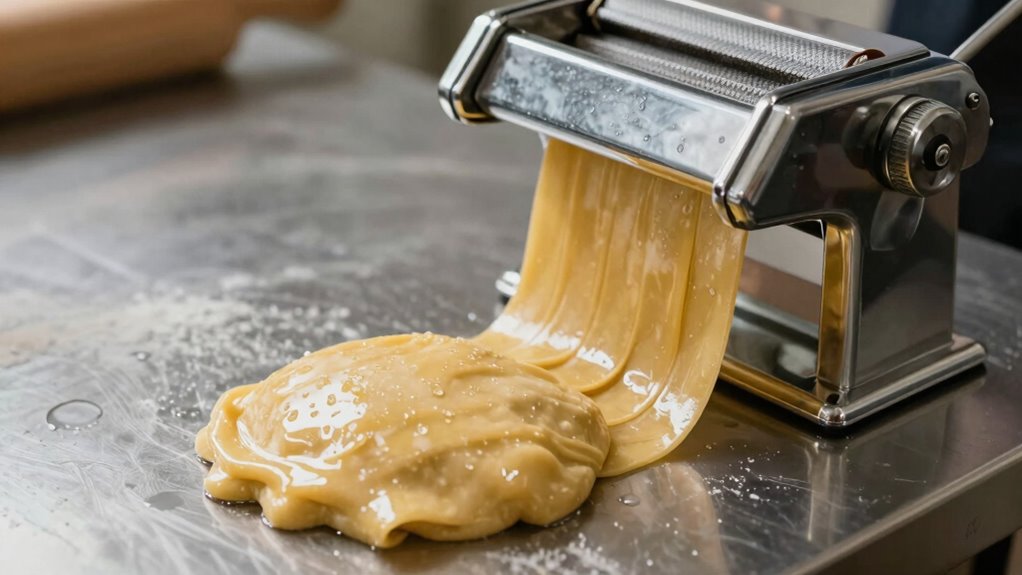
Proper dough hydration is essential because it directly affects the texture and elasticity of your pasta. When your dough has the right hydration balance, it achieves a smooth, cohesive consistency that’s easy to work with. If it’s too dry, the dough becomes crumbly and hard to shape, leading to cracks and uneven cooking. On the other hand, overly wet dough will be sticky and difficult to handle, causing frustration and inconsistent results. Maintaining proper dough consistency ensures your pasta will be tender yet firm after cooking. Achieving the right hydration balance also promotes gluten development, which gives your pasta its desirable elasticity. Pay close attention to your dough’s moisture level, and you’ll produce pasta with excellent texture, easy to extrude, and perfect for any sauce. Proper hydration is also crucial for the extrusion process, ensuring smooth and uniform pasta shapes.
How to Measure and Adjust Water for Different Flour Types
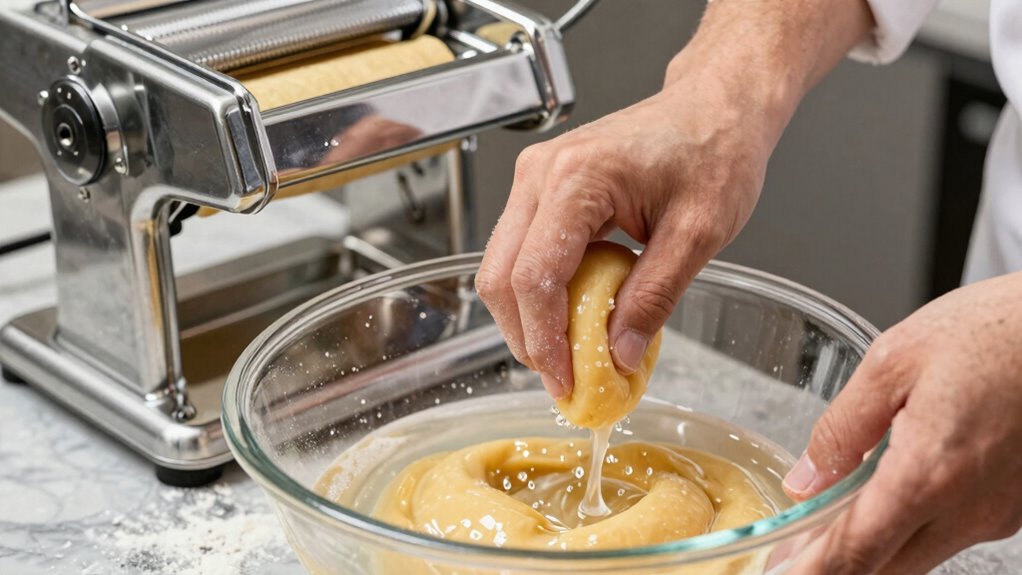
Different types of flour absorb water at varying rates, so knowing how to measure and adjust water accordingly guarantees your pasta dough reaches the right consistency. Flour protein content directly influences hydration levels; higher protein flours, like bread flour, require more water to develop the gluten structure, while lower protein flours, such as cake or pastry flour, need less. Start by adding water gradually, monitoring how the dough feels—should be firm but pliable. If your dough feels too dry and crumbly, increase hydration levels slightly; if it’s too sticky, reduce the water. Keep in mind, consistent measurement and awareness of your flour’s protein content help you fine-tune water adjustments, ensuring a smooth, elastic dough suited for perfect pasta extrusion.
Recognizing Under-Hydrated and Over-Hydrated Pasta Dough

You’ll want to learn how to spot when your pasta dough is under-hydrated or over-hydrated. Under-hydrated dough feels dry and crumbly, making it hard to work with, while over-hydrated dough feels sticky and overly soft. Recognizing these signs helps you adjust water levels for perfect pasta every time. Additionally, understanding free floating techniques can help you achieve the ideal dough consistency by allowing the dough to naturally adapt to environmental factors.
Signs of Under-Hydration
When your pasta dough is under-hydrated, it often feels dry and crumbly, making it difficult to knead smoothly. Look for hydration cues like excessive cracking or flaking as you work the dough. The dough consistency will be stiff and rough, resisting elasticity and sticking less to your hands or surface. You might notice it cracks easily when you try to roll or stretch it, indicating it lacks enough moisture. If it feels gritty or uneven, that’s another sign of under-hydration. The dough may also crumble apart rather than coming together into a cohesive ball. These signs mean you need to add a small amount of water gradually, kneading until the dough becomes smoother and more pliable. Proper hydration ensures better dough consistency and easier shaping. Additionally, understanding dough hydration is essential for optimal pasta texture and quality, as it directly influences gluten development and overall dough strength.
Indicators of Over-Hydration
Over-hydration occurs when too much water is added to your pasta dough, leading to a slack, sticky, and overly soft texture. Signs of over-hydration include a dough that’s difficult to handle, as it can stick to your hands and work surface. The dough may feel excessively loose and lack the firm consistency needed for rolling and shaping. Achieving the right hydration balance is essential; too much water disrupts dough consistency, making it challenging to work with and potentially resulting in pasta that’s mushy after cooking. To correct over-hydration, add small amounts of flour gradually until the dough firms up and becomes less sticky. Proper dough hydration is crucial for achieving the ideal texture, as it directly impacts the pasta’s elasticity and cooking quality. Recognizing these indicators helps you maintain ideal dough consistency for perfect pasta every time.
Step-by-Step: Mixing and Kneading Your Pasta Dough
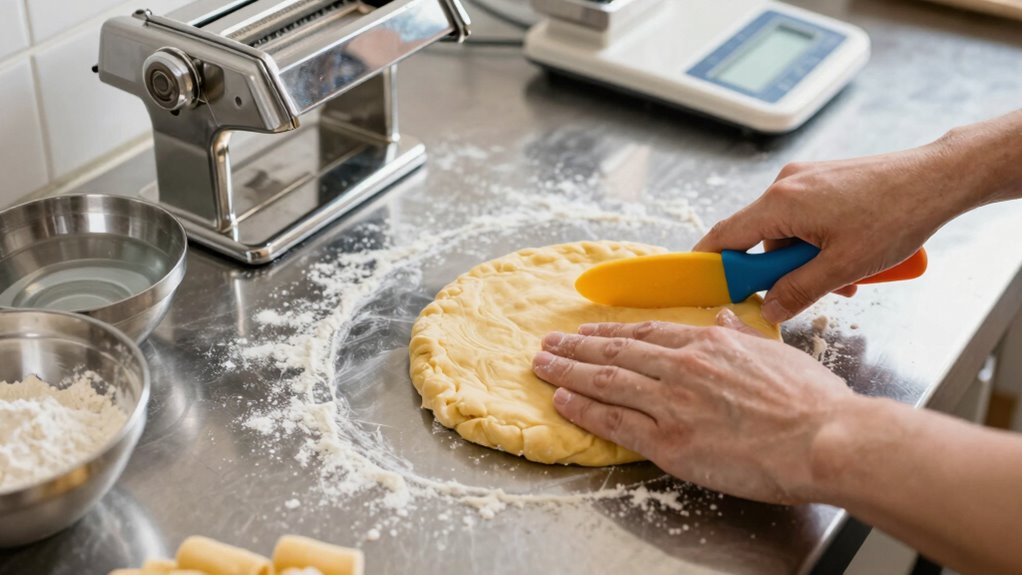
To start mixing and kneading your pasta dough, gather all your ingredients—typically flour and eggs—and measure them accurately. This guarantees proper hydration and texture. If you want to explore flour alternatives like gluten-free options or whole wheat, keep in mind they may affect dough consistency. As you combine ingredients, consider storage tips: cover the dough with plastic wrap or a damp cloth to prevent it from drying out during kneading.
Gather and measure ingredients carefully; cover dough to prevent drying during kneading.
Understanding food science can help you adjust techniques for different types of flours and achieve optimal results. Remember, kneading develops gluten and enhances elasticity. Pay attention to these key points:
- Use fresh eggs for better binding
- Adjust hydration if dough feels too dry or sticky
- Knead until smooth and elastic for ideal texture
Following these steps helps create a perfect pasta dough every time.
Resting Pasta Dough : How Hydration and Rest Time Improve Texture
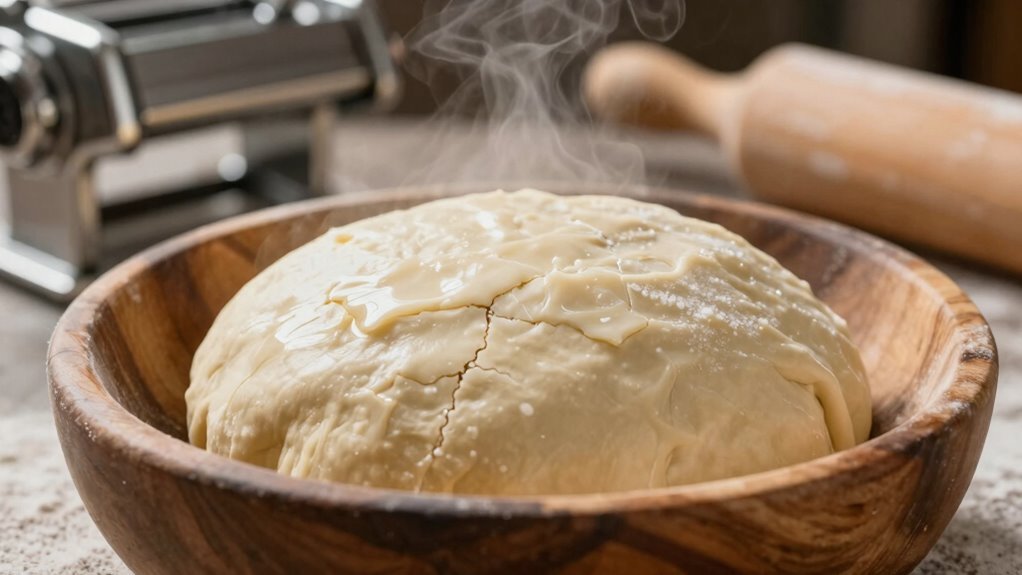
Resting your pasta dough is a crucial step that allows the gluten to relax and the moisture to distribute evenly. This process enhances dough elasticity, making it easier to roll out and shape without tearing. Proper rest time also promotes hydration stability, ensuring the flour fully absorbs water, resulting in a more cohesive dough. When you let the dough rest, it becomes more pliable and less sticky, giving you better control during shaping. Resting breaks down protein bonds, reducing toughness and improving texture. Keep your dough covered to prevent drying out. Typically, a 30-minute to 1-hour rest is sufficient, but longer rests can further improve elasticity. This simple step profoundly impacts the final quality, leading to smoother, more consistent pasta. Incorporating adequate hydration during mixing is essential for optimal dough development and final texture.
Using Your Pasta Maker to Shape Consistent Pasta Shapes
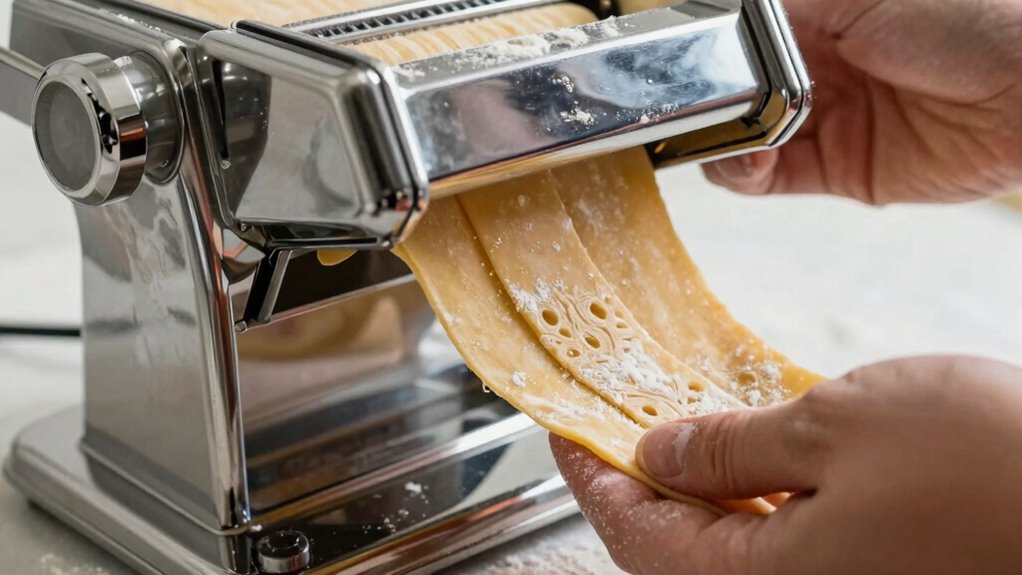
Using your pasta maker to shape consistent pasta shapes requires attention to dough thickness and even feeding. Ensuring uniform dough consistency helps achieve shape accuracy, so your pasta looks professional and cooks evenly. Start by setting the right thickness level on your machine, and feed the dough smoothly without forcing it. Consistent feeding prevents uneven shapes and irregular extrusion. To improve results:
Achieve perfect pasta shapes with smooth dough and steady feeding for consistent results.
- Keep dough surface smooth and free of cracks
- Feed dough slowly and steadily for even thickness
- Check dough consistency regularly to avoid tearing
- Regularly calibrate your pasta machine to maintain proper settings for optimal results
- Pay attention to dough hydration to ensure it’s neither too dry nor too sticky, which affects extrusion and shaping.
Troubleshooting Pasta Maker: Fixing Extrusion and Shape Issues
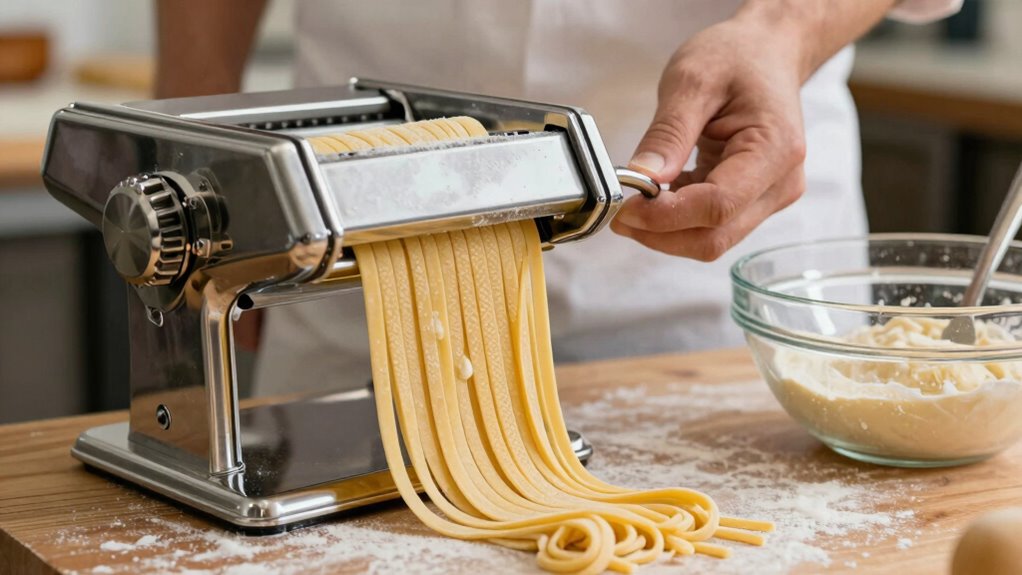
When your pasta isn’t extruding properly or shapes are inconsistent, it’s often due to issues with dough preparation or machine settings. Check your dough’s hydration level—if it’s too dry or too wet, extrusion will suffer. Consider using alternative ingredients like aquafaba or vegetable purees to adjust moisture content and improve consistency. Make certain your dough is kneaded thoroughly and rested properly. Also, verify that your pasta maker’s settings match the dough type; too tight or loose settings can cause shape issues. Proper storage methods help maintain dough quality if you prepare it ahead. Keep dough covered to prevent drying out, which can lead to uneven extrusion. Troubleshooting these factors helps achieve smooth, consistent pasta shapes and proper extrusion every time.
Tips for Achieving the Ideal Thickness and Shape With Your Pasta Maker
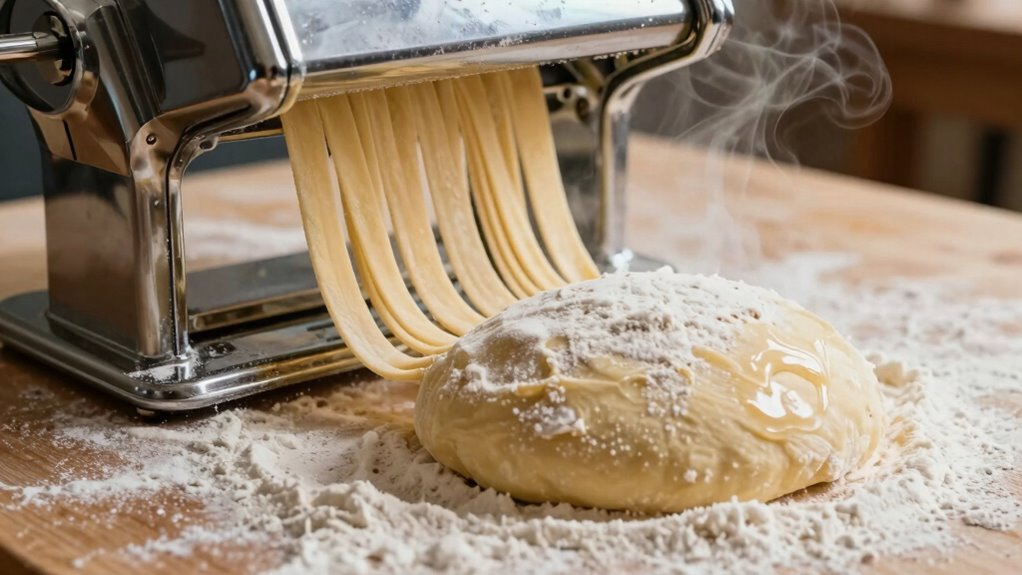
Achieving the ideal thickness and shape with your pasta maker requires careful adjustments and attention to detail. Start by selecting the right flour types—durum wheat semolina for firmness or all-purpose flour for softness—to influence dough consistency. Use your kitchen tools, like a pasta cutter or shaping molds, to refine your final product. To get consistent results:
- Adjust the roller settings gradually to match your desired thickness, ensuring even layers.
- Keep your dough at the right hydration level; too dry or too wet can affect shaping.
- Experiment with different flour types to see how they influence elasticity and appearance.
Adjusting Hydration for Different Pasta Styles and Flavors
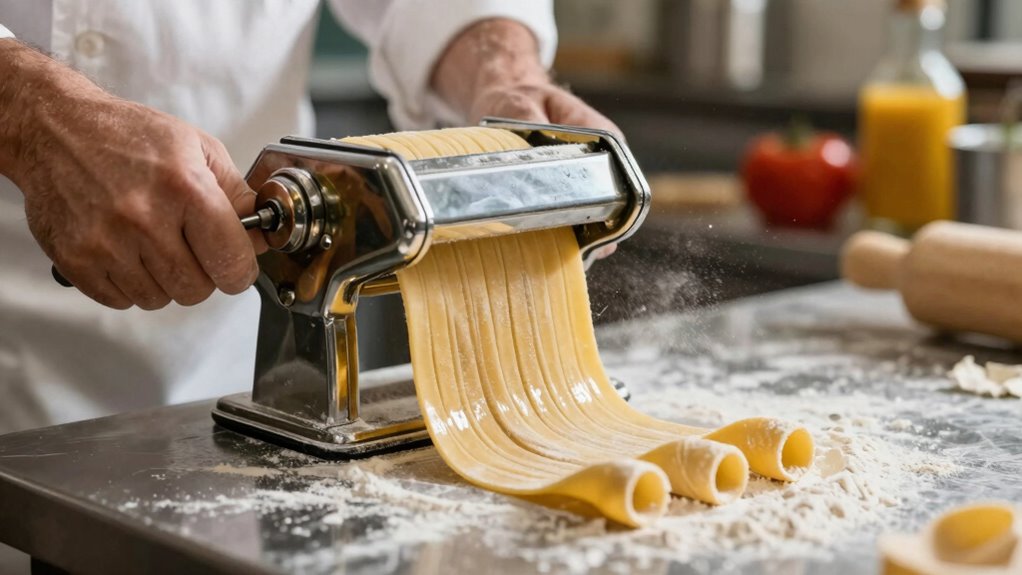
Adjusting the amount of hydration in your dough can boost flavor and create unique textures in your pasta. By varying hydration levels, you can highlight certain ingredients or achieve a firmer bite. Experimenting with these adjustments helps you customize your pasta to match different styles and taste preferences. Incorporating precise dough hydration techniques can also improve the overall consistency and quality of your pasta.
Flavor Enhancement Through Hydration
Hydration plays an essential role in enhancing the flavor profile of your pasta, as the amount of water you add influences not only texture but also how well the flavors develop during cooking. Proper hydration unlocks the full potential of seasoning techniques, allowing spices and herbs to meld seamlessly into the dough. When you adjust hydration levels, you can intensify or mellow flavors to match your desired style. Higher hydration tends to produce softer, more absorbent pasta, which enhances flavor absorption. Conversely, lower hydration results in firmer pasta with distinct taste profiles. Additionally, understanding the role of hydration in flavor development can help you fine-tune your pasta for optimal taste. Optimal soil conditions also contribute to achieving the perfect dough consistency, making the extrusion process smoother and more consistent. Being aware of the material quality ensures that your pasta maintains its texture and flavor during cooking. Moreover, controlling the net worth of your pasta ingredients can influence the quality and flavor, as premium materials often yield better results.
Texture Variations With Hydration
Varying the amount of water in your dough directly impacts the texture of your pasta, allowing you to tailor it to different styles and flavors. Higher hydration creates softer, more tender pasta perfect for delicate sauces like light olive oil or seafood-based dishes. Lower hydration results in firmer, chewier noodles, ideal for hearty, chunky sauces such as Bolognese or ragù. Adjusting hydration also influences nutritional benefits; wetter dough can retain more nutrients, making your pasta healthier. Texture variations can enhance sauce pairing, ensuring the sauce clings better or flows smoothly. Experimenting with hydration levels helps you craft pasta that complements your flavor profile while maximizing nutritional value, giving you versatile options for different culinary needs and taste preferences. Additionally, understanding layer concepts can improve your ability to organize and troubleshoot different pasta styles during preparation. Incorporating proper extrusion techniques can further refine the pasta’s texture and shape, enhancing overall quality. Moreover, controlling dough consistency is essential for achieving consistent results across various pasta types.
Cleaning and Maintaining Your Pasta Maker for Best Performance

To keep your pasta maker performing at its best, regular cleaning and maintenance are essential. Proper care prevents flour buildup, ensures smooth operation, and maintains ideal flour absorption. After each use, disassemble removable parts and brush away any dried pasta dough moisture. Avoid letting excess pasta dough dry in the machine, as it can affect extrusion. Use a damp cloth to wipe down the surfaces, and avoid harsh chemicals that could damage seals. Regularly lubricate moving parts with food-safe oil to ensure smooth extrusion. Keep your pasta maker dry and stored in a clean, dust-free environment. Understanding how small appliances work can help you troubleshoot issues and keep your machine in top condition. Additionally, inspecting filtration systems and ensuring they are clean can prevent dust and debris buildup that may interfere with the appliance’s performance. Being aware of lifecycle maintenance routines can extend the lifespan of your pasta maker and save you money over time. Incorporating smart maintenance reminders through connected devices can help schedule regular upkeep tasks effortlessly. – Clean all parts thoroughly after every use – Check and tighten screws and fasteners periodically – Use the right tools to remove stuck dough without damaging the machine
Frequently Asked Questions
Can I Use Alternative Liquids Instead of Water in Pasta Dough?
Yes, you can use alternative liquids instead of water in pasta dough. Egg substitutes and milk alternatives, like almond or soy milk, work well and add different flavors and textures. Keep in mind that these liquids may change the dough’s consistency, so you might need to adjust the flour slightly. Experimenting with small batches helps you find the perfect balance for your preferred taste and texture.
How Does Humidity Affect Dough Hydration Levels?
When humidity rises, it gently influences your dough’s hydration, making it more forgiving yet trickier to perfect. The humidity impact can soften the dough, leading to a looser consistency, or cause excess moisture, which might make handling difficult. To maintain consistent dough, you need to adjust the flour amount or add a touch less water. Stay attentive to how your environment subtly shapes your pasta’s texture.
What’s the Best Way to Store Leftover Pasta Dough?
To store leftover pasta dough, wrap it tightly in plastic wrap or place it in an airtight storage container to keep it fresh. This guarantees proper dough preservation and prevents it from drying out or absorbing odors. Store it in the refrigerator for up to 2 days. Before use, let it come to room temperature and knead it briefly to restore elasticity. Proper storage keeps your dough ready for your next pasta-making session.
Which Flour Types Require the Most or Least Hydration?
Wheat flours with high gluten strength, like bread or bread-type flours, require the most water absorption and therefore need more hydration. Conversely, cake or pastry flours, with lower gluten content, need less water. You should adjust hydration based on gluten’s water absorption capacity, ensuring the dough isn’t too sticky or too dry. Proper hydration improves dough elasticity and pasta texture, making your cooking experience much easier.
How Do I Prevent Dough From Sticking to the Pasta Maker?
To prevent dough from sticking to your pasta maker, keep your dough at the right consistency—neither too wet nor too dry. Lightly dust the dough and rollers with flour or try flour alternatives like rice or cornstarch to reduce sticking. Maintain a firm but pliable dough, and regularly dust your work surface and machine parts. These steps guarantee smooth extrusion, prevent sticking, and keep your pasta-making experience enjoyable.
Conclusion
Mastering dough hydration and extrusion is like fine-tuning a musical instrument—you’ll produce perfect pasta every time. By understanding water ratios, dough consistency, and your machine’s quirks, you can create delicious, restaurant-quality dishes at home. Keep experimenting and maintaining your pasta maker, and you’ll see your skills improve like a steady song getting more harmonious. With patience and practice, your pasta will turn out as beautiful and satisfying as a well-played symphony.