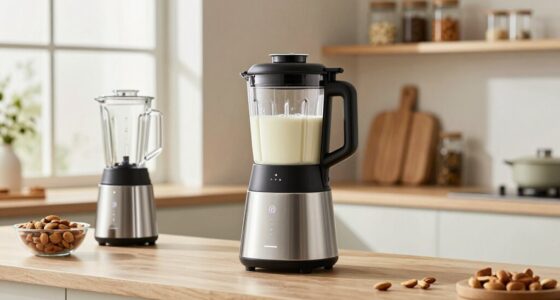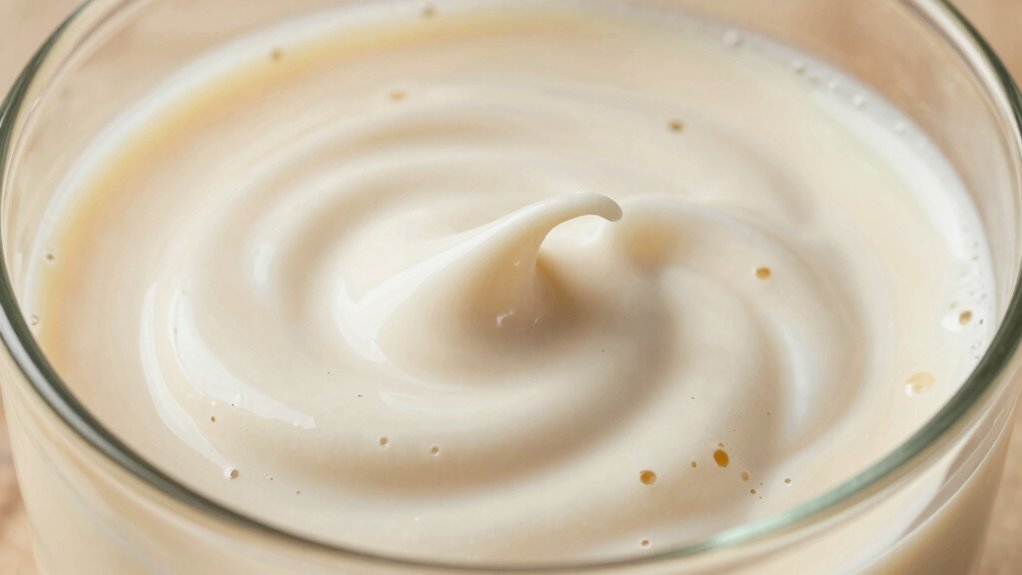

To fix grainy or thin oat milk, focus on proper blending and storage. Use high-speed blenders, extend blending time, and strain thoroughly with fine mesh bags to get that smooth and creamy texture. Add fats like a dash of oil or soaked cashews for extra richness. Be mindful of storage—keep it airtight and shake before use. If you’re still struggling, there are small tweaks and tricks that can make a big difference, and you’ll discover them as you go.

Get kitchen staples and gadgets delivered free — and shop member deals
- Fast, free delivery on millions of items
- Access to Prime Big Deal Days deals on October 6–7
- Prime Video, Amazon Music and more included
Key Takeaways
- Extend blending time and use high-speed blenders for a smoother, creamier texture.
- Strain thoroughly with fine nut milk bags to remove pulp and prevent graininess.
- Add healthy fats like soaked cashews or neutral oil to boost richness and velvety mouthfeel.
- Store in airtight containers, shake well before use, and avoid temperature fluctuations to maintain consistency.
- Choose high-quality oats and avoid over-blending to prevent thin, gritty oat milk.
As an affiliate, we earn on qualifying purchases.
Why Does Oat Milk Sometimes Feel Grainy or Thin?
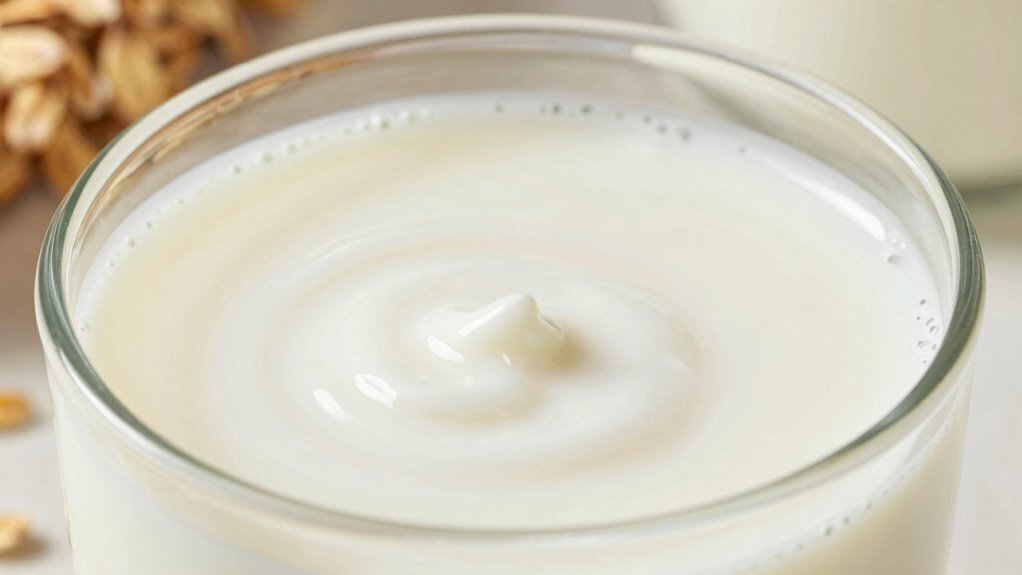
Sometimes, oat milk feels grainy or thin because of how it’s processed or stored. If it’s been on the shelf too long, the oat milk’s shelf life might be nearing its end, causing separation or a less smooth texture. Low-quality oats or improper blending can also reduce its nutritional value, making it feel less creamy. When oat milk is stored in warm or fluctuating temperatures, its consistency can change, leading to a thinner or grainier texture. Additionally, over-processing or skipping proper homogenization can leave you with a product that’s not as velvety as desired. To improve your experience, always check the expiration date and store oat milk properly. Freshness directly impacts both the texture and nutritional value, helping you enjoy a better, creamier drink.
How to Achieve Creamier, Velvety Oat Milk at Home
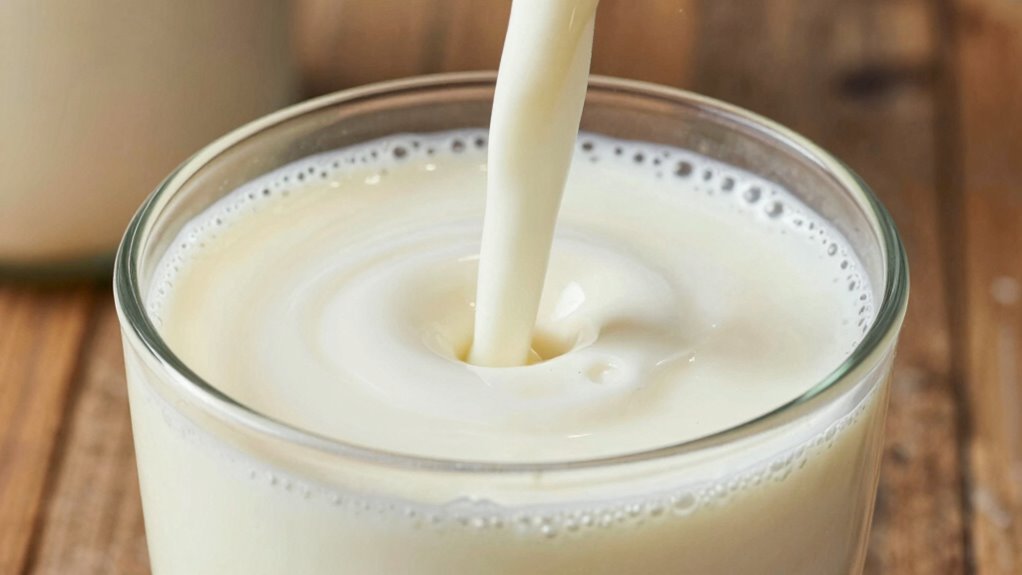
Looking to make your homemade oat milk creamier and more velvety? Adding a splash of neutral oil or a small amount of soaked cashews can boost creaminess. Blending longer guarantees a smoother texture, while straining through a fine nut milk bag removes grit. For alternative flavor options, try cinnamon, vanilla, or cocoa powder to enhance flavor without compromising creaminess. Incorporating texture enhancement techniques can also help you experiment with different presentations and textures. Additionally, adjusting the homemade oat milk’s consistency by controlling blending time and straining process allows for tailored results. Understanding how dream symbolism like clocks and time can influence your perception of life’s mysteries may inspire creative ways to approach your homemade recipes. Exploring inclusive casting practices in recipe development can encourage more diverse and innovative flavor combinations. Store your oat milk in an airtight container in the fridge, and shake well before each use to maintain consistency. Here’s a quick guide:
| Tip | Details |
|---|---|
| Use added fats | Oil or soaked nuts for richer texture |
| Blend longer | Achieves silkier, more uniform consistency |
| Flavor infusions | Cinnamon, vanilla, cocoa for variety |
| Storage tips | Keep in airtight container, shake before use |
Common Mistakes That Ruin Oat Milk Texture
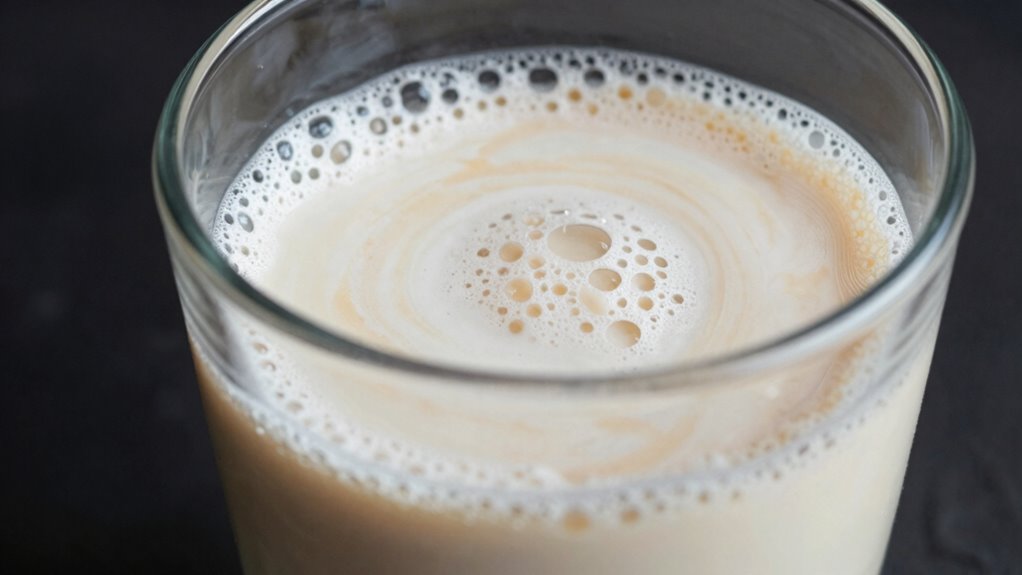
One of the most common mistakes that can ruin your oat milk’s texture is over-blending or blending at too high a speed. This can lead to a thin, gritty consistency instead of smooth creaminess. Additionally, improper sweetening techniques, like adding too much sugar or sweetener during blending, can cause separation or a grainy mouthfeel. It’s best to sweeten gradually and taste as you go. Poor storage tips also impact texture—leaving oat milk in the fridge for too long or not shaking it before use can cause separation, affecting creaminess. To maintain a silky texture, store your oat milk in an airtight container and give it a good shake before each use. Incorporating sound healing science principles, such as understanding the importance of gentle processes, can also help preserve the smoothness of your oat milk. Paying attention to texture preservation techniques can further enhance the consistency. Using proper storage methods ensures the oat milk maintains its optimal texture during shelf life. Additionally, understanding the blending process and how it impacts cell structure can help you avoid creating unwanted grittiness. Being mindful of processing techniques can also prevent damage to the oat particles and improve overall mouthfeel. Avoid these mistakes, and your oat milk will stay smooth and delicious longer.
Easy Tricks to Improve Your Oat Milk Consistently
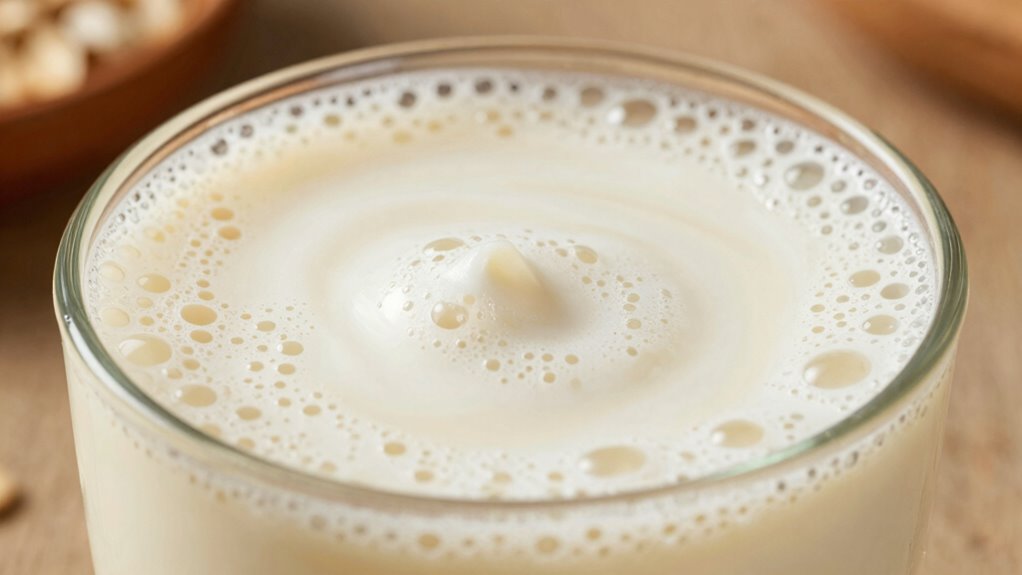
Ever wonder how to consistently achieve that perfect, creamy oat milk texture? One easy trick is to focus on flavor balancing—adding a touch of sweetener or a pinch of salt can enhance creaminess without overpowering. Also, pay attention to packaging considerations; store your oat milk in airtight containers to prevent separation and maintain freshness. When blending, use a high-speed blender to guarantee even mixing, which results in a smoother consistency. Straining your oat milk through a fine mesh or nut milk bag can remove residual pulp that causes grittiness. Incorporating proper maintenance of your blender and equipment can further improve the richness and overall quality of your homemade oat milk. These simple adjustments help you produce a consistently rich, velvety texture, making your oat milk more enjoyable every time. Small tweaks like these make a big difference in your homemade batch.
Troubleshooting: Fixing Oat Milk That Still Isn’t Perfect
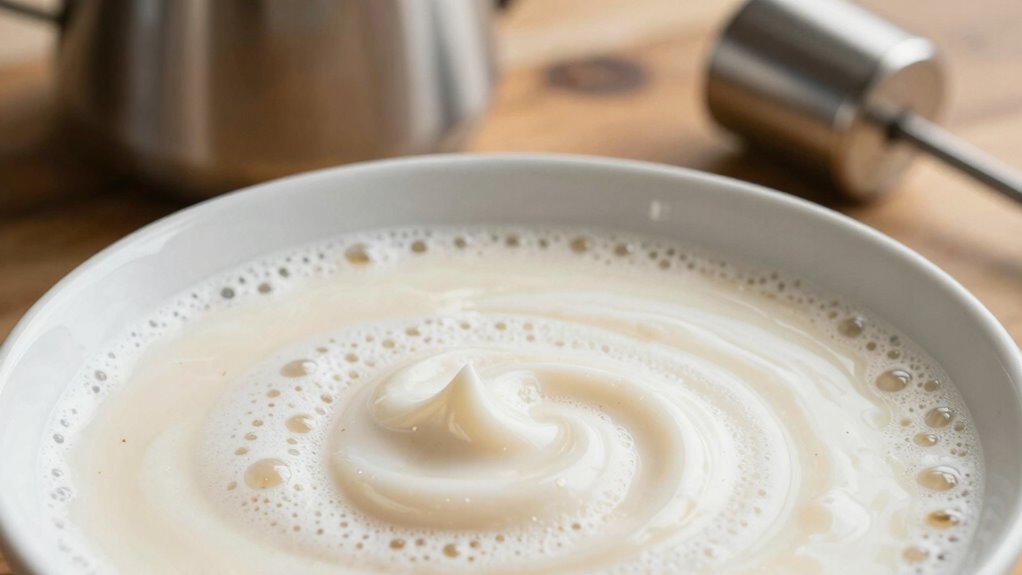
Even when you follow all the tips, sometimes oat milk still doesn’t turn out quite right. If it’s too thin, too thick, or lacks creaminess, consider your oat milk packaging and the brands you choose. Different oat milk brands vary in quality and processing, which affects texture. Experiment with different brands or make your own for better control. Paying attention to minimalism in ingredients can also help you achieve a cleaner, more consistent texture. Additionally, understanding production methods can give you insights into how processing impacts the final texture and flavor.
Frequently Asked Questions
Can the Type of Oats Affect the Final Oat Milk Texture?
Yes, the type of oats can affect the final oat milk texture. Higher-quality oats tend to produce smoother, creamier texture consistency, while lower-quality oats might result in a grainier or thinner milk. Organic rolled oats or steel-cut oats often yield better results because they retain more natural flavor and nutrients. Using good-quality oats guarantees your oat milk is rich, smooth, and satisfying every time you make it.
Does Temperature Impact the Creaminess of Homemade Oat Milk?
Yes, temperature influences the creaminess of your homemade oat milk. When you blend oats with hot water, the heat helps break down fibers, resulting in a smoother, creamier texture and better flavor extraction. Proper oat milk storage in airtight containers maintains its creaminess and flavor, preventing separation or spoilage. Using cold water can make your oat milk feel thinner, so adjusting temperature during blending and storing guarantees a richer, more satisfying result.
How Long Should I Blend or Soak Oats for Optimal Texture?
You should soak oats for about 30 minutes to soften them properly, which helps improve texture. When blending, aim for 30 to 45 seconds; this guarantees the oats break down sufficiently without becoming overly slimy. Proper oat soaking reduces the need for lengthy blending, leading to a smoother, creamier oat milk. Adjust soaking time based on your desired creaminess, but avoid over-blending, which can affect texture negatively.
Are There Specific Brands of Oats That Produce Better Texture?
You’ll find that certain oat varieties, like organic rolled oats or gluten-free options, tend to create a smoother, creamier milk with the right viscosity. Brands like Bob’s Red Mill or Thrive Market often deliver better texture, thanks to their quality control. Experimenting with different oats helps you discover the perfect balance, giving your drink a luxurious feel that truly satisfies. Your perfect oat milk is just a few choices away.
Can Adding Thickeners Improve Oat Milk Consistency?
Adding thickeners can definitely improve oat milk’s consistency, making it creamier and more enjoyable. Thickeners like xanthan gum or guar gum help enhance flavor and texture, giving you a richer taste. Plus, they boost shelf stability, so your oat milk stays fresh longer. Just start with a small amount, blend well, and adjust to your preferred thickness. This simple fix elevates your homemade oat milk experience considerably.
Conclusion
Now that you know these secrets, your oat milk will be so velvety smooth, it’ll make baristas jealous and your coffee taste like liquid gold. No more grainy disasters or thin, sad textures—you’re about to become an oat milk wizard! Get ready to impress everyone with your creamy, dreamy drink. Say goodbye to mediocrity and hello to oat milk perfection. Your taste buds are in for a wild, velvety ride they’ll never forget!
NFL season / tailgating Picks
team gear
As an affiliate, we earn on qualifying purchases.