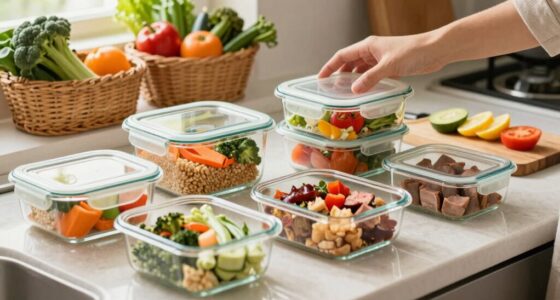
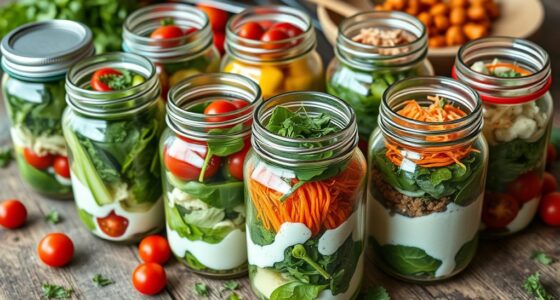
You can easily incorporate imperfect and leftover vegetables into your meal prep to cut food waste and save money. Use “ugly” produce like blemished tomatoes or wrinkled zucchini in soups, stews, or baked goods. Overripe berries make great smoothies or muffins, while wilted greens can go into quesadillas or stir-fries. By getting creative with surplus ingredients, you support sustainability and enjoy nutritious meals. Keep exploring to discover more innovative ways to upcycle produce in your kitchen.
Key Takeaways
- Incorporate imperfect vegetables like blemished tomatoes or misshapen carrots into soups, stews, or roasted dishes to reduce waste.
- Use overripe berries in smoothies, muffins, or jams to maximize flavor and minimize spoilage.
- Prepare veggie fritters or quesadillas with wilted greens and leftover produce for quick, nutritious meals.
- Blend leftover roasted or steamed vegetables into sauces, dips, or pasta toppings to extend their shelf life.
- Plan meals around surplus or discounted produce, developing creative recipes that emphasize sustainability and cost savings.
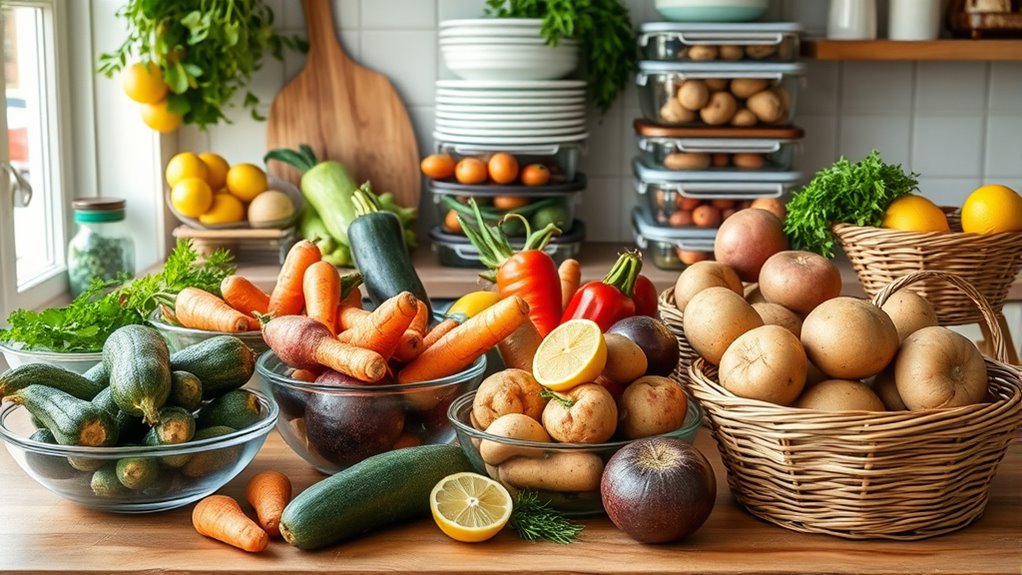
Many people overlook the potential of imperfect or leftover produce, but with a little creativity, you can turn upcycled ingredients into delicious, nutritious meals. This approach not only minimizes food waste but also supports sustainable eating practices. When you choose to incorporate “ugly” vegetables and surplus produce into your meal prep, you’re making a conscious effort to reduce the amount of food that gets discarded simply because it doesn’t look perfect. These less-than-perfect items are often just as nutritious and flavorful as their visually appealing counterparts, yet they’re frequently overlooked at grocery stores and markets. By intentionally seeking out and using these ingredients, you play a direct role in reducing food waste and promoting environmental sustainability.
You might start by buying “imperfect” veggies that are discounted at the store or gathering leftovers from your fridge that need to be used up. Instead of tossing those slightly blemished tomatoes or misshapen carrots, you can incorporate them into soups, stews, or smoothies. For example, a slightly wrinkled zucchini can go into a veggie fritter, or overripe berries can be blended into a smoothie or baked into muffins. This not only extends the life of the produce but also saves you money and reduces the environmental footprint associated with food production and waste. When you upcycle produce in your meal prep, you’re actively participating in a more sustainable lifestyle, lessening the demand for mass-produced, perfectly shaped vegetables that often come with excessive packaging and transportation costs.
Buy imperfect produce to save money, reduce waste, and create delicious, sustainable meals.
Additionally, experimenting with food waste reduction techniques can inspire more innovative and resourceful cooking habits. Preparing meals with upcycled ingredients encourages you to think creatively about what you have on hand. It pushes you beyond the usual recipes and helps develop your culinary skills. For example, you might turn leftover roasted vegetables into a hearty pasta sauce or use slightly wilted greens in a veggie quesadilla. The key is to see imperfections not as flaws but as opportunities to innovate. Meal prepping with these ingredients ensures that you always have nutritious options ready to go, reducing the temptation to rely on takeout or heavily processed foods. This practice aligns perfectly with the principles of sustainable eating, which focus on reducing waste, conserving resources, and making more mindful food choices.
In the end, by prioritizing food waste reduction through upcycled produce, you’re making a positive impact on the planet while enjoying vibrant, healthy meals. It’s a simple yet powerful way to be more eco-conscious, save money, and cultivate a deeper appreciation for all the food that sustains you. With a little effort and creativity, you can turn everyday imperfections into a showcase of sustainable eating that benefits both your health and the environment.
Frequently Asked Questions
How Do I Store Upcycled Produce to Maximize Freshness?
To maximize freshness, you should use proper storage techniques for upcycled produce. Keep vegetables in breathable containers or perforated bags to prevent moisture buildup, which can cause spoilage. Store leafy greens in airtight containers with a paper towel to absorb excess moisture. For root vegetables, keep them in a cool, dark place. Regularly check your produce and remove any spoiled items to preserve overall freshness longer.
Are There Safety Concerns With Using “Ugly” Vegetables?
Are there safety concerns with using “ugly” vegetables? Usually, no—if you inspect the produce carefully. While food safety is vital, these veggies often just have cosmetic flaws, not spoilage or bacteria. Wash them thoroughly, trim away any damaged parts, and cook properly. Doing so guarantees produce quality while reducing waste. Trust your senses and follow proper storage and handling to enjoy upcycled veggies safely and confidently.
What Are Creative Recipes for Unconventional Produce?
You can create inventive recipes with unconventional produce by experimenting with creative flavor combinations. Try blending roasted root vegetables into hearty stews or blending overripe fruits into smoothies for sweetness. Use ingredient substitution strategies, like swapping zucchini for noodles or bell peppers for wraps, to add variety. Don’t hesitate to get playful—add spices, herbs, or sauces to elevate unique ingredients and turn them into delicious, satisfying meals that surprise and delight your palate.
How Can I Reduce Waste While Meal Prepping?
Reducing waste while meal prepping is like trimming a bonsai tree—every cut counts. You can minimize food waste by properly storing leftovers and using up imperfect produce in creative recipes. Incorporate composting strategies for scraps like peels and stems, turning waste into nutrient-rich soil. Planning your portions also helps prevent excess, ensuring you make the most of your ingredients and support food waste reduction efforts.
What Tools Are Best for Prepping Imperfect Vegetables?
You’ll want a sharp chef’s knife for precise cuts and efficient vegetable peeling. A paring knife works well for detailed tasks, like trimming imperfect spots. Use a sturdy vegetable peeler for removing skins smoothly, especially on blemished produce. Good knife skills help you minimize waste by cutting around imperfections. Keep your tools sharp and clean to make prepping ugly veggies faster and easier, reducing waste and making the most of every piece.
Conclusion
By choosing upcycled produce and embracing “ugly” veggies, you’re not just reducing waste—you’re planting seeds of change. Imagine your kitchen as a garden where every imperfect carrot or wilting greens becomes a vibrant bloom of nourishment. Just like a gardener transforms overlooked soil into a lush paradise, your meal prep efforts turn discarded produce into delicious, sustainable dishes. Together, we can cultivate a more mindful world, one imperfect veggie at a time.