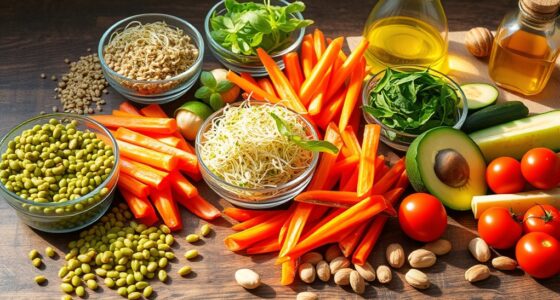
To power up your meal prep, incorporate fermented nuts and seeds by soaking them in water with a probiotic starter or salt for 12-24 hours. This process boosts flavor, makes them easier to digest, and adds beneficial probiotics. Once fermented, rinse and dehydrate or roast them for storage or snacks. Adding these nutrient-rich ingredients can elevate your dishes and support gut health. Keep going to discover more ideas for using fermented nuts and seeds in your meals.
Key Takeaways
- Soak nuts and seeds in salted water or probiotic culture for 12-24 hours to initiate fermentation.
- Rinse thoroughly after fermentation to remove residual salts or bacteria.
- Dehydrate or roast fermented nuts and seeds for easy storage and added flavor.
- Incorporate fermented nuts and seeds into salads, smoothies, or snack mixes for enhanced nutrition.
- Prepare batches in advance for quick, probiotic-rich meal additions throughout the week.

Fermented nuts and seeds are a smart addition to your meal prep routine because they boost flavor, improve digestibility, and increase nutrient absorption. When you take the time to ferment these foods, you unlock a range of fermentation benefits that enhance both their taste and health benefits. The process reduces antinutrients like phytic acid, which can hinder mineral absorption, making the nutrients in nuts and seeds more bioavailable. Additionally, fermentation introduces beneficial probiotics that support your gut health, aiding digestion and strengthening your immune system. This means that not only do your meals taste better, but they also work more effectively to nourish your body.
There are many nut and seed varieties suitable for fermentation, each bringing its own unique flavor profile and nutritional profile. Almonds, for example, develop a richer, nuttier flavor when fermented, while sunflower seeds tend to become milder and more buttery. Pumpkin seeds, or pepitas, are especially popular for fermentation because they have a firm texture that holds up well during the process, and their earthy flavor deepens after fermentation. Cashews, with their naturally creamy texture, turn even more luscious and flavorful, making them perfect for snacks or toppings. Sesame seeds, when fermented, bring out a deeper, more complex aroma, which can elevate salads or stir-fries. Each of these varieties offers distinct fermentation benefits, such as improving digestibility, reducing bitterness, and enhancing nutrient availability.
To start fermenting, you simply soak your chosen nuts or seeds in water with a little salt or probiotic starter culture. This encourages the growth of beneficial bacteria while breaking down complex compounds. After soaking for a period—usually 12 to 24 hours—you rinse and dehydrate or roast the nuts and seeds for storage or immediate use. This simple process transforms your usual nuts and seeds into probiotic-rich, more digestible ingredients that are perfect for meal prep. Incorporating fermented nuts and seeds into your weekly meals means you get to enjoy their enhanced flavors and health benefits every day.
Frequently Asked Questions
How Long Do Fermented Nuts and Seeds Stay Fresh?
Fermented nuts and seeds typically stay fresh for about 1 to 2 weeks when stored properly in an airtight container in the refrigerator. The fermentation duration influences their longevity; longer fermentation may reduce shelf life. Check freshness indicators like a tangy aroma, slight bubbling, or a change in texture. If you notice mold, foul smell, or sliminess, it’s best to discard them to ensure safety and quality.
Can I Ferment Any Type of Nut or Seed?
You can ferment most nut varieties and seeds, but some, like cashews and sunflower seeds, work best with specific fermentation techniques due to their unique textures and enzyme content. While not every type is ideal, experimenting with different nut varieties can yield delicious, probiotic-rich results. Just guarantee you follow proper fermentation methods to avoid spoilage, and always taste test before adding to your meals.
Do Fermented Nuts Require Special Storage Conditions?
Yes, fermented nuts need proper storage. You should use airtight storage containers to keep out moisture and contaminants. After fermentation, refrigerate them to slow down spoilage and maintain freshness. Make certain your refrigerator is set to the right temperature, ideally below 40°F (4°C). Proper refrigeration methods and sealed containers help preserve the nuts’ flavor, texture, and probiotic benefits, guaranteeing they stay safe and delicious for longer periods.
Are There Any Health Risks With Fermented Nuts and Seeds?
Fermented nuts and seeds are generally safe, but they can pose health risks if you’re allergic or sensitive. Nut allergen concerns are real, so if you have allergies, avoid them. Fermentation safety is key—ensure proper fermentation to prevent harmful bacteria growth. While they offer health benefits, consuming improperly fermented nuts could lead to digestive issues or contamination. Always follow safe fermentation practices and check labels for allergen info.
How Can I Tell if Fermented Nuts Are Spoiled?
You can tell if fermented nuts are spoiled by checking their nut quality and fermentation safety. If they smell sour, off, or rancid, or develop mold, it’s best to discard them. Also, if they feel slimy or excessively soft, they may be spoiled. Trust your senses—taste and smell—and always guarantee proper fermentation practices to maintain nut quality and safety. When in doubt, it’s safer to toss them out.
Conclusion
By incorporating fermented nuts and seeds into your meal prep, you not only boost your nutrition but also support better digestion. Some believe fermentation reveals hidden health benefits, making these foods supercharged with probiotics. While more research is needed, many swear by their positive effects. So, why not give it a try? Experimenting with fermentation might just transform your meals—and your health—in surprising ways. Ready to open the potential of these ancient superfoods?