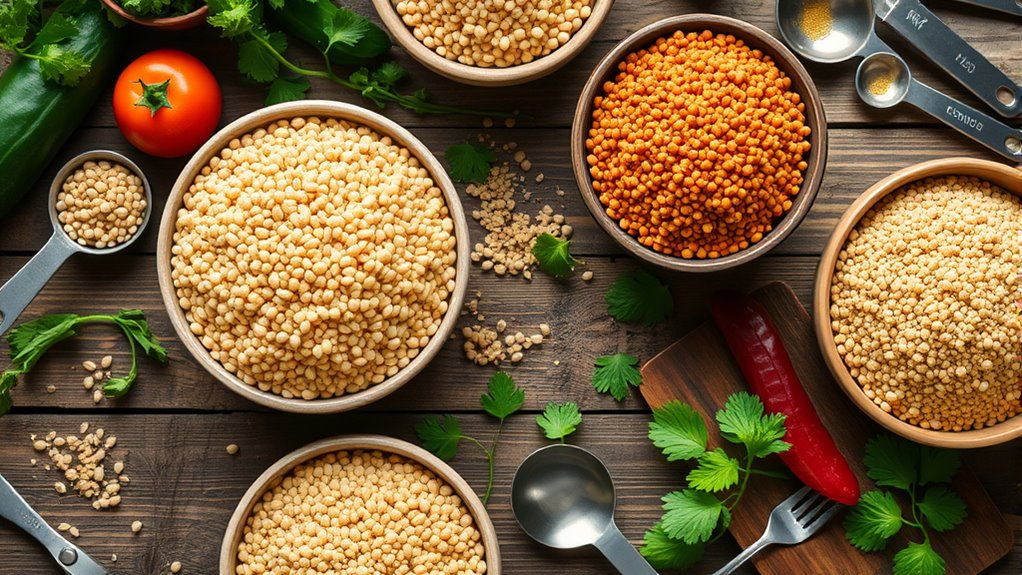

You can elevate your meal prep by incorporating ancient grains like teff and millet, which offer rich flavor, nutrition, and versatility. Cook large batches of these grains and use them as a base for salads, grain bowls, or stir-fries. Their naturally gluten-free and plant-based protein properties make them ideal for various dietary needs. Experiment with herbs, spices, and toppings to keep your meals interesting—if you keep going, you’ll discover even more tasty and wholesome ideas.
Key Takeaways
- Cook large batches of teff and millet for versatile meal bases like grain bowls, salads, and stir-fries.
- Use teff and millet as nutritious toppings or mix-ins with roasted vegetables, tofu, or legumes for variety.
- Incorporate these grains into breakfast dishes like porridges or breakfast bowls for sustained energy.
- Season and customize cooked grains with herbs, spices, or dressings to enhance flavor and meal diversity.
- Utilize their naturally gluten-free properties to create inclusive, plant-based meals suitable for gluten sensitivities.
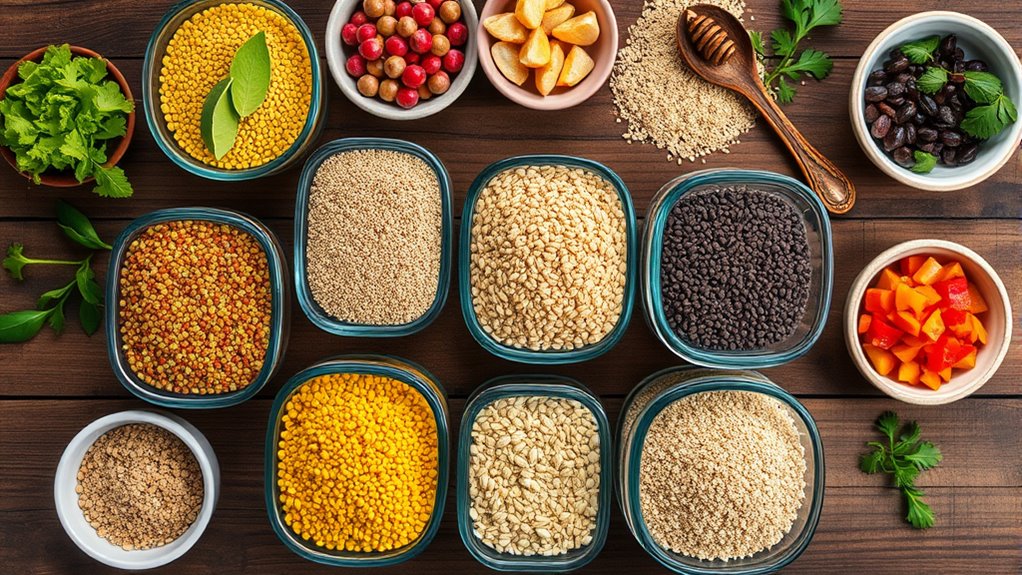
Ancient grains have become a popular choice for meal prep because they offer both nutrition and flavor that modern grains often lack. When you incorporate grains like teff and millet into your meal planning, you’re choosing versatile options that can suit a variety of dietary needs. If you’re looking for gluten free options, these grains are naturally free of gluten, making them ideal for those with gluten sensitivities or celiac disease. Plus, they pack a punch when it comes to plant-based proteins, helping you meet your daily protein goals without relying on animal products. This makes them perfect for vegetarian or vegan meal prep, ensuring you get essential nutrients while sticking to your plant-centered diet.
Teff, originating from Ethiopia, is tiny but mighty. It’s rich in iron, calcium, and fiber, and offers a subtly nutty flavor that works well in porridge, salads, or baked goods. Because teff is gluten free, you can confidently include it in your meal prep without worry about gluten cross-contamination. Millet, on the other hand, has a mild, slightly sweet taste and a fluffy texture when cooked, making it a great base for grain bowls, pilafs, or even breakfast dishes. Both grains are easy to cook in large batches, which helps streamline your weekly meal prep.
Adding these ancient grains into your meals not only diversifies your diet but also boosts your intake of plant-based proteins. For example, millet contains about 11 grams of protein per cooked cup, while teff provides around 10 grams. These grains can be combined with legumes, vegetables, and seeds to create complete proteins, giving your meals more nutritional punch. Incorporating them into salads, stir-fries, or grain bowls allows you to enjoy hearty, satisfying dishes that keep you energized throughout the day.
When planning your meal prep, consider using these grains as a base for various toppings and mix-ins. Toss cooked millet or teff with roasted vegetables, beans, or tofu for a balanced, protein-rich meal. Because they’re naturally gluten free, you don’t need to worry about hidden gluten sources, making your prep safer and more inclusive. Their neutral flavors make it easy to season and customize your dishes with herbs, spices, or dressings, ensuring variety and flavor throughout the week. Including gluten free grains is a smart way to accommodate dietary restrictions while maintaining nutritional diversity. Overall, ancient grains like teff and millet are smart, nutritious choices that help you create delicious, healthy, and plant-based meals with ease.
Frequently Asked Questions
How Do Ancient Grains Compare Nutritionally to Modern Grains?
Ancient grains generally offer more nutritional benefits than modern grains, as they tend to be richer in fiber, vitamins, and minerals. When you compare grains, you’ll notice that ancient varieties like teff and millet often have higher protein content and are less processed, helping you get more nutrients with each serving. This grain comparison shows that choosing ancient grains can boost your overall health and support better digestion.
Can Ancient Grains Be Used in Gluten-Free Meal Prep?
Imagine a rainbow of options—ancient grains like teff and millet can be your gluten-free substitutes, perfect for meal prep. They naturally lack gluten, making them ideal for gluten-sensitive diets. Just remember to check grain labeling to verify they’re truly gluten-free, as cross-contamination can happen. Incorporate these nutritious grains into your meals for variety and health, turning everyday dishes into vibrant, gluten-free creations.
What Are the Best Storage Methods for Cooked Ancient Grains?
You should store cooked ancient grains in airtight containers to keep them fresh and prevent moisture loss. Refrigerate them within two hours of cooking, and use these grains within 4-5 days for peak quality. When reheating, add a splash of water or broth to prevent dryness. Proper refrigeration tips help maintain their texture and flavor, ensuring your meal prep stays safe and delicious.
Are There Any Common Allergens Associated With Teff or Millet?
Like a gentle breeze, allergenic concerns around teff and millet are minimal for most people. However, some individuals might experience cross-reactivity issues, especially if they have gluten sensitivities or cereal grain allergies, since these grains can sometimes trigger similar responses. While rare, it’s wise to check for any symptoms and consult allergy info or your healthcare provider before including them in your diet, especially if you have known food allergies.
How Do Cooking Times Vary Between Different Ancient Grains?
Cooking times vary between ancient grains due to their different grain softening points. For example, millet typically cooks in about 20 minutes, while teff may take around 15-20 minutes, depending on the desired texture. Quinoa or amaranth might cook faster. You should always check for doneness and adjust cooking times accordingly. Keep in mind that soaking grains beforehand can reduce cooking times and improve texture.
Conclusion
Incorporating ancient grains like teff and millet into your meal prep is a tasty way to boost your nutrition. Did you know that millet is one of the oldest cultivated grains, dating back over 8,000 years? By swapping out regular grains for these nutrient-packed options, you’re not only adding flavor but also supporting better digestion and sustained energy. Start experimenting today—you might just find your new favorite staple for healthy, satisfying meals.