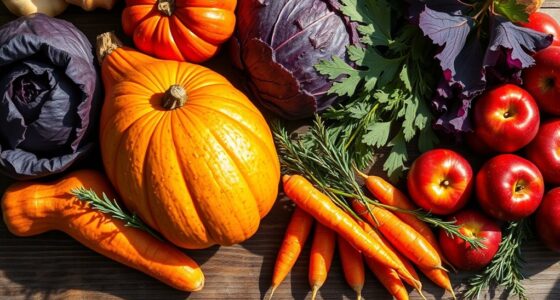
To meal prep for low-waste cooking, start saving vegetable scraps, stems, and peels in a dedicated container. Use these to make flavorful broths, stocks, or add directly to dishes for extra nutrition. Citrus peels can be dried for seasoning, while herb stems enhance sauces. Compost leftovers to enrich your garden soil. By incorporating these tips, you can reduce waste and create delicious, sustainable meals. Keep exploring for more creative ways to incorporate scraps into your cooking!

Get kitchen staples and gadgets delivered free with Prime
- Fast, free delivery on millions of items
- Prime Video, Amazon Music and more included
- Member-only deals all year
Key Takeaways
- Collect and store vegetable scraps, stems, and peels for future use in stocks, broths, or flavorings.
- Incorporate herb stems and citrus peels into sauces, teas, or baking to maximize ingredient utilization.
- Use peels and scraps directly in homemade stocks to enhance flavor and reduce waste.
- Compost organic scraps to return nutrients to the soil and minimize landfill waste.
- Plan meal prep around versatile ingredients to buy in bulk and reduce packaging waste.
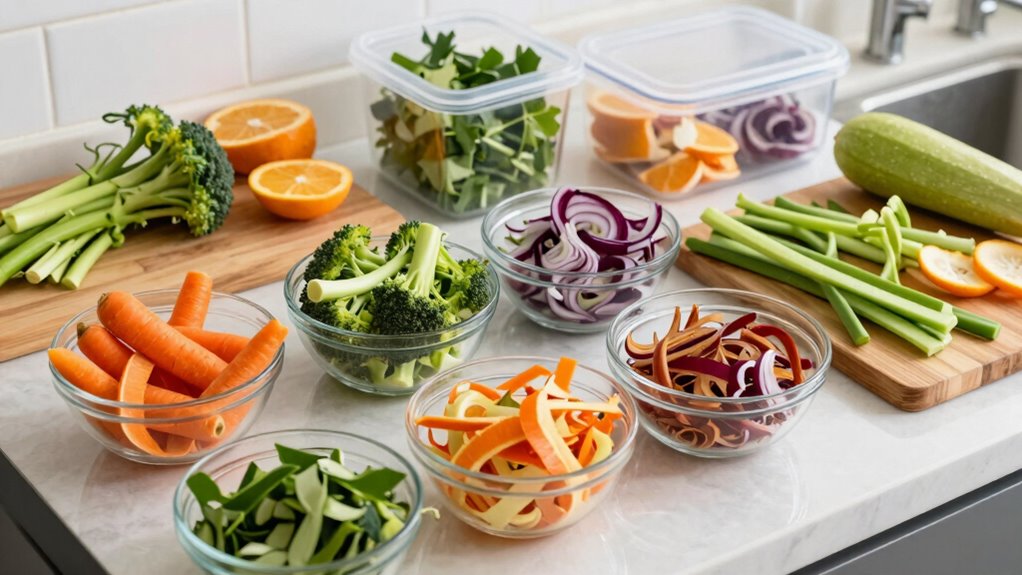
Preparing meals in advance can considerably reduce waste, but it’s vital to adopt mindful strategies to maximize your efforts. One effective way is to utilize scraps, stems, and peels, turning what might seem like kitchen refuse into valuable ingredients. This approach not only minimizes waste but also boosts the nutritional value of your meals. When planning your prep, think about composting techniques, which allow you to return organic waste to the earth, enriching your garden soil. Composting is a simple yet powerful way to close the loop on food waste, making it an indispensable part of sustainable shopping and cooking habits.
Start by keeping a dedicated container for scraps like onion skins, carrot tops, and vegetable peels. Instead of tossing these in the trash, save them for later use or compost. Many peels and stems can be added directly to broths or stocks, infusing flavor without extra effort. For example, vegetable peels from carrots, potatoes, and zucchini can be boiled to create homemade stock, reducing the need to buy pre-made broth and cutting down on packaging waste. Similarly, stems from herbs like cilantro or parsley can be chopped and incorporated into salads or sauces, reducing waste and adding fresh flavor.
Save vegetable scraps and herb stems to boost flavor and reduce waste in homemade broths and salads.
You can also incorporate citrus peels into your routine by zesting or drying them for later use in baking or seasoning. Dried citrus peels can be stored and used in teas or as natural flavorings. Using scraps creatively aligns with sustainable shopping because you’re making the most of what you already have, reducing the need to purchase new ingredients or packaged products. This mindset encourages buying versatile ingredients in bulk or loose form, which minimizes packaging waste and supports environmentally conscious choices. Additionally, understanding food waste reduction techniques can help you further optimize your kitchen practices.
Furthermore, adopting mindful composting techniques guarantees that your scraps don’t end up in landfills, where they generate methane—a potent greenhouse gas. Proper composting methods ensure that your organic waste is transformed efficiently into nutrient-rich soil rather than decomposing in a way that releases harmful gases. Using composting systems like backyard bins or community compost programs can further streamline this process and make it more accessible. Composting transforms organic waste into nutrient-rich soil that can nourish your garden or indoor plants. If space is limited, consider worm composting or Bokashi bins, which are compact and odor-free options for apartment dwellers. By integrating composting into your meal prep routine, you turn scraps into a resource rather than waste, reinforcing your commitment to sustainable living.
Implementing composting techniques as part of your routine ensures waste is kept out of landfills and supports the cycle of reuse and regeneration.
vegetable scrap storage containers
As an affiliate, we earn on qualifying purchases.
As an affiliate, we earn on qualifying purchases.
Frequently Asked Questions
How Do I Store Scraps to Prevent Spoilage During Meal Prep?
To prevent spoilage during meal prep, store scraps in airtight containers or resealable bags in the fridge. Keep them dry and use them within a few days for ideal food preservation. Label containers to avoid confusion. For longer storage, consider freezing scraps. Incorporate composting tips by storing scraps in a designated bin with a lid. This reduces waste and supports eco-friendly practices, ensuring your scraps stay fresh until you’re ready to use or compost them.
Are There Specific Recipes That Utilize Vegetable Stems and Peels Effectively?
You can turn vegetable stems and peels into culinary gold with recipes like broths, pestos, or stir-fries. These scraps work wonders for creative flavoring and texture enhancement, making dishes more vibrant and sustainable. For example, carrot tops add freshness to pestos, while broccoli stems boost hearty textures in soups. Don’t toss those scraps—transform them into delicious, low-waste meals that impress your taste buds and reduce waste!
How Long Can I Keep Leftover Scraps for Reuse?
You can typically keep leftover scraps for reuse in the fridge for about 3-4 days before they spoil. To maximize waste reduction techniques, consider freezing scraps to extend their lifespan or composting them if they’re no longer usable. Compost benefits include enriching soil and reducing landfill waste, so storing scraps properly guarantees you can reuse or compost them efficiently, minimizing waste and supporting sustainable cooking habits.
What Safety Tips Should I Follow When Using Scraps in Cooking?
When using scraps in cooking, prioritize food safety by thoroughly washing all scraps to prevent contamination risk. Always store scraps in airtight containers and keep them refrigerated or frozen to prevent bacterial growth. Avoid using scraps that look moldy, slimy, or smell off. Practice good hygiene by washing your hands and utensils frequently. By following these safety tips, you reduce contamination risk and enjoy low-waste cooking confidently and safely.
Can Using Scraps Impact the Flavor or Texture of My Dishes?
Using scraps can impact the flavor and texture of your dishes if you’re not careful. To preserve flavor, use fresh scraps promptly and avoid moldy or spoiled ones. Some peels or stems might alter texture, making dishes less appealing if overused. However, with proper selection and balance, you can enhance flavor without negatively affecting texture. Experimenting in small quantities helps you find the right balance for tasty, low-waste meals.
Conclusion
By embracing the art of low-waste cooking, you’re turning kitchen scraps into treasure chests of flavor. Every peel and stem becomes a brushstroke on your culinary canvas, transforming waste into wonder. As you master this mindful habit, you’ll not only nourish your body but also nurture the Earth. So, keep your kitchen a symphony of sustainability—each scrap a note in your delicious, eco-friendly masterpiece. Your mindful cooking writes a brighter, greener future.
Fall Picks
fall essentials
As an affiliate, we earn on qualifying purchases.