
To prevent mold while brewing kombucha, keep everything ultra-clean and sanitized. Use high-quality, fresh ingredients and sterilize all jars, utensils, and surfaces with boiling water or vinegar. Brew in a well-ventilated, dust-free area, and cover your ferment with breathable cloths. Regularly inspect your setup for damage or residues, handle the SCOBY carefully, and maintain a consistent cleaning schedule. Keep mold at bay by following these tips, and you’ll stay on the safe side while enjoying homemade kombucha.
Key Takeaways
- Sanitize all utensils, jars, and surfaces thoroughly before use to prevent microbial contamination.
- Use high-quality, fresh ingredients and sterilized equipment for a safe brewing environment.
- Brew in a clean, well-ventilated area with proper airflow, lighting, and controlled humidity.
- Cover fermentation jars with breathable cloths and avoid drafts to prevent airborne mold spores.
- Regularly inspect and clean all equipment and workspace, discarding any batches showing mold or spoilage.
Why Cleanliness Is Crucial for Safe Kombucha Brewing
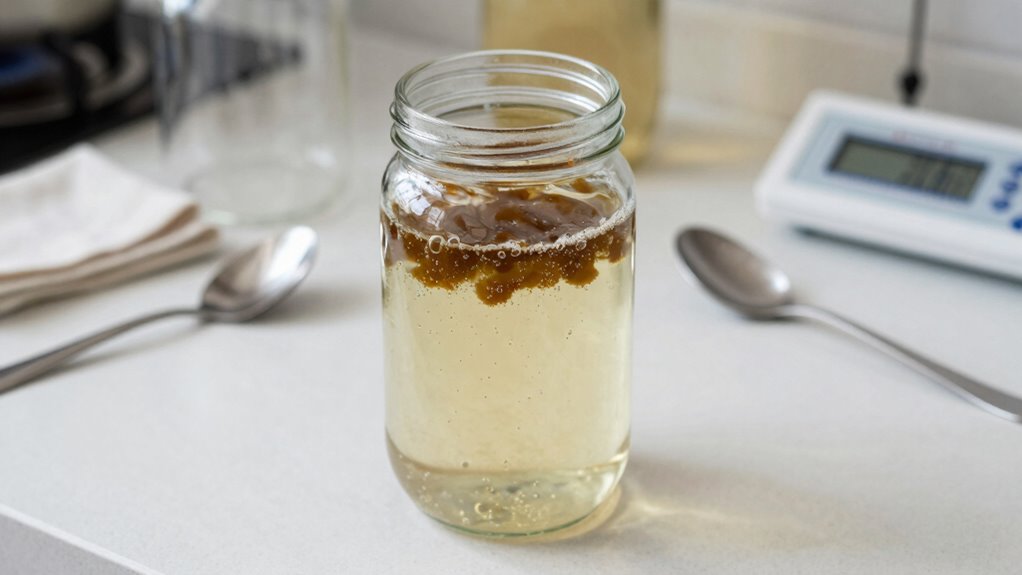
Keeping everything clean is vital when brewing kombucha because it helps prevent harmful bacteria and mold from contaminating your batch. Proper sanitation practices ensure your brewing environment stays free of contaminants that could spoil your tea or pose health risks. Start by thoroughly cleaning all utensils, jars, and work surfaces before you begin. Using high-quality ingredients also plays a key role; fresh, unblemished tea leaves and sugar reduce the chance of introducing unwanted microbes. Avoid using any dirty or previously contaminated equipment, as even small traces of residue can lead to mold growth. Sanitation protocols are essential to maintaining a safe brewing environment and preventing contamination. Consistent cleanliness not only safeguards your brew but also promotes a healthy fermentation process. When you prioritize sanitation and ingredient quality, you set the foundation for a safe, delicious, and successful kombucha batch. Additionally, understanding the importance of temperature control helps maintain optimal conditions for fermentation and prevents mold development.
How to Set Up Your Workspace for a Mold-Free Brew

Setting up your workspace properly is the first step toward a mold-free kombucha brew. Confirm your area is clean, well-ventilated, and free from drafts. Use a dedicated table or countertop to prevent cross-contamination. Consider the following factors:
| Aspect | Tips |
|---|---|
| Surface Material | Use smooth, non-porous surfaces for easy cleaning |
| Lighting | Bright, natural light discourages mold growth |
| Flavor Variations | Keep flavoring ingredients separate until fermentation is complete |
| Fermentation Timing | Schedule brews to avoid overlapping batches |
| Air Circulation | Ensure gentle airflow to prevent stagnation |
Proper setup minimizes mold risk and supports consistent fermentation, allowing you to experiment with flavor variations confidently. Additionally, maintaining hygienic practices throughout your process further reduces the chance of mold development. Incorporating proper airflow techniques can also help prevent moisture buildup that encourages mold growth. Regularly monitoring humidity levels and using ventilation strategies can further safeguard your brew from mold. Ensuring good air circulation is essential for reducing excess moisture and inhibiting mold spores from settling. Implementing these environmental controls creates an optimal environment for healthy fermentation.
Choosing the Right Equipment to Prevent Contamination

Choosing the right fermentation vessels is essential to keep your kombucha safe. Make sure you select non-reactive, food-grade containers that won’t introduce contaminants. Always clean your equipment thoroughly to prevent mold and bacteria from taking hold. Proper equipment maintenance is crucial to ensure ongoing safety and prevent spoilage during fermentation. Additionally, using free floating lids or covers can help prevent airborne mold spores from contaminating your brew. Regularly inspecting your setup and practicing good hygiene habits can further reduce the risk of contamination. Being aware of mold prevention techniques is also vital for maintaining a healthy fermentation environment. Incorporating connected equipment like smart monitoring devices can help you track temperature and pH levels, further supporting a safe fermentation process.
Selecting Proper Fermentation Vessels
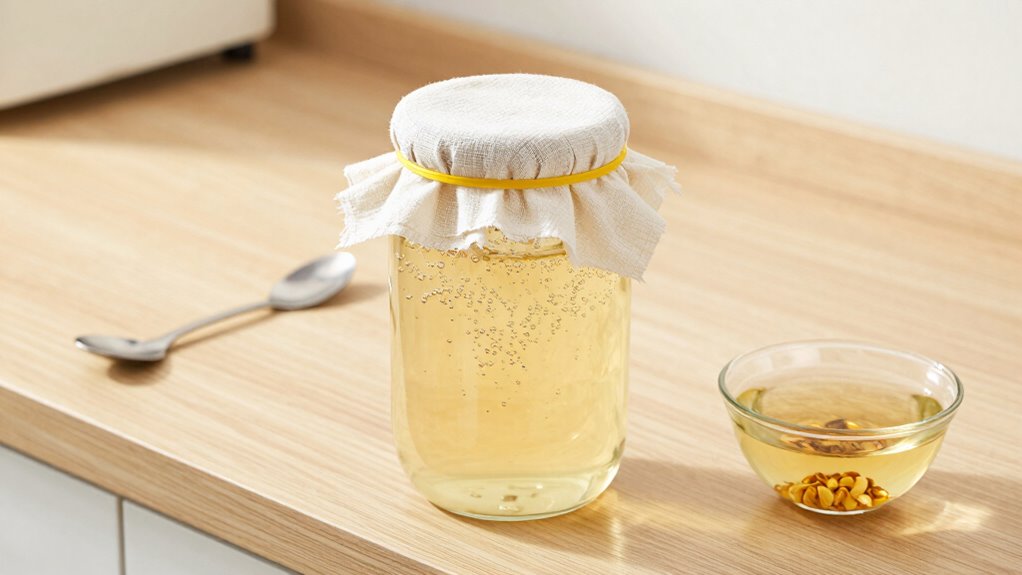
Selecting the right fermentation vessel is crucial to prevent contamination and guarantee a successful brew. Your choice of fermentation vessel impacts the overall health of your kombucha. Opt for a vessel made from non-reactive materials like glass or food-grade plastic, as these are easy to clean and won’t leach chemicals. Avoid metal containers, which can react with the brew and introduce unwanted flavors or contaminants. The material selection should also guarantee adequate airflow, so choose a vessel with a breathable cover, like cloth secured with a rubber band. Size matters too; use a vessel that allows enough room for the tea to expand during fermentation. Proper material and vessel selection create a clean environment, reducing the risk of mold and ensuring your kombucha ferments safely. Understanding safe fermentation practices helps ensure your brew remains free of harmful contaminants. Additionally, ensuring proper sanitation of your vessel before each use is vital to maintaining a contamination-free environment, which aligns with best practices in Smart Home Technology for system monitoring and automation. Using appropriate materials minimizes the risk of chemical leaching and supports a healthy fermentation process. Incorporating proper cleaning protocols further enhances safety and quality in your brewing process.
Ensuring Clean, Safe Equipment
To keep your kombucha safe and free from contamination, it is crucial to use clean, proper equipment throughout the brewing process. Follow strict sanitization practices to eliminate bacteria and mold spores that could compromise your brew. Always wash your jars, utensils, and lids with hot, soapy water, then sanitize with a vinegar solution or boiling water. Avoid porous or reactive materials that can harbor contaminants. Use food-grade containers designed for fermentation, and ensure all surfaces are dry before use. Regularly inspect your equipment for cracks or residues, and keep everything stored in a clean, dust-free area. Proper sanitization and contamination prevention are key to brewing a safe, delicious kombucha. Remember, clean equipment is the foundation of a healthy fermentation. Implementing Proper sanitization techniques can also help minimize the risk of mold growth and other contaminants during brewing. Additionally, utilizing air purifiers in your brewing area can reduce airborne mold spores and dust, further protecting your brew from contamination. Ensuring proper air circulation can also help prevent stagnant conditions that favor mold development. Incorporating these practices aligns with proven mold prevention strategies to ensure a safe fermentation environment.
How to Prepare Your Containers and Ingredients Safely
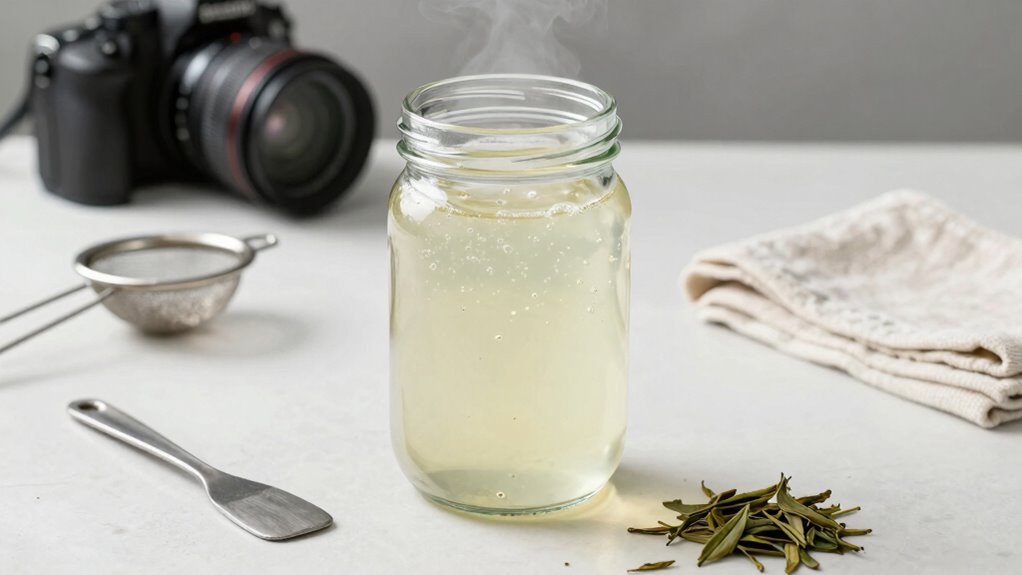
Before you start brewing, make sure to sterilize all your equipment thoroughly to guarantee unwanted bacteria. Use only fresh, high-quality ingredients to ensure your kombucha ferments safely and tastes great. Proper preparation of containers and ingredients is key to a successful and safe brewing process.
Sterilize Equipment Thoroughly
Ensuring your equipment is thoroughly sterilized is essential for a successful kombucha brew. Proper sanitization practices prevent unwanted microbes from contaminating your brew. Use effective sterilization techniques to eliminate bacteria and mold spores. Incorporate sound vibrations or specific frequencies during sterilization to further enhance microbial elimination. Consider these tips:
- Wash all containers with hot, soapy water before sterilizing
- Boil glass jars and utensils for at least 10 minutes
- Use a food-safe sterilizer or solution for plastics
- Rinse thoroughly to remove residue
- Allow equipment to air-dry completely before use
- Pay attention to home fermentation safety guidelines to ensure a healthy brewing environment. Maintaining proper hygiene standards is also crucial for preventing contamination.
Following these steps ensures your equipment remains free of contaminants, creating a clean environment for fermentation. Consistent sterilization practices are key to preventing mold and ensuring your kombucha turns out perfect every time.
Use Fresh, Quality Ingredients
Starting with clean, sterilized equipment sets the foundation for a successful brew, but using fresh, high-quality ingredients makes all the difference in your kombucha’s flavor and health. Choose ingredients with the best possible quality and verify ingredient freshness to prevent contamination and mold growth. Use organic or reputable sources for your tea, sugar, and starter tea, as stale or low-quality ingredients can introduce unwanted bacteria. Fresh ingredients also preserve the natural flavors and fermentation potential. When preparing your containers, verify they are thoroughly cleaned and free from residues that could harbor mold spores. Handling ingredients carefully and selecting fresh, quality supplies helps create a safe environment for fermentation and results in a vibrant, delicious kombucha every time.
Tips for Keeping Your Fermentation Environment Mold-Free
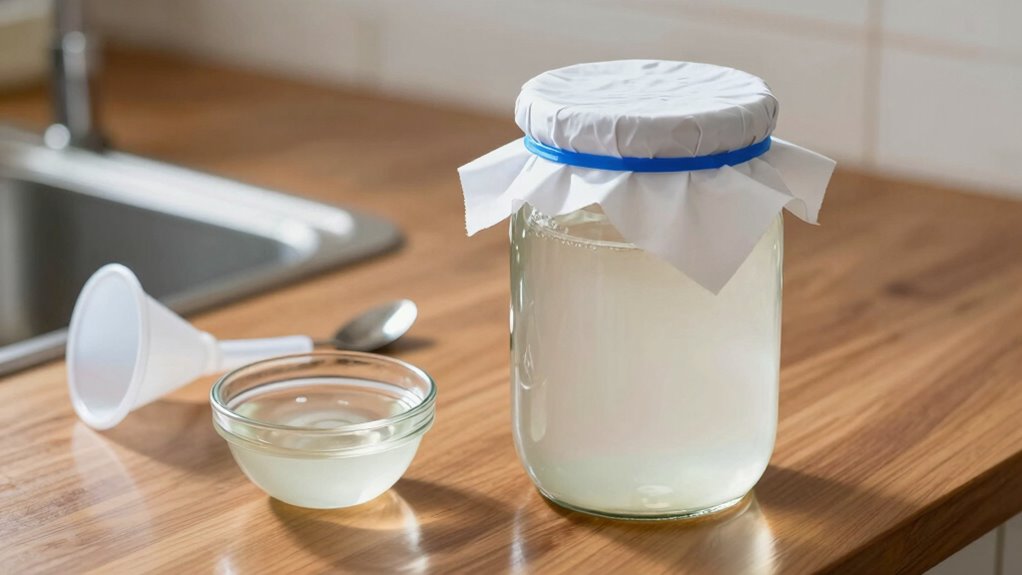
Maintaining a clean and stable environment is essential to prevent mold growth during your kombucha fermentation. Consistently practicing good sanitation practices helps eliminate mold spores and bacteria. Verify your workspace is spotless before starting, and clean all utensils thoroughly. Keep your ingredients fresh; old or spoiled ingredients increase mold risk. Maintain proper temperature and avoid drafts that can introduce contaminants. Additionally, use breathable covers like cloth to allow airflow while preventing dust and bugs from landing on your tea. Regularly inspect your fermenting vessel for any signs of mold or unusual growth. By staying vigilant and prioritizing cleanliness, you’ll create a healthy environment where your kombucha can thrive without mold issues.
Handling Your SCOBY and Tea Safely to Avoid Contamination

Handling your SCOBY and tea carefully is essential to prevent contamination and guarantee a healthy fermentation. When performing scoby handling, always wash your hands thoroughly to avoid introducing unwanted bacteria. Use clean utensils and avoid touching the SCOBY directly with your fingers, as oils and dirt can harm the culture. Make sure your brewing containers are sanitized before pouring tea or placing the SCOBY inside. Tea safety is also important; always use filtered or boiled water to minimize impurities. Keep your workspace clean and free from dust or mold spores. Cover your jar with breathable cloth to prevent airborne contaminants. By practicing careful scoby handling and prioritizing tea safety, you reduce the risk of mold and ensure a successful, safe kombucha brew.
How to Maintain a Regular Cleaning Schedule for Your Brew
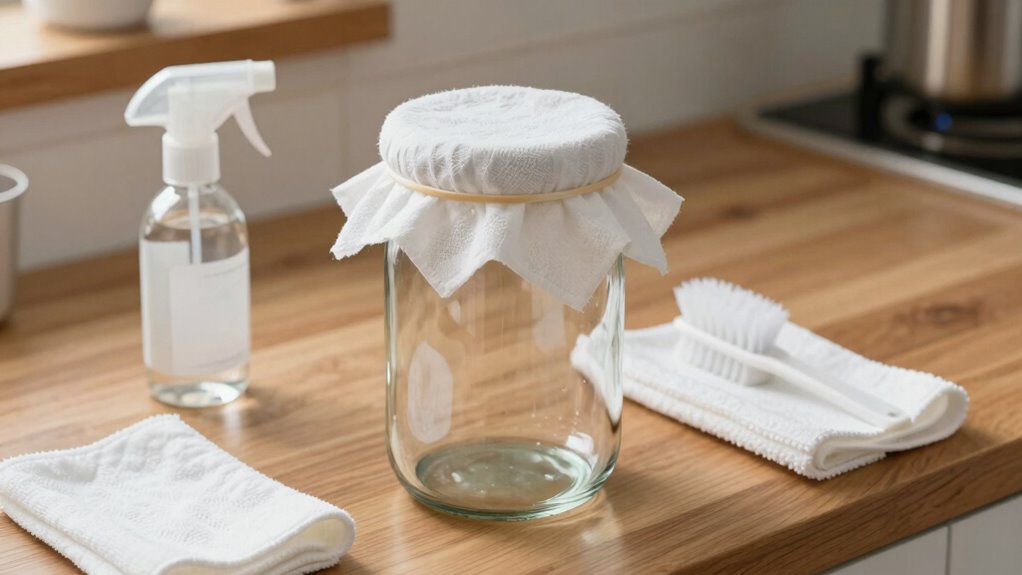
Keeping your brewing area clean is key to preventing contamination and ensuring consistent kombucha quality. Regular cleaning helps maintain ideal conditions and reduces mold risk. To stay on top of this, implement a routine that includes:
- Sanitizing all utensils and containers before use
- Wiping down surfaces with vinegar or alcohol-based solutions
- Checking your brewing area daily for any signs of mold
- Using proper sanitization techniques after each brew cycle
- Keeping the environment dry and well-ventilated to prevent mold growth
Consistent cleaning and sanitization techniques are essential for mold prevention. By maintaining this schedule, you create a clean environment that supports healthy fermentation and yields delicious, safe kombucha every time.
Troubleshooting Mold Problems and How to Prevent Them

Mold can quickly become a serious problem in your kombucha brewing process, but you can catch and prevent it early by staying vigilant. Regularly inspect your SCOBY and brew for any unusual spots or fuzzy growths, which indicate mold. To improve mold prevention, make certain your workspace and equipment are thoroughly sanitized, supporting contamination control. Avoid introducing foreign particles or contaminants by washing your hands and using clean utensils. Keep your brew covered with a breathable cloth to prevent airborne spores from settling. Maintaining proper pH levels and avoiding overexposure to direct sunlight also help inhibit mold growth. If you spot mold, discard the batch immediately—don’t attempt to scrape it off. Consistent attention to cleanliness and contamination control is your best defense against mold problems.
Final Tips for Making Safe and Healthy Kombucha
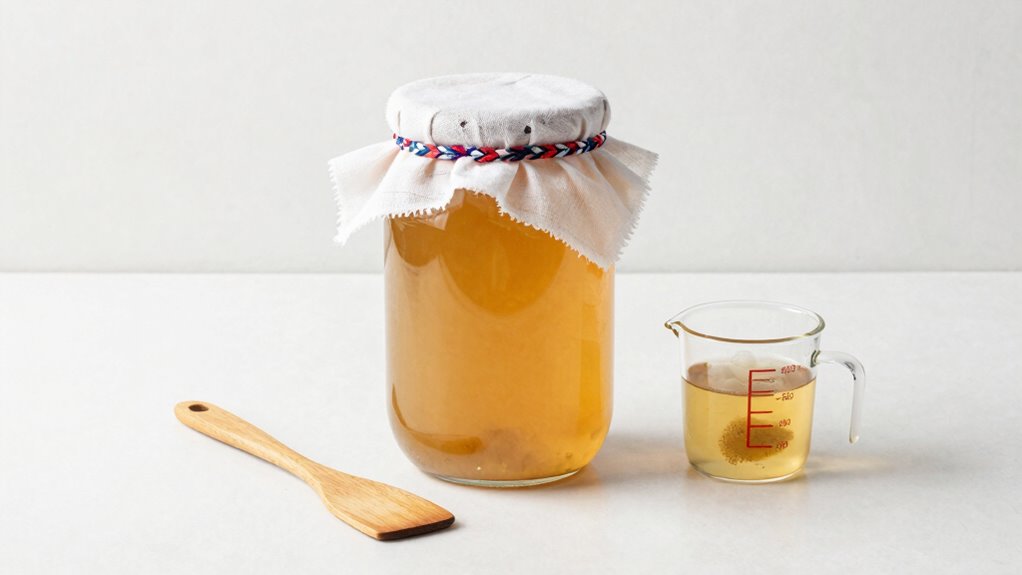
To guarantee your kombucha remains safe and healthy, prioritize cleanliness and proper fermentation practices throughout the brewing process. Ensuring a clean workspace and correct fermentation times help prevent contamination. Experiment with flavor variations by adding herbs, fruits, or spices after the initial fermentation, but always ensure your brew is free of mold before flavoring. Keep track of fermentation times to achieve your preferred balance of tang and sweetness—longer times yield more acidity, while shorter ones keep it milder.
- Use fresh, quality ingredients for each batch
- Maintain proper sanitation of tools and jars
- Monitor fermentation times closely
- Taste test periodically to determine ideal flavor
- Store in a clean, sealed environment to prevent unwanted bacteria
Frequently Asked Questions
Can I Use Non-Traditional Containers for Brewing Kombucha Safely?
Yes, you can use alternative container materials for brewing kombucha, but you need to prioritize fermentation vessel safety. Glass is the safest choice because it’s non-reactive and easy to clean. Avoid non-traditional containers like metal or plastic unless they’re food-grade and specifically designed for fermentation. Always make sure the vessel is clean, free of cracks, and doesn’t leach chemicals, so your kombucha stays healthy and safe to drink.
What Are Common Signs of Mold Growth During Fermentation?
Imagine your fermentation as a garden; mold spotting is like weeds sprouting unexpectedly. You’ll notice fuzzy patches, often green, black, or white, and an off-putting fermentation smell that’s sour or musty. These signs indicate mold growth. Stay vigilant by regularly inspecting your brew. If you see mold or detect an unusual smell, it’s best to discard the batch to keep your kombucha safe and delicious.
How Does Water Quality Affect Kombucha Safety?
Water quality directly impacts your kombucha’s safety. Impurities like chlorine or chloramine can inhibit fermentation and introduce harmful bacteria, while high mineral content can affect the flavor and fermentation process. Using filtered or distilled water reduces impurities, ensuring a clean environment for your SCOBY. Proper water choice helps prevent contamination, ensuring your kombucha ferments safely and tastes great every time.
Are There Natural Disinfectants Suitable for Kombucha Equipment?
Imagine your brewing setup as a fortress against harmful microbes—you need natural disinfectants to keep it impenetrable. You can use vinegar or hydrogen peroxide, which are powerful natural disinfectants, to guarantee brewing safety. These substances wipe out bacteria and mold without harsh chemicals. Just spray or rinse your equipment thoroughly, and you’ll create an environment where healthy kombucha thrives, protecting your brew from contamination every single batch.
How Often Should I Replace or Sanitize My SCOBY?
You should replace or sanitize your SCOBY every 4 to 6 weeks to guarantee proper SCOBY maintenance and fermentation hygiene. Regularly inspect for mold or off smells, and if you see any, discard the SCOBY immediately. Use gentle cleaning methods, like rinsing with non-chlorinated water, and avoid harsh disinfectants. Keeping your SCOBY healthy and clean helps prevent contamination and ensures your kombucha ferments safely and deliciously.
Conclusion
Think of your kombucha setup as tending a delicate garden. With careful watering, regular pruning, and vigilant protection from weeds (mold), your brew will flourish. Stay attentive, keep everything clean, and nurture your SCOBY like a treasured plant. In doing so, you’ll enjoy vibrant, safe kombucha harvests season after season—your very own flavorful, healthful garden of wellness thriving under your watchful care.