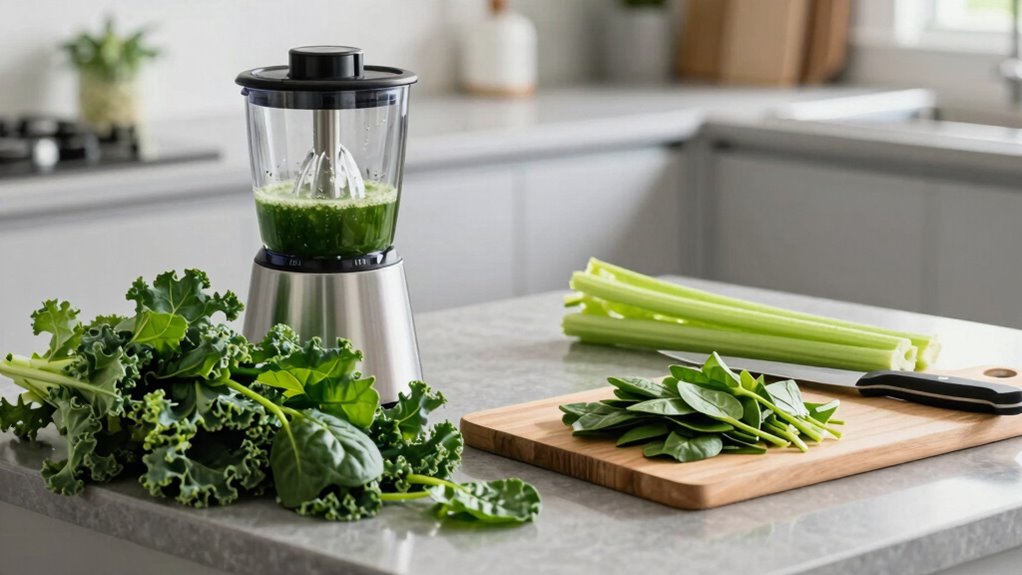

To juice greens without wasting half your produce, start by thoroughly washing and chopping them into smaller pieces. Use a high-quality, slow-press juicer designed for leafy greens, and alternate greens with watery fruits like cucumber or apple to loosen fibers. Feed greens slowly with gentle pressure to maximize extraction and reduce pulp. Proper maintenance, including cleaning and troubleshooting, guarantees efficient performance. Want to discover more ways to boost your juicing results and minimize waste? Keep exploring.
Key Takeaways
- Chop greens into smaller pieces to enhance juice extraction and reduce leftover pulp.
- Use a masticating juicer, which efficiently presses leafy greens, minimizing waste.
- Alternate greens with high-water content fruits to loosen fibers and improve yield.
- Properly disassemble and clean the juicer after each use to maintain optimal performance.
- Incorporate leftover pulp into smoothies or recipes to maximize produce utilization.
How to Prepare Greens for Maximum Juicing
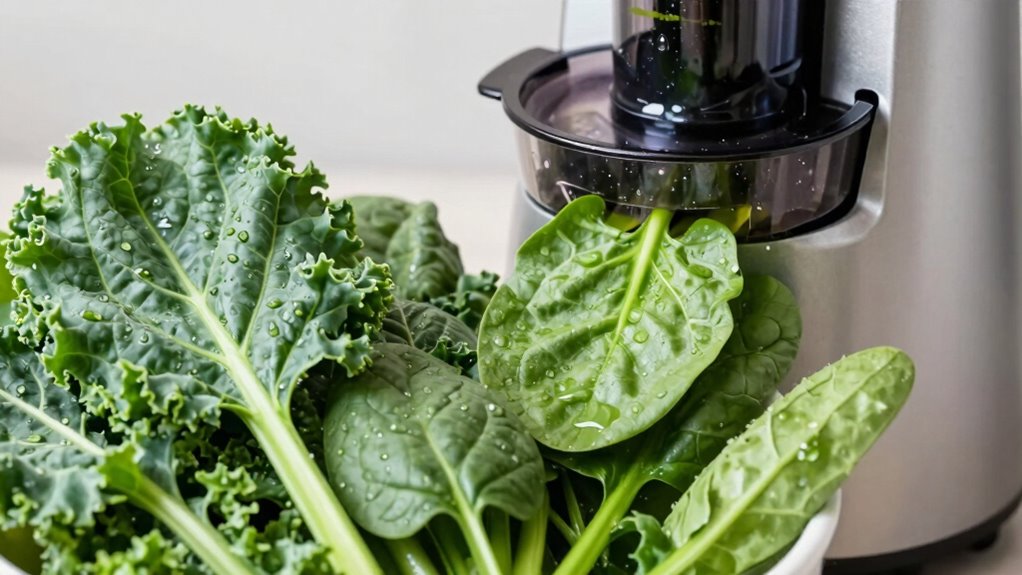
Before you start juicing, it’s important to prepare your greens properly to get the most juice and nutrients. First, wash your greens thoroughly to remove dirt and pesticides, which helps preserve nutrients and improves flavor pairing. Remove any tough stems or thick stalks, as they can clog your juicer and dilute the juice. Chop the greens into smaller pieces to make them easier to process, ensuring maximum extraction. To enhance flavor pairing, consider mixing milder greens like spinach with more bitter varieties like kale. Proper preparation not only boosts nutrient preservation but also guarantees your juice is smooth and flavorful. Additionally, understanding conversion tools can help you better manage large quantities of produce or ingredients, especially when scaling up your juicing efforts. Being aware of clogging issues and how to prevent them can also improve your juicing efficiency and reduce waste. For instance, ensuring your juicer’s blades are sharp and regularly maintained can help prevent piercing or damaging delicate greens, leading to better yields. Maintaining your juicer and understanding its optimal settings can further enhance your juice quality and efficiency. Moreover, handling your greens with care can prevent oxidation, which can degrade nutrients and affect flavor.
Choosing the Best Juicer for Greens

Choosing the right juicer makes a big difference in how efficiently you can extract juice from your greens. Many juicing myths suggest that only high-end machines can handle greens well, but that’s not true. Look for a juicer with a masticating or slow-press design; these models break down greens thoroughly and maximize juice yield. If you want to explore alternative greens like kale, wheatgrass, or spinach, guarantee your juicer can handle leafy textures without clogging or losing nutrients. Cheaper centrifugal juicers often struggle with greens and waste valuable produce. Investing in a quality juicer means less waste and more nutritious juice. Ensure your juicer is capable of handling leafy textures efficiently for optimal nutrient extraction. Additionally, selecting a juicer that incorporates sound healing science principles can enhance your overall wellness experience during juicing routines. Incorporating nutrient preservation techniques into your juicing process can help retain more vitamins and minerals from your greens, making your drinks even more beneficial.
Techniques to Extract More Juice From Greens
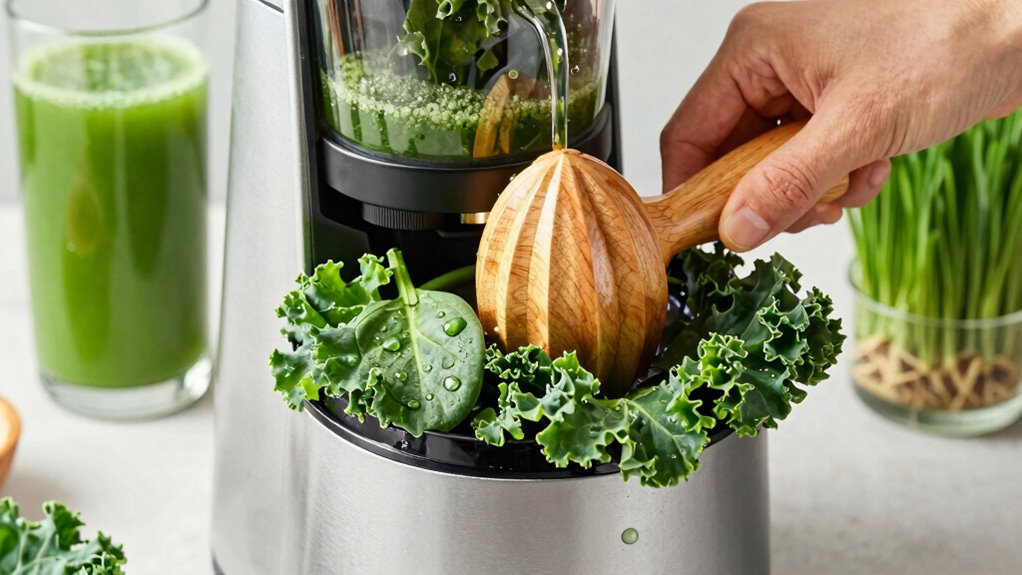
To maximize the juice you get from greens, it’s essential to use proper techniques that break down leafy textures more thoroughly. Start by chopping greens into smaller pieces before juicing, which helps your juicer extract more liquid. When making green juice blends, alternate between leafy greens and watery fruits like cucumber or apple to loosen the fibers and boost yield. Applying gentle pressure and feeding greens slowly into the juicer prevents clogging and ensures maximum extraction. Additionally, consider using a masticating juicer, which effectively presses out more juice from fibrous greens. Proper pulp utilization begins with these techniques, ensuring you get the most juice possible without overloading your juicer or wasting produce. Implementing efficient extraction methods can significantly improve your yield and nutrient preservation. Using the right juicing techniques also helps minimize waste and preserves nutrients. Employing proper juicing techniques can further enhance the quality and quantity of your green juice, making your efforts more sustainable. Incorporating natural filtration systems can also help maintain water quality in your juicing process, supporting a healthier routine. Balancing support and boundaries in your juicing process can help you maintain a sustainable routine and avoid waste.
How to Handle and Minimize Pulp Waste
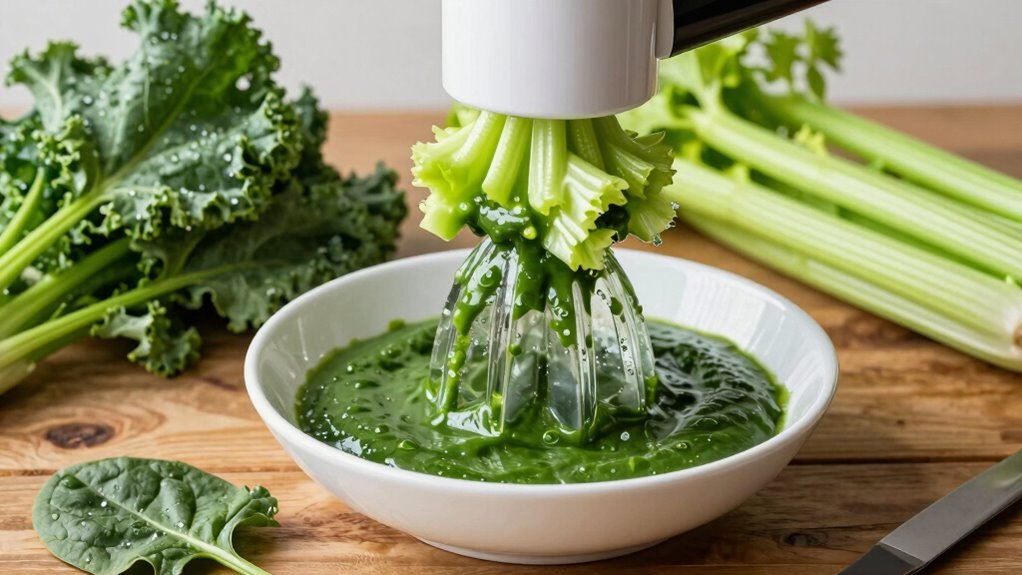
To reduce pulp waste, start by choosing organic greens that are fresh and less fibrous. Use fine-mesh strainers to catch excess pulp, and get creative by adding it to smoothies or baking recipes. These steps help you get the most out of your greens and cut down on waste. Incorporating well-drained soil and full sun in your garden can also ensure healthier, less fibrous greens for juicing. Additionally, selecting insulated jackets for winter can keep your greens fresh longer during storage. Ensuring proper plant nutrition through balanced fertilization can also contribute to producing more tender, juice-friendly greens. Furthermore, understanding the solar system design principles can help you optimize your garden’s environment for healthier, more productive greens. Paying attention to soil quality can further enhance the nutrient content and overall health of your greens, resulting in better juicing yields.
Choose Organic Greens Carefully
Opting for organic greens can substantially reduce the amount of pulp and contaminants in your juice, ensuring a cleaner, more nutrient-rich final product. When making an organic selection, choose greens that look vibrant and fresh—these have higher green freshness and moisture content, which helps produce a smoother juice with less pulp. Organic produce tends to be less processed and grown without synthetic pesticides or fertilizers, resulting in fewer unwanted fibers and residues. This means you’ll get a purer, cleaner juice, minimizing waste and the need for additional filtering. By carefully selecting your greens, you not only maximize nutritional value but also reduce unnecessary pulp. Focus on fresh, organic greens to enjoy a more efficient juicing process and a better-quality final drink. Additionally, choosing greens that are harvested sustainably supports community and cultural connections, which aligns with Indigenous wellness principles. Selecting sustainably grown greens can also help minimize environmental impact, further aligning your juicing practices with eco-friendly values. Incorporating traditional Indonesian decor masks into your space can inspire mindfulness and cultural appreciation, encouraging more intentional and eco-conscious choices in your lifestyle. Using proper handling techniques can further reduce waste and ensure you get the most out of your produce.
Use Fine-Mesh Strainers
Using a fine-mesh strainer is one of the simplest ways to handle pulp and reduce waste in your juice. After blending, pour your juice through the strainer to catch larger pulp particles, leaving behind smoother, more drinkable liquid. This method helps preserve the juice’s flavor pairing by removing unwanted fibers, guaranteeing a balanced taste without bitterness. Additionally, straining maintains nutrient preservation by preventing excessive pulp from overwhelming the delicate flavors and nutrients in your juice. You can reuse the pulp in other recipes or compost it, but the strainer ensures you get the most out of every sip. Understanding affiliate disclosure can help you make informed choices about product recommendations and tools used in your juicing process. With minimal effort, this technique improves juice clarity, enhances flavor, and minimizes waste—making your juicing process more efficient and enjoyable. Incorporating fresh regional flavors can also elevate your juice, adding unique and vibrant tastes to complement your greens.
Incorporate Pulp in Recipes
Incorporating pulp into your recipes is an effective way to minimize waste and boost nutrition. You can add pulp to smoothies, muffins, or veggie burgers for extra fiber and nutrients. When choosing recipes, consider flavor pairing—pulp’s mild, slightly earthy taste complements ingredients like herbs, garlic, or lemon. Adjust the pulp texture by blending it smoothly into batters or leaving it chunkier for added crunch in salads or veggie patties. Pulp can also thicken sauces or soups, giving them more body without extra calories. Be mindful of the pulp’s moisture content; drain or squeeze out excess liquid if needed. By creatively using pulp, you reduce waste and enhance your dishes with minimal effort, making your juicing process more sustainable and flavorful.
How to Combine Greens for Better Juicing Results

To get the best results from your greens, it’s important to combine different types strategically. Focus on flavor pairing to create a balanced, pleasant taste—pair milder greens like spinach with sturdier, slightly bitter options like kale or arugula. This contrast enhances flavor and prevents overpowering your juice. Nutrient blending is also key—you want a mix that maximizes vitamins and minerals without sacrificing taste. Combining dark, leafy greens with milder herbs or herbs like mint can boost both nutrition and flavor. Experiment with small batches to find the right harmony. Incorporating car protection and accessories can also help keep your produce fresh for longer, ensuring maximum nutrient retention. Remember, blending greens thoughtfully improves juice quality, making it more enjoyable and nutrient-dense without overwhelming your palate.
How to Store Greens to Keep Them Fresh and Nutrient-Rich
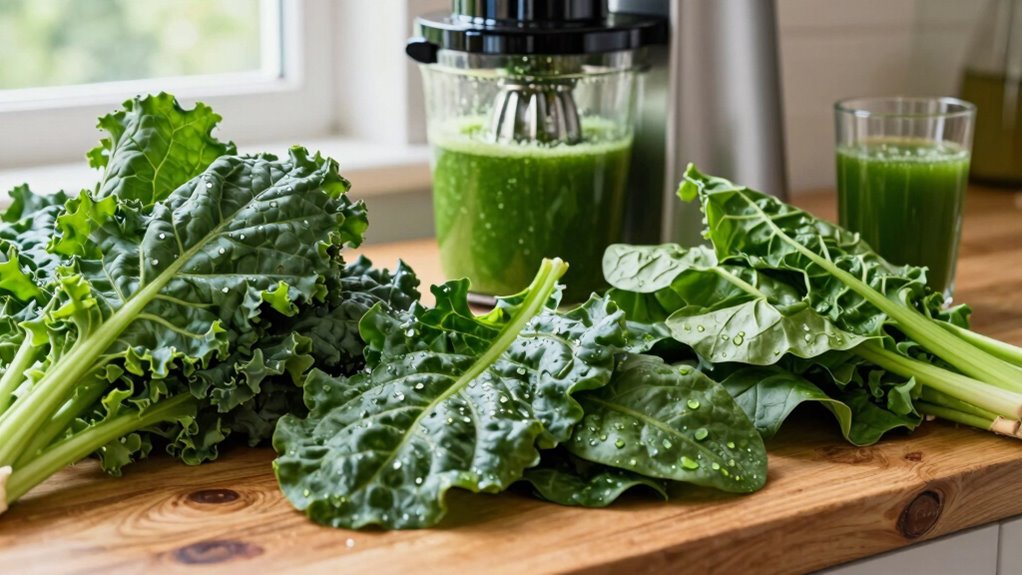
Keeping your greens fresh and nutrient-rich starts with proper storage techniques. Use airtight storage containers to limit exposure to air, which can cause greens to wilt and lose nutrients quickly. Before storing, gently wash and dry your greens thoroughly; excess moisture promotes spoilage. For flavor pairing, store greens separately from strong-smelling foods to prevent flavor transfer. Keep greens in the crisper drawer of your fridge, ideally at a temperature around 32-40°F. Placing a paper towel inside the container absorbs excess moisture, extending freshness. Avoid overcrowding containers, which can crush delicate leaves. Properly stored greens can stay fresh for up to a week, ensuring you get the most nutrients and flavor from your produce each time you juice.
Common Juicing Mistakes That Waste Greens

Many people waste greens during juicing by making simple mistakes that reduce their nutrients and yield. One common error is ignoring flavor combinations, which can lead to unpalatable juice and leftover greens. Balancing bitter greens with sweet fruits or mild vegetables can make your juice more enjoyable and prevent waste. Another mistake is using inappropriate juicing equipment; some blenders or juicers may not efficiently extract juice from leafy greens, leaving valuable produce behind. Overloading the juicer or not preparing greens properly can also cause clogs and reduce output. Additionally, rushing through the process or not cleaning your equipment thoroughly can decrease efficiency, resulting in more waste. Paying attention to proper techniques, equipment, and flavor pairing helps you maximize your greens and minimize waste.
Creative Ways to Use Leftover Pulp and Reduce Waste

You can incorporate leftover pulp into recipes like muffins, smoothies, or veggie burgers to add fiber and nutrients. To keep it fresh, store pulp in airtight containers and freeze it for later use without losing its quality. Using these methods helps you cut waste and make the most of every part of your produce.
Incorporate Pulp Into Recipes
Instead of discarding leftover pulp after juicing greens, get creative by incorporating it into various recipes. Pulp adds fiber and nutrients, making your dishes more wholesome. You can blend pulp into Pulp smoothies for extra texture and nutrition, or add it to baked goods like muffins and bread for a boost of greens. Using pulp in recipes also helps reduce food waste and supports greens composting efforts.
Here are some ideas:
- Mix pulp into veggie soups or stews for added fiber.
- Use it as a base for veggie patties or veggie burgers.
- Incorporate it into oatmeal or pancake batter for a nutritious twist.
Preserve Nutrients With Storage
To make the most of your leftover pulp and keep its nutrients intact, proper storage is key. Store pulp in an airtight container in the refrigerator if you’ll use it within a few days. For longer storage, freeze it in small portions using ice cube trays—this makes adding it to your green smoothies easy and quick. Keeping pulp cold prevents nutrient loss and preserves its antioxidant boost. Label containers with dates to track freshness. When you’re ready to use, thaw the pulp or blend it directly into your smoothie. This method minimizes waste and maximizes nutrition, ensuring each green smoothie delivers maximum health benefits. Proper storage helps you enjoy the full nutritional value of your greens without sacrificing flavor or quality.
Troubleshooting Common Greens Juicing Problems
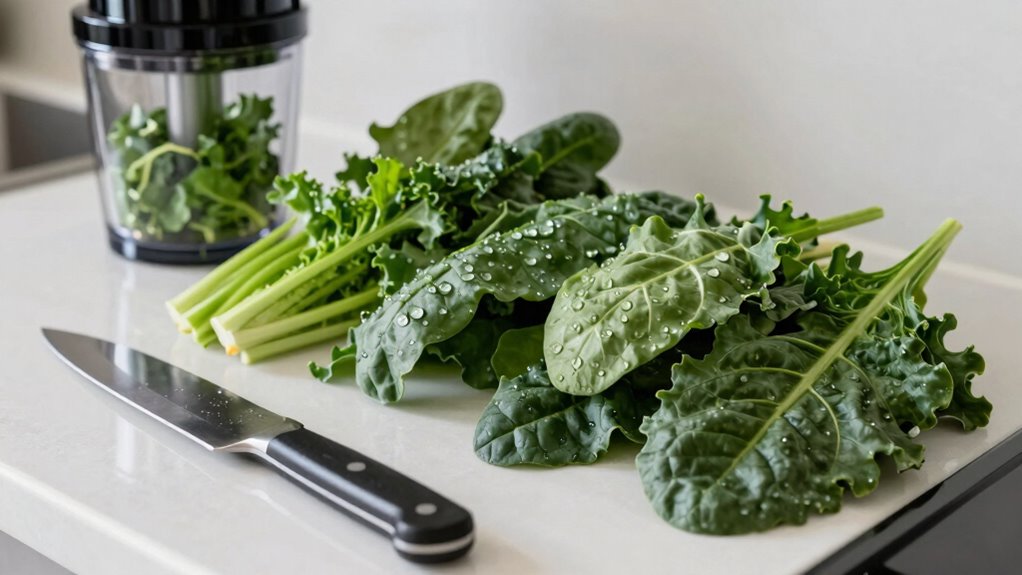
Greens juicing can sometimes be tricky, resulting in issues like thick, foamy juice or clogging your machine. To troubleshoot, first check your greens harvesting: overgrown or wet greens can cause problems. Also, make certain your juicing safety by avoiding tough stems or damaged leaves that might clog the system. If your juice is foamy, try blending the greens with a bit of water first to break down fibers better. For clogging issues, feed greens gradually and avoid overstuffing the juicer. Here are some tips:
- Use a fine mesh strainer to reduce foam
- Alternate greens with softer produce
- Clean your juicer regularly to prevent build-up
Addressing these problems helps guarantee smoother juicing and better nutrient retention.
How to Clean and Maintain Your Juicer for Optimal Performance

Keeping your juicer clean and well-maintained guarantees it works efficiently and lasts longer. Follow a regular cleaning routine, disassembling parts carefully to avoid damage. Regularly inspect and replace worn or damaged components to keep your juicer in top shape.
Regular Cleaning Routine
Regularly cleaning your juicer is essential to guarantee it performs at its best and lasts longer. Keeping it spotless prevents buildup that can affect juice quality and machine efficiency. After each use, take a few minutes to rinse all parts with warm water, removing pulp and residue. For thorough cleaning, disassemble the juicer and wash components with mild soap. Store your juicer in a designated spot to maintain kitchen organization and make daily cleanup easier. To avoid clutter, use storage containers for leftover pulp or juice, keeping your workspace tidy. Also, regularly check and replace worn parts. A clean, well-maintained juicer ensures peak performance, reduces waste, and simplifies your routine, making juicing more enjoyable and efficient.
Proper Disassembly Techniques
Proper disassembly is the key to thorough cleaning and maintaining your juicer’s performance. To guarantee disassembly safety, always unplug the machine before taking it apart. Carefully follow your juicer’s manual to avoid damaging parts or voiding warranties. Pay attention to tool compatibility; use only the recommended tools to prevent stripping screws or breaking components. When disassembling, handle blades and sharp edges with care to avoid injury. Keep track of small parts like gaskets and screws, and store them safely. Clean each part separately, ensuring no residue remains. Regular, careful disassembly helps prevent buildup and prolongs your juicer’s lifespan. Remember, patience and attention to detail during disassembly will make your cleaning routine more effective and safer.
Inspect and Replace Parts
To guarantee your juicer operates at its best, you need to regularly inspect its parts for signs of wear or damage. Check for cracks, corrosion, or any buildup that could hinder performance. Focus on inspecting parts like blades, screens, and seals to ensure they’re functioning properly. If you notice any damage or excessive wear, it’s time to replace filters or other worn components. Regularly replacing filters helps maintain optimal juice quality and prevents clogging. Also, clean the filters thoroughly after each use to extend their lifespan.
- Examine blades and screens for dullness or damage
- Replace filters when they show signs of wear or clogging
- Tighten or replace seals to prevent leaks and maintain pressure
Frequently Asked Questions
Can Freezing Greens Affect Their Juicing Quality?
Freezing greens can affect their juicing quality by causing cell walls to break down due to freezing effects, which makes them softer and easier to juice. While freezing may slightly impact nutrient retention, it generally preserves most nutrients if done properly. You might notice a change in texture, but the flavor and nutrient content remain relatively intact, making frozen greens a convenient option for juicing without significant loss of quality.
Are Organic Greens Significantly Better for Juicing?
Yes, organic greens are considerably better for juicing because they come from organic farming, which avoids synthetic pesticides and fertilizers. This means fewer pesticide residues in your juice, making it healthier and safer. Organic greens often retain more nutrients and flavor, enhancing your juicing experience. While they might cost more, the health benefits and cleaner taste make them a worthwhile choice for best results.
How Do Different Green Varieties Impact Juice Flavor?
Your juice’s flavor can be wildly transformed by different green varieties. Leafy greens like kale bring a bold, earthy taste, while spinach offers a milder, sweeter profile. Herbs like parsley add vitality, and cucumber greens give a revitalizing, subtle flavor. The variety effects are powerful—some greens dominate, others blend seamlessly. Experimenting with different greens lets you craft personalized flavor profiles, making each juice uniquely delicious and far from boring.
Is It Necessary to Peel or Trim Greens Before Juicing?
You don’t need to peel or trim greens before juicing, but trimming techniques can help improve flavor and cleanliness. Use a sharp knife or kitchen scissors to remove tough stems or damaged leaves, especially with greens like kale or Swiss chard. Green peeling isn’t usually necessary unless the greens are heavily soiled or have thick stems. By trimming properly, you guarantee a smoother juice and reduce waste, making the process more efficient.
Can Juicing Greens Improve Overall Nutrient Absorption?
Juicing greens can improve your overall nutrient absorption by increasing nutrient bioavailability, making it easier for your body to absorb vitamins and minerals. The liquid form helps break down cell walls, boosting digestive benefits and ensuring you get more nutrients with less effort. This process allows you to maximize the health benefits of greens, especially if you have trouble digesting raw vegetables, by providing concentrated nutrients in a readily absorbable form.
Conclusion
Now that you’re armed with all the tips, you’ll be squeezing every drop of goodness from your greens—literally. No more tossing mountains of pulp into the trash, turning your kitchen into a leafy landfill. Instead, envision yourself as a juice wizard, conjuring liquid gold from humble greens, leaving no waste behind. Remember, with a little practice, you’ll be turning even the most stubborn kale into a nectar fit for royalty—waste not, want not!