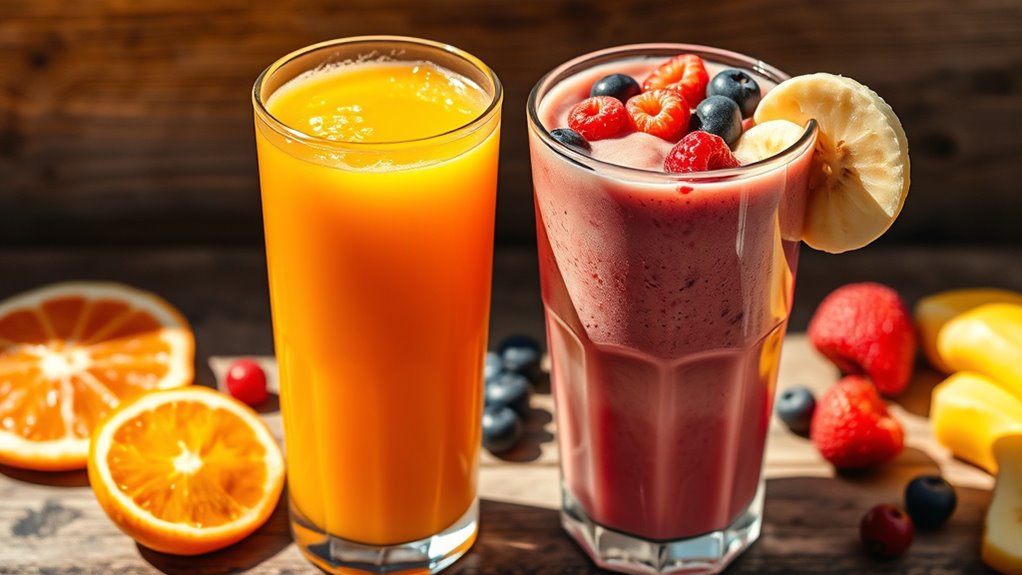

Juices and smoothies differ mainly in fiber and sugar content. Juices strip out pulp, giving you a quick vitamin boost but less fiber, which can cause blood sugar spikes. Smoothies blend whole fruits and veggies, preserving fiber that helps control appetite and stabilize blood sugar. While juices offer rapid nutrients, smoothies provide lasting energy and satiety. Understanding these differences can help you pick the best option for your health goals—more details await those who keep exploring.

Get kitchen staples and gadgets delivered free with Prime
- Fast, free delivery on millions of items
- Prime Video, Amazon Music and more included
- Member-only deals all year
Key Takeaways
- Juices remove most fiber, providing quick absorption of vitamins but lacking in dietary fiber, unlike smoothies which retain fiber.
- Juices often have higher sugar concentration per serving, leading to rapid blood sugar spikes, whereas smoothies’ fiber slows sugar absorption.
- Smoothies offer a balanced mix of nutrients, including protein and healthy fats, while juices mainly deliver vitamins and antioxidants.
- Juices are ideal for immediate nutrient boosts, while smoothies support sustained energy, digestion, and satiety.
- Both can be healthy if prepared mindfully; smoothies are better for fiber intake, and juices are quick nutrient sources.
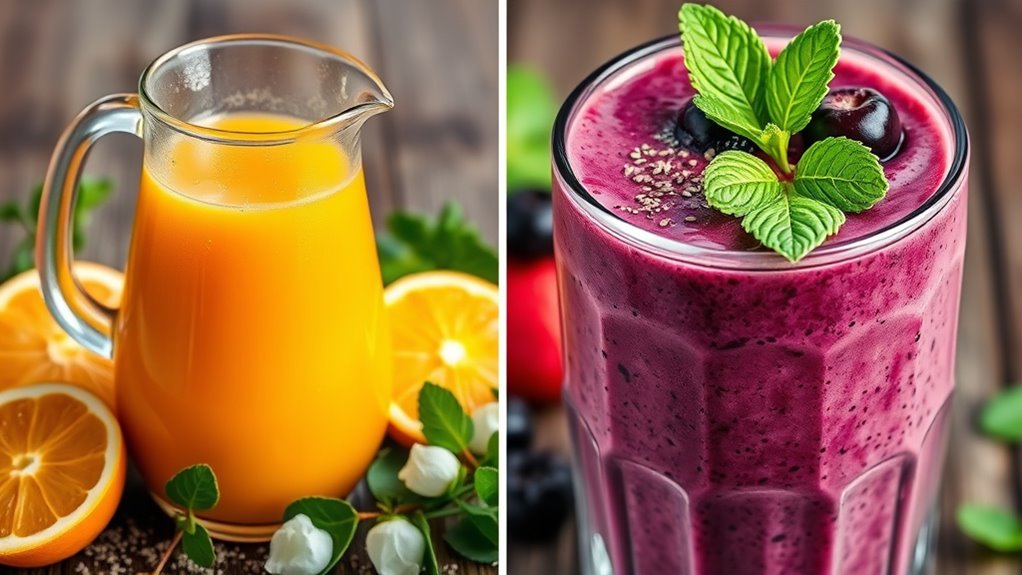
Have you ever wondered whether juices or smoothies are better for your health? The answer depends on what you’re looking to get from your drink, especially when it comes to nutritional differences. One of the main distinctions lies in their fiber content. Smoothies, made by blending whole fruits and vegetables, retain most of the fiber found in the original produce. This fiber isn’t just beneficial for digestion; it also helps you feel full longer, making smoothies a more satisfying option for those watching their appetite or trying to manage weight. Juices, on the other hand, are typically strained to remove pulp and fiber, leaving behind a liquid that’s rich in vitamins and minerals but low in dietary fiber. If fiber is a priority for you, smoothies are the better choice, as they provide that additional benefit that juices lack.
Another critical factor to contemplate is sugar levels. When you make a juice, the process concentrates the sugars from the fruits or vegetables used, often resulting in a drink with a higher sugar content per serving compared to smoothies. Since most of the fiber is removed in juices, the natural sugars are absorbed quickly into your bloodstream, which can cause a spike in blood sugar levels. This might be a concern if you’re managing diabetes or trying to limit your sugar intake. Conversely, smoothies, with their intact fiber, slow down sugar absorption, helping to stabilize blood sugar levels. The fiber acts as a buffer, preventing rapid spikes and crashes. Additionally, high-precision blending techniques can impact the nutrient retention and texture of smoothies, making them more appealing and nutritious. However, it’s worth noting that smoothies can also become calorie-dense if you add sweeteners or high-sugar ingredients like honey or fruit juices, so moderation remains key regardless of your choice.
In terms of nutritional delivery, both drinks can be healthy options if prepared thoughtfully. Juices can give you a quick boost of vitamins and antioxidants, especially if you’re pressed for time or want to maximize nutrient intake from a variety of produce. Smoothies, however, often serve as more balanced mini-meals or snacks, offering not only vitamins but also fiber and sometimes protein, depending on the ingredients you add. Ultimately, your decision should align with your health goals. If you’re looking for a quick nutrient shot and don’t mind the higher sugar content, juices fit the bill. For sustained energy, better digestion, and lower sugar impact, smoothies tend to be the more nutritious choice.
high-speed juicer for fruits and vegetables
As an affiliate, we earn on qualifying purchases.
As an affiliate, we earn on qualifying purchases.
Frequently Asked Questions
Which Is Better for Weight Loss: Juice or Smoothie?
Smoothies are better for weight loss because they keep you full longer, thanks to ingredient versatility like fiber-rich fruits and vegetables. They also allow for creative flavor combinations, making them more satisfying and less likely to cause overeating. Juices, on the other hand, often lack fiber and can spike your blood sugar. Stick with smoothies to enjoy a nutritious, filling drink that supports your weight loss goals.
Can Smoothies Replace Meals More Effectively Than Juices?
Yes, smoothies can replace meals more effectively than juices because they offer better meal satisfaction and ingredient versatility. They contain fiber and protein that help you feel full longer, making them more suitable as meal replacements. Plus, you can customize smoothies with various ingredients like fruits, vegetables, nuts, and dairy or plant-based proteins, ensuring balanced nutrition and satisfying your hunger better than juices, which lack fiber and often leave you hungry.
How Do Juice and Smoothie Calories Compare?
Imagine you make a smoothie with bananas and oats, containing 300 calories, and juice from oranges, which has 150 calories. Smoothies are typically more calorie-dense because they retain fruit fiber and include additional ingredients. Juices usually have fewer calories but lack fiber, making their calorie content lower. So, smoothies often pack more calories per serving, helping you satisfy hunger longer, while juices are lighter but less filling.
Are There Specific Health Benefits Unique to Smoothies?
You’ll notice that smoothies offer unique health benefits like increased fiber benefits, which help with digestion and satiety. Since smoothies preserve more nutrients from the whole fruits and vegetables you blend, you get a richer source of vitamins and minerals. This means better overall nutrient preservation and sustained energy. Plus, the fiber benefits support your gut health, making smoothies a smart choice for boosting your nutrition and feeling fuller longer.
Which Option Has a Higher Sugar Content Naturally?
Smoothies generally have a higher sugar content naturally because they use whole fruits, which retain their fruit sugars and natural sweetness. When you blend fruits into a smoothie, you keep the fiber, but the natural sweetness remains concentrated. Juices, on the other hand, often have less sugar because they’re filtered, removing some of the fruit sugars and fiber. So, if you’re watching sugar intake, smoothies tend to be sweeter naturally.
Conclusion
Choosing between juices and smoothies is like picking between a swift breeze and a gentle wave—both invigorating, yet different in their benefits. Juices deliver concentrated nutrients quickly, while smoothies offer fiber and sustained energy. Knowing your goals helps you decide which to enjoy. So, whether you prefer the clarity of a crisp breeze or the comforting embrace of a gentle wave, both can revitalize your body—just like nature’s own symphony of health.
Halloween Picks
halloween
As an affiliate, we earn on qualifying purchases.