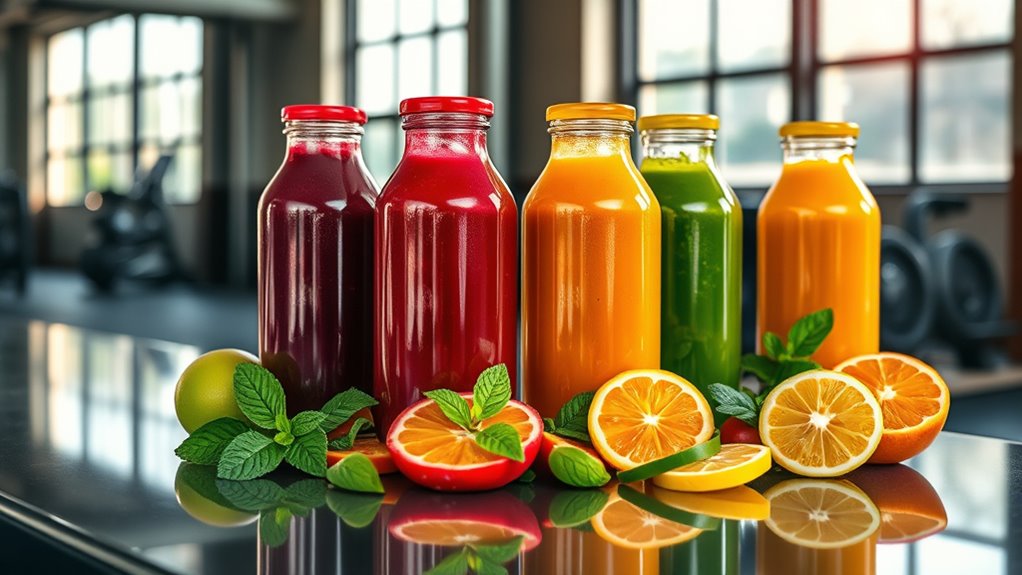

To boost your recovery and energy, incorporate nutrient-rich juices into your routine. Opt for fresh, cold-pressed options with ingredients like berries, citrus, spinach, and cucumber. These provide essential electrolytes, antioxidants, and natural sugars that support hydration, reduce inflammation, and fight oxidative stress. Use them before, during, or after workouts to enhance performance and recovery. Keep exploring for more tips on choosing the best juices to optimize your athletic results.
Key Takeaways
- Juices provide natural sugars and electrolytes for quick energy and efficient hydration during and after workouts.
- Rich in antioxidants from berries and greens, they help reduce oxidative stress and support faster recovery.
- Hydrating juices maintain fluid balance, aiding muscle function, joint health, and endurance.
- Ingredients like citrus and ginger offer anti-inflammatory benefits, reducing muscle soreness and inflammation.
- Using fresh, cold-pressed juices enhances nutrient intake, promoting overall athletic performance and cellular health.

Juices can be a powerful addition to an athlete’s nutrition plan, providing essential nutrients and hydration needed for ideal performance and recovery. As an athlete, you understand how crucial staying hydrated and fueling your body with the right nutrients is. Juices, especially when incorporated thoughtfully, can help you optimize both. Hydration strategies are a key focus, and fresh juices can contribute substantially to maintaining fluid balance throughout your training sessions and competitions. Unlike plain water, juices contain natural sugars and electrolytes that support quicker absorption and help replenish what you lose through sweat. This makes them an excellent choice for pre-, during, and post-workout hydration. The natural sugars in fruit and vegetable juices provide a quick source of energy, preventing dips in blood sugar levels that can impair performance. Furthermore, their high water content helps you stay hydrated, which is essential for muscle function, joint health, and overall endurance. Including Hydration strategies in your routine can further enhance your athletic performance and recovery.
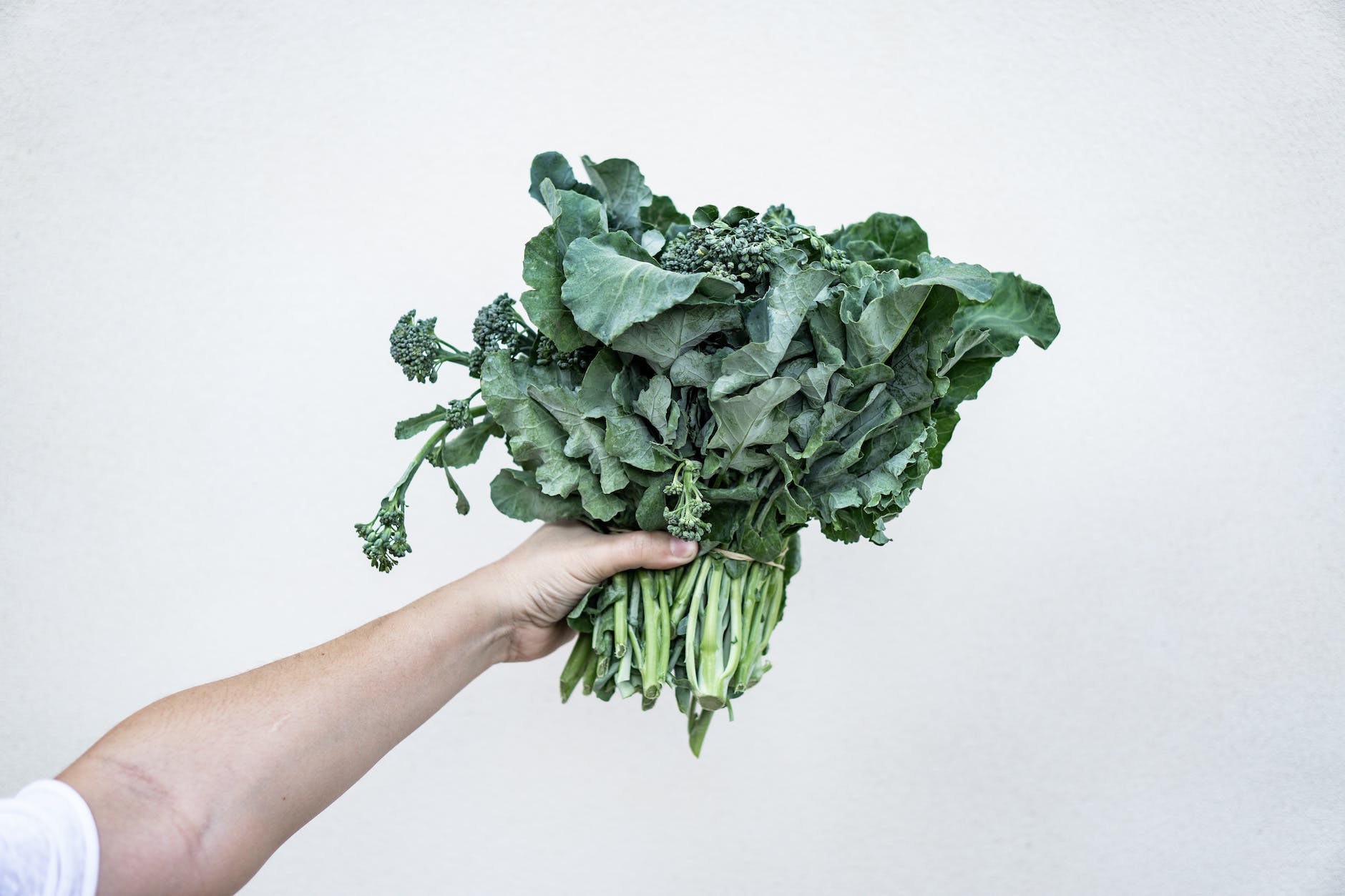
Beyond hydration, juices offer antioxidant benefits that are especially valuable for athletes. Intense physical activity generates oxidative stress in your body, leading to muscle fatigue and delayed recovery. Juices rich in antioxidants—like those made from berries, citrus fruits, and dark leafy greens—help combat this stress by neutralizing free radicals. This not only supports quicker recovery but also reduces inflammation and lowers the risk of injury over time. Incorporating antioxidant-rich juices into your routine can bolster your immune system, keeping you healthier during heavy training periods. They also promote healthier skin and reduce oxidative damage to cells, which is essential for long-term athletic performance. When choosing juices, focus on fresh, minimally processed options. Cold-pressed juices retain more nutrients and antioxidants compared to those that are heat-treated or heavily preserved. Combining ingredients like blueberries, oranges, spinach, and cucumber can maximize both hydration and antioxidant benefits. You can also experiment with adding a splash of lemon or a pinch of ginger for additional anti-inflammatory properties. Drinking these juices in moderation complements your overall nutrition plan, which should include a balanced intake of protein, carbs, and healthy fats.
Frequently Asked Questions
What Are the Best Juices for Quick Muscle Recovery?
You should choose juices rich in fruit antioxidants, like cherry, tart cherry, or blueberry, to support quick muscle recovery. These antioxidants help reduce inflammation and muscle soreness. Choose for juices that promote efficient juice digestion, ensuring your body absorbs nutrients quickly. Combining these with ingredients like ginger or turmeric can further enhance recovery by reducing inflammation and speeding up healing. Drink these after workouts for best muscle repair.
How Much Juice Should Athletes Consume Daily?
You should aim for about 4 to 8 ounces of juice daily, following proper juice portioning and daily intake guidelines. It’s best to balance juice consumption with whole fruits and vegetables to avoid excess sugar. Listen to your body, and adjust your intake based on your activity level and recovery needs. Staying within recommended portions helps you maximize energy and recovery without overdoing it.
Are There Any Juices to Avoid Before Competition?
You should avoid juices with high acidity and sugar content before competition, as they can cause stomach discomfort and energy crashes. Stay away from citrus juices or fruit blends that are too acidic, and opt for low-sugar, less acidic options like diluted berry or vegetable juices. These choices help maintain your energy levels and prevent gastrointestinal issues, ensuring you’re fully prepared and focused when it counts.
Can Juices Replace Traditional Sports Drinks Effectively?
Juices can be your lightning bolt, but they might not replace traditional sports drinks entirely. While rich in fruit sugars for quick energy, they often lack the electrolyte balance needed for sustained hydration. Think of juices as a spark, fueling you briefly, but sports drinks serve as the steady current, replenishing electrolytes lost through sweat. For ideal performance, combine both to harness their strengths during your workout.
Do Juice Ingredients Affect Hydration Levels Differently?
Yes, juice ingredients do affect hydration levels differently. You notice that electrolytes in ingredients like coconut water help maintain your electrolyte balance better, aiding hydration. However, high sugar content in many juices can hinder rehydration by drawing water into your gut, delaying absorption. So, opt for juices with natural electrolytes and moderate sugar to optimize hydration, especially during intense activity or recovery.
Conclusion
So, next time you hit the gym or push your limits, reach for these energizing juices. They help replenish lost nutrients and boost your recovery, giving you that extra edge. Some might think juices lack enough protein, but combining them with a protein-rich snack can solve that. Don’t underestimate the power of a natural, revitalizing drink—your body will thank you for it. Stay energized, recover faster, and keep crushing your goals!