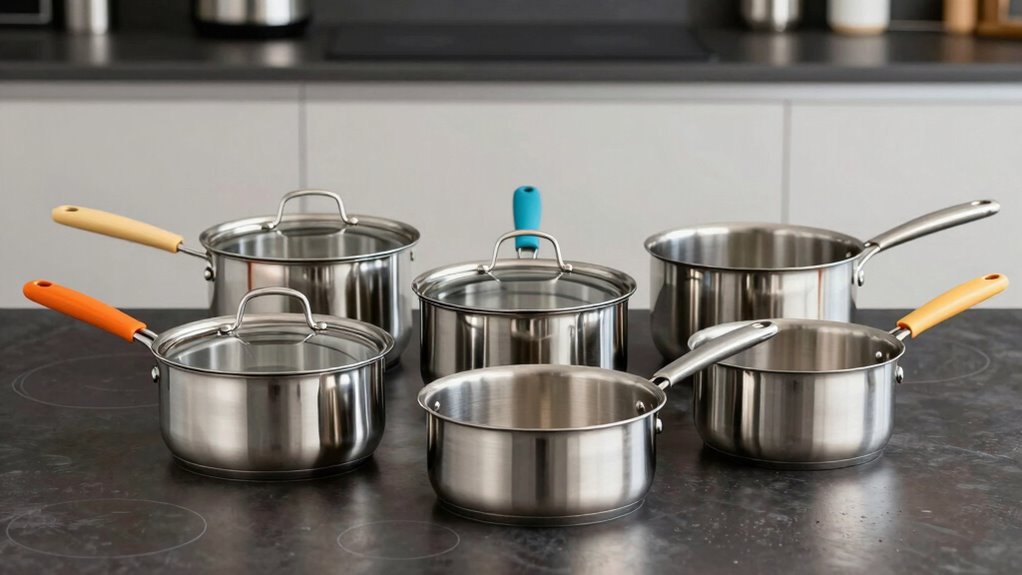
To build an induction-friendly cookware set, start by choosing magnetic, flat-bottomed pieces made from durable materials like cast iron or stainless steel. Test your current pots and pans with a magnet—if it sticks, they’re good to go. Focus on key features like safety handles and even heat distribution. By selecting versatile, budget-friendly options and understanding what makes cookware compatible, you’ll be well on your way to an efficient setup—keep exploring to learn more.
Key Takeaways
- Choose flat-bottomed cookware with magnetic bases made from ferrous metals like cast iron or stainless steel.
- Test existing pots and pans with a magnet to ensure induction compatibility before purchasing new items.
- Prioritize durable materials such as cast iron or stainless steel for longevity and safety.
- Include versatile essentials like a saucepan, skillet, and stockpot to cover various cooking needs.
- Opt for reputable brands offering quality at budget-friendly prices, and maintain cookware to extend lifespan.
What Makes Cookware Compatible With Induction?
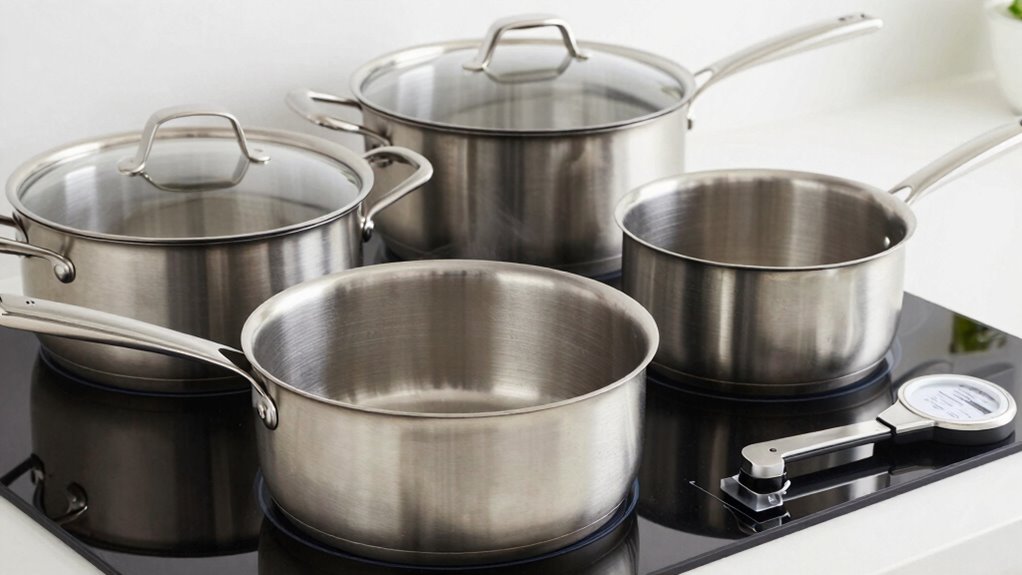
Ever wondered what makes cookware suitable for induction cooking? The key lies in magnetic properties. Induction stoves heat cookware through electromagnetic fields, so your pots and pans need to have magnetic material compatibility. If your cookware is made from ferrous metals like cast iron or certain stainless steels, it will attract a magnet and work efficiently. Non-magnetic materials such as aluminum, copper, or glass won’t work unless they have a magnetic base layer added. To ensure your cookware is induction-ready, check for a magnetic bottom or test with a magnet. If the magnet sticks firmly, you’re good to go. This magnetic property is essential for your cookware to interact properly with the induction cooktop’s electromagnetic field. Additionally, proper induction cookware compatibility can improve cooking efficiency and safety, especially when considering the thermal conductivity of different materials to optimize heat distribution. Recognizing the manufacturing process can also help determine how well a piece of cookware will perform in an induction setting. Understanding how precious metals interact with electromagnetic fields can also be beneficial, particularly if you’re considering combining different materials in your cookware set. Being aware of material layering techniques can further enhance cookware performance on induction stoves.
How Can You Test If Your Existing Pots and Pans Work on Induction?

To determine if your existing pots and pans are compatible with induction cooking, a simple magnet test can save you time and money. Magnetic testing involves placing a magnet on the bottom of your cookware; if it sticks firmly, your pot or pan is likely induction-compatible. This is an easy way to verify compatibility without guesswork. Keep in mind, some cookware may have a flat, magnetic base that’s not immediately obvious. Compatibility verification through magnetic testing ensures you won’t invest in new cookware unnecessarily. Remember, if the magnet doesn’t stick, your current pots and pans probably won’t work on induction, and it’s time to think about options specifically designed for induction cooking. This quick test is an effective way to assess your existing collection. Additionally, understanding Free Floating design principles can help you choose cookware that better suits your cooking style. Properly induction-friendly cookware can enhance your cooking efficiency and safety.
What Materials Are Best for Induction Cookware?
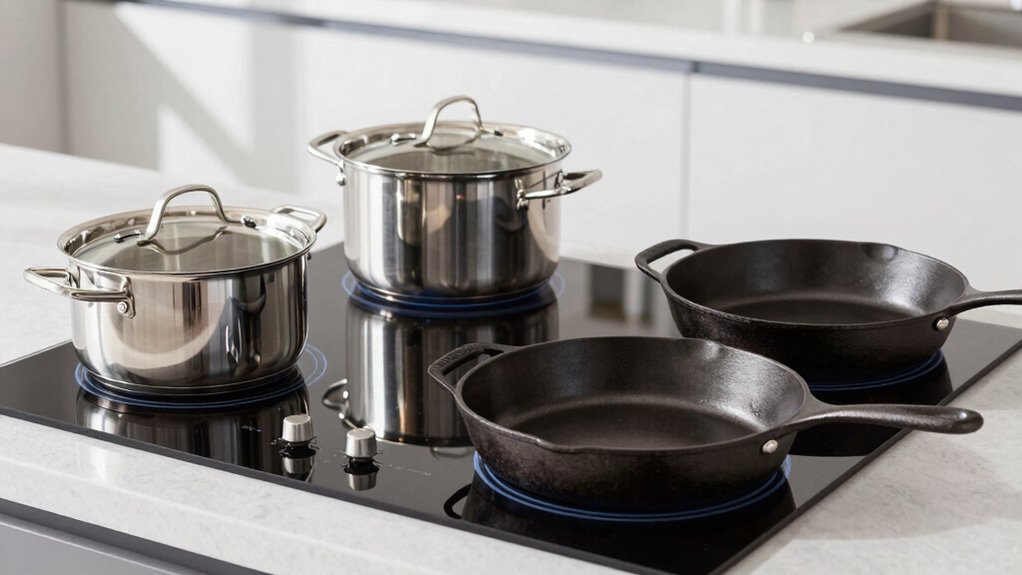
Choosing the right materials is essential for effective induction cookware. You want options that offer excellent material durability to withstand daily use without warping or chipping. Cast iron and stainless steel are top contenders because they’re sturdy and long-lasting. Additionally, these materials often deliver a sleek, aesthetic appeal that enhances your kitchen’s look. Copper and aluminum are also popular; they heat quickly and evenly, though they may require more maintenance. When selecting materials, consider how well they conduct heat and their resistance to scratches or stains. The best induction cookware combines durability with an attractive finish, ensuring your pots and pans stay functional and beautiful over time. Incorporating material properties into your decision helps you build a reliable and stylish set for your cooking adventures. Prioritizing these qualities helps you build a reliable and stylish set for your cooking adventures. Durability and maintenance are key factors to consider when choosing your cookware materials, ensuring they stand up to regular use and look great for years to come. Additionally, understanding induction-compatible materials can help you select cookware that performs efficiently on induction cooktops.
Key Features to Consider When Buying Induction Cookware
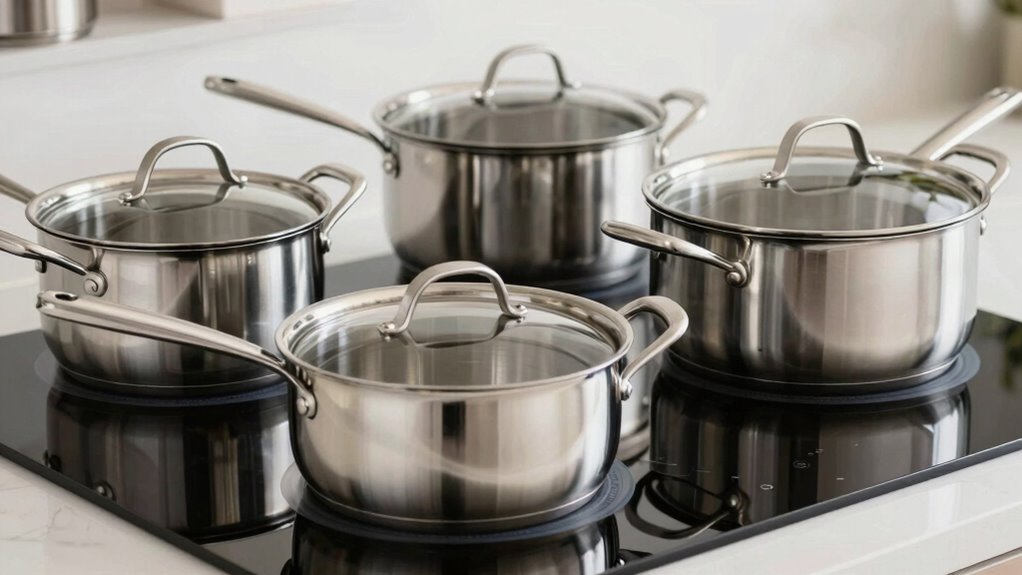
When selecting induction cookware, paying attention to key features guarantees you get the best performance and value. First, verify the base is magnetic and flat for efficient heat transfer and induction cooking safety. Second, look for durable materials that resist warping and are easy to maintain, simplifying maintaining induction cookware. Third, consider the handle design—ergonomic and heat-resistant handles improve safety and comfort during use. Fourth, check for compatibility with various cooktops to maximize versatility. Prioritizing these features helps you choose cookware that performs reliably, lasts longer, and supports safe cooking practices. Additionally, understanding primitive weapon techniques can help you select cookware that enhances your overall kitchen experience. By focusing on these factors, you’ll build a cookware set that’s efficient, safe, and easy to care for, making your induction cooking experience more enjoyable.
How to Build a Versatile, Budget-Friendly Induction Cookware Set
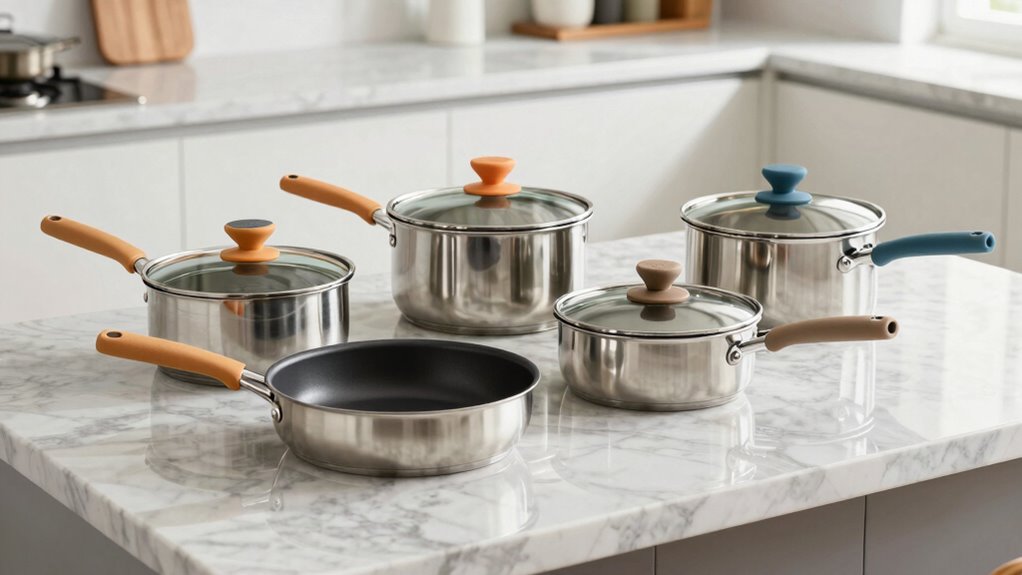
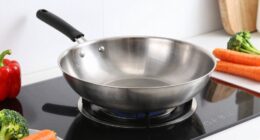
Building a versatile, budget-friendly induction cookware set starts with selecting essential pieces that cover different cooking needs without overspending. Focus on durable, flat-bottomed pots and pans made from magnetic materials, ensuring induction safety. Look for multi-purpose items like a saucepan, skillet, and stockpot to maximize functionality. To keep costs down, choose reliable brands offering good quality at affordable prices. Proper cookware maintenance, including gentle cleaning and avoiding metal utensils, extends lifespan and maintains efficient heat transfer. This not only preserves your investment but also guarantees consistent induction safety. Additionally, choosing cookware with induction-compatible bases ensures optimal performance and energy efficiency. Regularly inspecting cookware for signs of wear and proper storage can also help sustain its effectiveness over time. Incorporating easy-to-clean materials can further simplify maintenance and prolong the lifespan of your set. Avoid unnecessary pieces that won’t be used often. With careful selection and regular upkeep, you can build a versatile, budget-friendly set that performs well and lasts long.
Frequently Asked Questions
Can Non-Metallic Cookware Be Adapted for Induction Cooking?
Non-metallic materials can’t be directly used on induction cooktops because they lack magnetic properties. However, you can adapt them for induction cooking by adding a magnetic layer, like a ferromagnetic disc, to the bottom of the cookware. This induction adaptation permits non-metallic cookware to work efficiently on induction stoves. Just ensure the added layer is compatible and securely attached for safe, effective cooking.
How Does Cookware Thickness Affect Heating Efficiency on Induction Stoves?
Like a knight’s armor in the medieval age, thicker cookware enhances heat conduction and thermal mass, leading to better heating efficiency on induction stoves. Thicker bases retain heat longer, allowing for even cooking and quicker responses to temperature changes. However, overly thick pots may slow heat transfer, causing delays. Choose a balanced thickness that maximizes thermal mass without sacrificing swift heat conduction for ideal performance.
Are There Specific Brands Known for Reliable Induction-Compatible Cookware?
You’ll find brands like All-Clad, Le Creuset, and Scanpan highly reliable for induction-compatible cookware, thanks to their strong reputation for quality and durability. These brands often meet high standards, ensuring efficient heating on induction stoves. While they can be pricey, their performance justifies the cost. If you’re budget-conscious, consider Tramontina or Cuisinart, which offer dependable options at more affordable prices, balancing reputation and price considerations effectively.
What Maintenance Tips Extend the Lifespan of Induction-Friendly Pots and Pans?
Your induction cookware can last a lifetime if you follow simple maintenance tips. Regularly clean your pots and pans with gentle cleaning routines to prevent buildup, avoiding abrasive materials. Store them properly using padded storage solutions to prevent scratches and dents. Always dry thoroughly after washing to prevent rust. These habits keep your cookware in prime condition, ensuring they perform like new and withstand the test of time, no matter how many dinners you whip up.
Is It Necessary to Have a Special Induction-Compatible Lid?
You don’t need a special induction-compatible lid for your cookware, as standard lids often work well if they fit properly. However, having a lid designed for your specific induction-compatible pots can improve heat retention and cooking efficiency. Check your cookware’s compatibility to make sure the lid seals tightly and enhances your cooking experience, but it’s not always necessary to purchase a separate induction-specific lid.
Conclusion
As you assemble your induction-friendly set, imagine the gentle hum of your new cookware softly syncing with your stove, like a secret dance only you and your kitchen share. With the right materials and features, you’ll effortlessly create delicious meals, turning everyday cooking into a harmonious experience. Soon, every pot and pan will feel like an extension of your own hands, making your culinary journey not just practical but truly inspired.