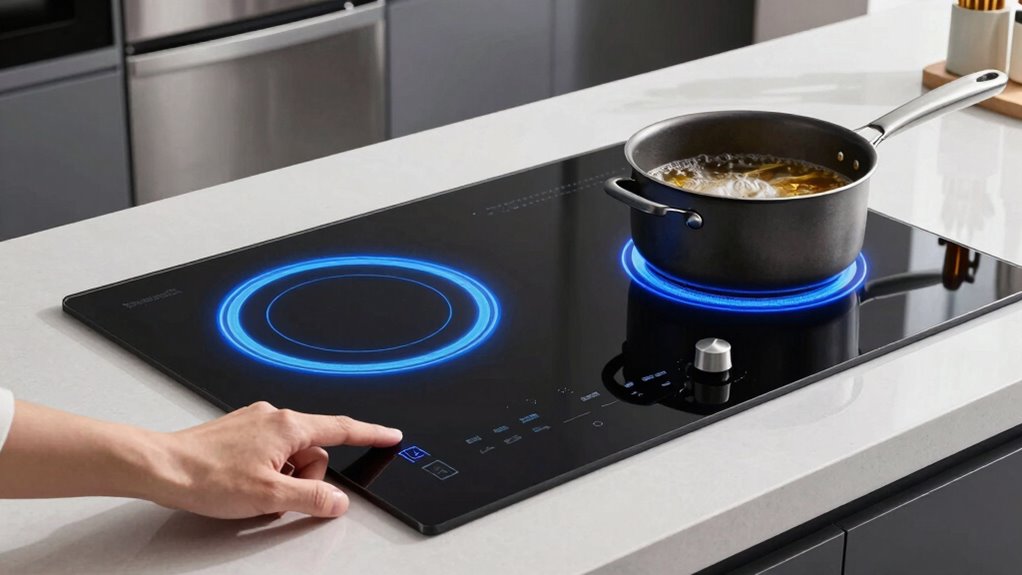
Induction cooking uses magnetic fields to heat cookware directly, making it fast, precise, and energy-efficient. It only works with ferromagnetic pots and pans like cast iron or magnetic steel—if a magnet sticks to your cookware, it’s compatible. Non-magnetic materials like aluminum or copper won’t work unless layered with magnetic metals. While safe and easy to clean, some recipes or techniques may not suit induction’s quick heat changes. To explore these details and learn how to optimize your setup, keep going.

Get kitchen staples and gadgets delivered free with Prime
- Fast, free delivery on millions of items
- Prime Video, Amazon Music and more included
- Member-only deals all year
Key Takeaways
- Induction cooking heats cookware directly via a magnetic field, offering fast, precise, and energy-efficient heat transfer.
- Works only with ferromagnetic cookware like cast iron and magnetic stainless steel; non-magnetic materials won’t heat properly.
- Benefits include quick heating, safety features, and easy cleaning, but it can produce noise and requires compatible cookware.
- Limitations involve uneven heating with unsuitable pots, difficulty adjusting delicate temperatures, and higher initial cookware costs.
- Safety features like auto shut-off and pan detection help prevent accidents, but electrical issues require professional troubleshooting.
Products Worth Considering

Le Creuset Enamemed Cast Iron Oval Dutch Oven, 5 qt., White/Crucible

Cuisinart Stainless Steel Bread Maker, 12 Programs, 2 lb Capacity

Le Creuset Signature Enameled Cast Iron Round Dutch Oven, 5.5 qt, Deep Teal
As an affiliate, we earn on qualifying purchases.
How Does Induction Cooking Work and What Makes It Different?
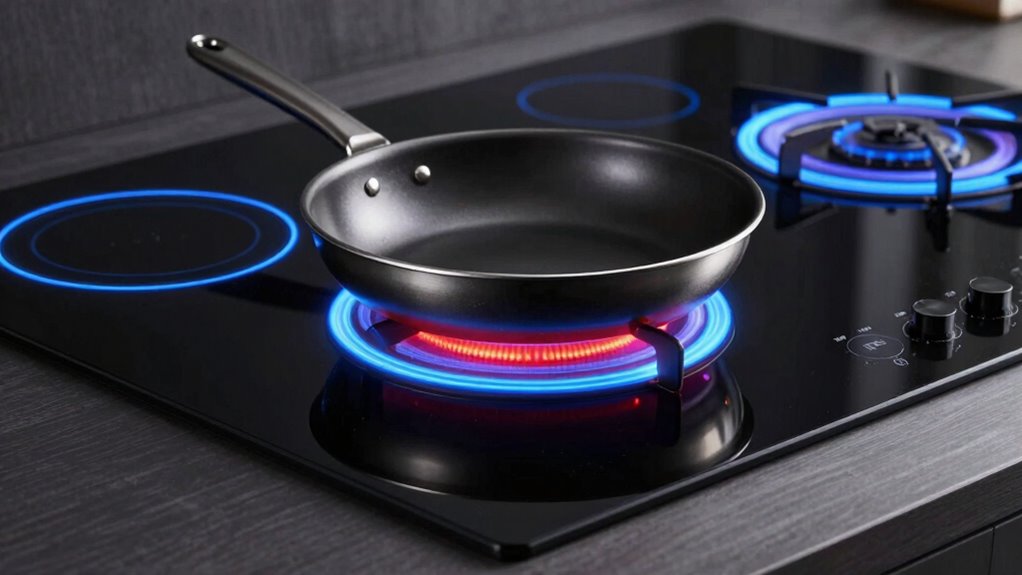
Have you ever wondered what makes induction cooking so efficient and different from traditional methods? It all comes down to how it uses a magnetic field to generate heat directly in your cookware. When you turn on an induction stove, an electromagnetic coil beneath the surface creates a rapidly changing magnetic field. This magnetic field interacts with ferromagnetic cookware, producing electric currents called eddy currents. These currents transfer energy directly into the cookware, rapidly heating it through a process called heat transfer. Unlike traditional stoves that heat the air or a coil first, induction technology heats your pots and pans directly, making the process faster and more energy-efficient. This targeted heat transfer minimizes wasted energy and allows for precise temperature control. Understanding electromagnetic principles is key to appreciating just how efficient and responsive induction cooking truly is. Additionally, the magnetic field generated by induction stoves can be precisely controlled, enabling quick adjustments in cooking temperature.
Which Cookware Works With Induction Stoves?
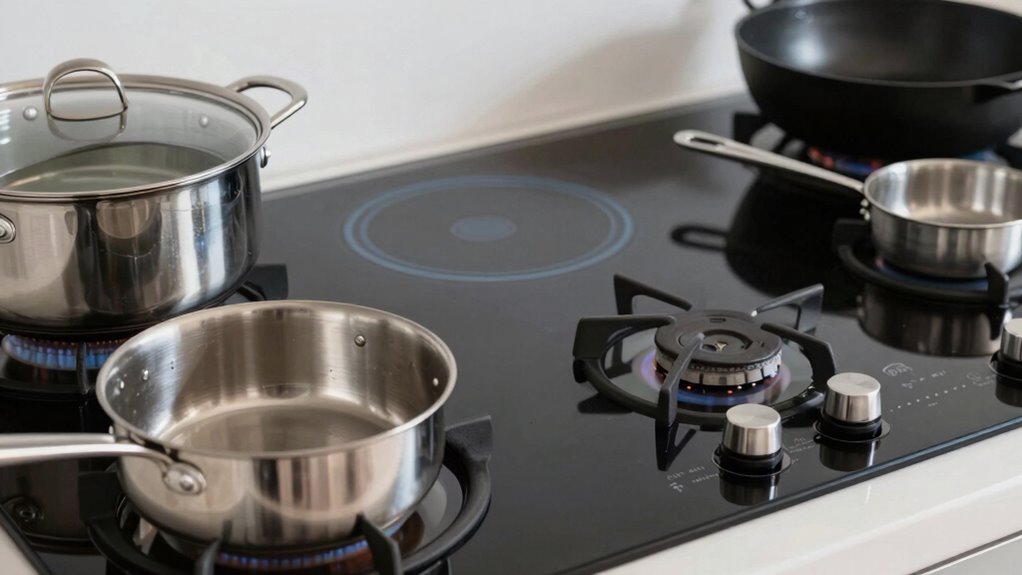
Since induction cooking heats cookware directly through magnetic fields, only certain types of pots and pans can effectively work with this technology. To confirm cookware compatibility, look for items with induction features such as a magnetic base. Usually, cookware made from ferrous metals works best, while glass, aluminum, or copper alone won’t activate induction stoves unless they have a magnetic layer. Here’s a quick guide:
| Suitable Cookware | Unsuitable Cookware |
|---|---|
| Cast iron | Glass |
| Magnetic stainless steel | Aluminum |
| Enamel-coated steel | Copper |
Choosing cookware with proper induction features guarantees efficient heating and peak performance on your induction stove. Always verify magnetic compatibility before purchasing. Additionally, understanding induction compatibility can help you select the most effective cookware for your needs. Ensuring that the cookware’s material composition aligns with induction requirements is essential for optimal cooking results. Moreover, awareness of layer construction can improve your selection process by confirming that the cookware’s layers support magnetic conduction. Being aware of magnetic properties can also help you quickly identify suitable cookware options. Recognizing heat transfer mechanisms is crucial for understanding how different materials perform on induction stoves.
How Can You Tell If Your Existing Cookware Is Induction-Compatible?
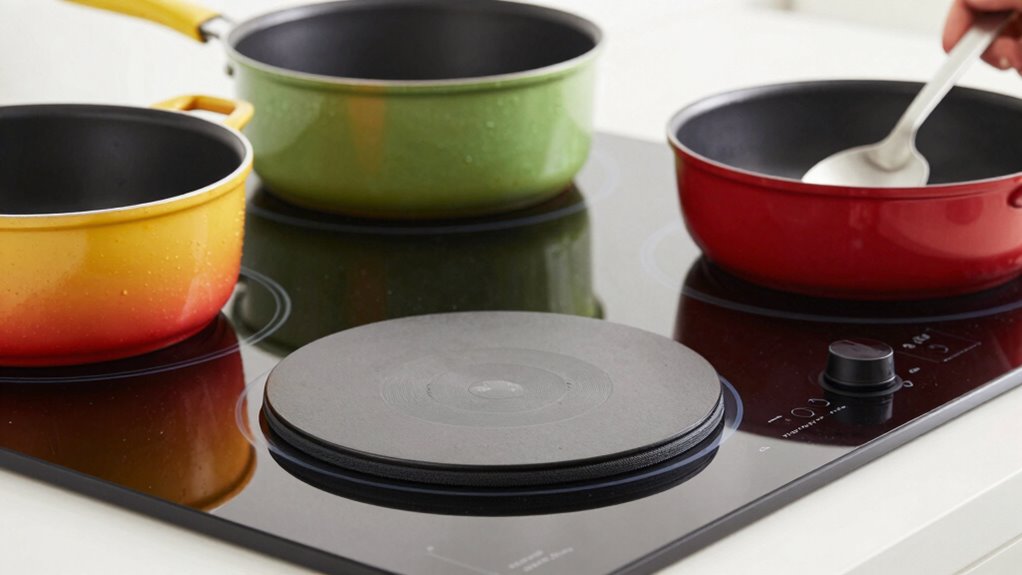
Wondering if your current cookware works with induction stoves? The key is understanding cookware compatibility and how material detection works. To check, try placing a magnet on the bottom of your pots and pans; if it sticks firmly, your cookware is likely induction-compatible. Many induction-ready pieces are made from ferrous metals like cast iron or magnetic stainless steel. Non-magnetic materials such as aluminum, copper, or glass won’t work unless they have a special induction-compatible base added. You can also perform a simple test: turn on the stove and see if the cookware heats up. If it does, your cookware is suitable. Remember, material detection is essential for ensuring your cookware will work efficiently and safely on an induction cooktop. Additionally, induction technology showcases advanced technology and design, similar to how induction cooktops incorporate sophisticated features for optimized performance. Understanding magnetic properties of cookware helps in making informed choices for your kitchen. Recognizing how ferrous metals interact with magnetic fields can further assist in selecting the right cookware for induction cooking.
What Are the Benefits of Using an Induction Cooktop?
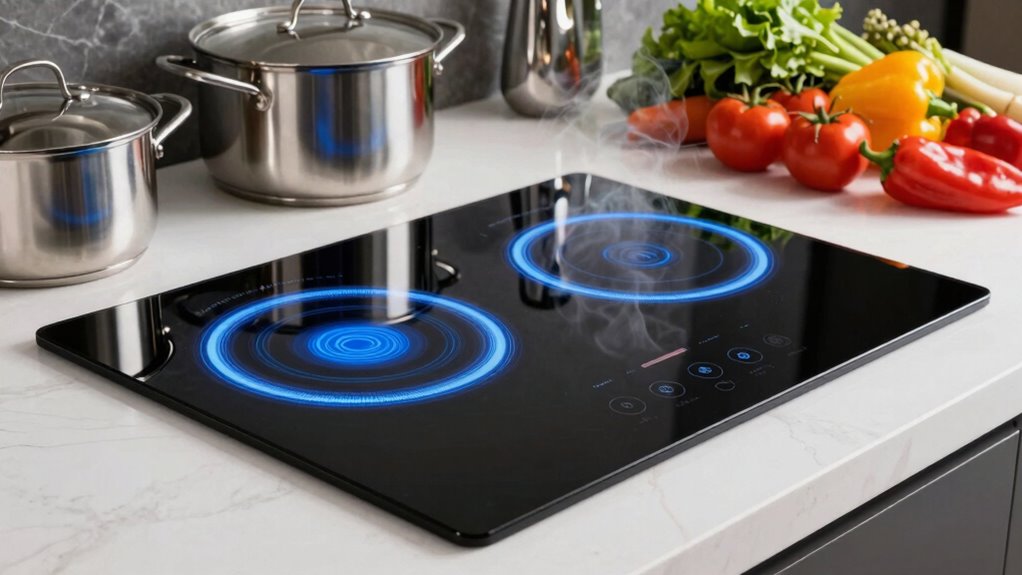
Induction cooktops offer a modern, efficient way to prepare meals, making them a popular choice for many kitchens. They heat quickly, giving you precise control over cooking temperatures. This efficiency can save you time and energy. Plus, induction myths often suggest they’re unsafe or incompatible with certain cookware, but that’s not true. Here are some benefits: 1. Faster heating and cooling, reducing cooking time 2. Safer surfaces, since only the pan heats up 3. Easy cleanup due to flat, smooth surfaces Additionally, cookware myths often suggest you need special pots, but many existing pans work if they’re magnetic. Proper cookware compatibility is essential for optimal performance. Understanding induction technology can help you make the most of its advantages. Learning about induction safety** can dispel common concerns and help you feel confident using this technology. When choosing cookware, it’s important to consider induction-compatible materials, which directly affects how well the cooktop functions. Gaining a comprehensive understanding of induction** can enhance your cooking experience and ensure safety. Overall, induction cooking combines speed, safety, and convenience, making it a smart choice for your kitchen.
What Are the Common Challenges or Limitations of Induction Cooking?
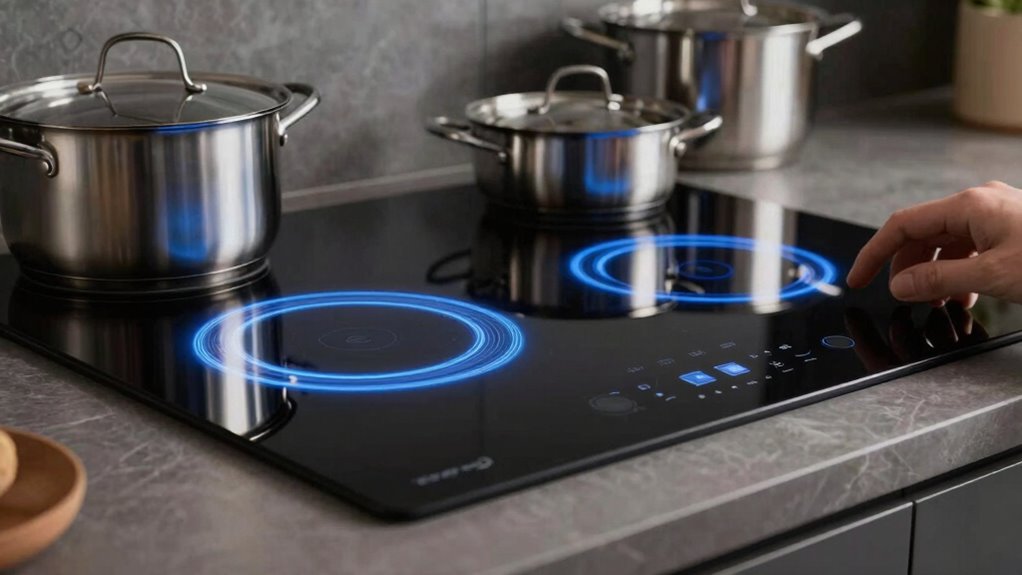
While induction cooktops offer many advantages, they also come with some challenges that you should consider. One primary induction limitation is cookware compatibility; not all pots and pans work on induction, especially those made of non-magnetic materials like aluminum or glass. You’ll need ferrous-based cookware for the cooktop to heat properly. Additionally, induction cooktops can be sensitive to cookware size and placement, which may lead to uneven heating or failure to activate. Some users also find that induction units produce a buzzing or humming sound during operation. Furthermore, the initial cost of induction-compatible cookware can be higher. These limitations mean you’ll need to invest in suitable cookware and be mindful of the cooktop’s operational requirements to get the best results. Also, regulatory standards influence the safety and efficiency features of induction cooktops, impacting their overall performance.
How Do You Troubleshoot Typical Induction Cooking Problems?
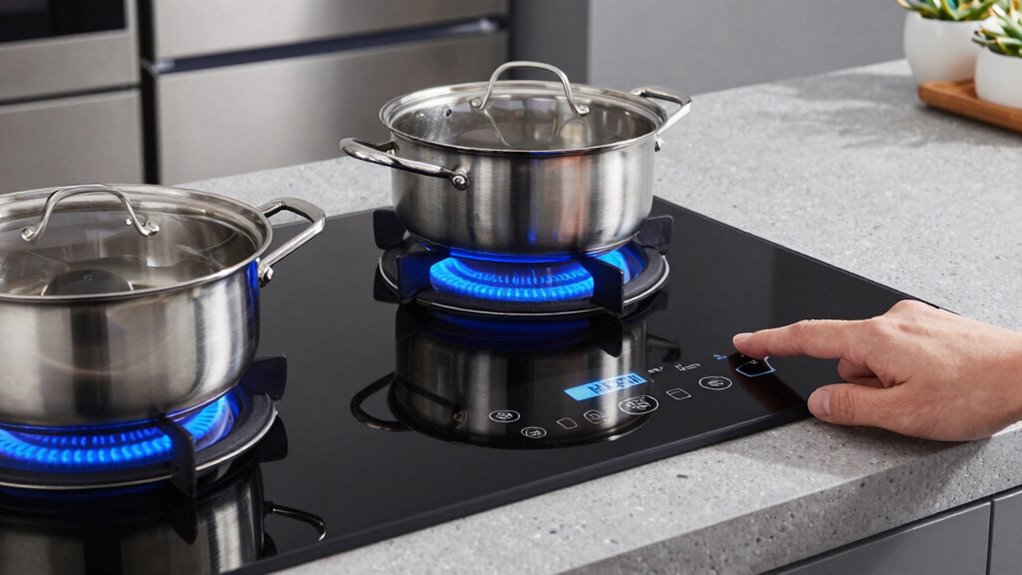
When induction cooktops encounter problems, troubleshooting begins with identifying the specific issue. First, check if the induction safety features are active—sometimes, a safety lock or child lock may prevent operation. Second, ensure your cookware is compatible; induction requires ferrous material, so use a magnet to test it. Third, examine the cookware for damage or warping, which can disrupt heat transfer. If the cooktop isn’t heating, verify proper cookware placement and clean the surface to remove debris. Also, confirm that the power source is stable and the circuit isn’t overloaded. Additionally, understanding professional services can help you make informed decisions if you’re considering alternative investments for your financial future. Proper maintenance can prevent many common issues and extend the lifespan of your appliance. Regularly updating your smart home system settings can also optimize performance and troubleshoot integration problems. Recognizing narcissistic traits in user interactions can sometimes help in managing troubleshooting patience and expectations. By addressing these common issues, you can quickly restore your induction cooking functionality and maintain safety. Troubleshooting effectively helps prevent unnecessary repairs and keeps your cooking experience smooth.
Why Do Some Recipes or Techniques Not Work Well on Induction?
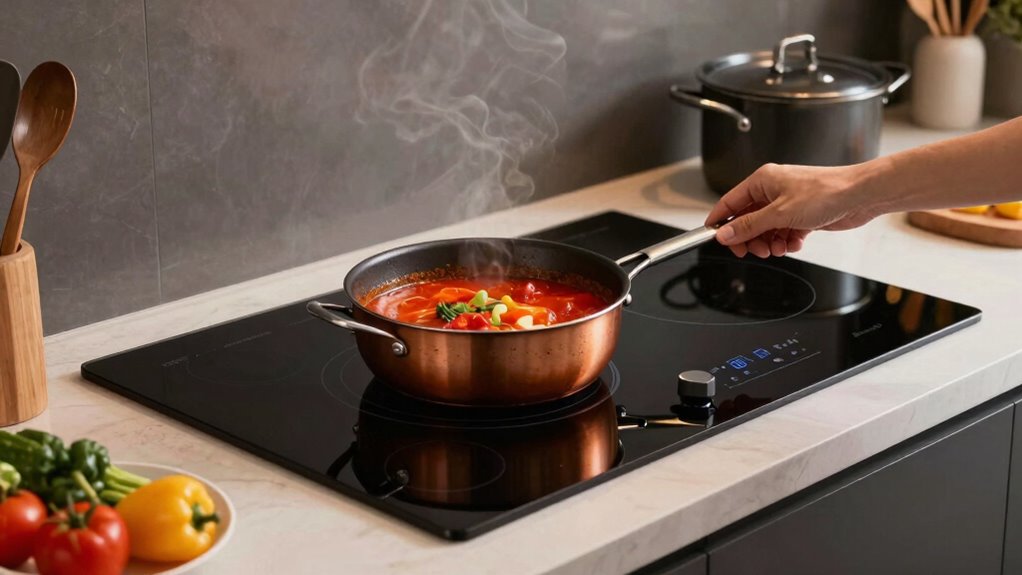
Certain recipes or techniques may not turn out as expected on induction cooktops because of how they rely on specific heat control or cookware properties that don’t translate well to induction cooking. Some recipe limitations stem from the fact that induction heats cookware directly, making slow, gradual adjustments difficult for delicate sauces or simmering techniques. Additionally, technique restrictions can occur because induction requires compatible cookware—if your pots and pans aren’t ferromagnetic, they won’t heat properly. Recipes that depend on traditional oven or open flame methods, like baking or charring, may also not work well. These limitations mean you might need to adapt your cooking approach or choose recipes suited for induction to achieve the best results. Understanding cookware compatibility can help you select the right tools for successful induction cooking. Moreover, mastering heat distribution is crucial because induction cooktops can heat unevenly if the cookware isn’t designed for even heat conduction. Recognizing these market trends in kitchen appliances can also guide you toward choosing the most effective induction equipment for your needs.
Is Induction Cooking Safe? Key Safety Features Explained
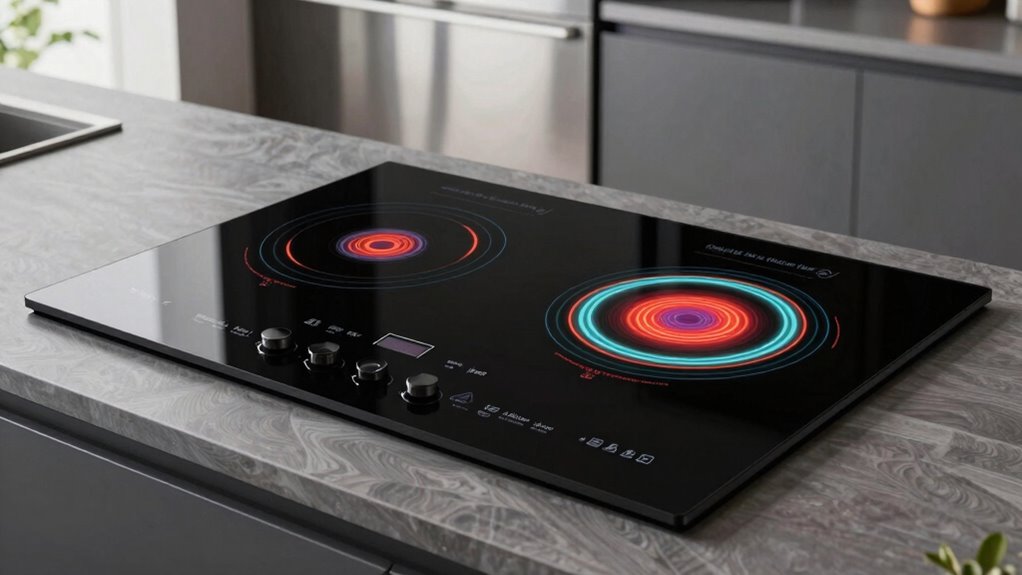
Induction cooktops are designed with safety features that make them a popular choice for many kitchens. Their induction safety measures help prevent accidents and ensure peace of mind. Here are three key safety features you should know:
- Auto shut-off: The cooktop turns off automatically if it detects no cookware or if it overheats, reducing fire risk.
- Pan detection: The surface only heats when compatible cookware is present, preventing burns and energy waste.
- Cool-to-touch surface: Since heat is generated directly in the cookware, the cooktop stays cool, minimizing burn hazards.
These safety features make induction safety a priority, offering a safer cooking experience without sacrificing efficiency or convenience.
Should You Switch to Induction? Factors to Consider Before Making the Change
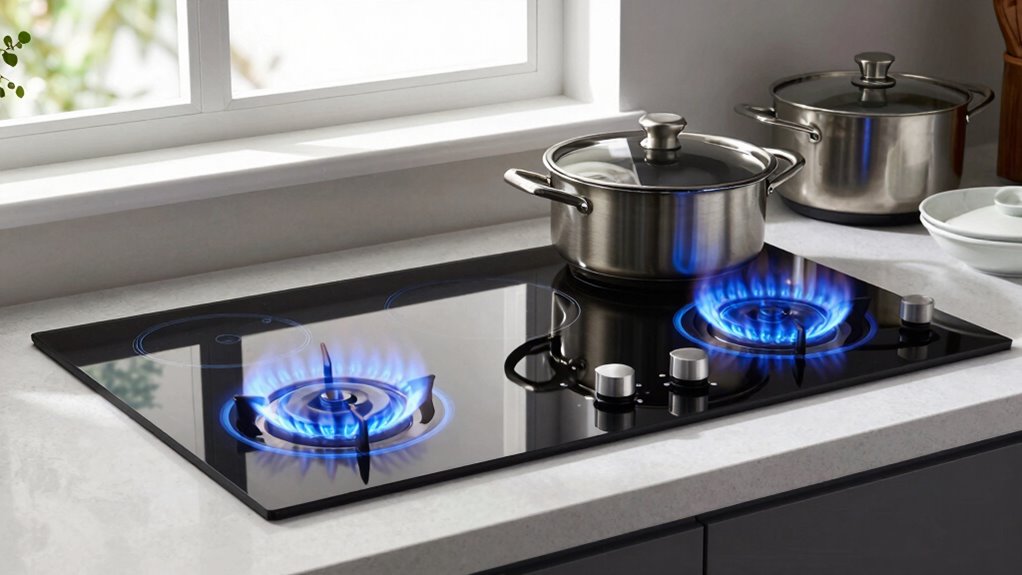
Before switching to induction, consider how its energy efficiency can save you money and reduce waste. You’ll also want to check if your current cookware is compatible, as induction requires magnetic pots and pans. Think about these factors carefully to decide if the switch aligns with your cooking needs and lifestyle.
Energy Efficiency Benefits
Switching to induction cooking can considerably boost your kitchen’s energy efficiency. Induction stoves use electromagnetic fields to directly heat cookware, reducing energy waste. This results in notable energy savings and lower power consumption compared to traditional methods. To maximize benefits, consider these factors:
- Faster Heating: Induction heats pots quickly, saving time and energy during cooking.
- Precise Control: Better temperature control minimizes energy use by preventing overheating.
- Reduced Heat Loss: Since heat is generated directly in the cookware, less energy escapes into the environment.
These advantages make induction an attractive option for efficiency-conscious cooks. By choosing induction, you can lower your energy bills while enjoying faster, more precise cooking.
Compatibility and Compatibility Concerns
While induction cooktops offer many benefits, compatibility remains a key consideration before making the switch. You need to verify your cookware is compatible with induction technology, which means it must have a ferromagnetic base. Not all cookware offers the same durability; some materials, like cast iron and stainless steel, tend to last longer, ensuring good cookware durability. Additionally, glass compatibility is important—your cookware’s surface should be flat and smooth to maximize contact and efficiency. If your current pots and pans aren’t compatible, you might need to invest in new cookware, which adds to the overall cost. Evaluating these factors helps you determine whether switching to induction cooking makes sense for your kitchen setup and lifestyle.
When Should You Seek Professional Help for Induction Issues?
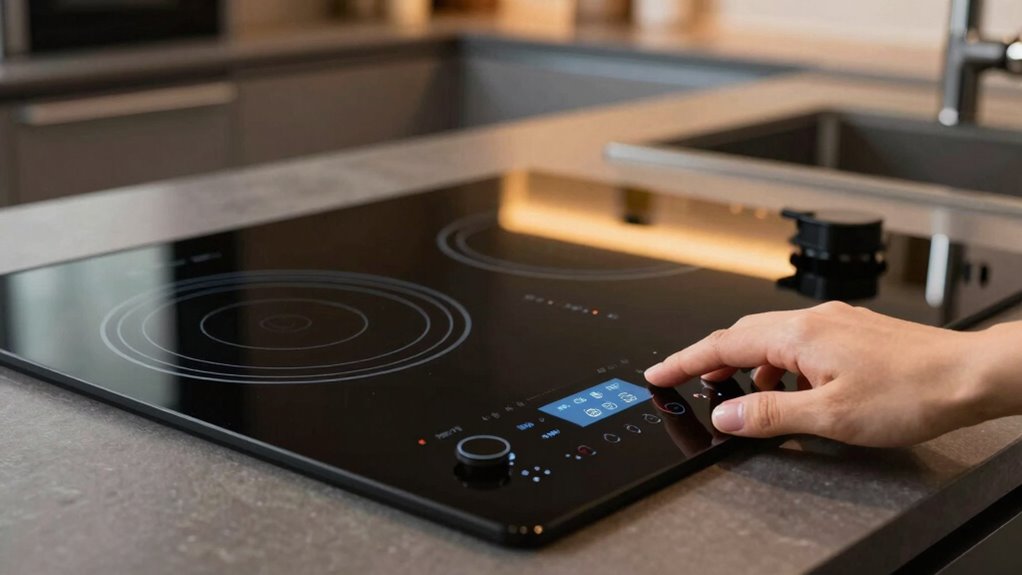
If your induction cooktop isn’t functioning correctly, it’s time to call a technician. Look out for signs like frequent outages, sparks, or burning smells, which indicate electrical problems. Addressing these issues promptly can prevent further damage and guarantee safe operation.
When to Call a Technician
Knowing when to call a technician can save you time and prevent further damage to your induction cooktop. If you notice persistent issues, it’s time to seek professional servicing. Consider these signs:
- Your stove doesn’t turn on or responds intermittently, which could indicate electrical problems needing expert diagnosis.
- Error codes appear frequently, and basic troubleshooting doesn’t resolve them—this calls for specialized induction stove repairs.
- The cooktop makes unusual noises or shows signs of damage, suggesting internal issues that require professional assessment.
Attempting DIY fixes might worsen the problem, so don’t hesitate to contact a qualified technician for induction stove repairs. Professional servicing ensures safety, proper functioning, and longevity of your appliance.
Signs of Electrical Problems
Electrical issues are often the root cause behind many induction cooktop problems. If your cooktop shows signs like flickering displays, inconsistent heating, or frequent shutdowns, it’s time to contemplate professional help. Common indicators include a sudden power surge or circuit overload that trips your breaker, preventing safe operation. Be alert to unusual smells or sparks, which signal serious electrical faults.
| Sign | Possible Cause | Action Needed |
|---|---|---|
| Display flickering | Power surge or loose wiring | Call an electrician promptly |
| Frequent shutdowns | Circuit overload | Have a professional check circuit |
| Smells or sparks | Faulty wiring or component | Seek expert repair immediately |
Ignoring these signs risks further damage or safety hazards. When in doubt, consult a professional to diagnose and fix electrical issues safely.
Frequently Asked Questions
How Energy-Efficient Is Induction Cooking Compared to Other Methods?
Induction cooking is highly energy-efficient compared to gas or electric stoves, offering significant energy savings. It heats cookware directly, reducing wasted heat and cooking time. This method’s precise control and quick response also cut down on energy use. Plus, these eco-friendly benefits mean you consume less power, lowering your carbon footprint. Overall, induction helps you save money and promotes sustainable cooking practices while maintaining excellent performance.
Can Induction Cooktops Be Used Outdoors or in RVS?
Yes, you can use induction cooktops outdoors or in RVs, especially with portable setups designed for mobility. An interesting statistic: 60% of outdoor cooks prefer induction for its quick heat and energy efficiency. Just make certain your cooktop has outdoor durability features like weather-resistant surfaces and ventilation. This way, you enjoy reliable cooking anywhere, whether camping or tailgating, without sacrificing performance or safety.
Are There Environmental Concerns Related to Induction Cooking?
Yes, induction cooking has environmental concerns. Its energy efficiency benefits reduce overall resource consumption, supporting resource sustainability. However, the environmental impact depends on how the electricity is generated; if from fossil fuels, it may contribute to pollution and greenhouse gases. You should consider these factors, especially if you aim for eco-friendly living, and look for ways to minimize the environmental footprint, like using renewable energy sources.
How Does Induction Cooking Affect Electricity Bills Long-Term?
Induction cooking can lower your electricity bills over time because it’s highly efficient. It reduces power consumption by heating cookware directly, cutting down on wasted energy. This efficiency translates into cost savings, especially if you cook frequently. While initial setup costs might be higher, your long-term savings on electricity bills make induction a smart choice. Just make certain your appliances are used properly to maximize energy efficiency.
What Are the Best Maintenance Practices for Induction Stoves?
You should clean your induction stove regularly, as studies show that proper maintenance extends its lifespan by up to 20%. Use gentle cleaning routines to avoid damaging the glass surface and inspect components like the control panel and power cord monthly for wear or damage. Keeping the surface free of debris and ensuring all parts are functioning well prevents malfunctions and maintains peak performance.
Conclusion
Think of induction cooking as a finely tuned orchestra—when all instruments work together, the harmony is stunning. But if one instrument falters, the music suffers. Similarly, your induction cooktop needs compatible cookware and proper use. Embrace the rhythm of this modern technique, and you’ll enjoy faster, safer cooking. Stay attentive to its quirks, and you’ll master the symphony of induction, turning your kitchen into a concert hall of efficiency.