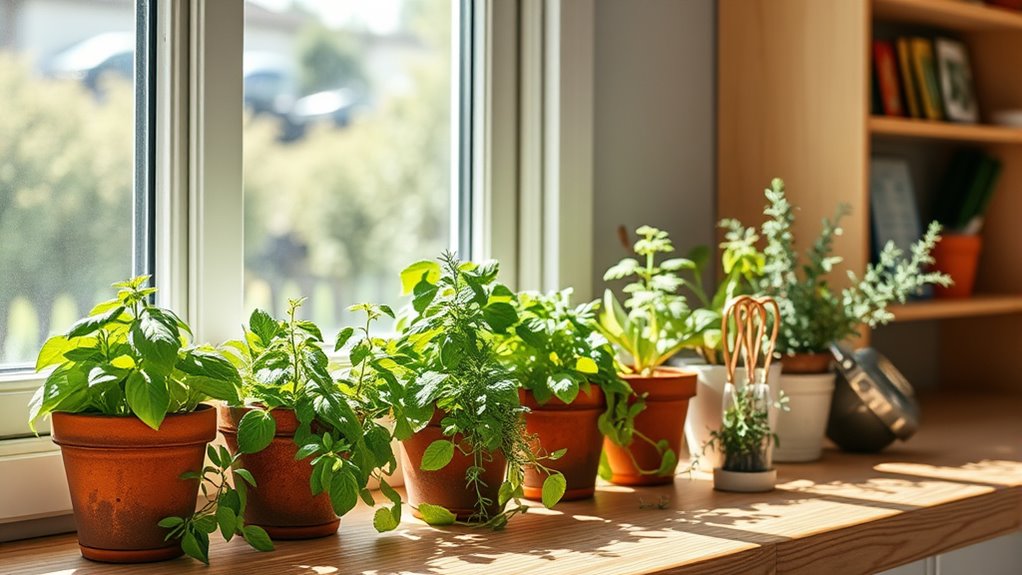

To start an indoor herb garden, choose containers with drainage holes and use materials like clay or plastic. Place your herbs near south-facing windows or add grow lights for ample light. Water your herbs when the soil feels dry about an inch deep, avoiding overwatering to prevent root issues. Keep an eye on environmental factors like humidity and temperature, adjusting your watering routine as needed. Want to learn more tips to keep your herbs thriving?
Key Takeaways
- Choose containers with drainage holes, such as clay or plastic pots, and add gravel for better water flow.
- Place herbs near south-facing windows or use grow lights to ensure sufficient natural or artificial light.
- Check soil moisture daily and water thoroughly only when the soil feels dry to prevent overwatering.
- Adjust watering frequency based on indoor humidity, temperature, and plant size for optimal growth.
- Regularly monitor and modify watering and light routines to keep herbs healthy and thriving indoors.

Indoor herb gardening is a simple and rewarding way to enjoy fresh flavors year-round, even if you don’t have outdoor space. One of the first steps to success is choosing the right herb containers. You want containers that provide good drainage to prevent water from pooling at the bottom, which can lead to root rot. Clay or terracotta pots are popular because they allow excess moisture to evaporate, but plastic containers are also fine if they have drainage holes. When selecting containers, consider the size of the herbs you want to grow; larger pots give roots more room to expand and help prevent the need for frequent repotting. Make sure each pot has drainage holes, and don’t forget to add a layer of gravel or small stones at the bottom to improve drainage further.
Once you’ve chosen your containers, establishing a watering schedule is key to keeping your herbs healthy. Herbs generally prefer evenly moist soil but dislike sitting in water. You’ll want to check your plants daily by sticking your finger about an inch into the soil; if it feels dry, it’s time to water. When you do water, do so thoroughly until you see some excess drain from the bottom of the pot. Avoid overwatering, which can lead to root rot and other issues. During the growing season, most herbs need watering every few days, but this can vary depending on the indoor environment, such as humidity and temperature. If your home is dry, especially in winter, you may need to water more frequently. Conversely, if your space is humid, less frequent watering might be necessary.
Position your herbs in a spot where they’ll get plenty of light, ideally near a south-facing window, but be mindful of the watering needs based on light and temperature. If natural light is limited, consider supplementing with grow lights to ensure your herbs get enough energy to thrive. As your plants grow, adjust your watering schedule accordingly. Larger or more mature plants may need more water, whereas smaller seedlings require less. Always monitor your herbs closely, and don’t be afraid to tweak your routine until you find what works best for your specific setup. For added convenience, consider using a self-watering plant pot to help maintain consistent moisture levels with less effort.
Frequently Asked Questions
How Often Should I Water My Indoor Herbs?
You should water your indoor herbs when the soil moisture feels dry about an inch below the surface. Typically, this means watering every 2-3 days, but it varies depending on your environment. Check your watering schedule regularly and guarantee proper drainage to prevent overwatering. By monitoring soil moisture closely, you give your herbs just enough water to thrive without risking root rot.
What Is the Best Artificial Lighting for Herbs Indoors?
The best artificial lighting for your herbs indoors is LED grow lights with full spectrum bulbs. These lights mimic natural sunlight, promoting healthy growth and vibrant herbs. Place them about 12-18 inches above your plants, ensuring they get enough light without overheating. Keep the lights on for 12-16 hours a day, adjusting as needed based on your herbs’ response. LED grow lights are energy-efficient and provide consistent, ideal light for indoor herb gardening.
How Do I Prevent Pests on Indoor Herbs?
To prevent pests on your indoor herbs, start with pest prevention tips like keeping your plants healthy through proper watering, light, and airflow. Regularly inspect your herbs for signs of pests, and use natural pest control methods such as neem oil or insecticidal soap if needed. Avoid over-fertilizing and remove any affected leaves promptly. These steps help keep pests at bay and ensure your herbs stay vibrant and healthy indoors.
Can I Grow Herbs in Small Apartments?
Absolutely, you can grow herbs in small apartments! In fact, over 60% of urban dwellers successfully cultivate herbs indoors. Using your apartment balcony or compact herb container sizes, you can create a thriving garden. Choose small, efficient containers and place them near natural light sources. Even limited space can yield fresh herbs, making your apartment more vibrant and your cooking more flavorful.
Which Herbs Are Most Tolerant to Low Light Conditions?
You should consider shade-loving herbs like mint, chives, parsley, and cilantro when dealing with low light conditions. These low light tolerant herbs thrive even in limited sunlight, making them perfect for small apartments with minimal natural light. Keep in mind, while they tolerate low light, providing some indirect sunlight or artificial light will boost their growth and flavor. With proper care, you can enjoy fresh herbs year-round.
Conclusion
Now, as you watch your fresh herbs sprout on your windowsill, you realize how simple and rewarding indoor gardening can be. It’s like transforming a plain space into a vibrant kitchen oasis, where green leaves thrive amid busy city life. With just a little effort, you turn dull countertops into lush, fragrant gardens. Embrace this hobby, and every time you harvest, you’ll feel like a skilled gardener in your cozy, green haven.