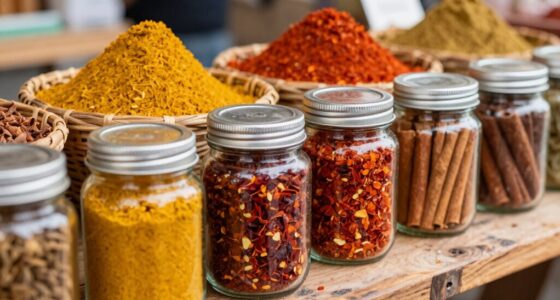
To store herbs longer and reduce waste, dry herbs in a well-ventilated, dark spot or use a dehydrator, then keep them in airtight containers. For fresh herbs, wrap leafy varieties loosely in a damp paper towel and store in perforated bags. Freezing herbs in ice cube trays with water or oil makes portions easy to use later. Proper storage helps preserve flavor, nutrients, and extends shelf life—discover more tips to keep your herbs fresh for longer.

Get kitchen staples and gadgets delivered free with Prime
- Fast, free delivery on millions of items
- Prime Video, Amazon Music and more included
- Member-only deals all year
Key Takeaways
- Dry herbs thoroughly and store in airtight containers to extend shelf life and prevent spoilage.
- Freeze chopped herbs in ice cubes with water or oil for quick, portioned use.
- Wrap leafy herbs loosely in damp paper towels and refrigerate to maintain freshness longer.
- Store herbs in a cool, dark, and dry environment to slow deterioration and preserve flavor.
- Label storage containers with dates and use proper methods based on herb type to reduce waste.
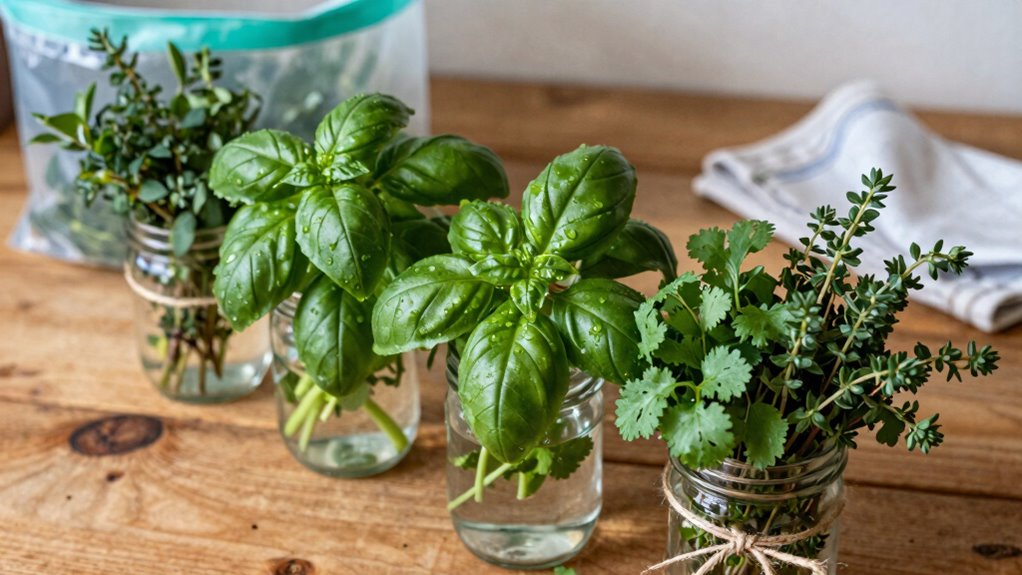
Storing herbs properly can considerably extend their freshness and flavor, ensuring you get the most out of your purchase. When it comes to preserving herbs, mastering herb drying techniques is one of the most effective methods. You can hang herbs upside down in a well-ventilated, dark spot to dry naturally, which preserves their essential oils and flavor. Alternatively, using a dehydrator is quick and consistent, especially if you’re working with large quantities. Whichever method you choose, make sure the herbs are completely dry before storing them in airtight containers to prevent mold and spoilage.
Proper herb storage extends freshness; dry naturally or with a dehydrator, then use airtight containers.
Another way to extend herb life is by freezing herb tips. Freezing is a convenient and fast method that locks in flavor and nutrients. To do this, chop your herbs and place them in ice cube trays, then cover with water or olive oil before freezing. Once frozen, transfer the cubes into sealed bags or containers. This technique makes it easy to add freshly frozen herbs directly to soups, stews, or sauces, without waste. Keep in mind that herbs like basil and mint may discolor or lose some texture after freezing, so consider adding them at the final cooking stage.
You should also consider storing herbs properly in the fridge, especially leafy varieties like parsley, cilantro, or chives. Wrap them loosely in a damp paper towel and place them inside a perforated plastic bag or container. This setup maintains the right humidity level, preventing wilting without causing excess moisture that could lead to rot. Check your herbs regularly, removing any that start to spoil. For herbs with woody stems like thyme or rosemary, trimming the stems before storage can help keep them fresh longer. Additionally, understanding the best storage conditions for different herbs can significantly prolong their freshness. Proper storage environments are crucial for maintaining the quality and flavor of herbs over time. To further optimize storage, temperature regulation plays a vital role in slowing down spoilage and preserving herbs’ vitality.
To maximize shelf life and reduce waste, think about combining these techniques. For example, dry herbs you won’t use immediately and freeze smaller portions of herbs you want to keep on hand for quick cooking. Always label your storage containers with dates, so you know how long they’ve been stored. Properly stored herbs can last weeks or even months, depending on the method used. The key is to keep herbs in a cool, dark, and dry environment, whether they’re drying, freezing, or refrigerated. Understanding the ideal storage environment for different herbs can help maintain their nutritional value and flavor for longer periods. By applying these simple methods, you’ll reduce waste, save money, and enjoy fresh herbs whenever you need them.
As an affiliate, we earn on qualifying purchases.
Frequently Asked Questions
Can Dried Herbs Be Stored Longer Than Fresh Ones?
Yes, dried herbs last longer than fresh ones. Using effective herb drying techniques, you can preserve herbs for months or even years. Proper herbal preservation methods, like storing in airtight containers away from light and moisture, help maintain flavor and potency. Dried herbs are more convenient for long-term use, reducing waste and ensuring you always have herbs on hand. So, drying herbs is a smart way to extend their shelf life considerably.
What’s the Best Container for Herb Storage?
The best container for herb preservation is one made of glass or airtight metal, as these materials prevent air and moisture from degrading the herbs. Avoid plastic containers, which can absorb odors and compromise freshness. Use small, dark-colored jars or tins for dried herbs, and guarantee they’re tightly sealed after each use. Proper container choice helps maintain flavor, aroma, and potency, extending your herbs’ shelf life effectively.
Do Herbs Lose Flavor When Frozen?
No, herbs don’t lose flavor when frozen if you use proper herb preservation techniques. Freezing helps lock in essential oils, maintaining flavor retention tips. To keep herbs tasting fresh, chop and store them in airtight containers or ice cube trays with a little water or oil. This method preserves their aroma and flavor, making them perfect for cooking later. Just remember to thaw herbs gently before use to preserve their quality.
How Can I Tell if Herbs Have Gone Bad?
You’ll know herbs have gone bad when their appearance shifts—herb spoilage becomes evident with slimy textures or dark spots, and mold growth appears as fuzzy, white or gray patches. Don’t ignore these signs; they hint at potential health risks. If herbs smell off or taste bitter, it’s time to toss them. Trust your senses—discard any herbs showing these signs to avoid consuming spoiled herbs.
Is It Better to Store Herbs in the Fridge or at Room Temperature?
Storing herbs in the fridge generally offers better herb preservation, especially for delicate varieties. Use proper storage techniques, like wrapping herbs in damp paper towels or placing them in airtight containers, to keep them fresh longer. At room temperature works for some hardy herbs like rosemary and thyme, but refrigeration slows down spoilage. Choose the best method based on the herb type to maximize freshness and reduce waste.
Conclusion
By mastering these simple storage methods, you guarantee your herbs stay fresh and vibrant, ready to elevate every dish. Think of it as tending a little garden—each herb preserved is a seed of flavor you nurture for future joy. Don’t let your culinary treasures wilt away like forgotten memories; instead, cherish them, keeping their essence alive. With care, your herbs will continue to inspire and delight, turning everyday meals into memorable experiences—just like a well-loved story waiting to be told.
NFL season / tailgating Picks
team gear
As an affiliate, we earn on qualifying purchases.