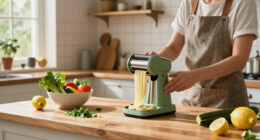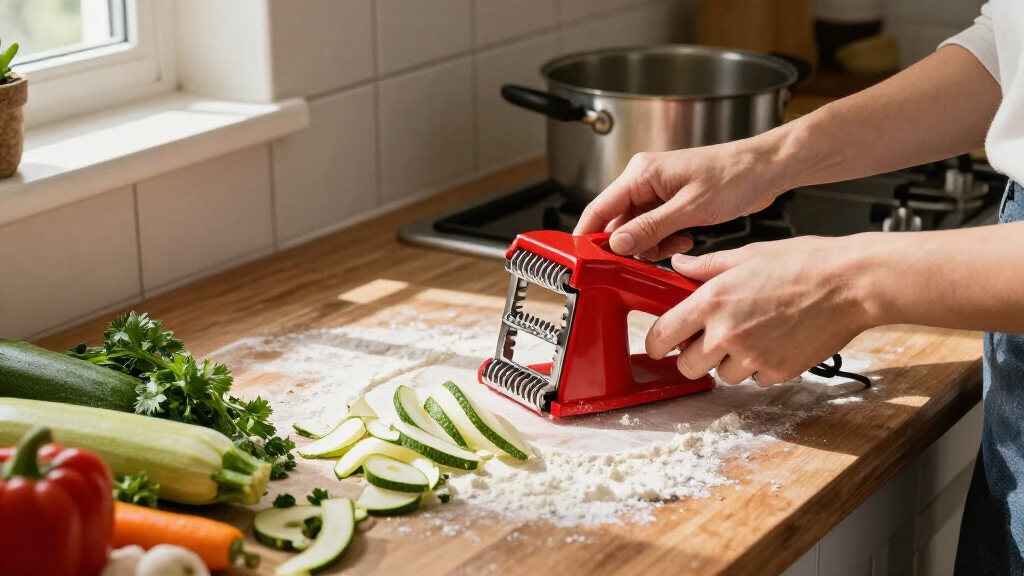
Choose and try one unusual kitchen gadget that solves a real task in your kitchen. This beginner guide helps home cooks compare options, check fit and safety, and test a new tool with a suitable recipe. Set aside about 30-60 minutes to research, prepare your workspace, and complete a first use; cooking time may vary.

Get kitchen staples and gadgets delivered free with Prime
- Fast, free delivery on millions of items
- Prime Video, Amazon Music and more included
- Member-only deals all year

OTOTO Red The Crab Silicone Spoon Rest for Stove Top – Kitchen Utensil Holder
- ✔ Brand: OTOTO
- ✔ Material: Silicone
- ✔ Color: Red Crab

OTOTO Splatypus Jar Spatula, Silicone Spatula, Small Spatula & Bowl Scraper
- ✔ Brand: OTOTO
- ✔ Model: OT887
- ✔ Material: Silicone

OTOTO Sir Peels A-Lot Medieval Knight Vegetable Peeler
- ✔ Brand: OTOTO
- ✔ Model: OT1264
- ✔ Tool type: Vegetable peeler
Difficulty: Beginner | Time: 30-60 minutes, plus delivery time if ordering
What You’ll Need
Tools & Materials:
- A phone or computer to compare products and read instructions
- Your usual kitchen tools for the task, such as a cutting board, bowl, or measuring cup
- The ingredients for one simple recipe that uses the gadget
Knowledge:
- Basic kitchen hygiene and safe handling of sharp or hot tools
- The cooking task you want to make easier or more consistent
Pick a task you do often, such as spiralizing vegetables, removing herb leaves, making uniform dumplings, or slicing an avocado. Set a spending limit before browsing. If the gadget uses electricity, check the voltage, plug type, and counter space where you plan to use it.
OTOTO Red The Crab Silicone Spoon Rest for Stove Top – Kitchen Utensil Holder
Red the Crab is our most rounded choice because its character design is attached to two related cooking tasks. It can hold ladles, tongs, and spatulas between stirs, while also gripping some pot lids to leave a steam-release gap. That makes it more adaptable than the Splatypus, which focuses on scraping, and more varied than Sir Peels A-Lot, which is built for peeling alone. Its compact, lightweight silicone body should be easier to tuck away than a larger counter accessory.The tradeoff is its size: the stated footprint is under four inches per side, so it may not support very large spoons or oversized lids. It is also a small rest rather than a broad landing area for a whole batch of messy utensils. The heat-resistant, BPA-free silicone and dishwasher-safe construction make routine cleanup straightforward, but buyers should choose it for compact everyday cooking, not for handling every cookware size. Among these three, it offers the strongest mix of utility and novelty, provided its proportions fit the tools and lids we use.
Pros:
- Holds several types of cooking utensils between uses.
- Can grip some pot lids to create a steam-release gap.
- Heat-resistant, BPA-free silicone is dishwasher safe.
- Compact form is easy to store.
Cons:
- Small footprint may not suit large utensils.
- May not fit oversized pot lids.
Best for: Cooks who want a compact, characterful spoon rest that can also help prop compatible pot lids open.
Not ideal for: Anyone who regularly uses oversized cookware, very large utensils, or wants a wide rest for many messy tools.
Bottom line: Choose Red the Crab when we want the most versatile novelty here, as long as our utensils and lids fit its compact size.
“Choose Red the Crab when we want the most versatile novelty here, as long as our utensils and lids fit its compact size.”
OTOTO Splatypus Jar Spatula, Silicone Spatula, Small Spatula & Bowl Scraper
When our main frustration is leaving jam, nut butter, or another soft spread in the corners of a jar, the Splatypus has the clearest purpose of the three. Its narrow, flexible shape is designed to reach tight spaces in jars and bowls, making it more precise for this job than Red the Crab and more useful for scraping than the peeler. At 8.27 inches long, it offers reach while keeping a slim profile, and the silicone construction suits spreading as well as scooping soft ingredients.That specialization also sets its limits. It is a small scraper, not a serving spatula or a sturdy tool for chunky, dense foods. A wider utensil rest like the crab handles a different stage of cooking, while Sir Peels A-Lot is the better match for produce prep. The Splatypus makes most sense if jar and bowl cleanup is a repeated annoyance and a playful tool will make that small task more enjoyable. Dishwasher-safe, BPA-free silicone is convenient, but it does not expand the tool’s narrow role.
Pros:
- Flexible shape reaches tight jar corners and bowl edges.
- Useful for scraping and spreading soft foods.
- Food-grade, BPA-free silicone construction.
- Dishwasher safe and compact.
Cons:
- Small size limits large scooping tasks.
- Not intended for heavy or chunky foods.
Best for: People who often scrape soft spreads from jars or clean batter and sauces from narrow bowl corners.
Not ideal for: Cooks seeking a large scoop, a sturdy tool for chunky ingredients, or a general-purpose serving spatula.
Bottom line: Pick the Splatypus when precise jar scraping matters more than the broader kitchen usefulness of Red the Crab.
“Pick the Splatypus when precise jar scraping matters more than the broader kitchen usefulness of Red the Crab.”
OTOTO Sir Peels A-Lot Medieval Knight Vegetable Peeler
Sir Peels A-Lot takes the most familiar job in this lineup: peeling vegetables and fruit. Its swivel stainless steel blade is described as handling potatoes, carrots, and fruit, while the cushioned silicone handle is intended to provide a non-slip grip. That makes it the practical choice for someone who wants a useful prep tool first and a whimsical design second. Compared with the Splatypus, it tackles firm produce rather than soft spreads; compared with Red the Crab, it has no stated second function, so its appeal rests on the peeler itself and its knight-themed form.Its main tradeoff is narrower versatility. One blade covers the described peeling task, and the compact size may feel less effective on very large root vegetables. The supplied information also says the blade may need frequent sharpening with heavy use, which matters for cooks who peel in volume. Dishwasher-safe cleanup and a cushioned grip help with routine preparation, but they do not make it a broad prep set. We would choose this for occasional fruit and vegetable peeling or as a playful gift, while frequent batch prep may call for a more robust dedicated peeler.
Pros:
- Swivel stainless steel blade is suited to fruit and vegetable peeling.
- Cushioned silicone handle is designed for a non-slip grip.
- Dishwasher safe for convenient cleanup.
- Knight theme gives a familiar tool gift appeal.
Cons:
- Single blade may need frequent sharpening with heavy use.
- Compact size may be less effective on very large root vegetables.
Best for: Home cooks who want a distinctive, comfortable handled peeler for routine fruit and vegetable prep, or a practical novelty gift.
Not ideal for: People who peel large quantities, regularly handle very large root vegetables, or need multiple blade styles.
Bottom line: Choose Sir Peels A-Lot for characterful everyday peeling, while heavy prep favors a more robust dedicated tool.
“Choose Sir Peels A-Lot for characterful everyday peeling, while heavy prep favors a more robust dedicated tool.”
As an Amazon Associate we earn from qualifying purchases.
Before You Start
Read the product description and the manufacturer’s safety and care instructions before buying or using the gadget. Check whether it is dishwasher-safe, whether it needs replacement parts, and whether it works with the foods and quantities you use. Avoid gadgets with unclear instructions or exposed cutting parts that cannot be handled safely. Keep packaging and the receipt until you have tested the item.
Step-by-Step Instructions
Step 1: Name the kitchen task
Write down one specific task you want to improve and how often you do it. For example, note that you want to make vegetable noodles twice a week, or slice small tomatoes more evenly. Describe what currently takes too long, creates waste, or produces inconsistent results.
Tip:Keep the goal narrow. A gadget that solves one repeated problem is easier to judge than one that promises to do everything.
Check: You can describe the task in one sentence and identify what a better result would be.
Step 2: Compare gadgets for that task
Search for tools designed for your task, then compare at least three options. Read the dimensions, materials, capacity, cleaning directions, and safety notes. Look for clear instructions and replacement parts where relevant. Check several recent reviews for repeated reports about slipping, clogging, difficult cleaning, or fragile pieces.
Tip:Give more weight to recurring practical details than to broad claims such as “must-have” or “professional quality.”
Check: You have a short list with each gadget’s price, storage size, cleaning needs, and main limitation.
Step 3: Check the fit in your kitchen
Measure the storage space and counter area available for the gadget. Confirm that it fits your sink or dishwasher if its instructions allow machine washing. For electric tools, check the outlet location, cord length, power requirements, and whether the appliance can be safely kept away from water.
Tip:Include attachments and parts in your storage check; a compact base may still need several bulky accessories.
Check: You know where the gadget will be used and where every part will be stored and cleaned.
Step 4: Choose one option and confirm its care
Select the option that fits your task, budget, and kitchen space. Before purchase, confirm what comes in the box, whether blades or attachments are included, and how the tool must be cleaned. Save the product instructions or note the manufacturer’s support details.
Tip:Do not assume that a part is dishwasher-safe because it looks like metal or plastic; follow the product’s stated care instructions.
Check: You can explain why this specific gadget suits your task and know what supplies or attachments it requires.
Step 5: Prepare the gadget and workspace
Unpack the gadget and check it for cracks, loose parts, or missing attachments. Wash food-contact parts as directed, dry them fully, and assemble the tool according to its instructions. Clear and dry the counter, set out a stable cutting board or bowl if needed, and gather the ingredients for a small first test.
Tip:Keep fingers away from blades and grating surfaces. Use any supplied guard or pusher, and unplug an electric gadget before fitting or removing parts.
Check: The assembled gadget sits securely, all expected pieces are present, and the work area is clean and uncluttered.
Step 6: Test it with a small amount
Follow the manufacturer’s directions with a small quantity of an ingredient suited to the gadget. Use the recommended size, pressure, speed, or setting. Stop if the tool jams, shifts, overheats, or requires force beyond what its instructions describe. Do not reach toward a blade while the tool is moving or plugged in.
Tip:Test with an inexpensive ingredient before using the gadget for a full meal or a special occasion.
Check: The tool completes the task without slipping, jamming, unusual noise, or damage, and the food has the intended shape or texture.
Step 7: Clean, store, and assess the result
Turn off and unplug electric tools before cleaning. Disassemble the gadget only as instructed, remove food residue carefully, and wash or dry each part according to its care directions. Store sharp pieces with their covers on. After cleanup, note whether the gadget saved time, reduced waste, or improved consistency enough to justify its storage and cleaning effort.
Tip:Clean sticky or fibrous residue soon after use; dried food can be harder to remove from small openings.
Check: The gadget is clean, dry, safely stored, and you have a clear decision about whether it is useful for your routine.
Common Mistakes to Avoid
- Buying a gadget because it looks novel without identifying a repeated task it solves. — Choose a specific cooking task first, then buy only a tool that addresses it.
- Ignoring storage, cleaning, or replacement-part needs. — Check dimensions, care instructions, and part availability before purchase; include accessories in the space check.
- Forcing food through a tool or putting fingers near a cutting surface. — Use the recommended ingredient size and supplied guard or pusher. Stop and clear a jam only after turning off and unplugging the tool.
- Testing a new gadget on a large batch or an important meal. — Start with a small amount of an inexpensive ingredient so you can learn the technique and spot problems early.
Troubleshooting
Problem: The gadget slips or moves while in use.
Solution: Stop immediately. Place it on a dry, level surface and check that its feet, clamps, suction base, or locking parts are installed and engaged as directed. If it still shifts, discontinue use and consult the manufacturer.
Problem: Food jams in a blade, chute, or small opening.
Solution: Stop the tool and unplug it if powered. Remove food only using the method in the instructions, keeping hands away from sharp edges. Cut ingredients to the recommended size and feed them at the stated pace.
Problem: The result is uneven or the gadget does not work as expected.
Solution: Check assembly and settings, then review the recommended ingredient type and size. Try again with a small test portion. If results remain poor, inspect for a damaged or incorrectly fitted part and contact the manufacturer.
Problem: Cleaning takes longer than expected.
Solution: Disassemble only the parts the instructions identify as removable. Rinse residue promptly and use a suitable small brush for crevices if permitted. If cleanup remains burdensome, factor that time into whether the gadget belongs in your routine.
What Success Looks Like
You have selected a gadget for a clearly defined cooking task, confirmed that it fits your kitchen and budget, and used it on a small test portion according to its instructions. The task is completed safely, the food result matches the intended shape or texture, and the parts can be cleaned and stored as directed. Decide to keep using the gadget only if its practical benefit outweighs its setup, cleaning, and storage demands.
Next Steps
Use the gadget for the same task a few times before relying on it for a large batch. Keep its instructions with the tool, replace worn parts only with compatible components, and stop using it if it cracks, loosens, or behaves unexpectedly. If the gadget does not fit your routine, clean it, review the return period, and choose a simpler tool for the task.
Frequently Asked Questions
How do I decide whether an unusual kitchen gadget is worth buying?
Identify a task you repeat, estimate how much time or effort the gadget could save, and compare that benefit with its price, storage needs, and cleaning time. Reviews can reveal common problems, but check that they refer to the same model and intended use.
Should I buy a manual or electric gadget?
Choose a manual tool when the task is occasional, small, and does not require much force. Consider an electric model for frequent or larger batches, but check its power requirements, counter space, noise, and cleanup before buying.
How can I tell if a gadget is safe to use?
Check for intact parts, stable placement, clear instructions, and guards or pushers for exposed blades. Follow the stated assembly and cleaning directions, and stop using the tool if it slips, cracks, overheats, or has loose parts.
What should I do if the gadget is difficult to clean?
Follow the care instructions and clean residue soon after use. Do not assume parts are dishwasher-safe. If the required cleaning remains too time-consuming after a few uses, reconsider whether the tool is practical for your kitchen.