
TL;DR

Get kitchen staples and gadgets delivered free with Prime
- Fast, free delivery on millions of items
- Prime Video, Amazon Music and more included
- Member-only deals all year
A report published Oct. 20 describes how Kanesa Katsuobushi Shoten in Nishi-Izu makes katsuobushi, or dried bonito, using a hand-fired smoking method. The process includes boiling and repeatedly smoking the fish, then treating it with koji mold and sun-drying it for months; the workshop says the method has a long history in the region.
A report published Oct. 20 documents how Kanesa Katsuobushi Shoten, a workshop in Nishi-Izu, Japan, makes dried bonito using a hand-fired smoking method. The process takes more than six months, combining boiling, repeated smoking, koji mold treatment and sun-drying to produce katsuobushi, a hard, concentrated fish product used in Japanese cooking.
The workshop was founded in 1882 and is run by fifth-generation craftsman Yasuhisa Serizawa, according to the report. It uses a method called tebiyama, in which bonito is smoked and dried over a fire tended by hand. The account describes this approach as rare among producers in Japan, though it does not provide a count of how many workshops still use it.
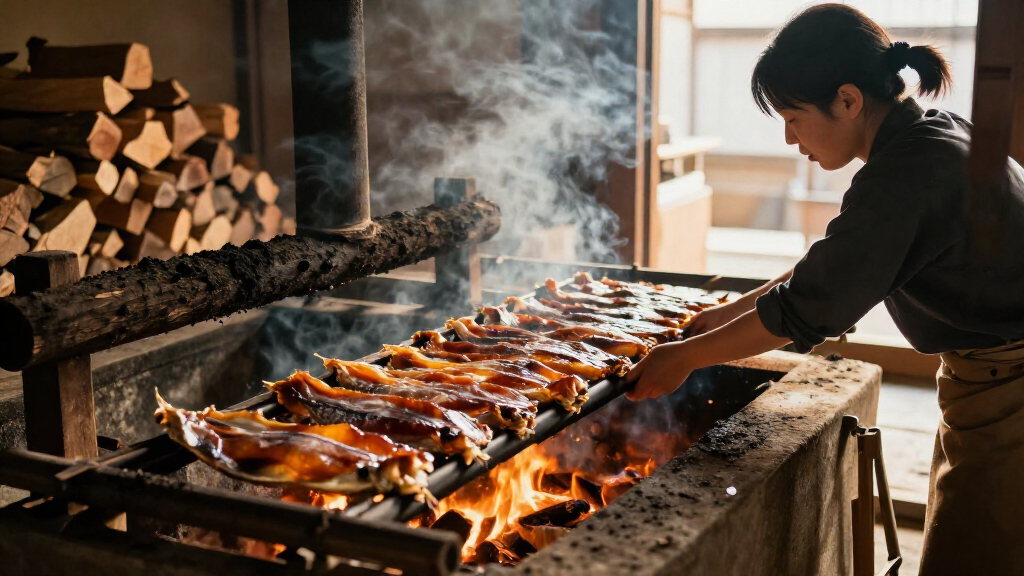
Production begins with fresh bonito, which is filleted and boiled for about 90 minutes. The fish is then smoked and dried more than 10 times over a wood fire. During the process, damaged areas are repaired with bonito paste; the fish is later treated with koji mold and left to dry in the sun for months.
Kanesa’s description of the tebiyama method says the fire is built at the bottom of a vertical pit about two meters deep. Woods including oak, sawtooth oak and cherry are used. The method exposes the fish to the heat of an open flame, rather than relying only on smoke from a more distant fire. The workshop says this produces a rich flavor by smoking the surface quickly and retaining umami.
Why the Smoking Method Matters
The account shows how a regional food craft depends on time-intensive work and direct control of fire, rather than a quick drying process. Repeated smoking, surface repairs, mold treatment and months of drying make production a sequence of distinct stages, each requiring continued attention.
For readers, the method offers a practical explanation of how fresh fish becomes katsuobushi, a staple ingredient used in Japanese cuisine. The report also records a technique that the workshop and its source describe as uncommon. The account does not establish how widespread the method was historically or how many producers continue to practice it today.
Japanese katsuobushi dried bonito blocks
As an affiliate, we earn on qualifying purchases.
As an affiliate, we earn on qualifying purchases.
A West Izu Method With Edo-Era Roots
Kanesa says tebiyama has been used in the Tago district of West Izu for a long time, with a history said to date back about 300 years, to the Edo period. That historical timeline is presented as the workshop’s account; the report does not cite independent historical research verifying the date.
The company describes tebiyama as the oldest existing smoking method for making dried bonito and calls it a “legendary method.” Those are the producer’s characterizations, not independently established rankings in the report. The workshop’s 1882 founding date and Serizawa’s fifth-generation role provide a more specific timeline for the business itself.
““This method of making dried bonito flakes has been used in the Tago district of West Izu for a long time, and its history is said to date back about 300 years.””
— Kanesa Katsuobushi Shoten, in a description of its tebiyama method translated from Japanese
What the Account Does Not Establish
The report does not identify how many Japanese workshops still use tebiyama, offer independent confirmation of the method’s claimed 300-year history, or compare its flavor with bonito made using other techniques. The company’s description of the method as the oldest still in use is also not backed by a separate survey in the material provided.
Some production details are given, including the approximate boiling time, number of smoking rounds and total drying period, but the report does not specify exact temperatures, humidity levels, or how those measures vary by batch. It also does not provide production volumes or information about the workshop’s plans for the future.
Following Each Stage of Production
The report describes a process that continues from fresh catch through months of drying, but it gives no schedule for future production, demonstrations or company announcements. The next useful details would be the workshop’s own production calendar and any additional information it publishes about how it controls the fire, fermentation and drying stages.
For now, the account records the method at a single workshop rather than a wider survey of the Japanese katsuobushi industry. Whether other producers continue to use tebiyama, and how the technique is changing, remains open.
Key Questions
What is katsuobushi?
Katsuobushi is dried bonito, made by processing fish through cooking, smoking and drying. The product described in the report also undergoes treatment with koji mold and extended sun-drying.
How long does the workshop’s process take?
The report says the fish is dried for more than half a year. It gives an approximate 90-minute boiling stage and says the fish is smoked more than 10 times, but does not give a complete timetable for each step.
What is the tebiyama method?
Tebiyama is the hand-fired smoking and drying method used at Kanesa Katsuobushi Shoten. The company describes a fire burning at the bottom of a pit about two meters deep, with wood from the Izu area used to smoke the fish.
Is the method definitely 300 years old?
The workshop says the method’s history is said to date back about 300 years, to the Edo period. The report does not provide independent historical documentation confirming that date.
Source: hn
Halloween Picks
halloween
As an affiliate, we earn on qualifying purchases.