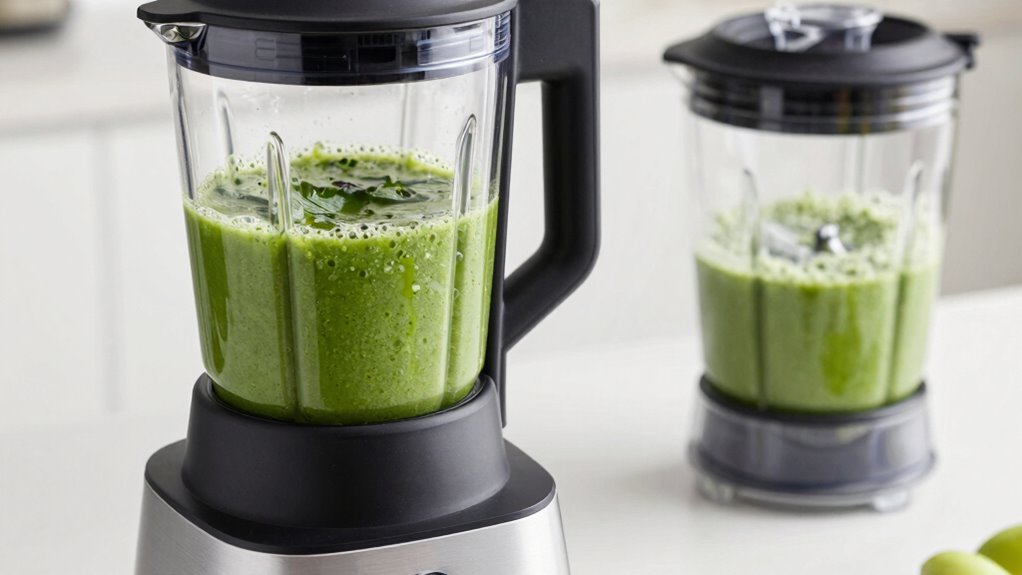
The main difference between a high-speed blender and a regular one is power. High-speed blenders have stronger motors, sharper blades, and advanced technology that let them process tough ingredients quickly and smoothly. They create creamier textures, preserve more nutrients, and handle tasks like ice crushing and nut butter more efficiently. If you want superior performance, durability, and better results, a high-speed model is worth considering—there’s more to discover if you keep exploring.
Key Takeaways
- High-speed blenders have more powerful motors (1,000–1,500W), enabling faster, more thorough blending of tough ingredients.
- They feature sharper, sturdier blades designed for durability and superior texture, producing creamier smoothies and finer ice crushing.
- High-speed models excel at nutrient extraction, preserving vitamins and enzymes better than regular blenders.
- They are generally more expensive and built for heavy, frequent use, offering greater durability and efficiency.
- Regular blenders are suitable for simple tasks, while high-speed blenders handle demanding recipes and professional-quality results.
What Are High-Speed Blenders and How Do They Work?
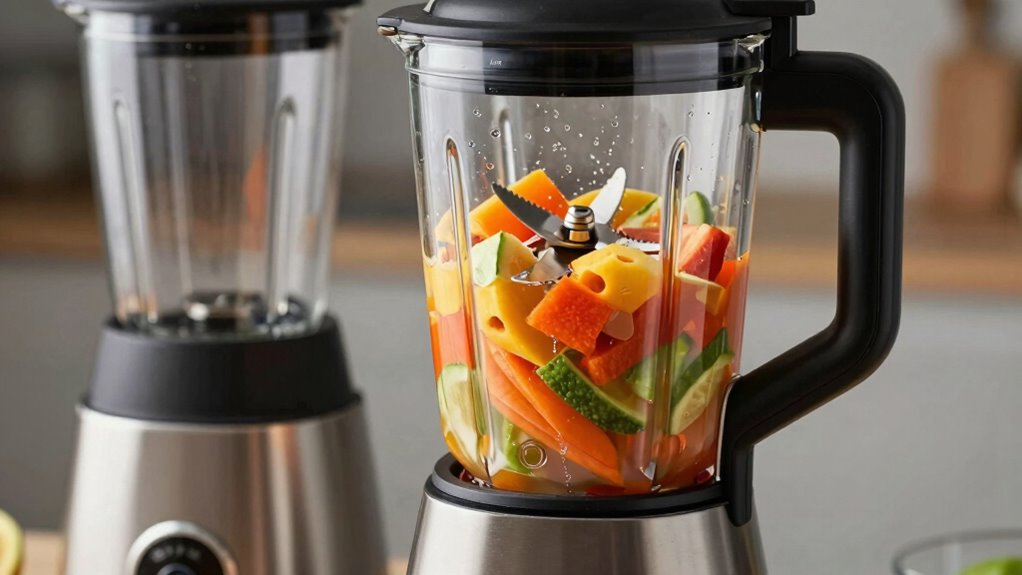
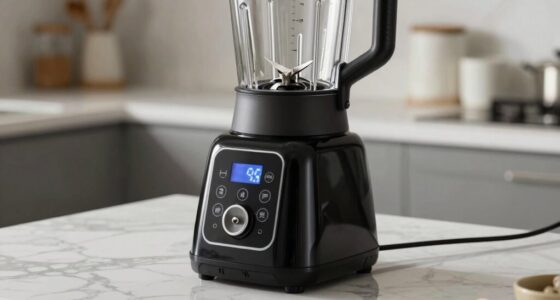
High-speed blenders are powerful kitchen appliances designed to blend ingredients quickly and smoothly. They operate with high-speed motors that generate intense blades, capable of pureeing tough items like nuts, seeds, and fibrous vegetables. Proper blender maintenance is essential to keep these machines functioning at peak performance, including regular cleaning and checking for worn blades. When considering brand comparisons, you’ll find that different brands offer various features, durability, and warranty options. Some brands focus on noise reduction, while others emphasize power and ease of use. Understanding how high-speed blenders work helps you appreciate their ability to create silky smoothies, sauces, and nut butters efficiently. This knowledge also guides you in maintaining your blender and selecting the best brand for your needs. Additionally, recognizing the blade design and motor specifications can help you choose a model that meets your blending needs more effectively. Being aware of the energy efficiency of different models can also contribute to more sustainable kitchen practices.
How Do High-Speed Blenders Compare in Power and Performance?
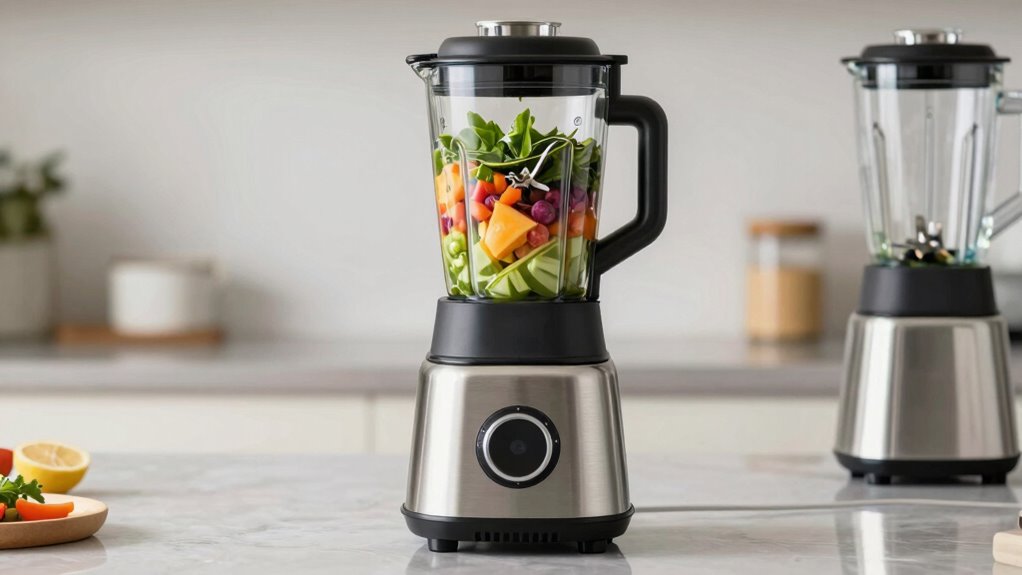
High-speed blenders pack more motor power and spin at higher speeds than regular models, giving you faster, smoother results. Their blade designs are engineered for maximum efficiency, blending ingredients more thoroughly with less effort. As a result, you’ll notice a clear difference in performance and versatility between the two. Additionally, upgrades and maintenance can help extend the lifespan and optimize the performance of your high-speed blender, ensuring consistent results over time. Incorporating reliable heat pump technology can further enhance efficiency and durability, especially in varying climates. Proper piercing care and hygiene, such as regular cleaning and avoiding irritants, can also contribute to the longevity of your equipment, preventing malfunctions caused by buildup or contamination. Maintaining the motor integrity of your blender through proper care can help prevent overheating and ensure sustained high performance. Regularly inspecting and replacing worn components can prevent component failures and keep your blender functioning at its best.
Motor Power and Speed
While regular blenders typically operate with motors around 300 to 700 watts, high-speed blenders pack considerably more power—often between 1,000 and 1,500 watts—allowing you to blend tougher ingredients with ease. The increased motor power enhances motor efficiency, meaning you get more effective blending without overloading the motor. High-speed blenders also offer greater speed variability, giving you precise control over blending consistency, from smooth purees to chunky textures. This versatility lets you tailor each blend to your needs, whether making smoothies or crushing ice. The powerful motors maintain consistent performance even under heavy loads, reducing strain and ensuring longevity. Additionally, the design and construction of high-speed blenders often include durable components that support continuous use under demanding conditions. Moreover, the energy efficiency of high-speed models often surpasses that of standard blenders, making them more environmentally friendly and cost-effective in the long run. Many high-speed blenders also feature advanced control settings, which provide additional precision for specific textures and ingredients. A high motor power not only improves blending quality but also enables faster processing times, saving you valuable minutes in your kitchen. Overall, more motor power and adjustable speeds make high-speed blenders remarkably more capable for demanding tasks.
Blade Design and Efficiency
The design of blender blades plays a crucial role in how effectively a blender processes ingredients, especially when comparing high-speed models to regular ones. High-speed blenders feature sharper, sturdier blades that enhance blade durability, allowing for tougher ingredients and longer use without dulling. Their blade angles and edge designs maximize shear force, improving efficiency and blending power. Additionally, blade design influences noise levels, with high-speed models often generating more sound due to their increased processing power. This can impact your overall noise environment during operation. However, this increased power often results in higher noise levels. To illustrate, blade engineering advancements continue to improve efficiency while attempting to mitigate noise issues. Moreover, modern blade materials are engineered to withstand the stresses of high-speed blending, further contributing to durability and performance.
What Tasks Are Best Suited for High-Speed Blenders?
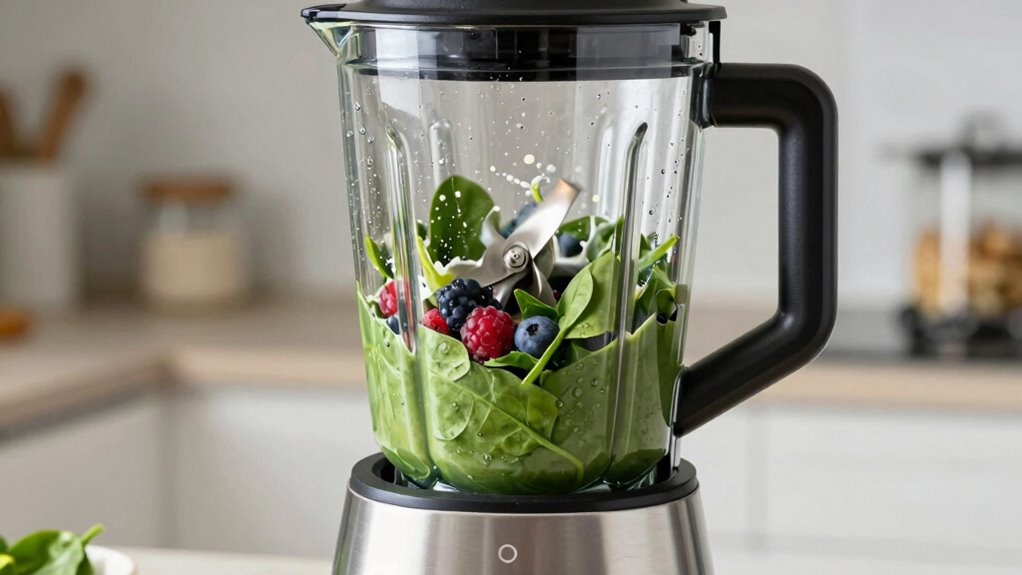
If you want to unfasten the full potential of your blender, you’ll find it excels at tasks that require powerful, quick processing. High-speed blenders are perfect for making smoothie recipes, blending ingredients into smooth, creamy textures in seconds. They also excel at ice crushing, turning frozen cubes into fine, slush-like consistency without extra effort. These blenders handle tough ingredients with ease, saving you time and effort. Whether you’re preparing nutrient-rich drinks or frozen desserts, their motors and blades are designed to deliver rapid, uniform results. Keep in mind, high-speed blenders are versatile for various tasks that demand intense power and precision, making them an essential tool for anyone who wants quick, high-quality results in the kitchen.
Do High-Speed Blenders Provide Better Texture and Nutrients?
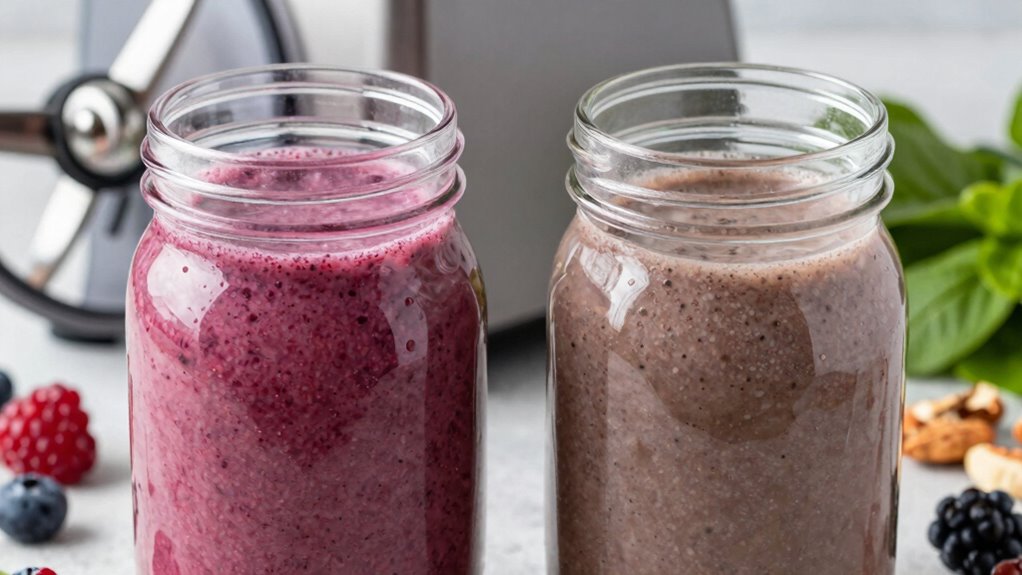
High-speed blenders often extract more nutrients from your ingredients, giving you healthier smoothies. They also create a smoother texture that feels more appealing and consistent. Plus, their rapid blending reduces oxidation, helping nutrients stay intact longer. Additionally, high-speed blenders are known for their advanced technology, which enhances blending efficiency and preserves more of the beneficial properties of your ingredients. This technology often includes powerful motors and precision blades that contribute to superior performance. Some models even utilize smart sensors to optimize blending times and speeds based on the ingredients, ensuring maximum nutrient retention. The reduction of oxidation during high-speed blending is crucial for maintaining the freshness and nutritional value of your blends. Furthermore, these blenders typically feature variable speed controls that allow for greater versatility in texture and consistency.
Better Nutrient Extraction
Because of their powerful motors and sharp blades, high-speed blenders can break down tougher ingredients more thoroughly than regular models. This results in better nutrient extraction, especially for fruit smoothies and ice crushing. The intense blending process releases more vitamins, minerals, and antioxidants from fruits and vegetables, making your drinks more nutritious. To illustrate, consider the following comparison:
| Feature | High-Speed Blender | Regular Blender | Benefits |
|---|---|---|---|
| Motor Power | 1000+ watts | 300-600 watts | Better nutrient extraction |
| Blade Sharpness | Ultra-sharp, multi-level blades | Standard blades | More thorough breakdown |
| Ice Crushing | Yes | Limited | Smoother textures, better smoothies |
| Fruit Smoothies | Smoother, more nutrient-rich | Less smooth, fewer nutrients | Enhanced health benefits |
| Overall Efficiency | Higher | Lower | Faster, more effective blending |
High-speed blenders also often have customizable speed settings, allowing for more precise control over texture and nutrient release.
Improved Texture Quality
Enhanced texture quality is one of the key advantages of high-speed blenders. They create smoother, more uniform textures that elevate your blending experience. With these blenders, you’ll notice:
- A consistently silky smoothie, thanks to superior blending power.
- Better ice crushing, resulting in finer, more enjoyable frozen drinks.
- Improved smoothie consistency, making drinks more enjoyable and easier to sip.
- Fewer chunks or bits, so your beverages feel luxurious and well-blended.
High-speed blenders break down ingredients more thoroughly, giving you a finer, creamier texture. This means your smoothies won’t just taste better—they’ll look more appealing, too. If you value smoothness and perfect ice crushing, investing in a high-speed blender is a game-changer for texture quality.
Reduced Oxidation Effects
While blending at higher speeds can generate more heat, high-speed blenders are often designed with cooling technologies that minimize oxidation. This is essential because oxidation reduction affects nutrient stability, especially for delicate enzymes and vitamins. Reduced oxidation means fewer nutrients are lost during blending, helping preserve enzyme activity and overall freshness. Unlike regular blenders, which can cause more oxidation due to longer blending times or inconsistent speeds, high-speed models quickly process ingredients with minimal exposure to air. This rapid blending limits enzyme degradation and maintains the food’s natural nutrients. As a result, you get a smoother, nutrient-rich mixture with better flavor and health benefits. In short, high-speed blenders offer superior enzyme preservation and lower oxidation effects, ensuring your blends retain their peak nutritional value. Understanding oxidation is key to appreciating how blending speed impacts food quality.
Are High-Speed Blenders Worth the Cost? Pros and Cons

High-speed blenders often come with a higher price tag, which can make you wonder if they’re really worth the investment. When considering the cost comparison, think about whether their benefits outweigh the expense. Here are some pros and cons:
High-speed blenders cost more, but their durability and performance may make them a worthwhile investment.
- Performance: They blend tough ingredients smoothly, saving you prep time.
- Durability: Usually built to last longer, reducing replacement costs.
- Maintenance requirements: They may need more frequent cleaning to keep blades sharp.
- Cost factor: The initial investment is higher, but some find it worthwhile for daily use.
- Skill development: Regular use of high-speed blenders can improve your speech clarity as you become more familiar with controlling blending consistency and techniques.
Ultimately, weigh these factors against your budget and needs. If you use a blender often and value power and consistency, a high-speed blender might be worth it.
How to Choose the Right Blender for Your Kitchen
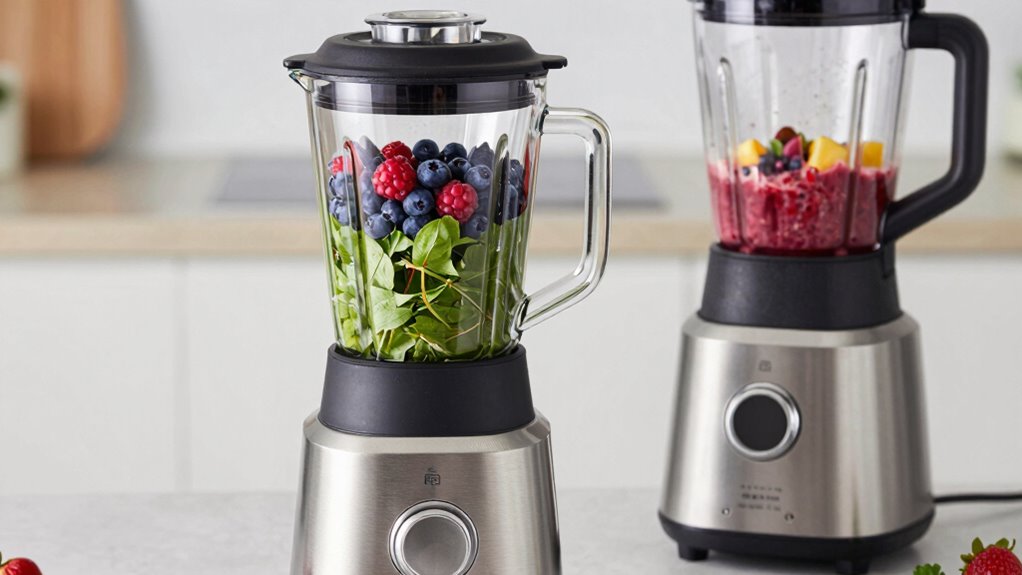
Choosing the right blender for your kitchen depends on how you plan to use it and your budget. Consider your typical tasks—smoothies, soups, or nut butters—and how often you’ll use the appliance. Look for models with easy blender maintenance to keep cleaning simple. Energy consumption is another key factor; high-speed blenders often use more power but process ingredients faster. To visualize your options, see the table below:
| Feature | Suitable For |
|---|---|
| Low wattage, budget-friendly | Basic blending, occasional use |
| High wattage, high speed | Smoothies, tough ingredients, frequent use |
| Easy blender maintenance | Easy cleaning, less downtime |
| Higher energy consumption | Faster results, more power needed |
| Durable build | Long-term use, heavy-duty tasks |
Frequently Asked Questions
Can High-Speed Blenders Make Hot Soups?
Yes, high-speed blenders can make hot soups. Their powerful motors generate enough heat through friction, allowing you to blend ingredients into steaming, hot soup directly in the jar. This versatility extends to smoothies and other recipes, while their high-speed blades maximize nutrient extraction. So, you can enjoy warm, nutritious soups and smoothies with ease, making your blender a versatile kitchen tool.
Are High-Speed Blenders Suitable for Crushing Ice?
Yes, high-speed blenders are excellent for ice crushing because their powerful motors and durable blades handle tough textures easily. You can confidently use it for frozen drinks, smoothies, or crushed ice, knowing it won’t strain the blender. Just make certain your blender has a sturdy build and sharp blades to maintain durability over time. This way, you get smooth results without risking damage to your appliance.
How Long Do High-Speed Blenders Typically Last?
High-speed blenders usually last between 5 to 10 years, much like a reliable car that keeps running smoothly. Durability concerns depend on usage and maintenance, but most come with warranty coverage of 3 to 7 years. Taking good care of your blender, like avoiding overloading, can extend its life. Regularly checking the motor and blades helps you get the most out of your investment.
Do High-Speed Blenders Require Special Maintenance?
You don’t need special maintenance for your high-speed blender, but paying attention to motor durability is key. Regularly check that the motor stays cool and avoid overloading it. Cleaning requirements are simple—just disassemble and wash the blades and jar after each use. Make sure you dry all parts thoroughly to prevent mold. By following these steps, your blender stays in top shape and performs efficiently for years.
Are High-Speed Blenders Louder Than Regular Ones?
You might find that high-speed blenders tend to be louder than regular ones, with noise levels reaching up to 90 decibels. The motor sound is more intense because of their powerful motors, which operate at higher speeds. This increased noise can be distracting, especially in quiet environments. If noise bothers you, consider models with noise reduction features or place your blender away from where you spend most of your time.
Conclusion
While high-speed blenders offer impressive power and smoother textures, they might not be necessary for everyone. If you enjoy making smoothies, nut butters, or soups regularly, investing in one could be worthwhile. However, for casual users, a regular blender may suffice. Ultimately, the truth is, a high-speed blender doesn’t just blend—it transforms ingredients, proving that sometimes, speed truly does make a difference in your kitchen.