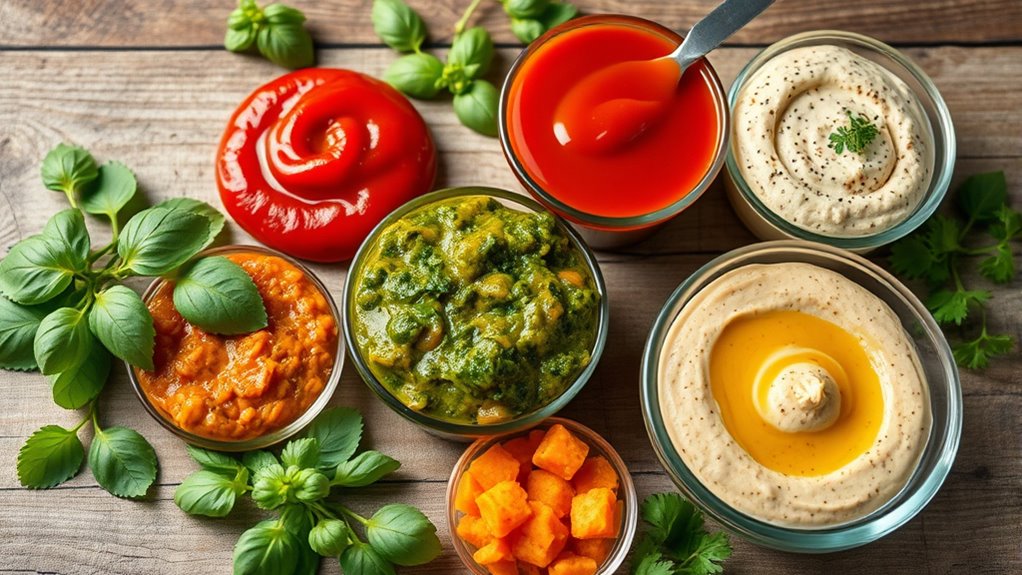
Flavorful vegetarian sauces and condiments are key to bringing vibrant, exciting flavors to your plant-based dishes. They can transform simple ingredients like vegetables, grains, or tofu into memorable meals, whether as dips, dressings, or marinades. By choosing homemade options, you control ingredients and avoid added preservatives. Focusing on versatile sauces like tahini, vinaigrettes, or spicy sriracha can elevate your meals effortlessly. Keep exploring these options to discover even more delicious possibilities.
Key Takeaways
- Use fresh herbs, spices, and high-quality ingredients to enhance flavor in vegetarian sauces and condiments.
- Incorporate versatile bases like tahini, soy sauce, or avocado for rich, satisfying flavors.
- Experiment with tangy, spicy, or creamy profiles to complement a variety of plant-based dishes.
- Keep sauces simple but customizable with ingredients like lemon juice, garlic, or miso for depth.
- Prepare homemade options to control added sugars, preservatives, and tailor flavors to your preferences.
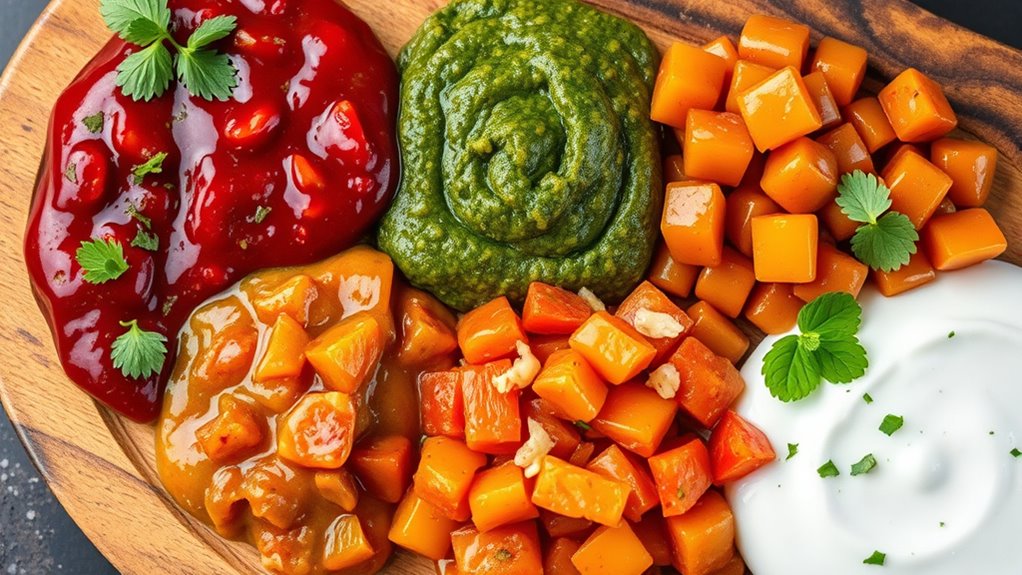
Vegetarian sauces and condiments add vibrant flavor and variety to plant-based dishes, making them an essential part of any vegetarian kitchen. Whether you’re preparing a quick snack or a full meal, these flavorful additions can elevate your dishes effortlessly. Dipping sauces and salad dressings are especially versatile, allowing you to customize flavors and create exciting combinations that keep your meals interesting. With the right sauces, you can turn simple vegetables, tofu, or grains into something memorable.
Vegetarian sauces and condiments transform simple ingredients into flavorful, memorable meals with endless versatility.
When it comes to dipping sauces, you have endless options to suit your taste buds. Think tangy tahini, spicy sriracha, or creamy avocado-based sauces. These complement a variety of snacks, from crispy veggie sticks to spring rolls or grilled veggie skewers. Making your own dipping sauces is easy and allows you to control ingredients, avoiding unnecessary preservatives or added sugars often found in store-bought versions. For example, a quick mix of soy sauce, rice vinegar, a touch of sesame oil, and a dash of honey creates a savory dipping sauce perfect for dumplings or tempura vegetables. Incorporating fresh herbs like cilantro or scallions can add brightness and freshness, making each bite more flavorful.
Salad dressings are another key component in vegetarian cooking. They serve as a simple way to bring a burst of flavor to your greens and grain bowls. You can whip up a classic vinaigrette using olive oil, balsamic vinegar, Dijon mustard, and a pinch of salt and pepper. For a creamier option, blend tahini with lemon juice, garlic, and a little water or olive oil to create a nutty, rich dressing. These dressings not only enhance salads but also work well as marinades or drizzles over roasted vegetables. Experimenting with ingredients like miso paste, apple cider vinegar, or fresh herbs can add depth and complexity. Plus, homemade salad dressings are healthier, free from additives, and customizable to your preferred flavors.
The beauty of vegetarian sauces and condiments lies in their adaptability. You can keep things simple or get creative, blending ingredients to match your mood and meal. They’re perfect for adding a punch of flavor without extra calories or processed ingredients. By mastering a handful of dipping sauces and salad dressings, you’ll find yourself reaching for them daily, transforming ordinary ingredients into extraordinary meals. Whether it’s a quick drizzle of lemon-tahini dressing or a spicy peanut sauce for dipping, these condiments bring excitement and variety to your vegetarian cuisine. Additionally, using high-quality ingredients ensures that your sauces and dressings are both flavorful and nutritious. Ultimately, they’re the secret to making plant-based dishes truly satisfying and flavorful.
Frequently Asked Questions
Can Vegetarian Sauces Be Stored for Long Periods?
Yes, vegetarian sauces can be stored for long periods if you follow proper storage tips. Typically, their shelf life varies from a few weeks to several months, depending on ingredients and preservatives. To maximize freshness, keep sauces in airtight containers in the fridge, and always check for signs of spoilage before use. Label bottles with dates, and avoid cross-contamination to guarantee your sauces stay tasty and safe over time.
Are Vegetarian Condiments Suitable for Gluten-Free Diets?
You’ll find that many vegetarian condiments are perfect for gluten-free diets, especially when you check the labels for gluten-free ingredients. Sometimes, it’s a lucky coincidence—like discovering a favorite sauce that’s both vegetarian and gluten-free—making meal prep easier. Always read vegetarian sauce labels carefully to verify they meet your dietary needs, as ingredients can vary. With a little attention, you can enjoy flavorful condiments worry-free!
How to Make Vegan Sauces Without Added Sugars?
To make vegan sauces without added sugars, start by using sugar alternatives like stevia, erythritol, or monk fruit to add sweetness without guilt. Incorporate natural sweeteners such as mashed dates, ripe bananas, or pureed fruit for a healthier touch. These options enhance flavor naturally, allowing you to enjoy delicious, sugar-free vegan sauces that suit your taste buds and dietary needs.
What Are Some Low-Calorie Vegetarian Condiment Options?
You can choose low-calorie vegetarian condiment options like salsa, mustard, or vinegar-based dressings to enhance flavor without extra calories. These varieties add zest to your dishes while keeping calorie counts low. Incorporate vegetarian sauce varieties such as hot sauce or herbal-infused vinegars for condiment flavor enhancements. They’re versatile, tasty, and perfect for adding depth to salads, sandwiches, or veggies without sacrificing your health goals.
Can Vegetarian Sauces Be Used as Marinades?
Yes, vegetarian sauces can definitely be used as marinades. By mixing and matching marinading techniques, you can maximize flavor infusion, making your veggies or tofu tastier. Simply brush or soak your ingredients in flavorful sauces, allowing the flavors to seep deeply. This technique enhances texture and taste, transforming simple dishes into sensational, savory sensations. So go ahead—marinate with your favorite vegetarian sauces for a delicious, dynamic dining experience.
Conclusion
Now that you’ve explored these vibrant vegetarian sauces and condiments, your meals will bloom like a garden in full color. Each splash and dollop adds a burst of flavor, turning simple dishes into a symphony of taste. Think of your kitchen as a canvas, and these sauces as the vivid brushstrokes that transform plain ingredients into culinary masterpieces. With every drop, you’re painting a delicious, vegetarian rainbow on your plate.