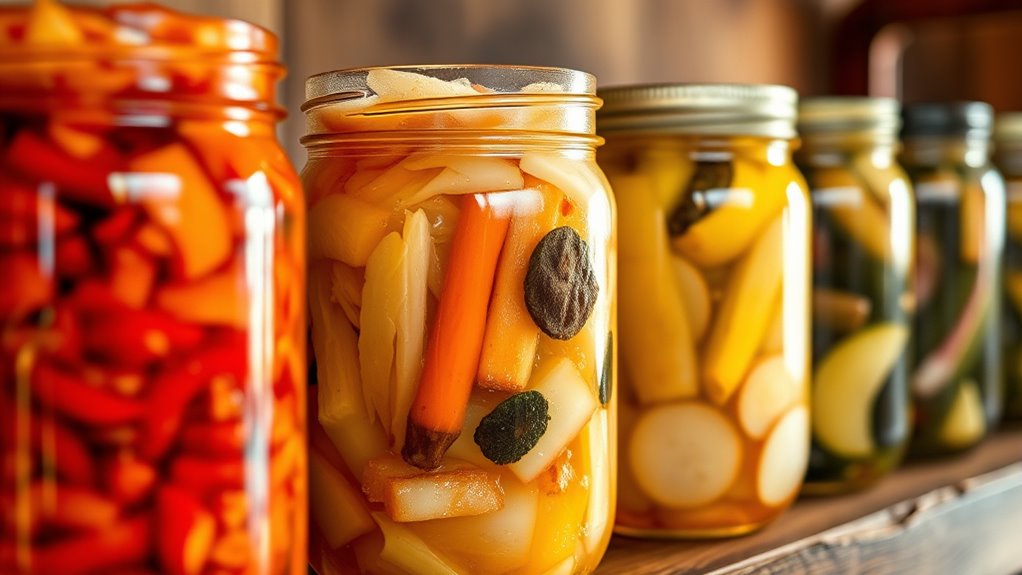

Fermented foods help you preserve produce, reduce waste, and increase nutritional value. By using natural microbes like good bacteria, you can turn vegetables, fruits, or dairy into tasty, nutrient-rich foods that last longer. Proper fermentation techniques, like controlling salt, temperature, and time, guarantee your foods stay safe and flavorful. Keep exploring ways to harness fermentation at home, and you’ll discover even more benefits for less waste and healthier eating.
Key Takeaways
- Fermentation transforms fresh produce into nutrient-rich, shelf-stable foods, reducing waste and extending their usability.
- Proper fermentation techniques, like using salt and airtight containers, ensure food safety and prevent spoilage.
- Homemade fermented foods preserve seasonal harvests while adding unique flavors and textures.
- Fermentation naturally inhibits harmful microbes, making produce last longer without preservatives.
- Incorporating fermented foods into your diet minimizes food waste and promotes sustainable, cost-effective eating.
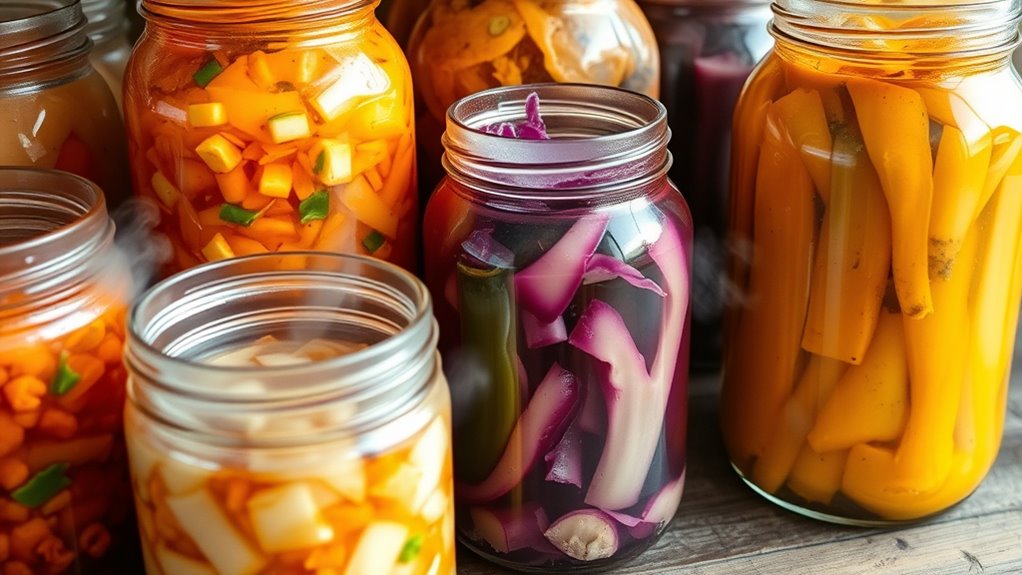
Fermented foods have gained popularity for their unique flavors and health benefits. When you incorporate these foods into your diet, you’re not just adding diverse tastes; you’re also tapping into a range of probiotic benefits that support your gut health and boost your immune system. The process of fermentation transforms simple ingredients into nutrient-rich, tangy, and often complex-flavored foods, making them a valuable addition to your pantry. Understanding fermentation techniques is key to mastering how to create these delicious and healthful foods at home, allowing you to preserve produce while reducing waste and saving money.
Fermentation techniques involve naturally occurring microbes that convert sugars and carbohydrates into acids, gases, or alcohol, giving fermented foods their distinctive flavors and textures. When you ferment vegetables like cabbage into sauerkraut or kimchi, or turn milk into yogurt and kefir, you’re harnessing the power of beneficial bacteria that thrive during the fermentation process. These probiotics are essential for maintaining a healthy balance of gut flora, which can improve digestion, enhance nutrient absorption, and even influence your mood. By mastering the right fermentation techniques, you can control the acidity, flavor, and safety of your homemade fermented foods, making sure they’re both tasty and beneficial.
Getting started with fermentation is simpler than you might think. You only need some basic equipment—like jars, fermentation lids, and a clean workspace—and a few ingredients such as vegetables, dairy, or even fruits. The key is to create an environment where good bacteria dominate and inhibit the growth of harmful microbes. This involves controlling factors like temperature, salt concentration, and fermentation time. For example, when making sauerkraut, you’ll salt the shredded cabbage to draw out moisture, then pack it tightly into a jar to ensure an anaerobic environment. Over time, natural bacteria ferment the sugars, producing lactic acid that preserves the cabbage and imparts a tangy flavor. Vetted
Frequently Asked Questions
How Long Does Fermentation Typically Take?
Fermentation typically takes anywhere from a few days to several weeks, depending on the type of food and desired flavor. You should monitor the fermentation duration and make timing adjustments as needed; for example, sauerkraut usually ferments for 1-4 weeks. Keep an eye on the process, taste test periodically, and adjust the timing to achieve the perfect balance of tanginess and texture.
Are Fermented Foods Suitable for All Diets?
Fermented foods are like a versatile wardrobe—you’ll find options for almost every diet. They’re generally suitable for most, including gluten-free and vegan-friendly choices, but always check labels or ingredients. Some fermented products contain gluten or animal-derived ingredients, so they might not fit everyone’s needs. If you’re cautious, explore fermented veggies or plant-based options, ensuring they align with your dietary preferences and restrictions.
Can I Ferment Vegetables at Home Safely?
Yes, you can ferment vegetables at home safely by following proper home fermentation safety practices. Use fermentation equipment essentials like clean jars, airlocks, and non-reactive utensils. Keep your workspace sanitized, maintain correct salt concentrations, and monitor the fermentation process regularly. Avoid mold and over-fermentation by tasting and smelling your produce. With these precautions, you’ll enjoy delicious, probiotic-rich vegetables safely from your own kitchen.
What Are the Signs of Spoilage in Fermented Foods?
You’ll know fermented foods spoil when you see signs of mold, which appear as fuzzy, discolored patches on the surface. Unusual odors, like sour, rotten, or off-putting smells, are also key indicators. If the texture changes notably or bubbles suddenly stop forming, it might be spoiled. Trust your senses—if anything looks or smells off, it’s safest to discard the food to avoid health risks.
How Does Fermentation Affect Nutrient Content?
Fermentation enhances nutrient content, boosting bioavailability and retention of key vitamins and minerals. While some nutrients may diminish slightly, the process generally makes others more accessible for your body to absorb. This juxtaposition means you get a richer nutrient profile, with fermentation revealing nutrients that would otherwise remain less available. So, by fermenting, you’re not just preserving produce—you’re actively enriching your diet’s nutritional value.
Conclusion
Just like ancient civilizations relied on fermentation to preserve their bounty, you can embrace this timeless practice to cut waste and enjoy healthier food. By fermenting your produce, you become part of a legacy that values sustainability and ingenuity. Remember, as the wise often say, “A stitch in time saves nine.” In this case, a simple jar of fermented veggies can save your leftovers and nourish both body and planet for years to come.