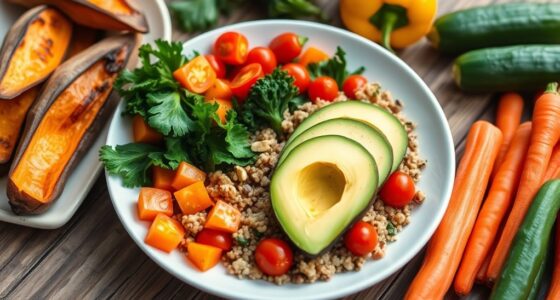
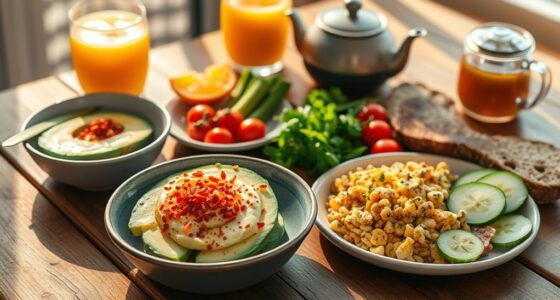
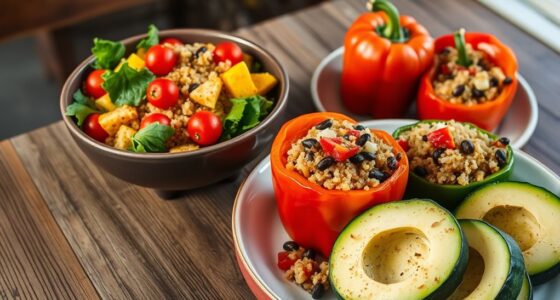
Incorporating fermented foods into your vegetarian diet is a great way to naturally boost your probiotic intake. Foods like kefir and miso support gut health, improve digestion, and strengthen your immune system. You can enjoy kefir in smoothies or breakfast bowls and use miso in soups or dressings. Regularly adding these flavorful, probiotic-rich options helps maintain a balanced gut microbiome. Keep exploring to discover more easy ways to enhance your vegetarian lifestyle with fermented foods.
Key Takeaways
- Fermented foods like kefir and miso naturally boost probiotic intake, supporting gut health for vegetarians.
- Incorporating fermented foods enhances digestion, reduces bloating, and improves nutrient absorption in a vegetarian diet.
- Miso adds umami flavor to soups and dressings, enriching meals while promoting gut health and immunity.
- Regular consumption of fermented foods helps maintain a healthy gut microbiome and overall well-being.
- Fermented foods are easy to include in meals, offering a tasty, natural way to support gut health on a vegetarian diet.
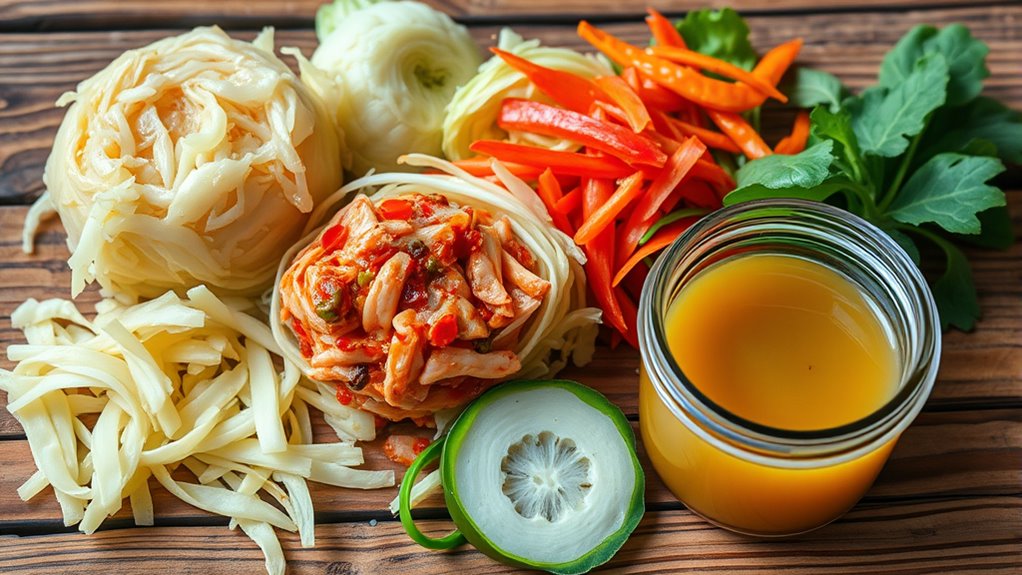
Have you ever wondered how to boost your vegetarian diet with beneficial probiotics? Incorporating fermented foods is a fantastic way to do that, and it’s easier than you might think. One excellent option is kefir, a fermented beverage packed with probiotics. You might have heard about kefir benefits, like improved digestion and enhanced immune function. Making kefir at home is simple, and you can enjoy it plain or add it to smoothies, breakfast bowls, or even salad dressings. Drinking kefir regularly can help balance your gut bacteria, which is essential for overall health, especially on a vegetarian diet. Its rich probiotic content supports digestion, reduces bloating, and helps your body absorb nutrients more effectively. Plus, kefir is versatile and can be customized with fruits or herbs to suit your taste. Incorporating fermented foods like kefir and miso into your routine can also support your body’s natural ability to produce beneficial enzymes and maintain a healthy gut microbiome.
Miso is another fermented food that fits perfectly into a vegetarian lifestyle. You can incorporate miso recipes into your routine by making miso soup, salad dressings, or marinades. Miso, a fermented soybean paste, is rich in probiotics and enzymes that promote gut health. Its savory, umami flavor adds depth to countless dishes, making it a delicious way to support your digestive system. When preparing miso recipes, remember to avoid boiling the paste, as high heat can destroy the beneficial bacteria. Instead, stir it into warm liquids or use it as a finishing touch. Regularly consuming miso can improve your digestion, boost your immune system, and even provide antioxidants. It’s a simple addition that can elevate your meals with both flavor and health benefits.
Incorporating these fermented foods into your vegetarian diet isn’t complicated. You can start your day with a glass of kefir or add it to your smoothies. Miso can be used in soups or as a flavor enhancer for vegetables and grains. Both kefir benefits and miso recipes offer a natural way to increase your intake of probiotics, which are essential for maintaining a healthy gut microbiome. As you explore these options, you’ll notice improvements not just in digestion but also in your energy levels and overall well-being. The key is consistency—making fermented foods a regular part of your meals. Over time, you’ll appreciate how these foods support your digestive health and enrich your diet with beneficial bacteria. Embracing fermented foods is a simple, tasty step toward a healthier, more balanced vegetarian lifestyle.
Frequently Asked Questions
Can Vegetarians Ferment Their Own Foods at Home Safely?
Yes, you can ferment your own foods at home safely if you follow proper home fermentation safety guidelines and vegetarian fermentation techniques. Make sure to use clean utensils, proper containers, and maintain the right temperature to prevent contamination. Research vegetarian-specific recipes and fermentation times. Keep an eye on your ferment for any signs of spoilage, and when in doubt, discard questionable batches to guarantee your homemade ferments are safe and healthy.
Are Fermented Foods Suitable for All Vegetarian Dietary Restrictions?
Are fermented foods suitable for all vegetarian dietary restrictions? Absolutely, but with caveats. Think of fermented foods as a passport to diverse cultural variations and rich flavor profiles; however, some might contain ingredients like honey or certain additives that don’t fit strict diets. Always check labels or prepare homemade versions to guarantee they align with your specific restrictions, making fermented foods both a delicious and inclusive choice.
How Do Fermented Foods Impact Vegetarian Iron Absorption?
Fermented foods enhance your iron absorption by breaking down phytic acid, which usually inhibits mineral absorption. When you include fermented foods like sauerkraut or kimchi, they reduce phytic acid interaction with iron, making it easier for your body to absorb plant-based iron. This process helps improve your overall iron status, especially if you’re relying on vegetarian sources, ensuring you get the nutrients needed for energy and health.
Which Fermented Foods Are Highest in Probiotic Content?
Did you know some fermented foods pack more probiotics than others? Kefir, for example, contains around 10^9 to 10^10 CFUs per serving, making it a top probiotic-rich choice. Among fermented foods, probiotic varieties like sauerkraut, kimchi, and traditional yogurt use specific fermentation techniques that maximize probiotic content. To boost your gut health, focus on these foods, as their fermentation processes help preserve and enhance probiotic levels effectively.
Do Fermented Foods Interact With Common Vegetarian Supplements?
Yes, fermented foods can interact with common vegetarian supplements. Some probiotic strains in fermented foods may enhance supplement absorption, but they could also compete for nutrients, impacting effectiveness. Always consider food safety, as improperly fermented foods may contain harmful bacteria. Combining these foods with supplements is generally safe if you choose high-quality, properly fermented products and monitor your body’s response. Consult a healthcare provider for personalized advice.
Conclusion
Incorporating fermented foods into your vegetarian diet not only enhances flavor but also boosts gut health. Did you know that nearly 70% of your immune system resides in your gut? By regularly enjoying foods like kimchi, sauerkraut, or tempeh, you support digestion and overall wellness. So, make fermented foods a staple in your meals and experience their powerful benefits firsthand, enriching both your diet and your health.