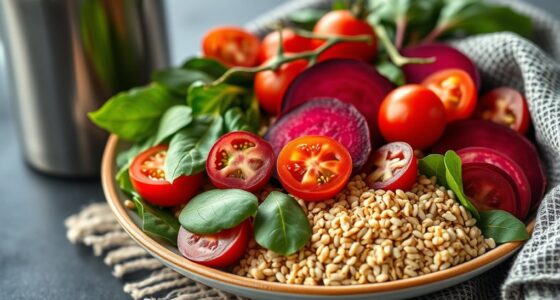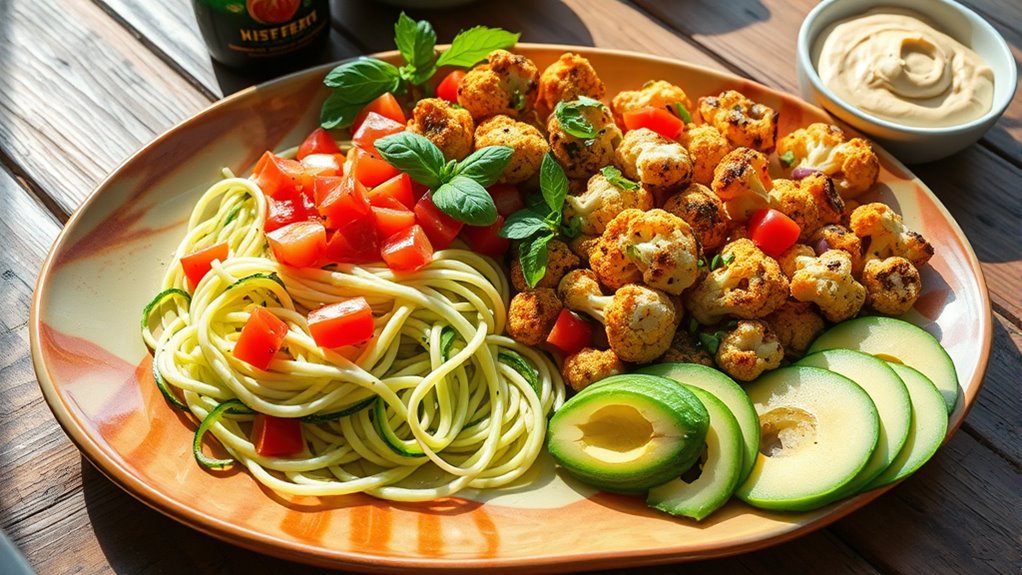

Exploring low-carb vegetarian options means getting creative with protein-rich meat substitutes like tofu, tempeh, and seitan, which can be seasoned and cooked in many ways. Incorporate fiber-rich veggies such as leafy greens, zucchini noodles, and roasted eggplant to stay full longer. Using herbs and spices enhances flavor, making meals satisfying and appealing. Planning ahead and experimenting with textures helps you stick to your goals while enjoying delicious, satisfying dishes. Keep exploring for even more inspiring ideas.
Key Takeaways
- Use meat substitutes like tofu, tempeh, and seitan for high-protein, low-carb vegetarian dishes.
- Incorporate fiber-rich vegetables such as leafy greens, zucchini noodles, and cauliflower rice to reduce carbs and boost nutrients.
- Snack on nuts, seeds, and crunchy vegetables like celery and bell peppers to promote satiety and fiber intake.
- Enhance flavor and texture with herbs, spices, and creative presentation inspired by farmhouse decor for more appealing meals.
- Plan and prepare meals ahead, experimenting with different ingredients to ensure variety, satisfaction, and adherence to a low-carb vegetarian diet.

Are you looking for delicious vegetarian meals that won’t spike your carb intake? If so, you’re in the right place. Embracing a low-carb vegetarian lifestyle may seem challenging at first, but with the right ingredients and ideas, you can enjoy satisfying, flavorful dishes without worrying about your carb count. One of the best ways to do this is by exploring meat substitutes that are low in carbs yet high in protein, making them perfect for filling meals. Options like tofu, tempeh, and seitan can be seasoned and cooked in countless ways, giving you the taste and texture you crave while keeping carbs in check. These meat substitutes are versatile, allowing you to create everything from stir-fries to hearty salads, all aligned with your low-carb goals.
In addition to meat alternatives, incorporating fiber-rich snacks into your diet can help you stay full and satisfied. Fiber not only supports digestion but also helps stabilize blood sugar levels, making it an essential component of any low-carb vegetarian plan. Consider snacking on nuts, seeds, or crunchy vegetables like celery and bell peppers. You can also try roasted chickpeas or homemade kale chips, which are both flavorful and fiber-dense. These snacks provide a satisfying crunch and keep hunger at bay between meals, ensuring you don’t reach for high-carb options out of boredom or emptiness.
Another effective strategy is to focus on non-starchy vegetables, which are naturally low in carbs but high in fiber and essential nutrients. Leafy greens like spinach, kale, and arugula serve as excellent bases for salads or cooked dishes. Zucchini noodles, cauliflower rice, and roasted eggplant can replace higher-carb grains and pasta, giving your meals substance without the extra carbs. Using herbs and spices to flavor these vegetables can elevate your dishes, making them both tasty and visually appealing. Pairing these with protein-rich meat substitutes ensures your meals are balanced, filling, and aligned with your low-carb vegetarian goals. Incorporating a variety of textures and flavors, including those inspired by traditional farmhouse decor, can make your meals more inviting and enjoyable.
Finally, planning your meals around these principles makes it easier to stick to your low-carb vegetarian lifestyle. Preparing snacks in advance, experimenting with different meat substitutes, and incorporating fiber-rich ingredients helps you enjoy variety without feeling deprived. With a little creativity, you can craft a range of satisfying, nutrient-dense meals that support your health and taste great. Remember, low-carb vegetarian eating isn’t about restriction; it’s about making smart, flavorful choices that fit into your lifestyle seamlessly.
Frequently Asked Questions
Are Low-Carb Vegetarian Diets Nutritionally Complete?
A low-carb vegetarian diet can be nutritionally complete if you plan carefully, but you might face nutritional deficiencies, especially in B12, iron, omega-3s, and protein. To prevent this, incorporate fortified foods, plant-based supplements, or consider supplement strategies like B12 drops or algae oil. Regularly monitoring your nutrient levels guarantees you stay balanced and healthy while maintaining your low-carb vegetarian lifestyle.
How Can I Balance Protein Intake Without Meat?
Plant-based proteins and dairy alternatives deliver diverse, delicious doses of protein, helping you balance your intake without meat. Incorporate tofu, tempeh, seitan, and edamame into your meals, each offering ample protein. Pair these with dairy alternatives like Greek-style plant-based yogurts and fortified milks, ensuring you get enough essential amino acids. You’ll craft a colorful, creative, and carb-conscious cuisine that keeps your energy elevated and your diet balanced.
What Are Some Quick Low-Carb Vegetarian Breakfasts?
For quick low-carb vegetarian breakfasts, try breakfast swaps like scrambled eggs with spinach or Greek yogurt topped with nuts and seeds. These options are nutrient-dense and easy to prepare in minutes. Focus on nutrient timing by eating these high-protein, low-carb meals early in the day to boost energy and keep you full longer. You can also prepare ingredients ahead to make your mornings even more efficient and satisfying.
Can Vegetarians Meet Their Fiber Needs on Low-Carb Diets?
Yes, you can meet your fiber needs on a low-carb vegetarian diet. Focus on fiber sources like chia seeds, flaxseeds, avocados, and nuts, which are excellent vegetarian options. Incorporate plenty of leafy greens, broccoli, and berries into your meals. By choosing these fiber-rich foods, you guarantee good digestion and overall health while maintaining your low-carb goals. Just be mindful of portion sizes to stay within your carb limits.
Are There Affordable Low-Carb Vegetarian Meal Options?
Yes, you can enjoy affordable low-carb vegetarian meals by combining budget-friendly ingredients like eggs, tofu, and seasonal vegetables. Use flavor-enhancing spices such as turmeric, cumin, or paprika to make your dishes tasty and satisfying. Look for sales on nuts and seeds, and cook in bulk to save money. With a little creativity, you’ll find delicious, low-cost options that fit your vegetarian and low-carb lifestyle.
Conclusion
By exploring low-carb vegetarian options, you embrace variety, nourish your body, and respect your goals. You discover new flavors, challenge your habits, and enjoy vibrant meals. You choose health, you choose balance, and you choose to feel good. Low-carb vegetarian eating isn’t just a trend; it’s a way to thrive, to energize, and to enjoy every bite. So, keep experimenting, keep enjoying, and keep nourishing yourself with mindful choices.