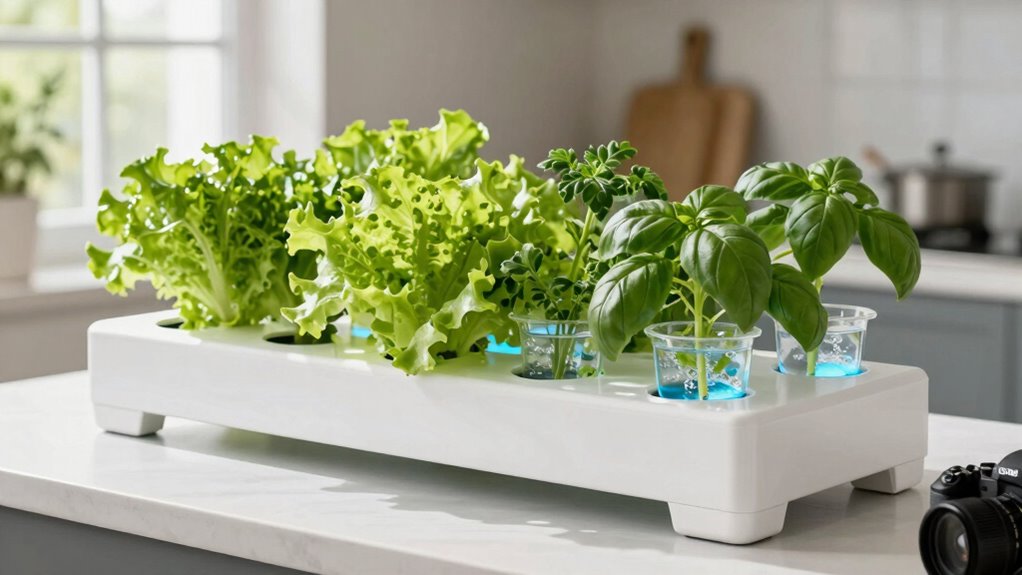
To succeed with a countertop hydroponic garden, you need to carefully manage your system design, choose resilient plants like herbs or lettuce, and provide proper lighting with adjustable LEDs. Maintain stable temperature and humidity, monitor water and nutrient levels regularly, and keep everything clean to prevent pests and diseases. Consistent care, attention to environmental conditions, and troubleshooting are key. If you stick with it, you’ll discover how to grow healthy plants effortlessly in your small space.
Key Takeaways
- Proper lighting, preferably full-spectrum LED grow lights, positioned correctly to promote healthy plant growth.
- Consistent environmental conditions, including temperature, humidity, and good airflow, to prevent stress and disease.
- Regular monitoring and adjustment of water chemistry, pH, and nutrient levels for optimal plant health.
- Choosing fast-growing, resilient plants suited for small indoor systems, like herbs and leafy greens.
- Routine cleaning, pest prevention, and system maintenance to ensure longevity and prevent issues like mold or algae.
What Are Countertop Hydroponic Gardens and How Do They Work?
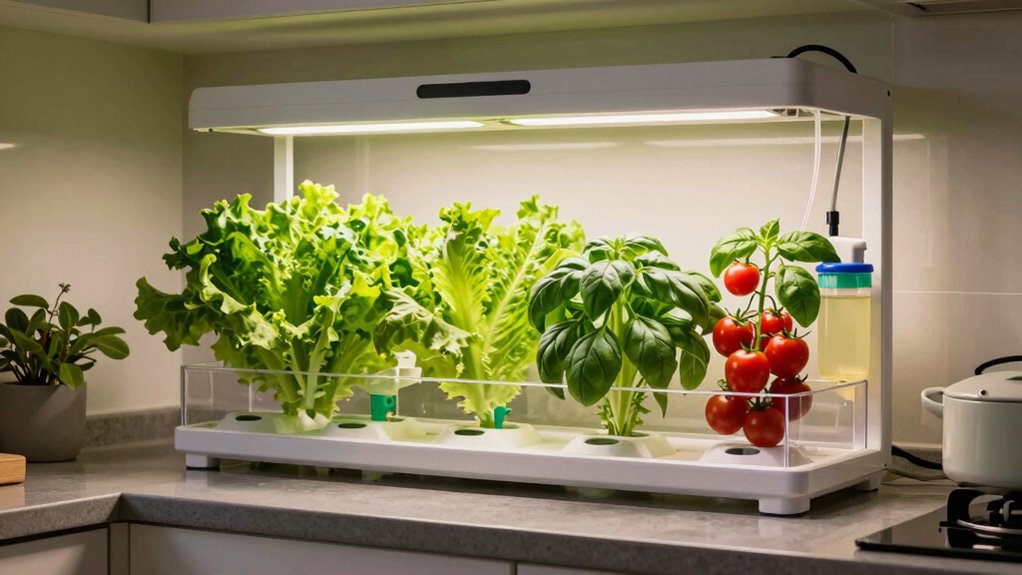
Countertop hydroponic gardens are compact, soil-free systems designed to fit easily on your kitchen counter or small space. They work by delivering nutrient-rich water directly to your plants’ roots, eliminating the need for soil. When setting up your garden, consider plant selection carefully; choose varieties that thrive indoors and suit your taste. Space optimization is key—these systems are designed to maximize limited space, often featuring vertical or modular setups that allow you to grow multiple plants without clutter. You can grow herbs, leafy greens, or small vegetables all year round, making efficient use of your countertop. This convenience means you get fresh produce with minimal fuss, while the smart design helps you make the most of your small indoor environment. Proper plant selection is essential for success in a small space, and understanding watering and nutrient management can significantly impact plant health. Incorporating smart gardening features like automated lighting and watering systems can further enhance your gardening experience and reduce maintenance efforts. Additionally, selecting systems with energy-efficient features can help reduce your overall power consumption and support sustainable gardening practices. To ensure your hydroponic garden thrives, paying attention to lighting conditions is also crucial, as proper light promotes healthy growth.
How to Choose the Best Plants for Your Indoor Hydroponic Garden
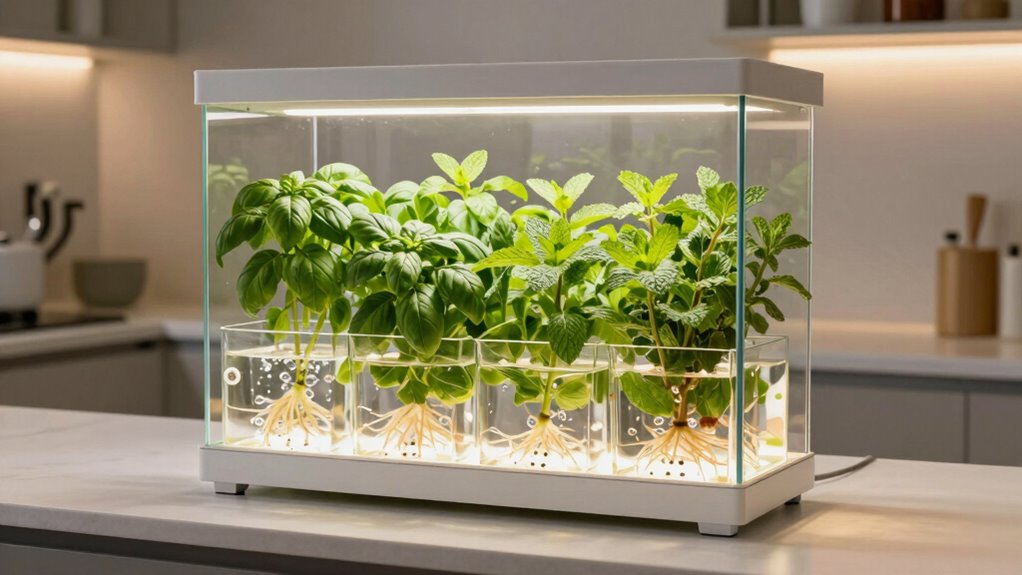
When selecting plants for your indoor hydroponic garden, consider their light needs to guarantee they thrive under your setup. You’ll also want to think about how quickly they grow and how much maintenance they require to keep them healthy. Balancing these factors helps you choose plants that fit your space and lifestyle perfectly. Additionally, selecting herbs or vegetables that are compatible with herbal infusion machines and tools can enhance your growing and culinary experience. Incorporating smart IoT technologies can also help monitor and optimize plant health with minimal effort. Understanding the light requirements of your plants is essential for success in a hydroponic system, as proper lighting directly influences growth and yield. Moreover, choosing plants with durable growth habits can lead to better long-term results and less frequent replacement. Being aware of small system principles can help you troubleshoot issues and improve your overall gardening success.
Light Requirements
Choosing the right light for your indoor hydroponic garden is essential because it directly affects plant growth and health. LED lighting is an excellent option since it provides adjustable light intensity, allowing you to tailor the brightness to your plants’ needs. When selecting LED lights, consider the light spectrum; full-spectrum LEDs support healthy growth across different plant stages. Light intensity is critical—too little hampers growth, while too much can cause stress or scorch plants. Aim for a balanced approach, ensuring your plants receive enough light without overwhelming them. Position your lights appropriately, typically 12-24 inches above your plants, adjusting as needed. Proper lighting encourages lush, healthy foliage and thriving plants, setting a strong foundation for successful hydroponic gardening.
Growth Rate
Understanding the growth rate of plants is key to selecting the best ones for your indoor hydroponic garden, especially since faster-growing varieties can help you enjoy results sooner. Growth speed directly impacts how quickly you’ll see leaves, flowers, or fruits develop, influencing your overall satisfaction. If you want quicker harvest timing, choose plants known for rapid growth, like lettuce, herbs, or radishes. These varieties typically mature within a few weeks, giving you faster returns on your efforts. Conversely, slow-growing plants like tomatoes or peppers require more patience but can be worth the wait. Considering factors like plant growth rate can help optimize your garden’s productivity and success. Additionally, understanding the support Breakfast options available in your area can provide inspiration for nutritious meals to enjoy with your homegrown produce. When selecting plants, growth cycle duration plays a crucial role in planning your planting schedule and managing expectations. Being aware of growth conditions such as lighting, nutrients, and water is essential to ensure your plants thrive and reach their full potential. For optimal results, incorporating mental wellbeing principles like patience and mindfulness can enhance your gardening experience and overall satisfaction. Consider your goals and available space when selecting plants based on their growth rate, ensuring you balance your desire for quick results with the type of produce you prefer.
Maintenance Needs
Selecting plants for your indoor hydroponic garden involves more than just their growth speed; you also need to contemplate how much maintenance they require. Some plants demand frequent pest control and vigilant pest management to prevent infestations that can ruin your crop. Choose varieties known for their resilience and low maintenance needs if you’re new to hydroponics. Regularly inspect plants for pests and act quickly to manage any issues. Maintaining proper hygiene and monitoring nutrient levels help reduce pest problems and keep plants healthy. Opting for pest-resistant plants can minimize pest control efforts and increase your chances of success. Additionally, selecting plants with low maintenance requirements can make your gardening experience more enjoyable and less labor-intensive. Selecting plants that are adaptable to indoor environments and easy to grow can further enhance your success rate. Being aware of the regulatory considerations related to various plant types can also help you avoid potential legal issues and ensure compliance. Incorporating appropriate lighting and environmental controls further supports plant health and reduces the need for frequent intervention. By selecting plants with manageable maintenance needs, you’ll enjoy a thriving, stress-free hydroponic garden with less time spent on pest management.
Creating the Perfect Environment: Lighting, Temperature, and Humidity Tips
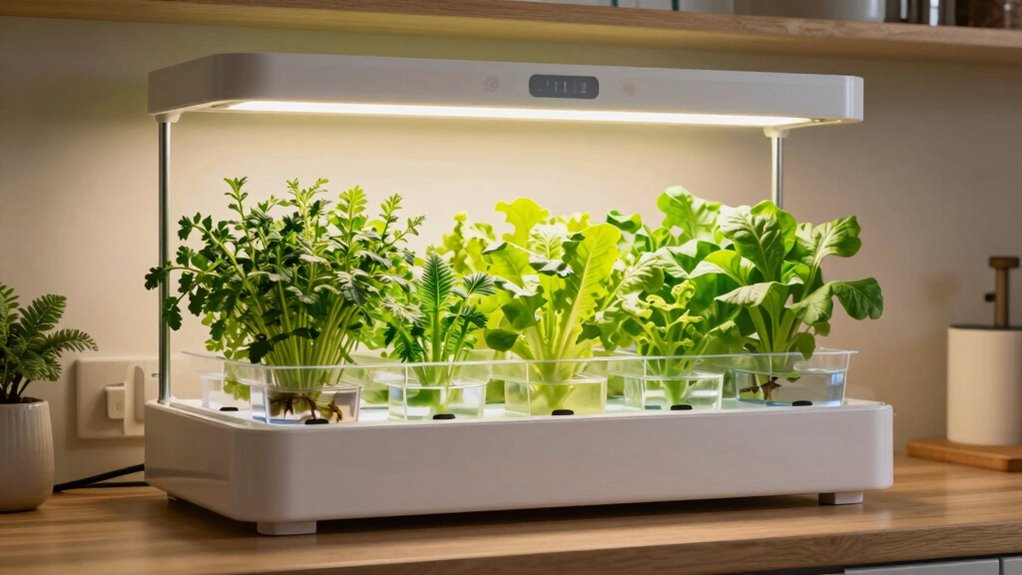
Getting the lighting right is key to healthy plant growth, so you’ll want to choose the best light sources and schedules. Maintaining consistent temperature and humidity levels helps your plants thrive and prevents issues. With proper climate control strategies, you can create an environment that keeps your garden productive and vibrant. Additionally, understanding the importance of water chemistry ensures your plants receive the proper nutrients and pH balance for optimal growth. Regularly monitoring climate conditions can help you make adjustments before problems develop, and being aware of air quality can further enhance the health of your indoor garden. Incorporating proper care techniques can also extend the lifespan and beauty of your plants.
Optimal Lighting Conditions
Proper lighting is essential for your hydroponic garden to thrive, as it directly influences plant growth and health. You should provide bright, consistent light, either from LED grow lights or natural sunlight. LED grow lights are energy-efficient and can be customized to suit your plants’ needs, ensuring they get enough light regardless of the weather. Natural sunlight is ideal but may require positioning near windows or using reflective surfaces to maximize exposure. Imagine your space like this:
| Bright, even light | Plants flourish with steady illumination | No shadows or dark spots |
|---|---|---|
| LED grow lights | Mimic sunlight, promote growth | Adjustable intensity |
| Natural sunlight | Free, abundant, ideal for many plants | Filtered or indirect |
Achieving the right lighting creates a vibrant, healthy environment for your hydroponic garden. Proper lighting is also vital for plant health, supporting photosynthesis and preventing etiolated growth.
Climate Control Strategies
Maintaining the right climate conditions is key to keeping your hydroponic garden healthy and productive. Consistent temperature and humidity levels prevent stress on your plants and reduce the risk of pests and diseases. To enhance pest prevention, keep the environment clean and avoid excess moisture, which attracts unwanted critters. Implement crop rotation strategies to minimize pest buildup and prevent nutrient depletion. Adjust your climate controls to provide stable conditions, avoiding sudden temperature swings that can weaken plants. Proper ventilation helps regulate humidity and keeps the air fresh, discouraging mold and pests. Regularly monitor your environment to ensure it stays within ideal ranges. Additionally, understanding climate control strategies can help you fine-tune your setup for optimal growth. By managing these climate control strategies, you create a stable, healthy environment that supports robust plant growth and minimizes problems.
How to Manage Nutrients and Water for Healthy Hydroponic Growth
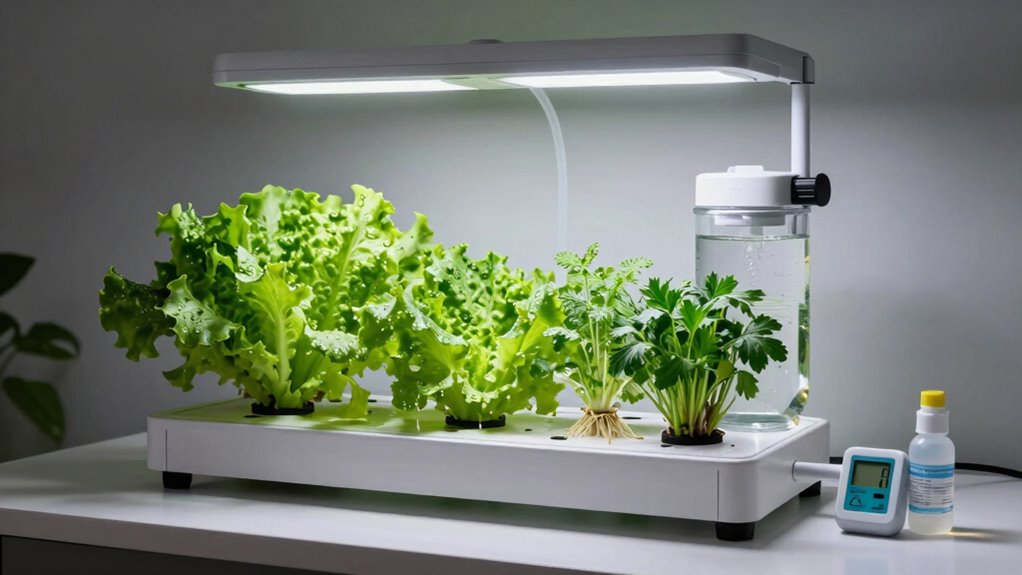
To guarantee healthy growth in your hydroponic garden, you need to carefully manage both nutrients and water. Maintaining proper nutrient balance is vital; too much or too little of specific nutrients can hinder plant development. Regularly check and adjust the nutrient solution to make certain it meets your plants’ needs. Water circulation is equally important—consistent movement prevents stagnation, supplies oxygen to roots, and distributes nutrients evenly. Use a reliable pump to keep water flowing smoothly and monitor flow rates to avoid over- or under-circulation. Keep an eye on pH levels, as they affect nutrient uptake. By balancing nutrients and ensuring efficient water circulation, you’ll create an ideal environment for your plants to thrive and grow healthy.
Common Problems in Hydroponic Systems and How to Fix Them

Even with careful nutrient and water management, hydroponic systems can face common problems that slow plant growth. Pests can invade your setup, making pest management essential. To prevent pests, keep the area clean and inspect plants regularly. If pests appear, remove them promptly. Root rot is another issue caused by overwatering or poor drainage. Ensure your system has proper aeration and avoid stagnant water. Nutrient imbalances can also stunt growth; check your nutrient levels often. The table below summarizes key problems and fixes:
| Problem | Solution |
|---|---|
| Pest invasion | Implement pest prevention and manual removal |
| Root rot | Improve drainage and aerate roots |
| Nutrient deficiency | Regularly test and adjust nutrient levels |
| Algae growth | Cover reservoirs to block light |
Tips for Maintaining Your Hydroponic Garden and Extending Its Life
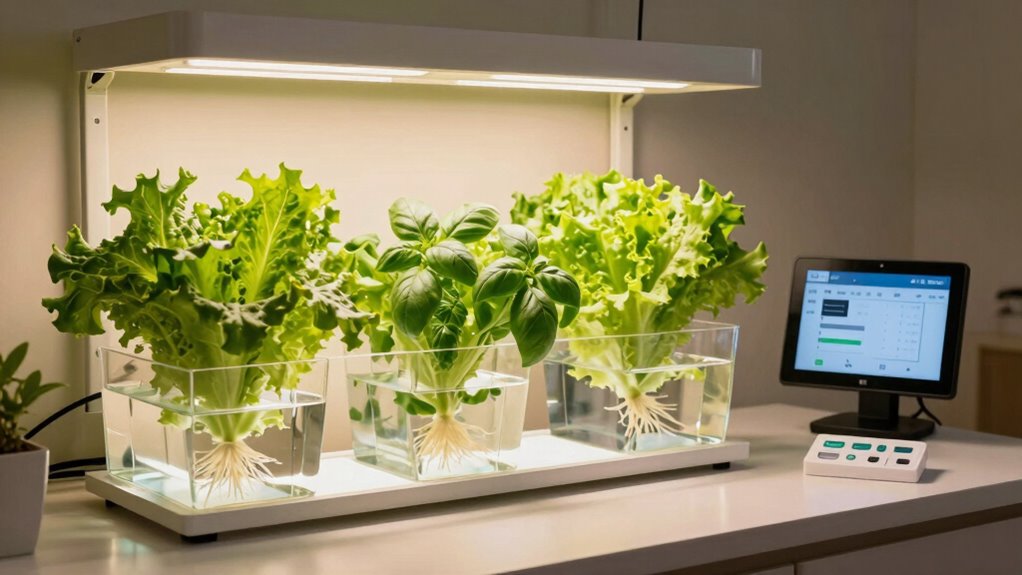
Regularly inspecting your hydroponic system and performing timely maintenance are key to keeping it running smoothly and extending its lifespan. Check for signs of pests early, and practice pest prevention by sealing openings and maintaining cleanliness. This helps prevent infestations that can damage plants and harm your system. Keep the nutrient solution clean and monitor water levels to avoid stagnation, which can attract pests. Regularly clean filters, reservoirs, and grow trays to prevent mold and algae buildup. Ensure your lighting and ventilation are functioning properly to promote healthy growth. By staying vigilant and addressing issues promptly, you reduce the risk of pests compromising your garden’s health, ultimately extending its life and maximizing your success.
How to Evaluate Your System and Set Realistic Expectations
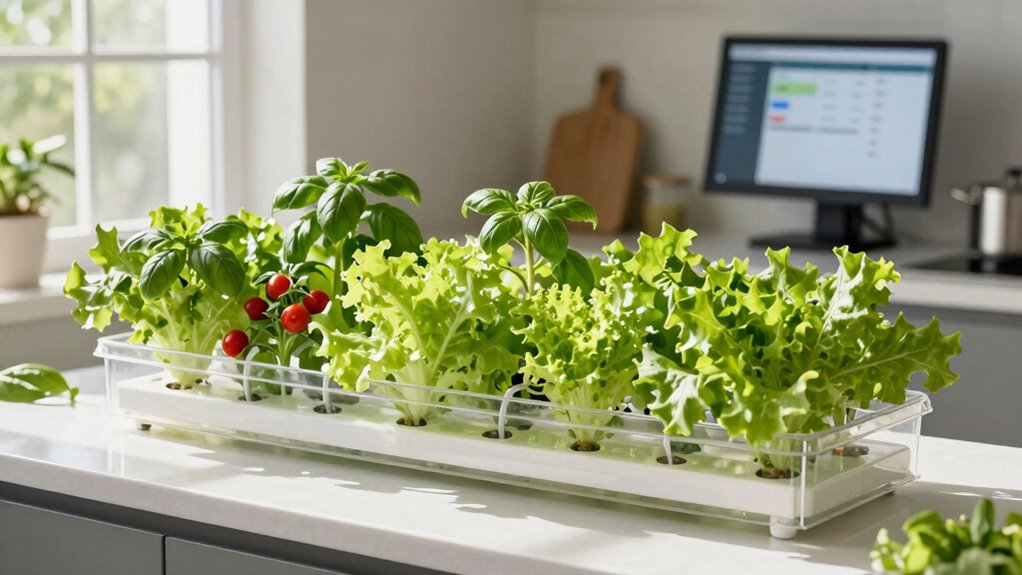
Evaluating your hydroponic system thoroughly helps you understand its current performance and identify areas for improvement. Start by checking for signs of soil contamination, which can hinder plant growth and introduce pests. Regularly inspect roots and water reservoirs for algae or microbial buildup. Assess your pest control measures; if pests are present, it indicates your system needs better sanitation or barriers. Set realistic expectations by recognizing that some issues, like minor pest presence or nutrient fluctuations, are normal initially. Keep track of plant health, growth rates, and any recurring problems. This honest evaluation helps you adjust your maintenance routines, optimize environmental conditions, and create a healthier system. With consistent assessment, you’ll develop a clearer picture of what your countertop hydroponic garden needs to thrive.
Frequently Asked Questions
What Is the Typical Cost of Starting a Countertop Hydroponic Garden?
The typical cost of starting a countertop hydroponic garden ranges from $50 to $200, depending on size and features. Your initial investment includes a grow tray, lighting, nutrient solutions, and a water pump. To guarantee success, make a clear cost estimate beforehand, considering quality and durability. This way, you can enjoy fresh herbs and veggies without overspending, and you’ll set yourself up for a productive, sustainable gardening experience.
How Much Time Does Daily Maintenance Usually Require?
You’ll typically spend about 10 to 15 minutes daily on maintenance, focusing on lighting requirements and nutrient management. You’ll check the lighting to guarantee plants get enough light, adjust if necessary, and monitor nutrient levels to keep your plants healthy. You’ll top off water, clean components, and observe plant growth, all while making certain your garden stays balanced. This routine helps your hydroponic garden thrive with minimal daily effort.
Are There Specific Safety Concerns With Indoor Hydroponic Systems?
You should be aware of safety concerns with indoor hydroponic systems, especially pest prevention and electrical safety. To avoid pests, keep your system clean and monitor plants regularly. For electrical safety, ensure cords and connections are properly insulated and away from water. Always unplug the system before maintenance, and use equipment designed for indoor gardening. Staying vigilant helps prevent accidents and keeps your garden safe and thriving.
Can a Countertop Hydroponic Garden Grow Root Vegetables?
Yes, you can grow root vegetables in a countertop hydroponic garden if you consider root vegetable compatibility and light requirements. Choose crops like radishes or baby carrots, which adapt well to smaller spaces. make certain your garden provides enough light, typically full-spectrum LED grow lights, and maintain proper nutrient levels. By meeting these conditions, you’ll successfully grow healthy root vegetables indoors.
How Do I Troubleshoot Algae Growth in My System?
To troubleshoot algae growth, start by preventing algae through proper algae prevention measures like covering exposed water surfaces and reducing light exposure. Next, focus on nutrient balancing; guarantee your system has the right nutrients without excess, as over-fertilizing encourages algae. Regularly clean your system and change the water to keep algae at bay. Maintaining these practices helps keep your hydroponic garden healthy and algae-free.
Conclusion
Think of your hydroponic garden as a delicate boat sailing on a vast, ever-changing sea. With the right adjustments—lighting, nutrients, and care—you’ll navigate smoothly toward a bountiful harvest. Remember, even the sturdiest vessels face storms, so stay vigilant and patient. With perseverance, your garden will flourish like a well-charted voyage, turning your countertop into a lush, thriving oasis. Keep steering with confidence, and success will be yours.