
If you’re short on space, you can still compost effectively using small-scale solutions like indoor bins or worm composting. Choose odor-controlled bins that fit under your sink or on shelves, and guarantee proper ventilation and secure lids. Worm composting is quiet and produces nutrient-rich castings, perfect for limited areas. Incorporate techniques like Bokashi to boost efficiency. Keep conditions stable for worms, and you’ll turn waste into valuable compost. Keep exploring to discover more ways to make composting work for your space.

Get kitchen staples and gadgets delivered free with Prime
- Fast, free delivery on millions of items
- Prime Video, Amazon Music and more included
- Member-only deals all year
Key Takeaways
- Indoor composting solutions like odor-controlled bins are ideal for small spaces such as apartments or countertops.
- Worm composting (vermicomposting) efficiently transforms food waste into nutrient-rich castings in compact setups.
- Proper management of moisture, temperature, and ventilation ensures odorless and pest-free indoor composting.
- Combining methods like Bokashi with worm bins can enhance waste breakdown and composting efficiency in limited areas.
- Sharing knowledge and resources fosters community-based composting efforts, expanding small-scale sustainability practices.
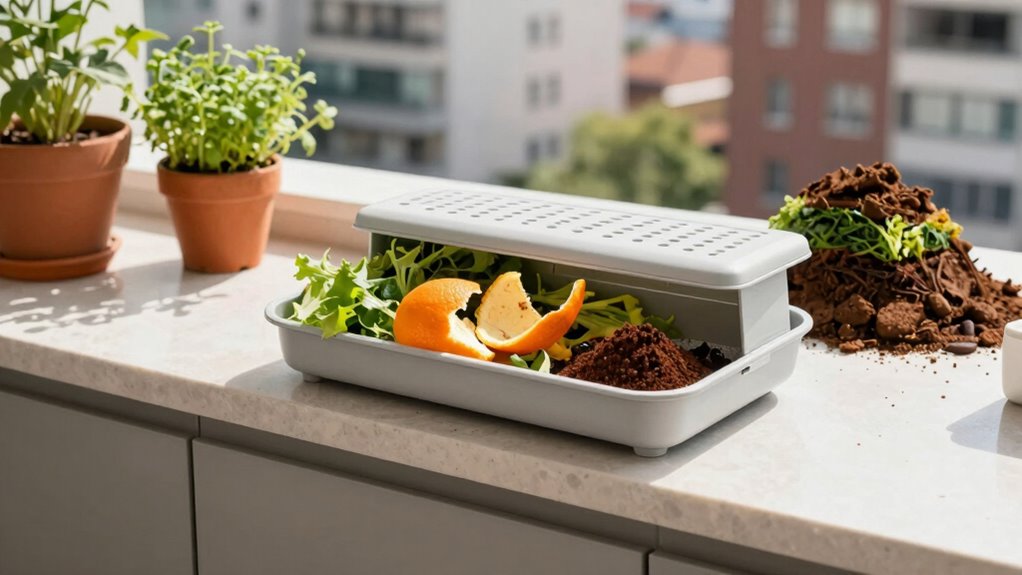
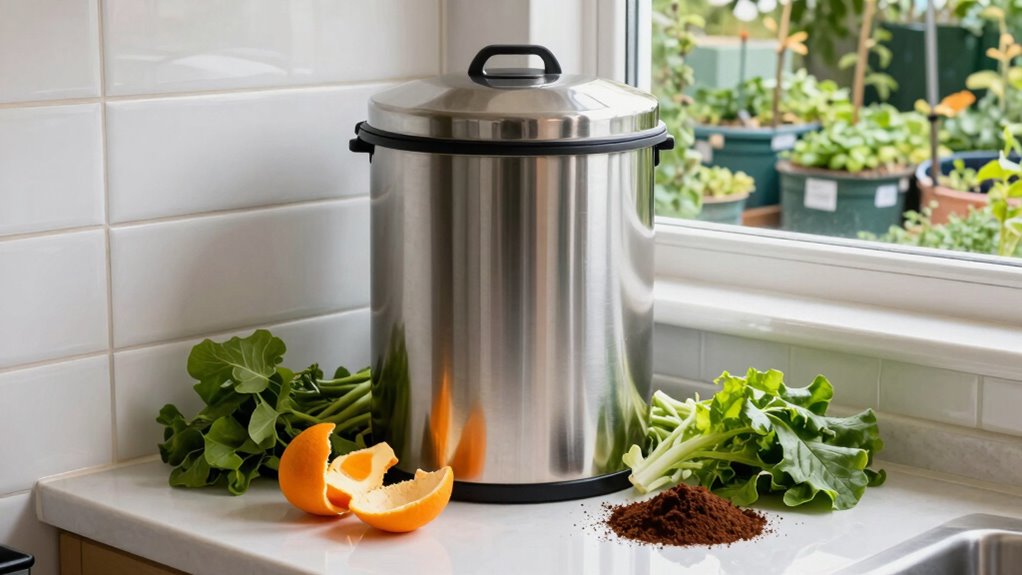
Living in a small space doesn’t mean you have to give up on composting; in fact, with a little planning, you can turn your limited area into a productive composting spot. The key is choosing the right methods and equipment that fit your environment. An indoor bin is a practical solution, especially if you don’t have a yard or outdoor space. These bins are compact, odor-controlled, and designed specifically for small-scale composting. You can keep one under your kitchen sink or on a shelf in your apartment, making it easy to manage scraps without mess or smell. When selecting an indoor bin, look for one with good ventilation and a secure lid to prevent odors from escaping and pests from getting in.
Small spaces can still support composting with compact, odor-controlled indoor bins.
One of the most efficient ways to compost indoors is through worm composting, also called vermicomposting. This method uses worms—typically red wigglers—to break down food waste quickly and quietly. Worm composting is ideal for small spaces because it produces rich, usable compost in a confined container. You simply set up a bedding of moist newspaper or coconut coir, add your worms, and start feeding them kitchen scraps like vegetable peels, coffee grounds, and eggshells. The worms eat the waste and produce worm castings, a nutrient-dense compost perfect for houseplants or a balcony garden. Plus, worm composting is odorless when managed properly, making it a discreet and clean way to compost indoors. Proper temperature control is essential to keep your worms happy and active. Maintaining the right ventilation and moisture levels in the bin also helps prevent unpleasant odors and promotes healthy worm activity.
To ensure optimal conditions, it’s also important to understand the benefits of vermicomposting, which include faster composting times and reduced odors compared to traditional methods. You’ll want to place your worm bin in a spot that maintains a stable temperature—somewhere out of direct sunlight and away from drafts. Keep the bedding moist but not soaked, and feed the worms small amounts regularly. When the bin starts to fill, harvest the castings by gently separating the worms from the compost, then reuse the clean castings as fertilizer. This process minimizes waste and turns your food scraps into a valuable resource, all without leaving your apartment or small home overwhelmed. Incorporating composting methods like Bokashi or other techniques can further enhance your indoor composting efficiency, making the process even more adaptable to small spaces.
As an affiliate, we earn on qualifying purchases.
Frequently Asked Questions
Can Composting Attract Pests in Small Spaces?
Yes, composting can attract pests in small spaces if you’re not careful. To prevent this, focus on pest prevention by regularly turning your compost and avoiding meat or dairy. Container selection is essential—choose a well-ventilated, secure container with a tight lid to keep pests out. Proper maintenance and choosing the right container help you enjoy composting without attracting unwanted visitors.
How Often Should I Turn My Small Compost Bin?
You should turn your small compost bin every 2-3 days to promote even decomposition and prevent odors. Proper moisture management is vital, so keep the compost moist but not soggy. The compost bin size influences how often you need to turn it—smaller bins require more frequent mixing to aerate and balance moisture levels. Regular turning helps control pests and speeds up composting in limited space.
What Are the Best Odor Control Methods for Compact Composting?
Think of your compost bin as a revitalizing change—odor control is key. You can use a natural deodorizer, like baking soda or charcoal, to absorb smells effectively. Carbon balancing also helps, so add brown materials like dry leaves or shredded paper to keep odors in check. Regular turning and proper layering ensure your small space stays fresh, making composting a pleasant part of your routine.
Is Composting Suitable for Apartment Living Year-Round?
Yes, composting is suitable for apartment living year-round with indoor composting options like balcony bins. You can set up a small, odor-controlled bin in your apartment or on your balcony, making it easy to compost kitchen scraps regardless of the weather. Just guarantee proper ventilation and odor management. This way, you reduce waste and create nutrient-rich soil without leaving your home, all year long.
How Do I Know When My Compost Is Ready to Use?
You’ll know your compost is ready when it’s dark, crumbly, and earthy in smell, indicating compost maturity. The appearance should resemble rich soil, with no recognizable food scraps. This means its soil nutrient content has balanced out, making it perfect for your plants. If you see few to no leftover scraps and the texture feels uniform, your compost is ready to use in your containers or garden beds.
Conclusion
By embracing composting in small spaces, you’re quietly nurturing a greener, more sustainable world right from your own corner. Every little effort helps turn what might seem like scraps into nourishing soil, enriching your environment and community. Remember, even the tiniest step can lead to a more vibrant, thriving future—so don’t hesitate to keep your eco-friendly habits blooming, no matter how cozy your space. Your gentle touch makes a meaningful difference.
Columbus Day / Indigenous Peoples' Day Picks
long weekend sales
As an affiliate, we earn on qualifying purchases.