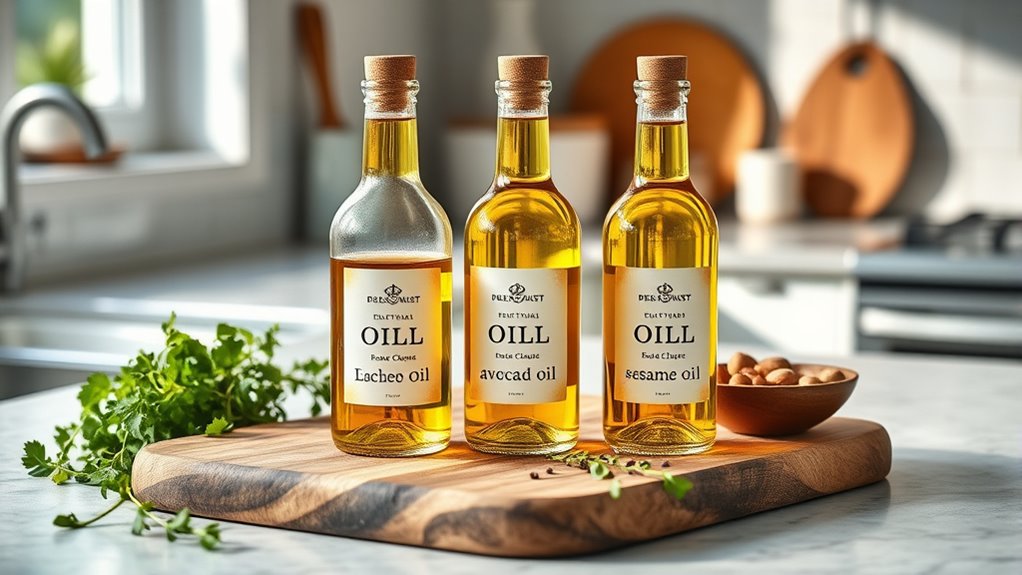

When choosing eco-friendly cooking oils, opt for options like olive, avocado, or seed oils from sustainable sources. Look for certifications that guarantee responsible farming practices such as reduced pesticide use and water conservation. Supporting local growers and renewable sources helps lower transportation emissions and preserves natural resources. By making mindful choices, you can help support environmental health and future food security. Exploring further will reveal more tips to make your cooking even greener.
Key Takeaways
- Select oils from renewable plant sources like olive or avocado to ensure sustainable cultivation.
- Prioritize locally sourced oils to reduce transportation emissions and support local farmers.
- Look for certifications indicating adherence to environmentally responsible farming and harvesting practices.
- Choose oils produced through sustainable farming methods that preserve soil health and biodiversity.
- Consider brands committed to eco-friendly energy practices, such as supporting renewable energy initiatives.

Have you ever wondered if your choice of cooking oil can impact the environment? It’s a valid question, especially as more people become conscious of sustainability and eco-friendly living. The good news is that your selection of cooking oil can make a difference, especially when you opt for options produced through sustainable farming practices and sourced from renewable sources. Sustainable farming ensures that crops are grown without depleting the soil, reducing the need for harmful chemicals, and maintaining biodiversity. By choosing oils from farms that prioritize these methods, you’re supporting agricultural practices that are better for the planet and help preserve natural resources for future generations.
Many eco-friendly cooking oils are derived from renewable sources, meaning they are produced from plants that can be replanted and harvested repeatedly without causing long-term environmental damage. For example, oils like olive, avocado, and certain seed oils come from crops that can be cultivated sustainably. These crops often require less water and energy compared to more resource-intensive alternatives, and they are typically grown in ways that minimize soil erosion and pesticide use. When you select oils from renewable sources, you’re encouraging the agricultural industry to shift toward more responsible and environmentally friendly practices.
Eco-friendly cooking oils come from renewable plants that minimize environmental impact and promote sustainable agriculture.
Additionally, choosing oils from sustainable farming initiatives often supports local economies and reduces the carbon footprint associated with transportation. When oils are sourced locally, they don’t have to travel long distances, which means fewer emissions from trucks and ships. This is especially important when considering the overall environmental impact of your cooking habits. By favoring oils produced on farms committed to sustainable practices, you’re helping to promote a more resilient food system that balances productivity with ecological integrity.
Furthermore, supporting hydrogen energy initiatives and other renewable energy sources can contribute to reducing the overall environmental impact of food production and transportation, aligning with eco-friendly choices. Many brands now emphasize transparency about their sourcing practices. Look for certifications or labels that indicate the oil was produced through sustainable farming and from renewable sources. These markers often mean the company adheres to strict environmental standards, which can include reduced pesticide use, water conservation, and soil health management. Making informed choices like this not only benefits the environment but also encourages producers to maintain high standards.
Frequently Asked Questions
How Do Eco-Friendly Oils Compare in Cost to Conventional Oils?
Eco-friendly cooking oils often cost more than conventional ones due to higher price comparison and sustainable production practices. You’ll find that organic or sustainably sourced oils tend to have increased cost factors, reflecting their eco-conscious methods. While they may be pricier upfront, you might save in the long run by choosing oils that support environmental health. Overall, expect a moderate rise in cost, but consider the added benefits for the planet.
Are There Specific Certifications to Look for in Eco-Friendly Cooking Oils?
You should look for certification standards like USDA Organic or Fair Trade, which verify eco-friendly practices. Pay attention to eco label criteria that confirm the oil is sustainably sourced and produced with minimal environmental impact. These certifications guarantee the oil meets specific standards for sustainability, helping you make an informed, eco-conscious choice. Always check labels carefully to confirm the oil’s adherence to recognized eco certifications.
Which Eco-Friendly Oils Have the Longest Shelf Life?
Think of your eco-friendly oils as wise old trees, lasting longer with proper care. Extra virgin olive oil and coconut oil have the longest shelf life, especially when stored in a cool, dark place. For the best shelf life, use airtight containers and avoid heat or sunlight. Following these storage tips guarantees your oils stay fresh, just like a sturdy tree standing tall year after year.
Can Eco-Friendly Oils Be Used for High-Heat Cooking?
Yes, eco-friendly oils can be used for high-heat cooking if they have a high smoke point and good heat tolerance. Oils like avocado, refined coconut, and grapeseed are excellent choices because they withstand higher temperatures without burning or breaking down. Always check the smoke point before using, ensuring your eco-friendly option suits your cooking method. This way, you enjoy healthy, sustainable meals without compromising flavor or safety.
How Do Eco-Friendly Oils Impact the Nutritional Value of Meals?
Think of eco-friendly oils as nourishing messengers for your meals. They often bring richer nutritional benefits, like healthy fats and antioxidants, boosting your health implications. Using these oils can elevate your dishes, making them more than just fuel—they become wholesome, vibrant experiences. With each splash, you’re not only caring for the planet but also enriching your body’s well-being, creating a harmony of taste and health that lasts.
Conclusion
So, next time you reach for that fancy cooking oil, remember—you’re not just fueling your meal, but also saving the planet one splash at a time. Who knew that choosing eco-friendly oils could make you a hero in disguise? So go ahead, impress your friends with your “green” choices, and maybe, just maybe, you’ll help save the world—one delicious, environmentally conscious bite at a time. Now, isn’t that a recipe worth trying?