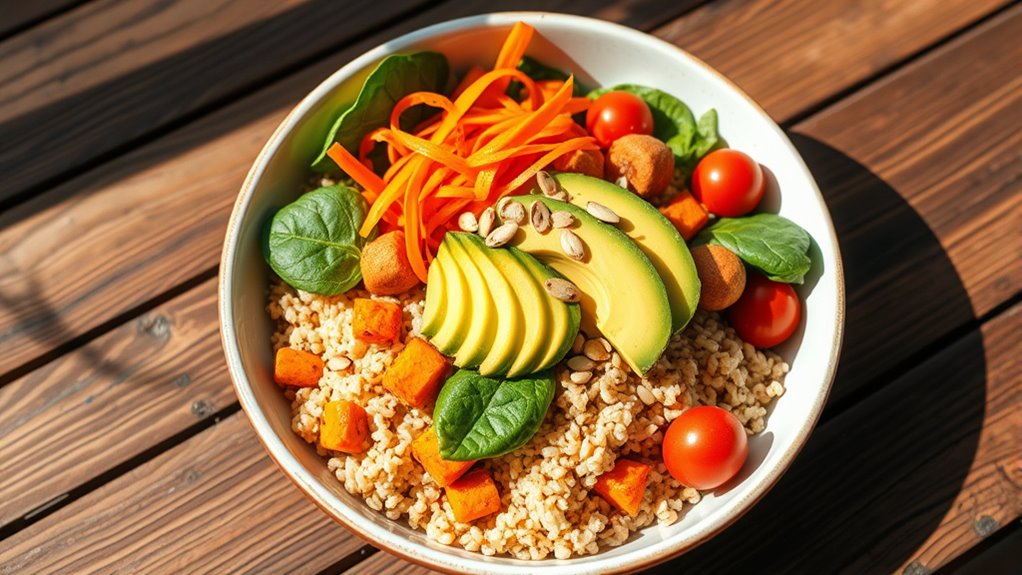
To build balanced vegan meal bowls, combine plant-based proteins like beans or tofu with fiber-rich grains such as quinoa or brown rice. Add a variety of colorful vegetables for vitamins and antioxidants, and include healthy fats like avocado or nuts for fullness. Mix in herbs, spices, or citrus for flavor. By thoughtfully combining these ingredients, you’ll create satisfying, nutrient-dense bowls. Keep exploring to discover creative ideas to personalize your bowls further.
Key Takeaways
- Incorporate a variety of plant-based proteins, carbs, healthy fats, and colorful vegetables for a balanced, nutrient-rich bowl.
- Use visual color diversity and diverse textures to enhance nutritional value and eating experience.
- Substitute ingredients like grains and proteins to add variety without sacrificing essential nutrients.
- Season with herbs, spices, and natural dressings such as tahini or olive oil to boost flavor and health benefits.
- Adjust ingredient portions based on individual preferences and availability to create personalized, nourishing meal bowls.
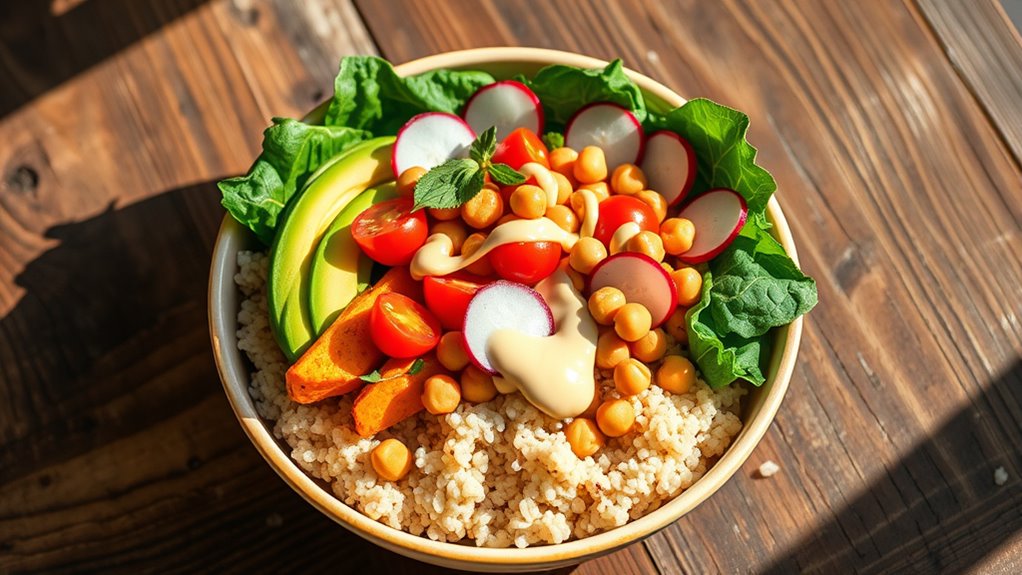
Vegan meal bowls have become a popular way to enjoy nutritious, flavorful, and customizable plant-based dishes in one convenient package. They’re an excellent way to pack in a variety of nutrients while catering to your personal taste preferences. To build a balanced vegan meal bowl, you need to focus on incorporating key components: proteins, carbohydrates, healthy fats, and plenty of vegetables. When choosing ingredients, keep in mind the nutritional benefits each offers; for example, beans and lentils provide plant-based protein and fiber, while leafy greens supply essential vitamins and minerals. If you’re looking to tweak your bowl, ingredient substitutions are your best friend. Swap out quinoa for brown rice for more fiber, or use tofu instead of tempeh to vary your protein sources. These substitutions help you keep your meals interesting and ensure you’re getting a broad spectrum of nutrients.
When assembling your bowl, aim for color and variety, since different colors often indicate different nutrient profiles. For instance, red bell peppers are high in vitamin C, while purple cabbage offers antioxidants. Combining diverse ingredients not only boosts nutritional benefits but also enhances flavor and texture. For protein, consider adding chickpeas or edamame, which are hearty and filling, and can be easily swapped based on what you have on hand. Carbohydrates like sweet potatoes or whole grains serve as the base, providing energy and fiber, while healthy fats from avocado, nuts, or seeds round out your meal and promote satiety. Balance is key—aim to include moderate portions of each component to keep your bowl satisfying without overwhelming your digestion.
Moreover, seasoning and dressing choices can elevate your meal while adding nutritional value. Use herbs, spices, and citrus juices to enhance flavor naturally, and opt for dressings made with tahini, olive oil, or apple cider vinegar. These not only taste great but also contribute healthy fats and antioxidants. Remember, building a balanced vegan meal bowl is about flexibility—if you’re missing one ingredient, find a suitable substitution that maintains the nutritional profile. For example, if you don’t have fresh greens, frozen spinach can work just as well. The goal is to create a meal that is nourishing, flavorful, and tailored to your dietary needs and preferences, making every bowl a satisfying and healthful experience.
Frequently Asked Questions
How Can I Add More Protein to Vegan Bowls?
To add more protein to your vegan bowls, include a variety of plant-based options like beans, lentils, chickpeas, tofu, tempeh, and edamame. You can also sprinkle seeds such as chia, hemp, or pumpkin seeds, and add nuts like almonds or walnuts for extra protein. Incorporating these diverse protein sources guarantees your meal is nutritious, satisfying, and well-balanced while boosting your intake of plant-based options.
What Are Some Affordable Ingredients for Balanced Vegan Bowls?
Think of your bowl as a garden where each ingredient is a seed. You can plant budget-friendly grains like rice or oats and pair them with inexpensive vegetables such as carrots, spinach, or cabbage. These ingredients are affordable and versatile, creating a nourishing foundation. By choosing simple, seasonal produce, you keep costs low while adding vibrant flavors and textures, making your vegan bowls both balanced and budget-friendly.
How Do I Prevent My Vegan Bowls From Becoming Soggy?
To prevent your vegan bowls from becoming soggy, focus on texture preservation by adding ingredients in the right order and using ingredient layering. Place wetter items like sauces and dressings at the bottom, then layer dry ingredients on top. Keep crispy elements, like roasted veggies or nuts, separate until serving. This method maintains the crunch and freshness, ensuring your bowl stays appealing and satisfying throughout.
Can I Prepare Vegan Bowls in Advance for the Week?
Yes, you can prepare vegan bowls in advance with smart meal prep strategies. Store each component separately, especially watery ingredients like tomatoes or cucumbers, to prevent sogginess. Use airtight containers and layer ingredients strategically—place wetter items on top or at the bottom. Keep dressings and sauces separate until you’re ready to eat. These storage tips help maintain freshness and texture, making your weekly vegan bowls convenient and delicious.
What Are Common Nutritional Deficiencies in Vegan Meal Bowls?
Think of your vegan bowls like a medieval knight’s armor—without proper pieces, you’re vulnerable. You might miss out on vitamin B12 and omega-3 fatty acids if you don’t include fortified foods, supplements, or specific ingredients. To stay balanced, add fortified plant milks, seeds like flax or chia, and algae oils. These help prevent common deficiencies and keep you strong, no matter if you’re battling dragons or just everyday life.
Conclusion
Building balanced vegan meal bowls is a simple way to enjoy nutritious, delicious food. Did you know that plant-based diets can reduce your risk of heart disease by up to 25%? By combining colorful veggies, protein, healthy fats, and grains, you’re fueling your body with everything it needs. So go ahead, get creative, and make every bowl a vibrant, health-boosting masterpiece. Your taste buds and your body will thank you!