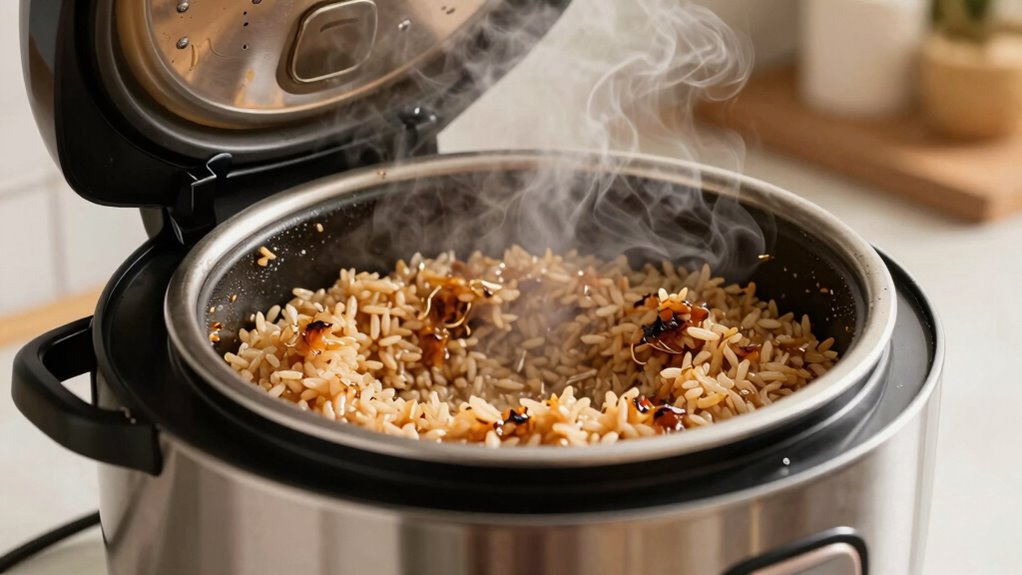
The main mistake that makes you dislike your rice cooker when cooking brown rice is using the wrong water ratio, skipping soaking, and not adjusting cooking time properly. Too much water can make the rice mushy, while too little leaves it chewy or underdone. Rinsing and soaking help achieve a better texture, but if you ignore these steps and don’t fine-tune your settings, your brown rice may turn out sticky or undercooked. Keep going to discover how to fix this for perfect rice every time.
Key Takeaways
- Using too little water causes undercooked, chewy rice, leading to dissatisfaction with the rice cooker results.
- Not rinsing or soaking brown rice results in uneven cooking and sticky, tough grains.
- Overestimating water amounts makes the rice mushy and unappealing.
- Ignoring proper cooking times for brown rice leads to underdone or overly sticky textures.
- Relying solely on default settings without adjusting for brown rice can produce poor, undesirable outcomes.
Why Brown Rice Turns Out Sticky or Undercooked
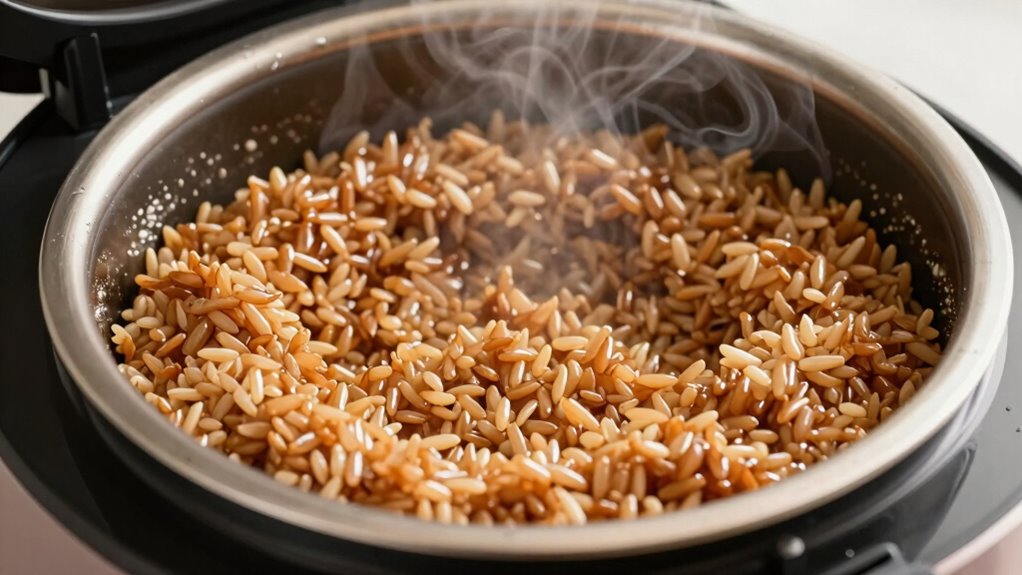
Brown rice often turns out sticky or undercooked because it still has its outer bran layer intact, which makes it tougher and takes longer to soften. This layer affects the rice’s flavor, giving it a nuttier, more robust taste than white rice. The key lies in your cooking methods. If you don’t use enough water or don’t cook it long enough, the rice won’t fully absorb the liquid, leaving it chewy or underdone. Conversely, too much water can make it mushy and sticky. To improve texture and flavor, you need to adjust your cooking time and water ratio. Properly cooked brown rice should be tender yet firm, with a distinct nutty flavor. Mastering your cooking methods guarantees your rice turns out perfectly every time. Additionally, understanding the cooking techniques specific to brown rice can help you achieve the ideal texture and flavor. Using appropriate cookware can also make a significant difference in the cooking process, ensuring even heat distribution and better absorption. Being aware of cooking science principles such as ratios, temperature, and water chemistry can further refine your results. A thorough understanding of grain properties can help you select the best cooking approach for different types of rice. Paying attention to water absorption rates can also guide you in achieving consistently good results.
Why Soaking and Rinsing Brown Rice Makes a Difference
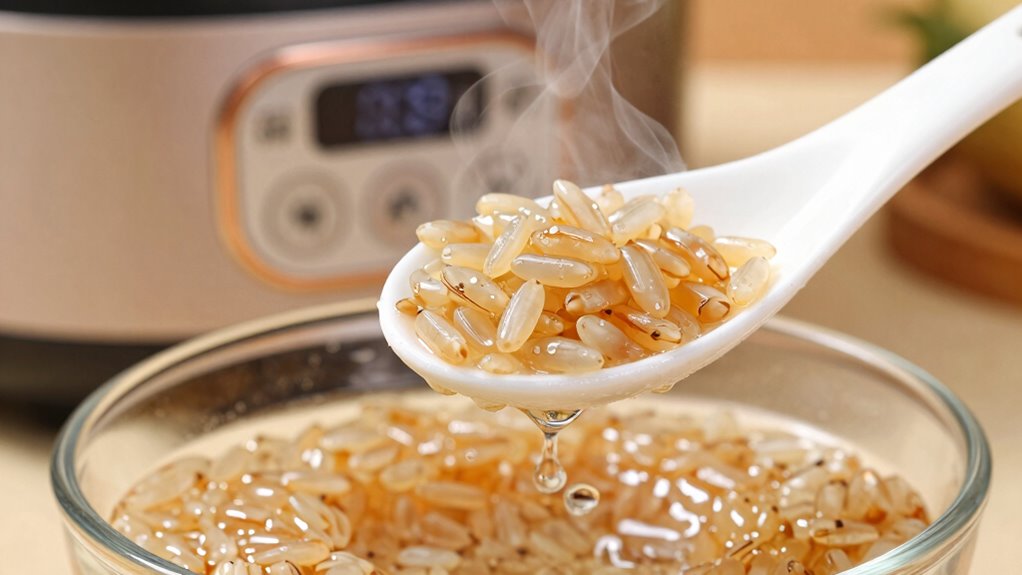
Rinsing and soaking your rice before cooking can markedly improve its texture and flavor. Rinsing removes surface starches that cause stickiness, leading to fluffier rice, while also washing away impurities. Soaking helps hydrate the grains, making them cook more evenly and reducing cooking time. This hydration process allows the grains to absorb water gradually, resulting in a more balanced taste. Different cooking methods benefit from soaking, especially stovetop or rice cooker techniques, where even moisture absorption is essential. Proper water absorption techniques can make a significant difference in the final outcome. Skipping these steps can leave your brown rice chewy or unevenly cooked, diminishing its natural nutty flavor. Taking the time to rinse and soak ensures better control over the final texture and taste, making your rice more enjoyable and consistent. Incorporating these steps can also improve overall rice quality, especially when combined with herbal wellness practices that enhance flavor profiles and nutritional benefits. Additionally, understanding the impact of soaking on nutrient retention can further elevate your rice’s health benefits.
How Water Ratios Affect Brown Rice Texture
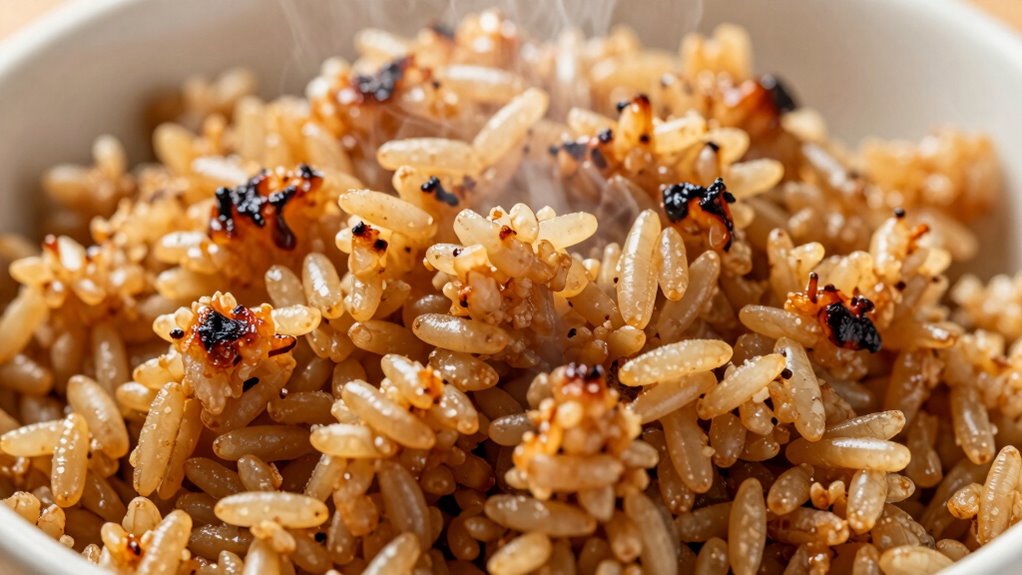
Have you ever wondered how the amount of water you use can change the texture of your brown rice? Using too much water can make it mushy, while too little results in chewy, undercooked grains. The right water ratio influences not only the rice’s consistency but also its flavor, as excess water can dilute the natural rice flavor. Adjusting the water amount affects the cooking duration; more water typically means longer cooking time, ensuring the rice becomes tender. Conversely, less water shortens the cooking process but risks uneven doneness. Finding the perfect balance is key: too much water and your rice may be overly soft, too little and it could be tough. Experimenting with water ratios helps you achieve the ideal rice texture and flavor every time. Proper water ratio also plays a role in grease detection during rice preparation, ensuring a clean and balanced cooking process. Additionally, understanding the water absorption properties of brown rice can help you fine-tune your cooking techniques for consistent results, especially since the vetted recommendations consider different rice varieties and their unique absorption qualities. A better understanding of cooking technology can further improve your results by guiding you through precise adjustments for different types of rice. Recognizing how fandom influences preferences and techniques can also enhance your overall rice cooking experience by aligning your methods with traditional or innovative practices.
Getting the Timing Right for Perfect Brown Rice
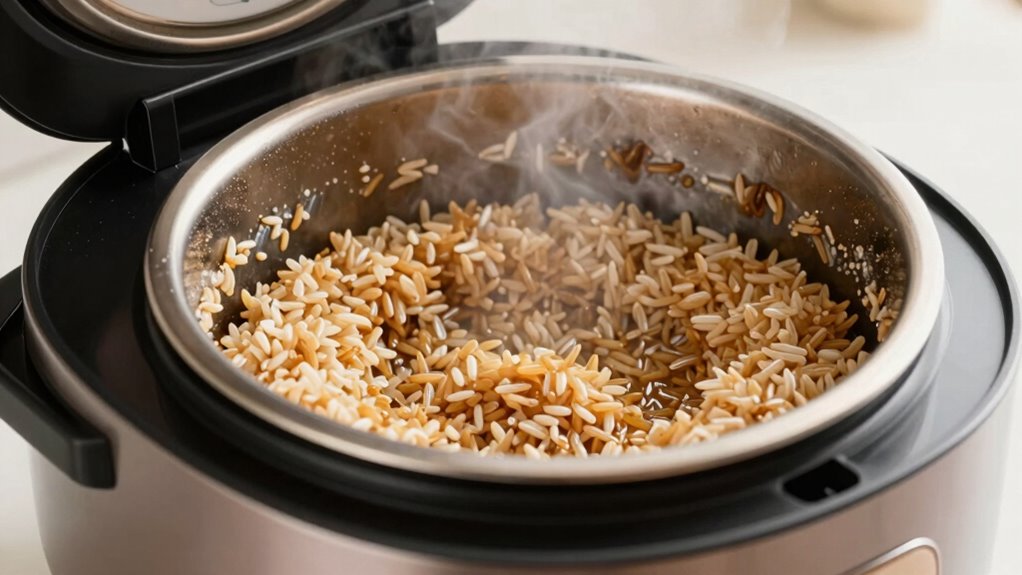
To cook perfect brown rice, you need to get the timing just right. Make certain you adjust the cooking time based on your rice’s texture and use the correct water ratio to prevent it from becoming mushy or undercooked. Pre-soaking the rice can also help guarantee even cooking and better results. Additionally, understanding the appropriate water ratio can significantly influence the outcome of your rice. Using the right piercing care and hygiene practices can help maintain the quality of your rice cooker and prevent buildup that might affect cooking performance. Proper maintenance, including regular cleaning and eco-friendly cleaning methods, can extend the lifespan of your rice cooker and ensure consistent results. Being aware of cookie management options can also help optimize your overall cooking experience and keep your device functioning properly. Furthermore, paying attention to cooking timing adjustments based on your specific rice cooker model can make a noticeable difference in your results.
Adjust Cooking Time Properly
Ever wondered why your brown rice sometimes turns out undercooked or mushy? It all comes down to adjusting the cooking time properly. Brown rice has a different grain texture than white rice, requiring a longer cooking duration to become tender. If you don’t extend the cooking time enough, the rice stays tough and chewy. Conversely, cooking it too long can make it mushy and lose its al dente bite. To get it just right, experiment with your rice cooker’s settings or manual timing. Keep track of how long it takes to reach your preferred grain texture, then modify accordingly. Over time, you’ll develop a feel for the perfect cooking duration. Proper timing ensures fluffy, tender brown rice every time, avoiding the common pitfalls of undercooking or overcooking. Understanding sound vibrations can also help optimize your rice cooking technique by promoting better water absorption and heat distribution. Paying attention to cooking signals such as bubbling or steam release can further enhance your results. Additionally, considering how water absorption varies with rice type can help you fine-tune your process for consistently better outcomes. For example, using natural indicators like the change in steam patterns can guide you to the ideal cooking point.
Use Correct Water Ratios
Getting the water ratio right is key to cooking perfect brown rice, as it directly influences the texture and doneness. Using the correct amount of water depends on your rice variety and cooking vessel. Too much water leads to mushy rice, while too little results in undercooked grains. For most brown rice, a 2:1 water-to-rice ratio works well, but some varieties need adjustments.
Here’s a helpful guide:
| Rice Variety | Water Ratio |
|---|---|
| Long grain brown | 2:1 |
| Short grain brown | 1.75:1 |
| Organic brown | 2.25:1 |
| Wild brown rice | 2.5:1 |
Adjust based on your rice type and vessel for perfect results.
Pre-Soak for Even Cooking
Pre-soaking brown rice before cooking helps guarantee even hydration and more consistent texture throughout the grains. It also reduces the risk of uneven rice fermentation, which can cause sour flavors and affect your cooker’s maintenance over time. When you soak the rice, enzymes activate, breaking down tough fibers and promoting uniform cooking. This step *assures* the grains absorb water evenly, preventing undercooked or mushy spots. Timing is key: soak for at least 30 minutes to an hour before cooking. Proper pre-soaking improves overall results, saving you from constantly adjusting water levels or risking damage to your rice cooker. Incorporate this simple step into your routine for flawless brown rice and better cooker longevity.
Common Mistakes That Lead to Chewy or Mushy Brown Rice
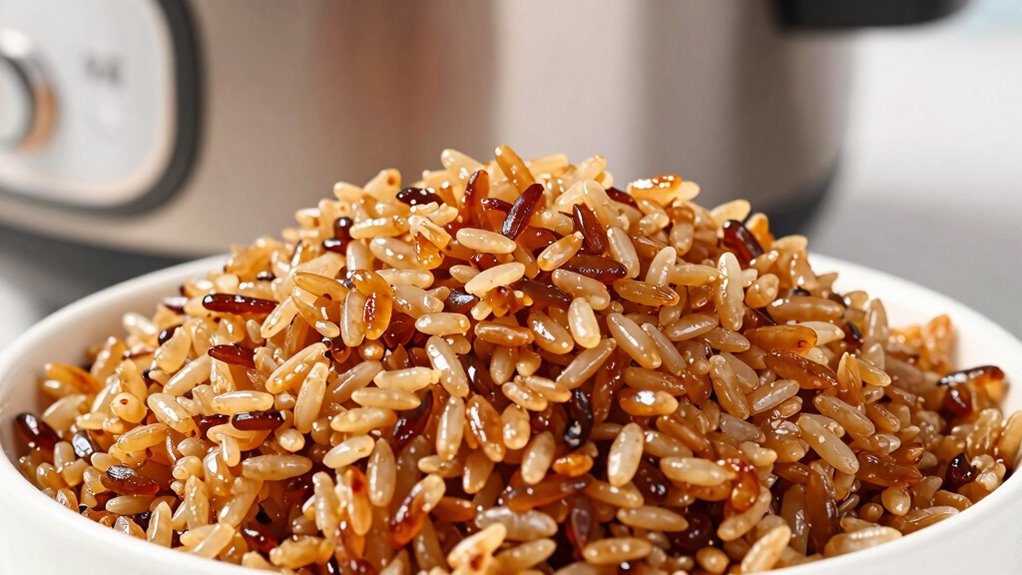
One common mistake that causes brown rice to turn out chewy or mushy is using too much water during cooking. Excess water breaks down the rice’s structure, resulting in a texture that’s overly soft or sticky. To avoid this, pay attention to your rice cooker’s specific water-to-rice ratio, which can vary by brand. Different rice cooker brands may require slight adjustments, so consult your manual for guidance. Also, neglecting flavor variations, like adding broth or herbs, might tempt you to overcompensate with water to enhance taste, but this often backfires. Instead, measure carefully and stick to recommended ratios. This way, you maintain the rice’s integrity and prevent undesirable textures, ensuring your brown rice turns out just right each time.
Expert Tips for Fluffy, Non-Sticky Brown Rice
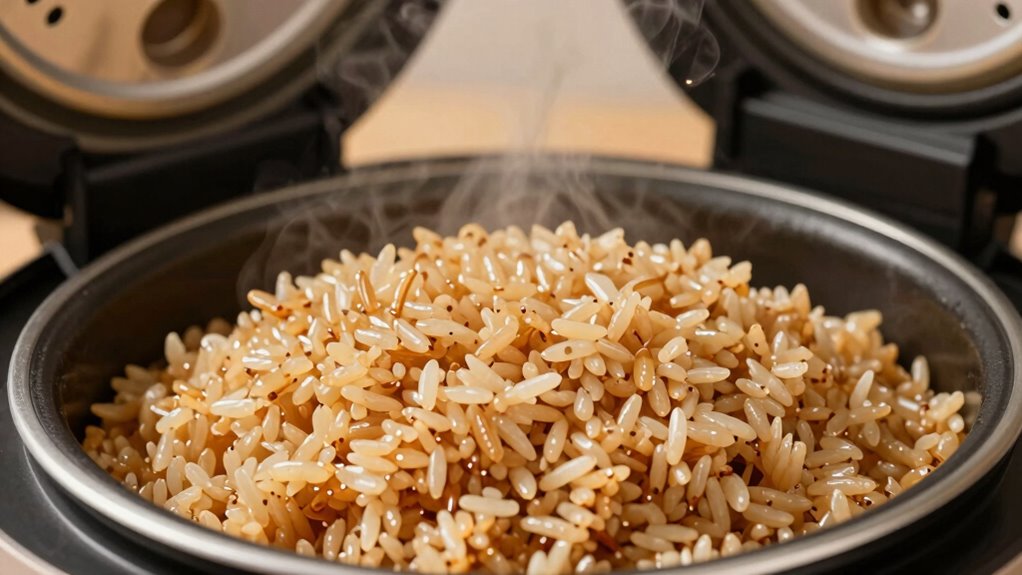
To get fluffy, non-sticky brown rice, start by rinsing it thoroughly to remove excess starch. Use the right water-to-rice ratio—usually about 2 to 1—to make sure perfect texture. Paying attention to these details helps prevent mushiness and achieves that ideal, separate grain finish.
Proper Rinsing Techniques
Rinsing brown rice properly is essential to achieve fluffy, non-sticky grains. Start by placing the rice in a clean cooking vessel, then rinse thoroughly under cold water. Gently swirl the rice with your hand, releasing surface starch that can cause stickiness. Rinsing also helps reduce rice fermentation bacteria, which can affect flavor and texture. Drain the water completely, using a fine-mesh sieve if needed, to remove excess moisture. Repeat the rinsing process two or three times until the water runs clear, indicating most surface starch has been washed away. Proper rinsing ensures the rice remains separate during cooking and minimizes stickiness, giving you better control over the final texture. This simple step considerably improves your brown rice cooking results.
Correct Water Ratios
Getting the water ratio right is essential for achieving fluffy, non-sticky brown rice. Different rice varieties, like short grain or long grain, may need slight adjustments in water amounts, so pay attention to package instructions. Your cooking techniques matter—using the correct water-to-rice ratio guarantees even cooking and prevents mushiness. For most brown rice, a common ratio is 2 cups of water for 1 cup of rice, but some varieties may require a bit more or less. Always measure your water carefully, and consider soaking the rice beforehand to improve texture. Remember, too much water results in sticky rice, while too little leaves it undercooked and hard. Fine-tuning your water ratios based on rice type and your preferred texture will lead to perfect, fluffy brown rice every time.
Tools and Accessories to Improve Your Brown Rice Cooking
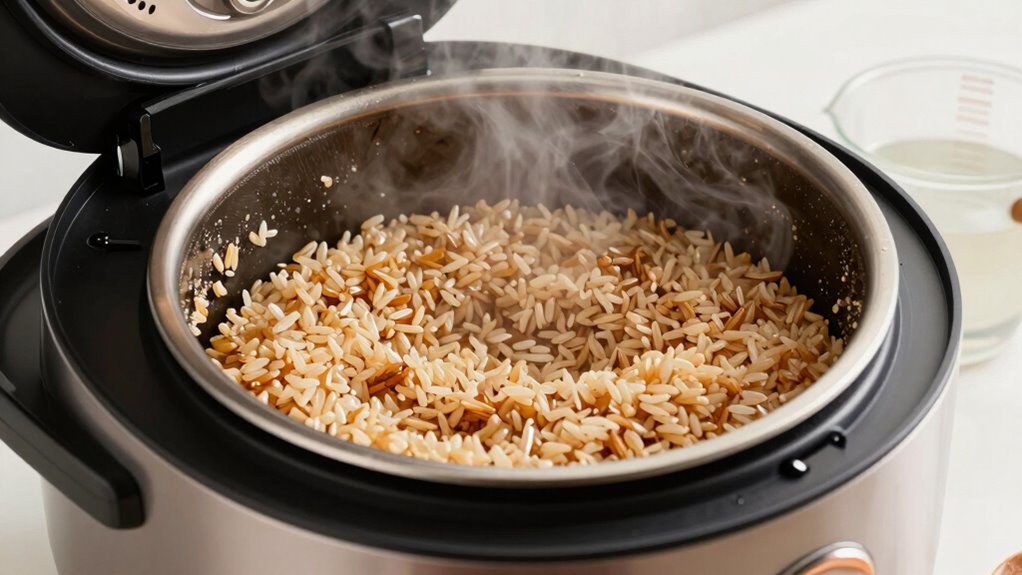
Using the right tools can make a significant difference when cooking brown rice, guaranteeing it turns out perfectly every time. A good rice cooker with a steam basket helps evenly cook rice and prevents sticking. To enhance flavor, consider using rice seasoning or rice flavoring accessories, like flavor infusers, which allow you to add herbs or spices directly into the cooking process. A rice paddle or spatula makes fluffing the rice easier and prevents damage to the cooker’s surface. Measuring cups and water level markers ensure consistent results. For added flavor, try pre-soaking brown rice with aromatics or adding a small amount of broth instead of water. These tools and accessories help elevate your brown rice cooking, making it more flavorful and foolproof.
Troubleshooting Brown Rice: Fixing Common Problems

Despite following all the steps, you might still encounter common issues when cooking brown rice. If your rice turns out too sticky, try rinsing it thoroughly before cooking or adjusting the water ratio. For rice that’s too firm or undercooked, increase the soaking time or add a little more water during cooking. If the flavor feels bland, experiment with flavor combinations like adding a bay leaf or cooking broth instead of plain water. Different rice cooker brands can also influence results—some may require slight adjustments in cooking time or water amount. Always check your rice cooker’s manual for specific recommendations. Troubleshooting these problems helps you achieve perfectly cooked brown rice, making each meal more enjoyable and flavorful.
How to Store and Reheat Brown Rice for Best Texture
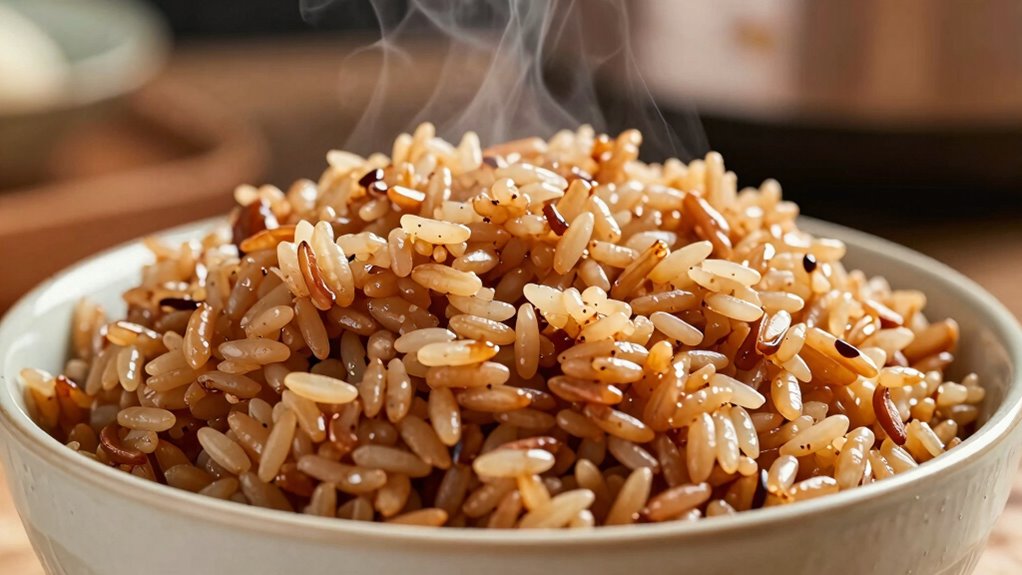
Properly storing and reheating brown rice is essential for maintaining its texture and flavor. To keep it fresh, transfer leftover rice to an airtight container and refrigerate within two hours of cooking. When reheating, add a splash of water or broth to restore moisture, and microwave in short intervals, stirring in between. The rice variety influences how well it reheats; some types, like long-grain brown rice, tend to stay fluffy, while others may become sticky. Consider flavor pairing when reheating — adding herbs, spices, or a splash of soy sauce can enhance taste and mask any dryness. Proper storage and gentle reheating preserve the rice’s texture, making leftovers just as enjoyable as freshly cooked brown rice.
Frequently Asked Questions
Can Different Rice Cooker Brands Affect Brown Rice Results?
Yes, different rice cooker brands can affect brown rice results because of varying brand compatibility and cooker settings. Some brands have specific functions tailored for brown rice, ensuring better texture and doneness. If you don’t use the right settings or a compatible brand, your brown rice might turn out undercooked or mushy. Always check your cooker’s instructions and settings, and choose a brand known for reliable brown rice cooking for best results.
Is It Necessary to Pre-Soak Brown Rice Every Time?
Imagine your brown rice as tiny, stubborn soldiers needing a gentle wake-up call. You don’t have to pre-soak every time, but it’s beneficial for better texture and quicker cooking. Pre-soaking benefits include reducing cooking time and improving digestibility. Soaking duration varies; 30 minutes to 2 hours works well. If you’re in a hurry, skip it, but for fluffier rice, a quick pre-soak makes a noticeable difference each time you cook.
Do Altitude or Humidity Impact Brown Rice Cooking?
Altitude effects can cause brown rice to take longer to cook, as higher elevations lower boiling points. Humidity impact is minimal but can influence water absorption, potentially making rice cook slightly faster or slower depending on moisture levels in the air. You might need to adjust cooking times or water ratios accordingly. Paying attention to these factors guarantees your brown rice turns out perfectly, regardless of altitude or humidity.
How Does Adding Oil or Salt Influence Rice Texture?
Adding oil or salt dramatically transforms your rice, turning bland grains into a flavor explosion and tweaking the texture for perfect fluffiness or stickiness. Oil coats each grain, preventing sticking and creating a silky feel, while salt amplifies flavor, making every bite irresistible. This simple trick unleashes flavor enhancement and texture modification, ensuring your rice isn’t just cooked but elevated to a whole new level of deliciousness you’ll crave every time.
What Are Alternative Cooking Methods for Better Brown Rice?
You can soak brown rice overnight to improve flavor and texture, making it more palatable. Using a pressure cooker speeds up cooking and enhances flavor, locking in nutrients. Try adding herbs or broth instead of water for better flavor enhancement. Additionally, roasting rice slightly before boiling can bring out a nutty flavor and boost its nutritional benefits. These methods make brown rice more enjoyable and healthful.
Conclusion
Mastering brown rice might seem tricky, but with the right techniques, you’ll get fluffy, perfect grains every time. Remember, soaking reduces cooking time and improves texture, while water ratios are key. Did you know that properly cooked brown rice retains more nutrients and flavor? By avoiding common mistakes and using helpful tools, you’ll enjoy healthier, tastier rice — and maybe even fall in love with your rice cooker all over again. Happy cooking!