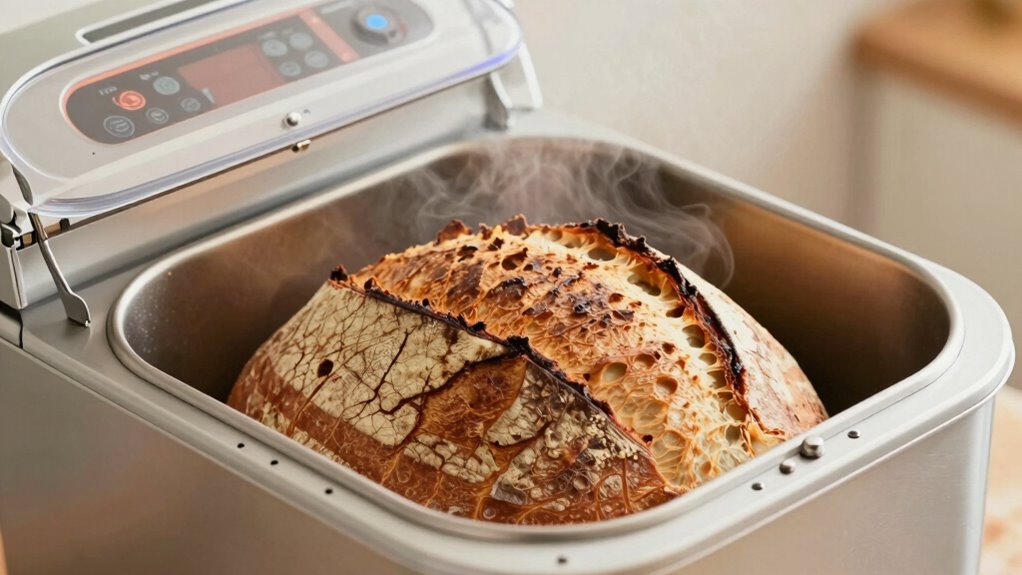

You can make sourdough in a bread machine, but it won’t fully match the traditional flavor or crust. The machine simplifies the process by combining ingredients, controlling fermentation and baking, but may produce a loaf with a milder tang and less rustic crust. Proper settings and longer fermentation times help improve results. If you keep exploring, you’ll discover tips to improve your sourdough’s flavor and texture in a bread machine.
Key Takeaways
- Sourdough can be made in a bread machine, but may not replicate traditional flavor complexities.
- Long fermentation times are essential, which can be achieved with specific machine settings or manual delays.
- Machines produce a more uniform crust and crumb, often less rustic than hand-kneaded sourdough.
- Using wild fermentation in a bread machine enhances flavor, but commercial yeast offers more predictability.
- Proper ingredient ratios, hydration, and timing are crucial for successful sourdough in a bread machine.
Can You Make Sourdough in a Bread Machine?

Can you make sourdough in a bread machine? The short answer is yes, but it might not give you the same flavor profile as traditional methods. A bread machine simplifies the process, allowing you to combine ingredients easily and let the machine handle fermentation and baking. You can experiment with ingredient substitutions, like using whole wheat or rye flour, to change the bread’s flavor. Keep in mind, however, that the dough’s texture and rise might differ from hand-kneaded sourdough. While a bread machine is convenient, it may not develop the complex tang and crust that come with longer fermentation times. Color accuracy and proper fermentation are key factors in achieving a true sourdough flavor, which can be challenging in a bread machine. Incorporating traditional fermentation techniques can help enhance the flavor and texture of your bread, even when using a bread machine. Additionally, understanding fermentation processes can help you better control the final taste and quality of your bread. Still, with some adjustments, you can create a tasty sourdough bread using your bread machine.
How Does a Bread Machine Ferment Sourdough?
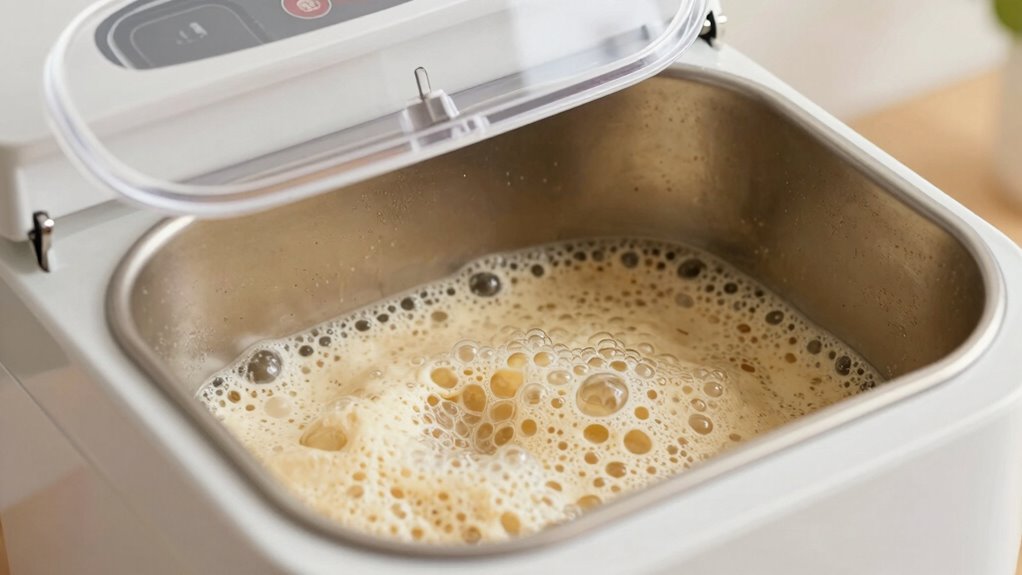
When a bread machine ferments sourdough, it primarily relies on yeast or wild fermentation to develop flavor and rise. You’ll need to choose the right settings and fermentation time to guarantee proper dough development. Understanding how these factors influence the process helps you get the best results from your machine. Additionally, selecting the appropriate water resistance and quick-drying materials in your ingredients can help maintain the dough’s consistency during fermentation. Incorporating essential oils for fermentation can also support a healthy environment for natural yeast activity, ensuring a successful sourdough rise.
Yeast vs. Wild Fermentation
Understanding how a bread machine ferments sourdough involves exploring the difference between yeast and wild fermentation. When you use a bread machine, you mainly rely on commercial yeast, which produces consistent fermentation flavors and predictable rising times. Wild fermentation, however, involves capturing natural yeasts and bacteria from the environment, creating unique flavors and complex aromas.
Here’s how they differ:
- Yeast: Fast, reliable, and easy to control, ideal for quick bread making.
- Wild fermentation: Slower process, develops richer flavors, and requires starter cultivation.
- Yeast alternatives: Sourdough starters or natural starters can mimic wild fermentation, adding depth to your bread.
Choosing between them impacts both flavor complexity and fermentation behavior.
Fermentation Time and Settings
To get the best results when fermenting sourdough in a bread machine, it’s crucial to understand the specific settings and timing involved. Most machines have a dough cycle, but for sourdough, you’ll want to extend fermentation time to develop flavor and crust texture. Use a longer fermentation or “proof” setting if available, or manually pause and delay the cycle for ideal results. During fermentation, the natural yeasts and bacteria produce acids that enhance the flavor profile, making it tangy and complex. Proper timing ensures the dough rises adequately without overproofing, which can affect crust texture—making it either too dense or too airy. Monitoring the process helps you achieve a balanced crust and a rich, sour taste. Additionally, understanding the value of home security systems can help you safeguard your baking supplies and equipment from theft or damage. Incorporating baking safety precautions can further protect your kitchen environment.
Impact on Dough Development
A bread machine’s controlled environment allows the sourdough to ferment steadily, promoting consistent dough development. This steady fermentation enhances flavor, as the bacteria and yeast work harmoniously. It also influences crust development, creating a nicely browned, crisp exterior. Here are key ways it impacts dough:
- Uniform fermentation ensures even gluten development, leading to better rise and texture.
- Consistent temperature promotes flavor enhancement by allowing bacteria to produce more complex acids.
- Steady kneading and rising allow for ideal crust formation, resulting in a more appealing finish.
Pros and Cons of Baking Sourdough With a Bread Machine
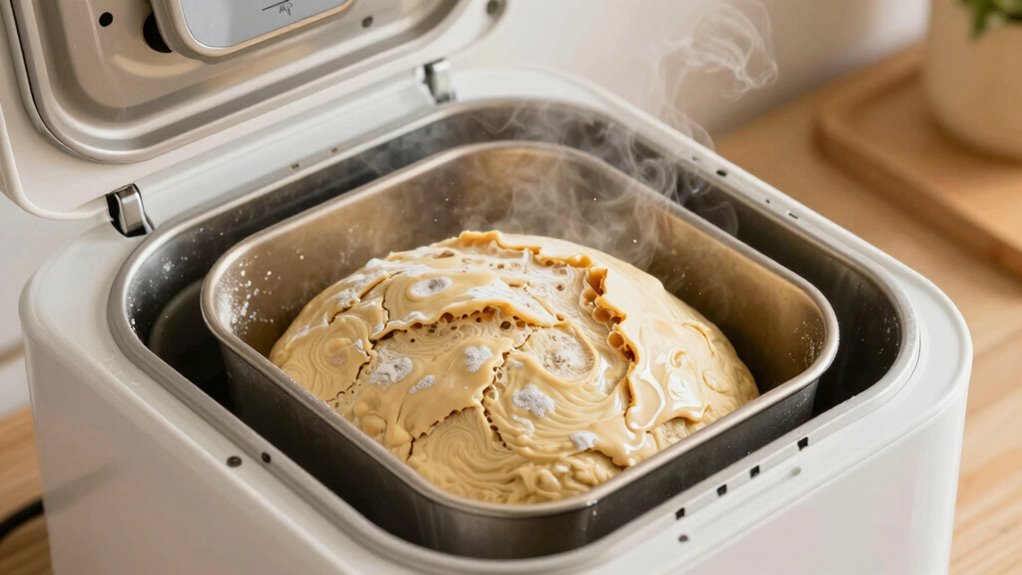
Baking sourdough in a bread machine offers several advantages, but it also comes with notable drawbacks. One benefit is convenience—you can set it and forget it, saving time and effort. The machine helps with consistent dough development, leading to better flavor enhancement and even fermentation. It also simplifies the baking process, making sourdough more accessible for beginners. Additionally, some bread machines feature automatic kneading and rising, which can improve dough texture and consistency. Moreover, utilizing a bread machine can reduce the need for artisanal baking skills, making sourdough baking more approachable for home bakers. When considering indoor environments, maintaining proper air quality and humidity levels can also influence fermentation and dough performance. Proper temperature control within the bread machine can further optimize fermentation, leading to more reliable results. However, there are drawbacks too. The crust texture may lack the artisanal crunch you get from traditional baking methods, and the flavor might be less complex. Additionally, bread machines often produce a more uniform loaf, which can diminish the rustic appeal of sourdough. If you’re seeking a distinctive crust and richer flavor, a bread machine might fall short, but for ease and consistency, it’s a practical choice.
Top Tips for Baking Sourdough Successfully in a Bread Machine

To get the best sourdough in your bread machine, you need to pay attention to proper ingredient ratios and mixing techniques. Making sure your dough rises at the right time is essential for a perfect loaf. Keep these tips in mind, and you’ll improve your chances of baking successful sourdough every time. Understanding the brewing methods used in sourdough fermentation can also help you achieve a more authentic flavor. Incorporating essential oils for relaxation and sleep into your baking space can create a calming environment that enhances your overall baking experience. Additionally, adopting creative storytelling for branding can help you share your baking journey and connect more deeply with fellow enthusiasts. Paying attention to safety practices during the baking process ensures you avoid common pitfalls and achieve consistent results. Familiarizing yourself with fermentation techniques can further refine the flavor and texture of your sourdough.
Proper Ingredient Ratios
Getting the ingredient ratios right is essential for successful sourdough in a bread machine. Proper ratios ensure good gluten development and flavor enhancement. Too much water can make the dough sticky, hindering gluten structure, while too little can result in dense bread. Balancing flour and water is key for a light, airy crumb.
Here are some top tips:
- Use about 60-65% hydration for ideal gluten development and a softer texture.
- Maintain a flour-to-starter ratio that supports fermentation without overpowering the dough’s flavor.
- Add salt after initial mixing to improve flavor and strengthen gluten.
Adjusting these ratios helps you achieve the right dough consistency, better rise, and richer sourdough flavor.
Optimal Mixing Techniques
Perfectly mixed dough sets the foundation for successful sourdough bread in a bread machine. To achieve this, guarantee your ingredients are evenly combined without overmixing, which can affect gluten development. Proper mixing helps develop flavor nuances by evenly dispersing the sourdough starter and salt, enhancing overall taste. It also influences crust texture; well-mixed dough results in a more consistent crumb and a desirable crust. Use the dough cycle on your bread machine, but pause occasionally to scrape down sides and check consistency. Avoid overworking the dough, as it can lead to a tough crust. Achieving a uniform mix ensures your sourdough develops the right flavors while maintaining the ideal crust texture, setting the stage for successful baking. Additionally, understanding the testing accuracy of your measuring tools can ensure precise ingredient proportions, further improving your bread’s quality.
Correct Rising Timing
Timing your dough’s rise is essential for achieving the best sourdough flavor and texture in a bread machine. Proper rising ensures the fermentation develops rich flavor and creates the ideal crust texture. To optimize this, pay attention to these key points:
- Allow sufficient proofing time—avoid rushing, as a longer rise enhances flavor and texture.
- Monitor dough expansion—it should roughly double in size, indicating proper fermentation.
- Use the punch-down method if needed, to release excess gas and encourage even rising, which boosts crust texture.
Common Mistakes to Avoid When Making Sourdough in a Bread Machine
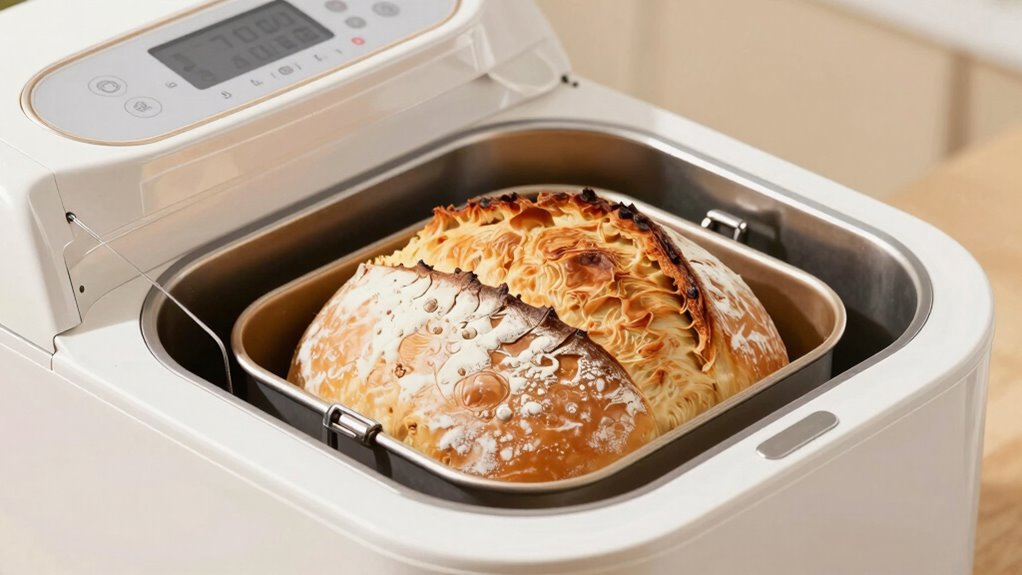
One common mistake to avoid is neglecting proper ingredient measurements, as even small inaccuracies can substantially impact your sourdough’s rise and texture. Precise measurements help develop a strong gluten structure, which is essential for trapping gases and creating a light, airy loaf. Inaccurate ingredient ratios can weaken this structure, resulting in dense bread with poor volume. Additionally, improper measurements can alter the flavor profile, making your sourdough taste bland or overly tangy. Using a kitchen scale ensures consistency and helps you achieve the desired balance of ingredients. Remember, Proper ingredient ratios are the foundation of a successful sourdough loaf, especially when working with a bread machine where adjustments are less flexible. Ensuring accurate measurements can also prevent common baking mistakes that compromise the final product. Being aware of ingredient accuracy can significantly improve your baking outcomes and consistency. Incorporating measurement tools into your baking routine can help maintain precision and improve your results. Developing a good understanding of ingredient accuracy can significantly improve your baking outcomes and consistency. Avoiding this mistake sets the stage for better results and more enjoyable bread.
How Does Machine-Made Sourdough Compare to Traditional Loaves?
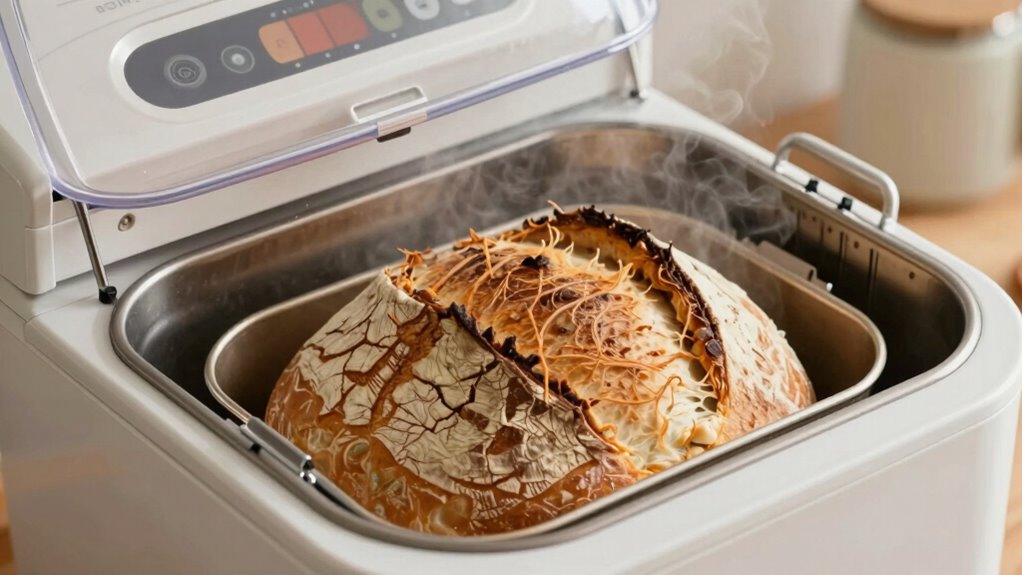
While mastering ingredient measurements is essential for success in a bread machine, it’s also interesting to compare the results with traditional sourdough baking. Machine-made sourdough often has a consistent bread crust, but it may lack the depth and complexity of flavor found in traditional loaves. The dough elasticity can vary; machines tend to produce a softer, more uniform dough, while hand-kneaded dough develops more structure.
Here are three key differences:
- Bread crust – Machine loaves tend to have a thinner, more uniform crust, whereas traditional loaves develop a thicker, more artisanal crust.
- Dough elasticity – Hand-kneaded dough usually has better elasticity, leading to a more open crumb.
- Flavor complexity – Traditional methods often produce richer, more nuanced flavors due to longer fermentation.
Is a Bread Machine Right for Your Sourdough Baking Journey?

Deciding whether a bread machine is right for your sourdough journey depends on your baking goals and preferences. If you value convenience and consistent results, a bread machine can handle the initial fermentation and shaping, saving you time. However, it may limit your control over gluten development, which is essential for structure and chewiness. While some machines can produce a decent crust, achieving the desired crust texture often requires manual finishing, like baking directly on a stone or in a Dutch oven. If you enjoy hands-on baking and experimenting with dough handling, traditional methods might suit you better. Ultimately, a bread machine can be a helpful tool, but it may not fully replicate the artisanal qualities of a sourdough loaf baked by hand. Understanding the role of gluten development is key to deciding whether a bread machine aligns with your baking style.
Frequently Asked Questions
Can I Use Commercial Sourdough Starter in a Bread Machine?
Yes, you can use commercial sourdough starter in a bread machine, but you should check its compatibility. Some starters may alter the machine’s kneading or rising process, so monitor your dough closely. Also, using commercial starter might require adjustments to your machine’s maintenance routine, like cleaning more often to prevent residue buildup. With a few tweaks, you can successfully make sourdough bread using your bread machine.
How Long Does It Take to Make Sourdough in a Bread Machine?
Making sourdough in a bread machine is like waiting for a good story to unfold. It typically takes about 4 to 6 hours, including fermentation time and dough kneading. The fermentation process allows flavors to develop, while the machine’s kneading guarantees proper gluten structure. Keep in mind, longer fermentation can deepen flavor, so patience truly pays off in creating a delicious, tangy loaf.
Does Bread Machine Sourdough Have the Same Flavor as Traditional?
Bread machine sourdough often has a different flavor than traditional because the fermentation process is shorter and less complex. In a bread machine, the dough doesn’t develop the same depth of tang and complexity, leading to less flavor consistency. While it can be a convenient option, it usually lacks the rich, nuanced taste that slow fermentation and natural starters in traditional baking provide.
Can I Add Extra Ingredients Like Nuts or Seeds in Bread Machine Sourdough?
Yes, you can add nuts or seeds to bread machine sourdough. To do this effectively, mix them in during the kneading cycle to guarantee even distribution. Keep in mind, adding ingredients can affect gluten development, so monitor dough consistency. Also, extra ingredients may influence texture preservation, making the bread denser or crunchier. Adjust your recipe as needed to maintain a good balance of flavor, texture, and gluten structure.
What Settings Should I Use for Baking Sourdough in a Bread Machine?
You should select the “Basic” or “Manual” cycle on your bread machine for baking sourdough. Use the dough kneading setting to develop the gluten properly. Once the dough is ready, choose the crust setting—light, medium, or dark—based on your preference. Some machines allow you to customize crust color, so adjust accordingly. After kneading and rising, let the machine bake the bread with the appropriate crust setting to achieve perfect sourdough.
Conclusion
While a bread machine might seem like the easy way out for sourdough, don’t be fooled—your loaf could turn out as unpredictable as a sourdough starter’s mood. You’ll get the convenience without the romantic, hands-on charm of traditional fermentation. So, if you’re after a perfect loaf, be prepared for some surprises—because even the most “automatic” machines can’t guarantee that sourdough magic. Sometimes, the best crusts come from your own patience and elbow grease.