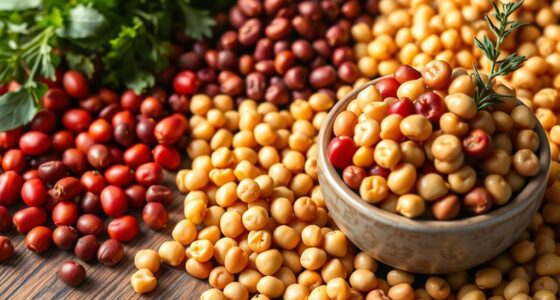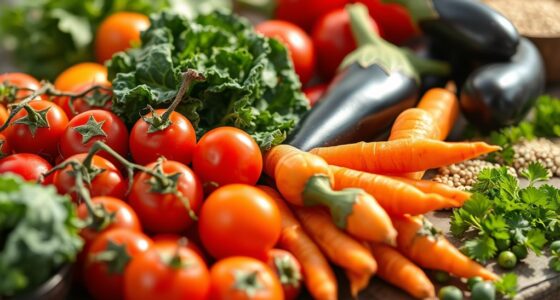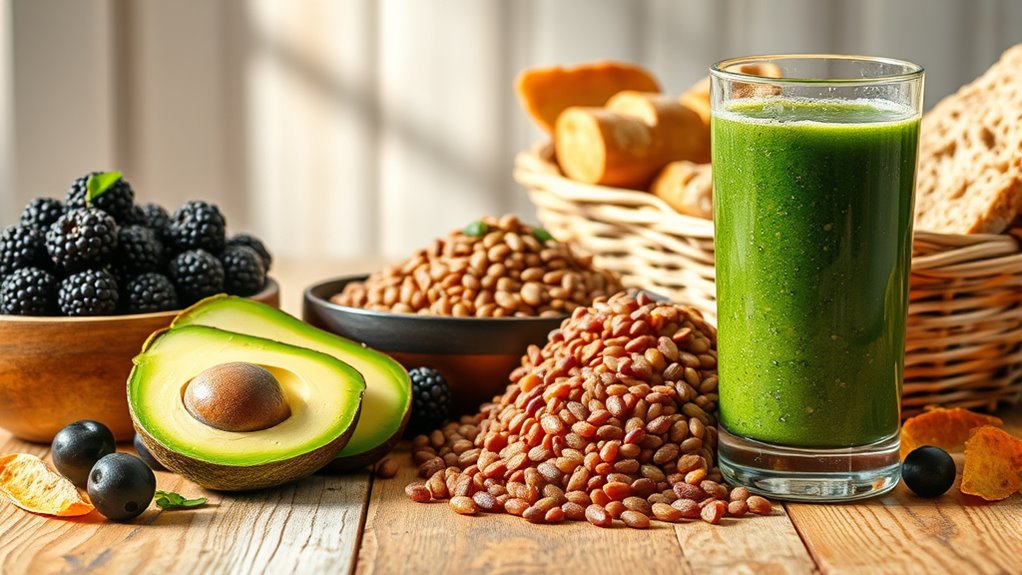

To boost fiber intake on a plant-based diet, include a variety of foods like fruits, vegetables, whole grains, nuts, seeds, and legumes daily. Focus on both soluble and insoluble fibers to support digestion and gut health. Planning balanced meals with these ingredients helps diversify your fiber sources and keeps meals interesting. Incorporating fiber-rich snacks and mindful meal prep also makes it easier. Keep exploring for more practical tips to optimize your fiber intake naturally.
Key Takeaways
- Incorporate a variety of high-fiber plant foods like fruits, vegetables, whole grains, nuts, seeds, and legumes.
- Include both soluble and insoluble fiber sources for comprehensive gut health benefits.
- Plan meals ahead to consistently feature fiber-rich ingredients, such as oatmeal, salads, and stir-fries.
- Use fiber-rich snacks like nuts, seeds, and fruit with nut butter to increase daily intake conveniently.
- Focus on diverse, minimally processed foods to maximize fiber intake and support digestion and overall health.
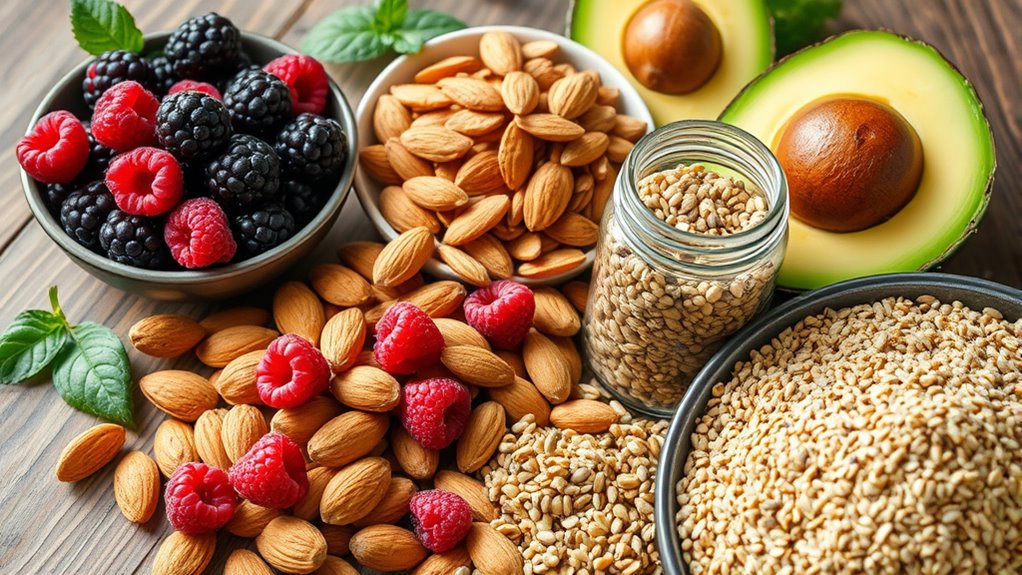
If you’re following a plant-based diet, paying attention to your fiber intake is vital for maintaining good digestion and overall health. Fiber plays an essential role in regulating your digestive system, preventing constipation, and supporting weight management. To maximize these benefits, focus on increasing fiber diversity in your meals. The more varied your fiber sources, the better your gut bacteria will thrive, leading to improved digestion and nutrient absorption. Incorporating a range of fruits, vegetables, whole grains, nuts, seeds, and legumes ensures you’re getting both soluble and insoluble fibers, each offering unique health benefits. Soluble fiber, found in oats, apples, and beans, helps lower cholesterol and stabilize blood sugar, while insoluble fiber, present in wheat bran and carrots, adds bulk to your stool and speeds up bowel movements. By diversifying your fiber sources, you also make your meals more interesting and satisfying. Additionally, paying attention to your toilet functionality and maintenance can help you recognize how diet impacts your digestive health and bathroom habits.
Meal planning becomes your best tool in boosting fiber intake. When you plan ahead, you can intentionally include high-fiber foods in each meal, balancing nutrients and avoiding reliance on processed foods that often lack fiber. For breakfast, opt for oatmeal topped with berries and a sprinkle of chia seeds. For lunch, a hearty salad with mixed greens, chickpeas, and quinoa provides plenty of fiber and protein. Dinner can feature stir-fried vegetables with brown rice or whole wheat pasta. Snacks like nuts, seeds, or an apple with almond butter also contribute to your daily fiber goals. Preparing meals in advance allows you to control portions and ensure you’re consistently incorporating fiber-rich ingredients, rather than reaching for less nutritious options when you’re hungry and pressed for time.
Frequently Asked Questions
Can I Meet Fiber Needs Without Supplements on a Plant-Based Diet?
Yes, you can meet your fiber needs without supplements on a plant-based diet. Focus on eating whole grains like oats, brown rice, and quinoa, which are rich in fiber. Incorporate a variety of legumes such as lentils, chickpeas, and black beans to boost your intake. A diverse legume selection and whole grains guarantee you get enough fiber naturally, supporting digestion and overall health without needing supplements.
How Does Fiber Intake Affect Gut Health Long-Term?
Did you know that a diverse gut microbiome improves health and longevity? Long-term, fiber intake boosts gut health by promoting beneficial bacteria through fiber fermentation. This process enhances your gut microbiome, strengthens immune function, and reduces inflammation. Consistently eating fiber-rich foods keeps your digestive system running smoothly, supports nutrient absorption, and prevents chronic diseases. So, maintaining high fiber intake is essential for lasting gut health and overall well-being.
Are There Specific Foods to Avoid to Prevent Digestive Issues?
You should avoid foods that trigger digestive discomfort, such as heavily processed foods, fried items, and high-fat baked goods. Limit intake of artificial sweeteners and excessive dairy if you’re sensitive, as these can cause bloating or gas. Also, watch out for too much fiber too quickly, which can lead to bloating. By steering clear of these foods, you’ll help prevent digestive issues and maintain a comfortable, healthy gut.
How Quickly Can I Expect to See Benefits From Increased Fiber?
You can expect to see benefits from increased fiber intake within a few days to a week. As your fiber digestion improves, you’ll notice better stool regularity and easier bowel movements. Consistent consumption of high-fiber foods enhances your digestive health over time. Keep in mind, staying hydrated and gradually increasing fiber helps your body adapt smoothly, ensuring you experience these positive effects sooner rather than later.
Does High Fiber Intake Impact Mineral Absorption?
High fiber intake can temporarily impact mineral absorption due to dietary interference, especially with minerals like iron, zinc, and calcium. Fiber binds to these minerals, making it harder for your body to absorb them efficiently. However, this effect is usually mild and can be minimized by balancing fiber-rich foods with mineral sources and spacing out high-fiber meals from mineral supplements or fortified foods.
Conclusion
By prioritizing fiber-rich foods on your plant-based journey, you’re not just nourishing your body but weaving a tapestry of health that stands the test of time. Think of fiber as the silent architect of wellness, building resilience from within. As you embrace these vibrant foods, remember: each bite is a brushstroke in the masterpiece of your well-being. So, seize the opportunity—your future self will thank you for the rich, nourishing foundation you’re creating today.