Cheap blenders burn out quickly on nut butters because they lack the motor power and durable build needed for such dense, oily ingredients. When processing tough textures, these blenders work harder, heat up fast, and stress their weaker components, often leading to overheating and failure. If you want a blender that can handle nut butters without burning out, you’ll find useful tips and features to look for as you explore further.
Key Takeaways
- Low-powered motors (under 1000W) can’t handle the high resistance of dense, oily nut butters, causing overheating and burnout.
- Poor build quality and inferior components fail quickly under heavy-duty blending stresses.
- Lack of proper cooling mechanisms leads to excessive heat buildup during nut butter processing.
- Dense nut butters generate high torque demands, straining cheap motors beyond their capacity.
- Inadequate blade design and weak containers increase stress and risk of damage when making thick nut butters.
Why Do Low-Power Blenders Burn Out When Making Nut Butters?
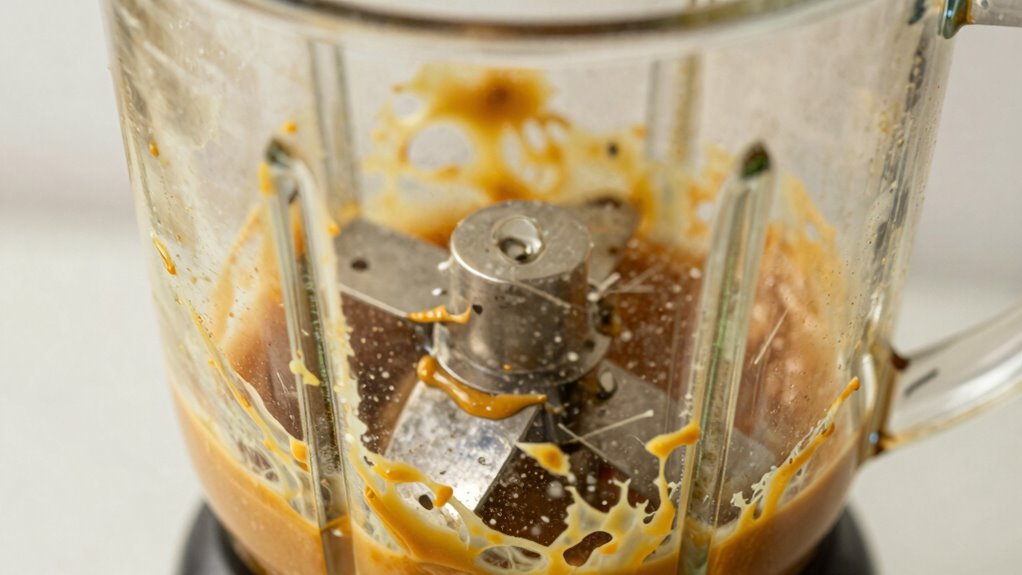
Low-power blenders often burn out when making nut butters because they struggle to handle the dense, oily texture of nuts. As you blend, the motor works harder, causing it to heat up quickly. This motor overheating increases the risk of damage, especially if the blender isn’t designed for such intense tasks. Cheap models usually lack proper cooling mechanisms, making them prone to failure under stress. Once the motor overheats, it can permanently burn out, forcing you to replace the entire blender. Some brands offer warranty coverage, but often, this only applies if the damage isn’t caused by misuse or overuse. To avoid burnouts, invest in a high-powered blender built for nut butters, reducing the risk of motor overheating and ensuring longer-lasting performance.
How Dense Nut Butters Stress Your Blender’s Motor
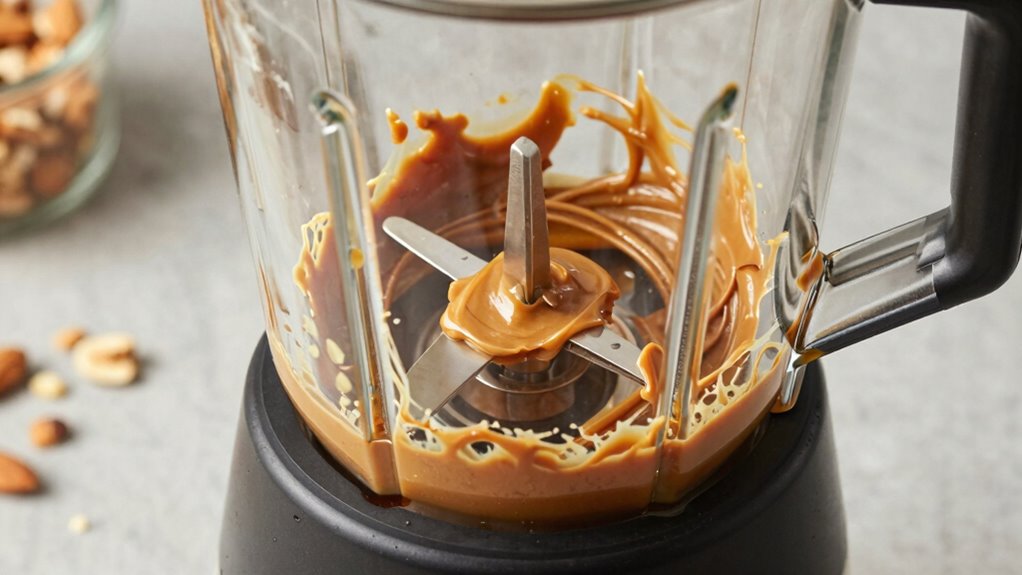
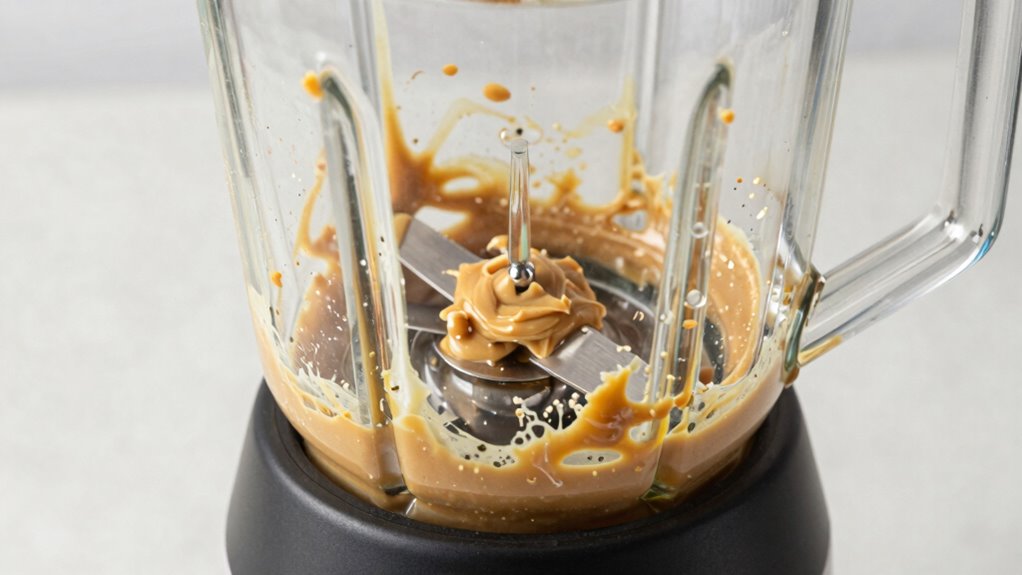
Dense nut butters demand a lot from your blender’s motor because their thick, oily consistency requires significant power to process. This high resistance puts extra strain on the motor, especially if it isn’t built for heavy-duty tasks. As you blend, the motor works harder to break down the dense mixture, causing it to overheat more quickly. The thick nut butter consistency creates greater torque demands, which can lead to overheating if your blender isn’t powerful enough. Over time, this stress wears out the motor faster than normal. Cheap blenders often lack the durability needed to handle such thick, stubborn textures. As a result, your blender risks burning out prematurely, making it less capable of efficiently processing dense nut butters without frequent repairs or replacements. Proper motor capacity plays a crucial role in handling these demanding textures effectively. Additionally, motor overload protection can help prevent damage by shutting off the blender before it overheats, especially when combined with durable components designed for high-stress blending. Incorporating high-quality materials in the motor and components can significantly extend the lifespan of your blender when tackling tough ingredients. Recognizing the importance of appropriate power levels can make the difference between a long-lasting machine and frequent replacements.
Signs Your Blender Is Overworking and How to Prevent Damage
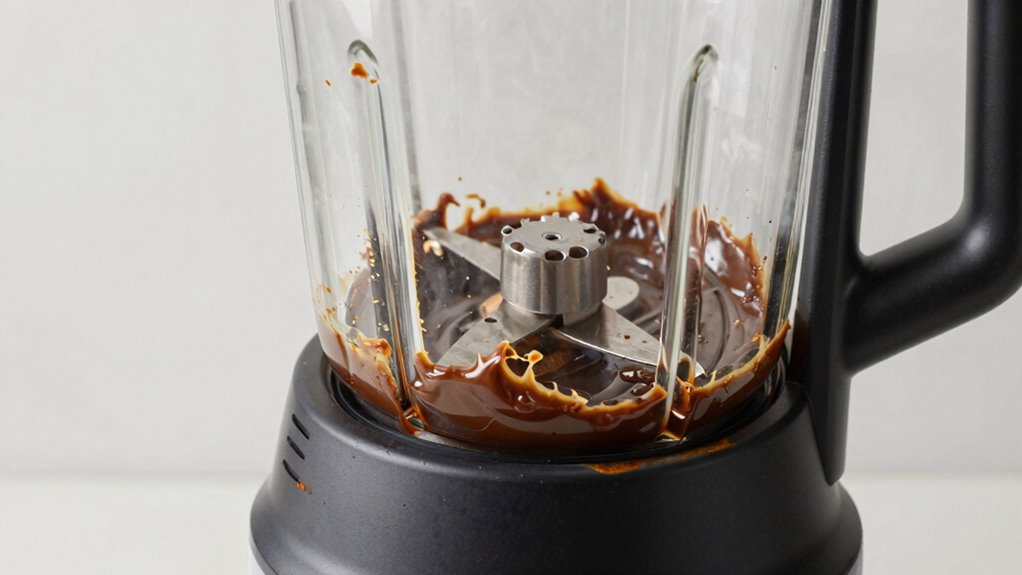
When your blender starts making unusual noises or heats up quickly, it’s a clear sign that it’s overworking. Ignoring these signs can damage the motor and shorten the blender’s lifespan. To prevent damage, keep an eye on:
- Struggling to blend or grinding slowly
- Unusual burning smells during operation
- Excessive vibration or wobbling
- The motor overheating and shutting off
- Using accessibility features like guided access can help monitor and control usage to prevent overworking your device
Choosing a blender with sturdy Blender aesthetics and good Brand reputation can help avoid these issues. Poor build quality or cheap materials often lead to quicker burnout. Regularly stopping to check the texture and giving your blender breaks during heavy use also prolongs its life. Staying attentive to these signs ensures your blender stays reliable and lasts longer. Additionally, understanding comparative advantage in appliance design can guide you toward models that offer better durability and performance over time. Being aware of the filtration/suction basics can also help optimize your blender’s efficiency and prevent overload. Implementing proper security measures in your appliance usage, like avoiding overloads, can further protect your device from damage. Incorporating knowledge about long-term durability can assist in selecting appliances built to withstand frequent heavy-duty tasks.
What Features Make a Blender Suitable for Nut Butter Making

To make nut butter effectively, you need a blender with enough motor power and durability to handle tough ingredients. Look for blades that are sharp and well-designed to grind evenly, and choose a container made from strong, high-quality materials. These features guarantee your blender can withstand the demands of nut butter making without burning out quickly. Additionally, selecting high-quality materials that resist heat and wear can help maintain the blender’s longevity during intensive use. Ensuring that your blender has proper heat resistance can prevent overheating and extend its lifespan during heavy-duty tasks. A robust motor is also crucial for sustained performance, especially when processing dense, oily nuts. Incorporating heat-resistant components can further improve the durability of your blender under continuous stress.
Motor Power and Durability
A blender’s motor power and durability are essential factors in determining its ability to handle nut butter. A powerful motor ensures you get a smooth blend consistency without overheating or burning out. Durability means the blender can withstand the constant strain of processing dense, sticky ingredients. If the motor isn’t strong enough, you’ll notice increased noise levels and inconsistent texture, often forcing you to stop and restart. Look for models with at least 1000 watts, as lower wattage motors struggle with nut butters. Additionally, a sturdy build and quality components improve longevity. Choosing a blender with robust motor power not only speeds up your process but also prevents premature burnout, keeping your nut butters smooth and your kitchen quieter during blending sessions. Motor technology advancements can further enhance performance and longevity. Proper maintenance and responsible use also play a role in extending your blender’s lifespan.
Blade Design and Sharpness
Blade design and sharpness directly impact how effectively your blender processes dense, sticky ingredients like nut butter. A well-designed blade should have a sturdy, multi-tiered structure that can handle tough textures without clogging or dulling quickly. Sharpness maintenance is essential because dull blades require more force, increasing motor strain and decreasing blade longevity. Look for blades made from high-quality stainless steel, which retain their sharpness longer and resist corrosion. Proper blade angles and edge geometry help guarantee efficient cutting and blending, reducing heat buildup that can burn out cheaper motors. If your blades dull too fast or struggle to process ingredients, your blender’s ability to make smooth nut butters diminishes, and you risk damaging both the blades and motor over time. Additionally, aligning with spiritual guidance can foster patience and positive intentions during your blending processes, promoting a more harmonious experience. Understanding blade durability can also help you choose products that maintain performance over time and withstand frequent use. Recognizing the importance of blade maintenance can extend the lifespan of your blender and ensure consistent performance.
Container Material Strength
When making nut butter, the strength of your blender’s container material plays a crucial role in durability and performance. A sturdy container prevents cracks and warping under intense blending, guaranteeing longer-lasting use. Look for containers made from high-quality materials that offer excellent container durability and are compatible with heavy-duty processing. Additionally, material properties such as impact resistance and chemical stability are key factors that influence the container’s ability to withstand the stresses of nut butter making. A well-designed container also considers AI-driven innovations that enhance durability and performance, ensuring your blender can handle dense, oily nut butters without breaking down, saving you money and frustration over time. Incorporating advanced manufacturing techniques can further improve the overall strength and resilience of the container, providing extra assurance during rigorous use. Recognizing the importance of regional manufacturing standards can also guide consumers toward more reliable and durable blender options.
Why Motor Power and Build Quality Matter for Heavy-Duty Blending
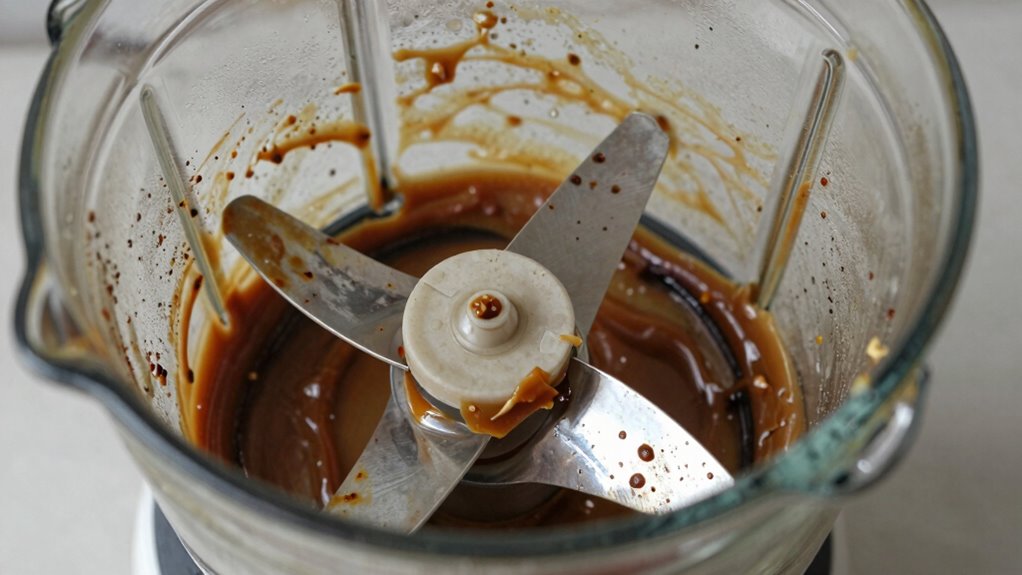
Heavy-duty blending demands more than just a motor; it requires sufficient power and durable build quality to handle tough ingredients like nut butters. A powerful motor ensures you won’t strain or stall during blending, reducing the risk of burnout. High build quality means the blender can withstand heat and stress, extending its lifespan. When a blender has enough motor power, it’s more energy-efficient, using less electricity to achieve smooth results without overheating. This also enhances user convenience, allowing you to blend thick ingredients effortlessly without constant stops or adjustments. Cheap blenders often lack these qualities, leading to quicker wear and tear. Investing in a sturdy, powerful blender not only improves performance but also saves you money and frustration over time.
How to Choose a Durable Blender That Won’t Burn Out
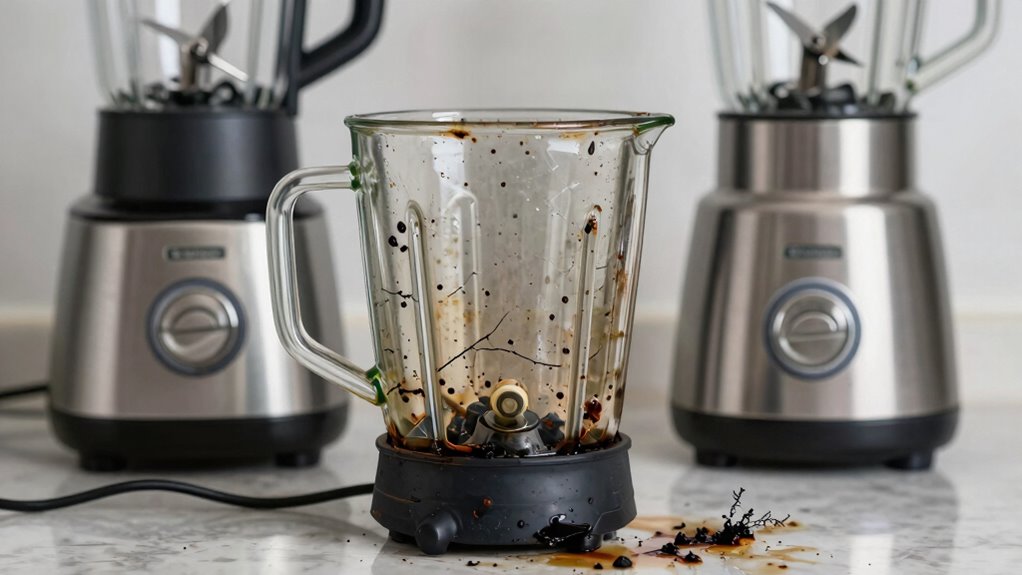
Choosing a durable blender that won’t burn out starts with inspecting its motor and build quality. You want a sturdy motor that can handle heavy-duty tasks like nut butter without overheating. Look for a well-constructed base, solid materials, and reliable components. Besides performance, consider kitchen aesthetics—blender color options can match your kitchen decor, making your space look cohesive. A sleek design and attractive color options can enhance your kitchen’s style. Also, check for features like sturdy blades and a durable jar. These elements guarantee longevity and consistent results. Remember, a blender’s durability isn’t just about power but also about construction quality and aesthetic appeal, so choose wisely to get both functionality and style in one package. Paying attention to motor durability can help prevent early burnout and ensure your blender stands the test of time.
Top Blenders for Nut Butters: What to Look For
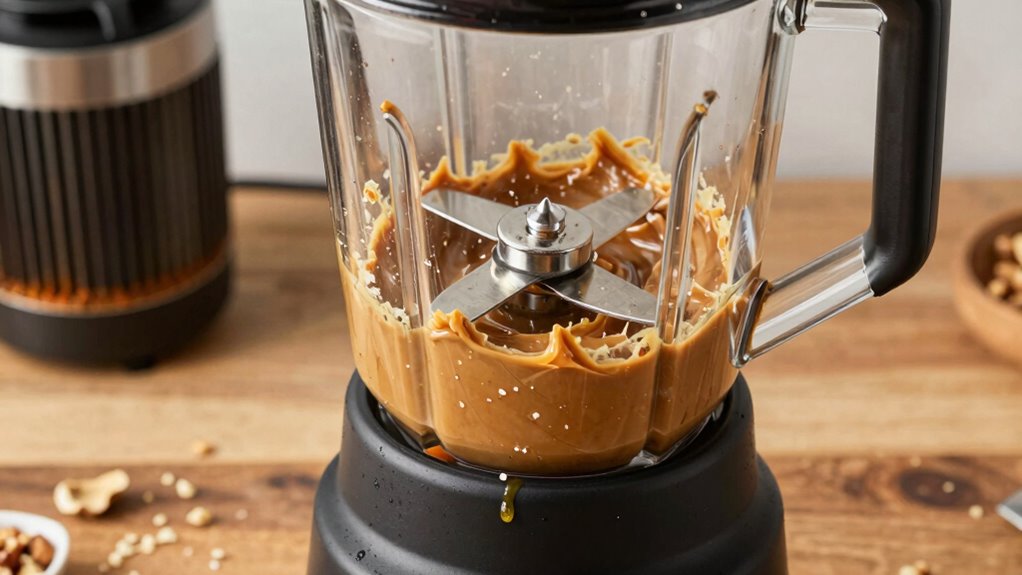
Selecting the right blender for making nut butters means focusing on key features that guarantee smooth, consistent results without risking motor burnout. First, look for models with sturdy, high-powered motors—at least 1000 watts—to handle tough nuts. Check the blender’s aesthetics to verify it fits your kitchen style, but prioritize performance over looks. A sleek design is great, but durability matters more, so consider brand reputation; trusted brands often offer better quality and customer support. Blenders with robust, impact-resistant jars and sharp, durable blades help achieve smooth textures without overworking the motor. Ultimately, you want a blender that balances aesthetics with proven power, assuring it can handle nut butters without burning out quickly.
Frequently Asked Questions
Can Adding Oil Help Prevent Blender Burnout With Nut Butters?
Adding oil can help prevent your blender motor from burning out when blending nut butter. The oil reduces the thickness and resistance, making it easier for the blades to process the nuts smoothly. This decreases strain on the motor, prolonging its lifespan. Just be sure to add a small amount gradually, so you don’t alter the texture too much. Using oil can make blending nut butter more efficient and protect your blender over time.
How Often Should I Pause Blending to Avoid Overheating?
You should pause blending every 20-30 seconds to prevent overheating. During this, check the blender noise and motor temperature; if it sounds unusually loud or the motor feels hot, give it a longer break. This helps avoid strain on the motor, especially when blending thick nut butters. Regular pauses guarantee your blender lasts longer and performs better without burning out prematurely.
Are There Specific Cleaning Tips to Extend My Blender’s Lifespan?
Think of your blender motor as the heart of your appliance—keeping it healthy is key! To extend its lifespan, follow a regular cleaning schedule: rinse immediately after use, run a blend of warm water and mild soap, and avoid harsh scrapers. This prevents residue buildup, reduces strain, and keeps your blender functioning smoothly longer. Proper care isn’t just maintenance; it’s an investment in your kitchen’s future.
What Is the Recommended Maximum Batch Size for Nut Butters?
You should keep your nut butter batch size around 1 to 2 cups to maintain the desired consistency. Larger batches strain your blender motor strength, especially if it’s a budget model, leading to burnout. Smaller batches allow the motor to handle the thick, sticky texture more efficiently. Monitoring your blender’s performance and avoiding overloading helps preserve its lifespan and guarantees smooth, creamy nut butters every time.
Do Variable Speed Controls Improve Blending Durability?
Imagine trying to steer a fast-moving boat through choppy waters—that’s how variable speed controls help you. They reduce motor strain by allowing you to adjust speed, which preserves blade durability during tough blends like nut butter. Without this control, your blender’s motor works harder, risking burnout. So yes, variable speed controls improve blending durability by giving you more precise control, protecting your blender from unnecessary stress.
Conclusion
Choosing a blender that’s built for the job prevents burnout and boosts your nut butter game. Focus on power, build, and durability to dodge damage and deliver delicious results. Don’t settle for cheap, compromise on quality, and avoid frustration. With the right blender, you’ll breeze through batches without burning out. Be bold, select smart, and savor sweet success—your perfect nut butter awaits!