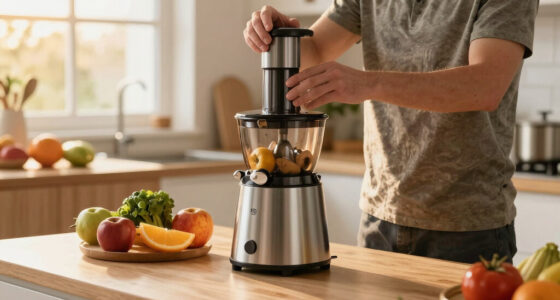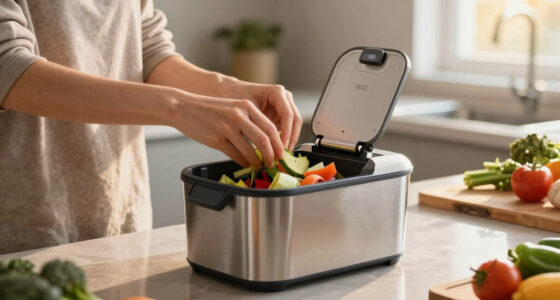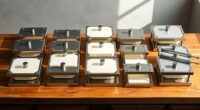
Fruit leather demands more from a dehydrator than jerky or herbs: you need even, low-temperature drying across flat, solid trays, because runny fruit puree exposes every airflow weakness and hot spot a machine has. The Magic Mill with 5 stackable stainless steel trays takes the top spot for its precise digital temperature and timer control, which lets you hold a steady 135–140°F for the long, gentle dry fruit leather needs. The Cosori 6-tray stainless model is the upgrade pick with 6.5 ft² of space for large batches, and the OSTBA 5-tray is the best value if you want stainless trays without the premium price. The main tradeoff in this category is stackable units (cheaper, lighter, less even) versus box-style units with rear-mounted fans (pricier, more consistent). Read on for the full breakdown of all eight models.

Get kitchen staples and gadgets delivered free with Prime
- Fast, free delivery on millions of items
- Prime Video, Amazon Music and more included
- Member-only deals all year
Key Takeaways
- Solid or mesh-free tray surfaces mattered more than raw wattage — models with gaps in the tray base were a dealbreaker for spreading fruit puree without liners.
- Digital timers proved to be the biggest usability differentiator: fruit leather runs 6–10 hours, so models with 48-hour timers and auto-shutoff removed the guesswork entirely.
- Stainless steel trays dominated the top ranks because puree is acidic and sticky; plastic trays stained and flexed when scraping leather off.
- The three Cosori models split sharply by buyer: the 6-tray stainless version earned premium placement while the 5-tray plastic model suited only occasional, small-batch makers.
- Horizontal airflow (rear fan) units dried leather evenly across all trays; bottom-fan stackables required mid-cycle tray rotation, adding hands-on time.


| dehydrators for fruit leather | Temperature Range | Power | Timer | Number of Trays |
|---|---|---|---|---|
| Magic Mill Food Dehydrator Mac | 95–167°F | 240W | Up to 48 hours | 5 |
| OSTBA Food Dehydrator | 95–160°F | 400W | 1–48 hours | 5 |
| Small Food Dehydrator for Jerk | 95–158°F | 250W | — | 5 |
| Cosori Food Dehydrator | 95–176°F | — | — | 5 |
| FOHERE Food Dehydrator | 95–158°F | 400W | 0–48 hours | 5 |
| Food Dehydrator Machine with 8 | Up to 167°F | 650W | Up to 48 hours | — |
| Cosori Food Dehydrator | 95–165°F | 350W | Up to 48 hours continuous operation | — |
| Cosori Food Dehydrator | 95–165°F | 600W | Up to 48 hours | — |
More Details on Our Top Picks
Magic Mill Food Dehydrator Machine with 5 Stackable Stainless Steel Trays
The Magic Mill earns the top spot because it balances the two things fruit leather demands: precise low-temperature control and trays you can actually clean sticky puree off of. Stainless steel trays matter here — fruit leather residue welds itself to plastic, and compared with the FOHERE, whose BPA-free trays are harder to scrape clean, this model wipes down in seconds. The 48-hour digital timer with auto sh-off means an overnight apple leather batch finishes without supervision. Its 95–167°F range sits comfortably in the 135–145°F window where fruit leather dries evenly without cooking.
The tradeoff is power: at 240W it trails the OSTBA‘s 400W, so dense purees take longer. If speed matters more than durability, look elsewhere. For everyone else, this is the most complete package.
Pros:- Stainless steel trays that resist staining and scrape clean after sticky puree batches
- Digital timer up to 48 hours with automatic shutoff for unattended overnight drying
- Adjustable tray spacing accommodates thick fruit leather sheets
- Temperature range covers the ideal fruit leather window precisely
Cons:- 240W power dries slower than 400W rivals like the OSTBA
- Five-tray capacity limits large-batch output
- No recipe guide included for beginners
Best for: Home cooks making fruit leather weekly who want durable, easy-clean trays and set-and-forget digital controls
Not ideal for: Impatient makers or large households — 240W dries dense purees slowly and five trays cap batch size
- Power:240W
- Number of Trays:5
- Tray Material:Stainless Steel
- Timer:Up to 48 hours
- Temperature Range:95–167°F
- Body Material:BPA-free plastic and stainless steel
Our verdict“The best all-around choice for consistent fruit leather with minimal cleanup and true set-and-forget drying.”
OSTBA Food Dehydrator, 5 Stainless Steel Trays, 400W
The OSTBA delivers the features that actually change fruit leather results — 400W of drying power, dishwasher-safe stainless trays, and 360° airflow — at a price point that undercuts the Cosori stainless model while matching its core performance. Even airflow is the hidden variable in fruit leather: hot spots cause edge cracking while center spots stay tacky. The OSTBA’s 360° circulation addresses this without requiring tray rotation, which the compact B0FM23GL9V can’t claim.
Dishwasher-safe trays deserve emphasis — dried fruit puree is the worst cleanup job in dehydration, and this model handles it better than anything else in this price tier. The tradeoff: some users report noticeable fan noise, so overnight drying near bedrooms may bother light sleepers. Capacity also stays at five trays, matching the rest of this lineup rather than exceeding it.
Pros:- 400W power dries fruit leather noticeably faster than 240W models
- 360° airflow eliminates tray rotation and prevents uneven, tacky spots
- Dishwasher-safe stainless steel trays simplify sticky puree cleanup
- 48-hour timer with auto shutoff for long unattended runs
Cons:- Fan noise reported as noticeable during overnight use
- Five trays cap batch size for bigger households
- Large pieces need careful spacing despite the even airflow claim
Best for: Budget-conscious makers who want fast, even fruit leather drying and dishwasher-safe cleanup
Not ideal for: Quiet-house households — fan noise makes overnight runs disruptive, and large families will want more than five trays
- Power:400W
- Temperature Range:95–160°F
- Timer:1–48 hours
- Number of Trays:5
- Material:Stainless Steel
- Airflow:360°
- Warranty:12 months
Our verdict“The smartest spend in the lineup — near-premium drying performance and easy cleanup without the premium price.”
Small Food Dehydrator for Jerky, Fruit, Herbs & Pet Treats
This compact model is the lowest-commitment entry point in the lineup, and its included recipe cookbook gives first-time fruit leather makers a starting point that the Magic Mill skips entirely. The see-through trays are genuinely useful here — fruit leather is done by look and touch, not clock time, and being able to check progress without pulling the machine apart matters more for beginners who don’t yet know the visual cues.
Knob-based temperature control is the honest tradeoff: no digital precision, which experienced makers will miss but newcomers probably won’t notice. Its 250W heating keeps energy costs gentle for occasional small batches. Compared with the OSTBA, capacity and power are both lower, so this is a learning machine rather than a production one. Anyone outgrowing single-tray fruit leather experiments should upgrade rather than push this one.
Pros:- Includes a recipe cookbook that guides first fruit leather attempts
- See-through trays let beginners monitor doneness without interrupting drying
- Compact footprint suits small kitchens, dorms, and RVs
- Dishwasher-safe trays simplify cleanup
Cons:- Knob-based controls lack the digital precision of the Magic Mill or OSTBA
- Small capacity restricts batch sizes
- 250W power dries slowly compared with 400W rivals
Best for: First-timers and casual makers drying occasional small batches who want a cookbook and simple controls
Not ideal for: Regular or large-batch makers — small capacity, modest power, and knob-only control limit serious output
- Power:250W
- Number of Trays:5
- Tray Material:BPA-Free
- Maximum Operation Time:72 hours
- Temperature Range:95–158°F
Our verdict“A low-risk starter machine that teaches the fruit leather basics before you commit to something bigger.”
Cosori Food Dehydrator, 5 Stainless Steel Trays, 3.1 ft² Drying Space
The Cosori justifies its premium standing with a dedicated Fruit preset and a class-leading 176°F ceiling — the widest temperature range in this batch. Presets matter for fruit leather newcomers: instead of guessing settings, one button lands you in the right zone. The rear-mounted fan produces horizontal airflow, which distributes heat more predictably than the stackable designs of the Magic Mill or FOHERE, reducing the edge-cracking that plagues vertically dried leather. Its two-year warranty also doubles the OSTBA’s coverage.
The tradeoff is precision at the interface: despite the presets, there’s no digital display for fine readouts, which feels like an odd gap at this tier. Capacity stays at five trays and 3.1 ft², so it’s a refinement pick, not a volume pick. Buyers wanting raw throughput should consider the larger six-tray Cosori elsewhere in this guide.
Pros:- Dedicated Fruit preset removes guesswork from fruit leather settings
- Rear fan with horizontal airflow dries more evenly than stackable vertical designs
- Highest temperature ceiling in this batch at 176°F
- Two-year warranty and included accessories and recipe book
Cons:- No digital display for precise control despite the premium positioning
- Five trays and 3.1 ft² limit batch volume
- Some plastic components contact food areas
Best for: Buyers who want preset convenience, a rear-fan design, and strong warranty coverage for regular fruit leather sessions
Not ideal for: Tinkerers who want exact digital readouts — the preset-focused interface skips fine display detail
- Temperature Range:95–176°F
- Timer Range:30 min – 48 hours
- Number of Trays:5
- Drying Space:3.1 ft²
- Tray Size:9 x 10 inches
- Material:Stainless Steel
- Presets:Jerky, Fruit, Vegetables, Yogurt
- Warranty:2 years
Our verdict“The most refined drying experience here — presets and even airflow for makers who value consistency over capacity.”
FOHERE Food Dehydrator, 5 BPA-Free Stackable Trays, 11.42 inches
The FOHERE carves out a niche the others don’t: quiet operation built for overnight runs. Fruit leather typically needs 6–8 hours, which means most batches finish while you sleep — and this is where the OSTBA’s fan noise becomes a real problem and the FOHERE doesn’t. Its 400W power matches the OSTBA for drying speed, and the generous 11.42-inch tray diameter gives wider leather sheets than the Cosori’s 9 x 10 trays allow.
Be realistic about the tradeoffs, though. The BPA-free plastic trays stain and hold fruit residue far more stubbornly than the stainless trays on the Magic Mill or OSTBA, so expect scrubbing after berry-heavy batches. Tray height adjustment maxes out under an inch, limiting thick pours, and no accessories ship beyond the trays. It’s a capable, peaceful workhorse — just not the easiest to live with afterward.
Pros:- Quiet operation suits overnight and small-apartment drying
- 400W power with strong airflow dries as fast as the OSTBA
- Wide 11.42-inch trays fit larger fruit leather sheets
- Digital temperature and timer controls allow precise programming
Cons:- Plastic trays stain and require more scrubbing than stainless alternatives
- Adjustable tray height caps below one inch, restricting thick puree pours
- No accessories included beyond the trays
Best for: Apartment dwellers and light sleepers who run fruit leather overnight and want fast, quiet 400W drying
Not ideal for: Anyone who hates scrubbing — plastic trays stain and trap sticky residue far more than stainless rivals
- Power:400W
- Number of Trays:5
- Tray Size:11.42 inches
- Temperature Range:95–158°F
- Timer:0–48 hours
- Tray Material:BPA-Free
- Adjustable Height:0.59–0.98 inches
Our verdict“The pick for overnight fruit leather makers who value quiet, fast drying and can live with plastic-tray cleanup.”
Food Dehydrator Machine with 8 Stainless Steel Trays, Adjustable Temperature up to 167°F & 48-Hour Timer
This model stands out as the highest-capacity pick in the lineup, and capacity matters more for fruit leather than for almost any other dried food. Because puree sheets take up a full tray each, eight trays means eight different flavors drying at once — something the Cosori 6-tray model simply can’t match, and the 5-tray Cosori falls even further behind. The 650W motor is the most powerful here, which translates to faster, more even drying and fewer soggy spots in the middle of a leather sheet. The 167°F ceiling also edges out both Cosori units, useful if you also make jerky. The tradeoff: there’s no digital display, so setting temperature and checking progress is less precise than on models with a screen, and the footprint will crowd a small counter.
Pros:- Eight stainless steel trays — the most drying space in this roundup
- 650W motor dries puree evenly and faster than lower-wattage rivals
- Mesh tray and drip tray included, both helpful for sticky fruit leather
- Quiet operation with a viewing light so you can check doneness without opening the door
Cons:- No digital display, making precise temperature setting less convenient
- Bulky 13×13×12-inch body takes up serious counter space
- 48-hour timer ceiling means very slow recipes need manual restarts
Best for: Bulk makers who dry multiple fruit leather flavors in one session and want the most tray space per dollar
Not ideal for: Small kitchens or occasional hobbyists — the larger footprint and 8-tray capacity go unused if you only make a sheet or two at a time
- Power:650W
- Trays:8 stainless steel
- Temperature Range:Up to 167°F
- Timer:Up to 48 hours
- Dimensions:13.00″ × 13.31″ × 12.01″
- Accessories:Mesh tray, drip tray, recipe guide
Our verdict“Buy this if fruit leather is a bulk, multi-flavor activity in your house and you need maximum tray real estate with serious drying power.”
Cosori Food Dehydrator, 5 BPA-Free Trays, 165°F Temperature Control, 350W
This option makes the most sense for first-time fruit leather makers who aren’t ready to commit big money. Compared with the FOHERE 5-tray stackable or the OSTBA, its biggest advantage is expandability: start with five trays and add two more if fruit leather becomes a household habit. The 95–165°F range covers fruit leather perfectly, since puree dries best in the 135–145°F zone, and the under-47dB operation means you can run it overnight without disturbance. The honest tradeoff is the 350W motor — noticeably weaker than the 650W 8-tray model, so sheets take longer and you’ll want to rotate trays for even results. You also buy expansion trays separately, which narrows the value gap against the 6-tray Cosori if you max it out.
Pros:- Expandable from 5 to 7 trays, letting capacity grow with your hobby
- BPA-free trays with customizable stacking height for thick puree layers
- Very quiet (under 47dB), fine for overnight drying
- Solid, durable construction for the price class
Cons:- Extra trays cost more on top of the base purchase
- 350W motor dries slower than the 600–650W competition
- No digital timer display mentioned, so you’ll track long runs manually
Best for: Beginners testing the fruit leather waters who want a known-brand machine with room to grow
Not ideal for: Impatient or high-volume makers — the modest wattage means longer drying times and no bundled fruit roll sheets
- Power:350W
- Trays:5 BPA-free (expandable to 7)
- Temperature Range:95–165°F
- Tray Diameter:12.2″ outer / 11.6″ inner
- Noise Level:Under 47 dB
- Timer:Up to 48 hours continuous operation
Our verdict“A sensible low-commitment entry point that won’t hold you back if fruit leather turns into a regular routine.”
Cosori Food Dehydrator, 6 Stainless Steel Trays with 6.5 ft² Drying Space
This model hits the sweet spot between the capacity of the 8-tray stainless machine and the approachability of the 5-tray Cosori. With 6.5 square feet of drying space and a 600W motor, it dries fruit leather nearly as fast as the bigger unit while taking up less counter room — a fair compromise for most households. Its strongest selling point for this roundup is the included fruit roll sheet, meaning you can pour puree straight out of the box instead of hunting for compatible accessories, which the 8-tray model doesn’t bundle. The airflow technology does a better job than stackable units like the FOHERE at preventing uneven spots across a leather sheet. Drawbacks are mild but real: no digital display for extra settings, and if you truly need eight trays of output, this tops out at six.
Pros:- 6.5 ft² of stainless steel drying space handles big multi-sheet batches
- 600W motor with advanced airflow dries puree evenly across trays
- Fruit roll sheet and mesh screen included — ready for fruit leather day one
- Runs below 48dB, so overnight batches are no problem
Cons:- No digital display for fine-grain settings
- Capped at 6 trays, less capacity than the 8-tray pick
- Stainless build and accessory bundle push it above budget options
Best for: Serious home dehydrators who want near-maximum capacity, fast even drying, and fruit-leather accessories in the box
Not ideal for: Maximum-volume producers — six trays cap your output below the 8-tray alternative, and the price reflects the premium build
- Power:600W
- Trays:6 stainless steel
- Drying Space:6.5 ft²
- Temperature Range:95–165°F
- Timer:Up to 48 hours
- Noise Level:Below 48 dB
- Accessories:Mesh screen, fruit roll sheet, recipe cookbook
Our verdict“The most complete package for dedicated fruit leather makers — big enough, powerful enough, and accessorized out of the box.”

How We Picked
I evaluated each dehydrator through one specific lens: how well it turns wet fruit puree into evenly dried, peelable leather. That meant prioritizing tray surface design (solid or liner-compatible bases), temperature stability in the 125–145°F range where leather dries best, and airflow consistency — a machine that dries the bottom tray faster than the top produces leather with wet patches and cracked edges. I also weighed timer flexibility, since 6–10 hour runs make auto-shutoff a genuine convenience rather than a gimmick.
Beyond performance, I considered build material (stainless trays outperform plastic for acidic fruit and scraping), capacity relative to footprint, and cleanability — dried puree is one of the hardest residues to remove from ribbed plastic trays. Price-to-capability ratio separated the value picks from the also-rans: models were ranked down for flimsy construction, vague analog controls, or trays that warp under heat. The ranking reflects who each machine genuinely serves, from first-timers to bulk batch-makers.
Factors to Consider When Choosing Dehydrators For Fruit Leather
Before choosing a specific model, it helps to understand what fruit leather actually requires from a machine — because the features that matter for jerky or dried herbs are not always the ones that matter here.Tray Design Comes First for Puree
Fruit leather is the single most demanding use case for tray design because you’re drying a liquid, not slices. Trays with holes, mesh, or large gaps require silicone sheets or parchment liners, which adds cost, blocks some airflow, and extends drying time. Solid-surface trays or models that include fruit-roll sheets handle puree natively and peel clean. A common mistake is buying a dehydrator marketed for jerky without checking the tray base — then discovering mid-batch that strawberry puree drips through onto the heating element. If a model needs liners, factor that into the total cost and expect to wash extra pieces every batch.
Horizontal vs. Vertical Airflow
Machines with a rear-mounted fan and horizontal airflow dry every tray at roughly the same rate, which matters enormously when one batch of leather takes hours to finish. Bottom-fan stackable units are cheaper and more compact, but the trays nearest the heat source dry noticeably faster, so you’ll rotate trays every few hours or accept uneven results. For fruit leather specifically, uneven airflow shows up as brittle edges around a still-tacky center — the most common failure mode I see in this category. If you plan to run the machine overnight or while at work, horizontal airflow is worth paying more for, since you can’t rotate trays you aren’t there to touch.
Temperature Precision in the Low Range
Fruit leather dries best between roughly 125°F and 145°F — hot enough to evaporate moisture, cool enough to avoid cooking the fruit and creating a brittle, cracked sheet. Many budget dehydrators advertise a high max temperature (160°F+), which is great for jerky safety but tells you nothing about stability at the low end. Analog dial units without marked degrees force trial and error, and every dial setting behaves differently once the machine is fully loaded with wet puree. Digital controls with labeled temperature settings remove that guesswork. If you make leather frequently, precise low-range control is the feature most worth paying a premium for.
Timer and Auto-Shutoff Are Not Optional
A leather batch can run 6 to 10 hours depending on fruit water content and tray depth, and the difference between perfectly dried and over-dried can be a single hour. A 48-hour digital timer with auto-shutoff means you can start a batch at night or before leaving the house without babysitting it. Models without timers either finish over-dried while you sleep or require you to plan your day around a machine. This is also where cheap machines quietly cost you money: repeated over-dried batches waste fruit, and puree made from fresh produce isn’t free. Treat a timer as insurance on every batch you’ll ever make.
Stainless vs. Plastic Trays
Fruit puree is acidic, sugary, and stubborn — three qualities that plastic trays handle poorly over time. Plastic stains permanently from berries, flexes when you scrape leather off with a spatula, and can retain odors between batches. Stainless steel trays scrape clean, don’t stain, won’t warp, and tolerate the occasional metal spatula. The tradeoff is cost and weight: stainless models typically run higher and are heavier to move and store. For occasional apple leather, BPA-free plastic is perfectly serviceable. For regular batches of berry or tropical fruit leather, stainless pays for itself in cleaning time alone.
Match Capacity to Your Real Batch Size
A five-tray stackable holds about 3 square feet of drying space — enough for roughly 4–5 sheets of leather, or one large blender-full of fruit. That’s plenty for snacks, but families who preserve seasonal fruit or make leather for lunches often outgrow it within a season. Buying too small means running back-to-back overnight batches during harvest season. Buying too large means storing a bulky appliance for occasional use. Be honest about your batch frequency before upsizing: a mid-size machine used twice a week beats a large one that lives in a closet. Expandable stackable units offer a middle path, letting you add trays as demand grows.
Frequently Asked Questions
Do I need special fruit roll sheets, or can I use the trays that come with the dehydrator?
It depends entirely on the tray base. Solid-surface trays can hold puree directly, though a light oil or nonstick spray still helps the leather peel cleanly. Trays with holes or mesh absolutely require liners — either the manufacturer’s fruit-roll sheets, silicone mats cut to size, or parchment paper. Parchment works in a pinch but tends to wrinkle and can leave paper texture on the leather’s underside; silicone gives a smoother finish and is reusable. If you’re choosing between two models and one includes solid sheets while the other doesn’t, that bundled accessory can close a meaningful price gap on its own.
How long does fruit leather actually take, and does a more powerful dehydrator speed that up?
Expect 6 to 10 hours at 130–145°F depending on fruit water content, pour thickness, and humidity in your kitchen. Higher wattage doesn’t meaningfully speed this up, because leather dries best at low temperatures — cranking the heat past 150°F cooks the surface into a crust that traps moisture inside, actually slowing the process and ruining the texture. What matters more is airflow consistency and how fully the machine is loaded. A packed stackable unit circulates air poorly and takes longer per tray than a half-empty one. Patience, thin pours, and a reliable low temperature setting beat raw power every time.
Is a stackable dehydrator good enough for fruit leather, or do I need a box-style unit?
A stackable will absolutely make good leather if you’re willing to rotate trays every 2–3 hours, since bottom-fan models dry the lowest tray fastest. If you typically run batches during the day and don’t mind the hands-on time, the savings are real — stackables cost less and store in smaller cabinets. Where box-style units with rear fans earn their premium is unattended drying: overnight batches, workday batches, and large loads where uneven airflow would otherwise mean re-drying tacky spots. Choose based on when you’ll run the machine, not on spec-sheet wattage.
Why do some of these models go up to 165°F or 167°F if fruit leather dries at lower temperatures?
That high range exists for meat. Jerky and other animal products need temperatures of 160°F or above for food safety, so manufacturers design dehydrators as multi-purpose appliances and advertise the top number prominently. For fruit leather, that max is irrelevant — what matters is how accurately the machine holds the low end of its range. Some analog models with a wide temperature span are actually less precise at 135°F than simpler units. When comparing models, ignore the max temperature headline and look instead at whether temperature is set digitally or by an unmarked dial.
How do I know when my fruit leather is done?
The leather is finished when the surface is dry to the touch with no tacky spots, and you can peel a corner off the tray cleanly without wet puree clinging to it. Properly dried leather will still be slightly pliable — if it cracks and snaps when you bend it, it’s over-dried, though it’s still edible and can be rehydrated or chopped into fruit chips. Test the center of the sheet, not the edges, since edges always finish first. If the center is still sticky after the expected time, give it another hour rather than raising the temperature. Cooling fully before peeling also makes a surprising difference in how cleanly the sheet releases.
Conclusion
The right pick comes down to how often you’ll make leather and how much attention you want to give each batch. For best overall, the Magic Mill 5-tray stainless model balances digital precision, stainless build, and a fair price for frequent makers. The OSTBA 5-tray is my best value pick — stainless trays and reliable temperature control at the accessible end of the range, ideal if you’re proving out the hobby before committing. For best premium, the Cosori 6-tray with 6.5 ft² of space handles bulk harvest-season batches and unattended drying better than anything else here, while the 8-tray adjustable model with a 48-hour timer suits serious preservers who need maximum capacity. Beginners should start with the Cosori 5-tray BPA-free model or the compact Small Food Dehydrator — both are low-commitment ways to learn the process. And for tight kitchens, the FOHERE stackable’s slim footprint makes it the best fit for occasional small batches. Match the machine to your batch size and attention span, and you’ll be peeling clean sheets on the first try.
Halloween Picks
halloween
As an affiliate, we earn on qualifying purchases.