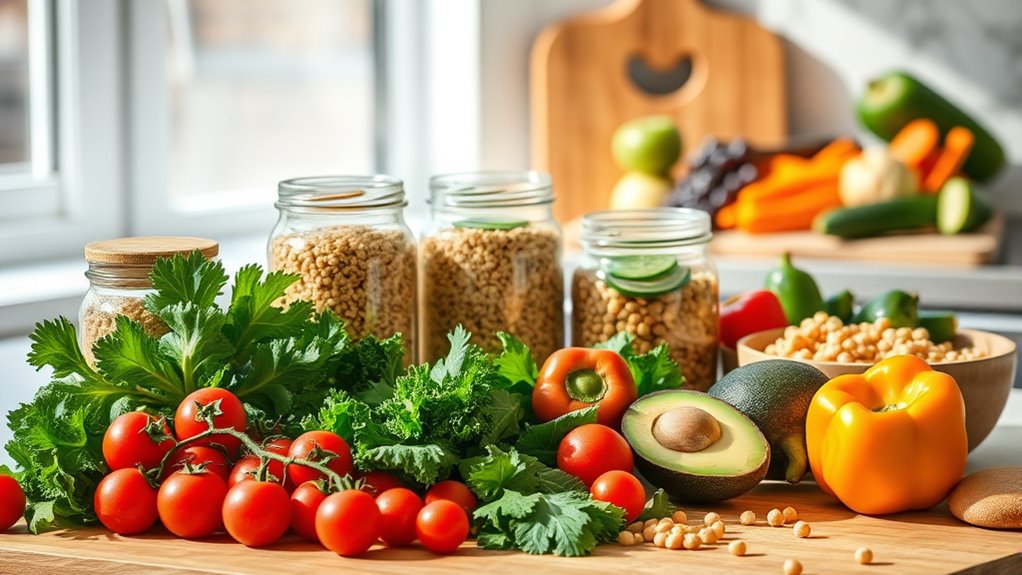
Starting a plant-based weight management journey involves planning balanced, satisfying meals rich in fruits, vegetables, grains, and plant proteins like beans and tofu. Focus on variety, whole foods, and proper portion sizes to meet your nutritional needs and stay full longer. Incorporate healthy fats from nuts and seeds, and stay hydrated. Consistency and flexibility are key for long-term success. Keep exploring to discover practical tips that will help you thrive on this healthy, sustainable path.
Key Takeaways
- Focus on balanced, colorful meals with diverse plant proteins, healthy fats, fruits, and vegetables to support weight goals.
- Plan weekly menus in advance to streamline shopping, reduce impulsive choices, and ensure nutrient variety.
- Incorporate fortified foods or supplements to prevent deficiencies in vitamin B12, iron, and omega-3s.
- Monitor portion sizes and calorie intake while maintaining flexibility to adapt to changing needs.
- Practice mindful eating and consistency to promote sustainable weight management and overall well-being.
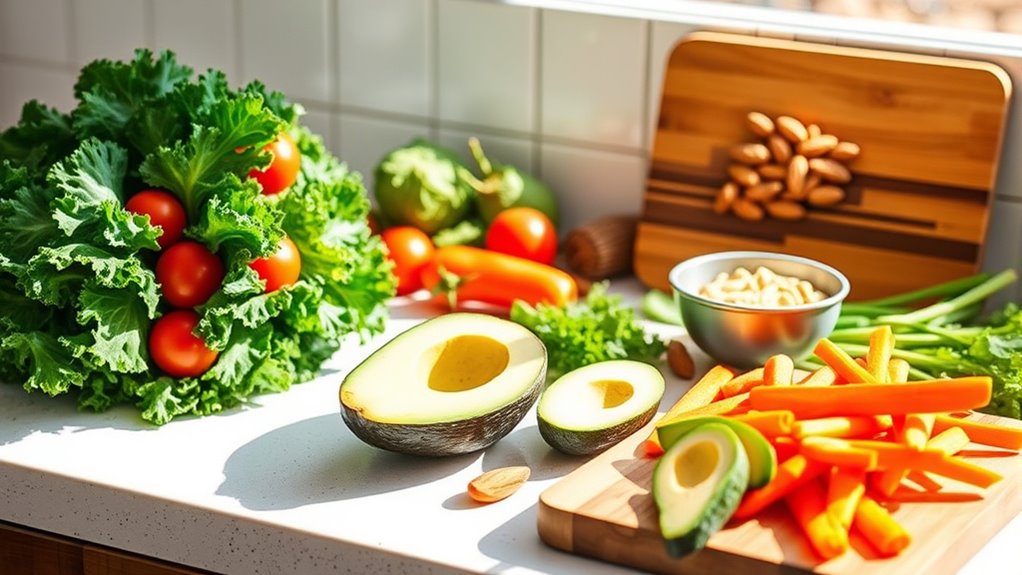
Starting a plant-based weight management journey can be both exciting and rewarding. As you embrace this lifestyle, one of the most important steps is mastering meal planning. Proper meal planning helps you create balanced, satisfying meals that support your weight goals while ensuring you get all the essential nutrients. When planning, focus on including a variety of plant-based foods such as fruits, vegetables, whole grains, legumes, nuts, and seeds. This variety not only keeps your meals interesting but also helps you cover your nutritional bases. Think about preparing your weekly menu in advance, so you can shop efficiently and avoid impulsive choices that might derail your progress. By planning your meals, you gain control over portion sizes and calorie intake, making it easier to stay within your target range without feeling deprived.
Nutrient balancing is a key component of successful plant-based weight management. While plant foods are rich in fiber, vitamins, and minerals, they can sometimes lack certain nutrients like vitamin B12, iron, or omega-3 fatty acids. To prevent deficiencies, you need to be mindful of including fortified foods or supplements when necessary. Balancing your nutrients also involves paying attention to protein intake, which is vital for satiety and muscle maintenance. Incorporate a variety of plant proteins such as beans, lentils, tofu, tempeh, and quinoa to meet your daily needs. Additionally, healthy fats from sources like avocados, nuts, and seeds support overall health and help keep you full longer. When you think about nutrient balancing, aim to include a colorful range of foods in each meal, ensuring you get a broad spectrum of nutrients without resorting to processed or overly refined options. Moreover, understanding target electronics return policies can be helpful if you’re shopping online for your plant-based ingredients, ensuring smooth returns in case of issues.
As you progress, keep track of your meals and how they make you feel. Use this information to refine your meal planning and better understand your body’s responses. Remember, consistency is key, but flexibility is equally important; sometimes, you’ll need to adjust based on your energy levels, cravings, or schedule. Hydration also plays a significant role, so drink plenty of water throughout the day. By focusing on thoughtful meal planning and nutrient balancing, you set yourself up for sustainable success. This approach not only supports your weight management goals but also promotes overall well-being and enjoyment of your new plant-based lifestyle. With patience and mindfulness, you’ll develop habits that become second nature, helping you thrive long-term on your plant-based journey.
Frequently Asked Questions
Can Plant-Based Diets Help With Rapid Weight Loss?
Yes, a plant-based diet can support rapid weight loss by promoting calorie control and encouraging a plant-based detox. You’ll naturally consume fewer calories since plant foods are lower in energy density, helping you shed pounds quickly. Plus, the detox benefits of eating more fruits and vegetables can boost your metabolism. Just remember, consistency and balanced nutrition are key to sustainable results.
Are There Any Risks for Vegans Trying to Lose Weight?
You should know that about 20% of vegans experience nutritional deficiencies, which can pose risks when trying to lose weight. Without proper planning, you might also face issues with vegan detoxification, leading to fatigue or dizziness. These risks highlight the importance of balanced meals and possibly supplementing nutrients like B12 and iron. Being mindful helps you safely reach your weight goals without compromising your health.
How Do I Balance Protein Intake on a Plant-Based Plan?
To balance protein intake on a plant-based plan, focus on incorporating a variety of protein sources like beans, lentils, tofu, tempeh, nuts, and seeds into your meals. Plan your meals ahead to guarantee you’re meeting your daily protein needs, spreading intake throughout the day. This approach helps you maintain muscle, boost satiety, and support overall health while enjoying diverse, tasty plant-based options.
Is It Necessary to Supplement With Vitamins on a Plant-Based Diet?
Think of your body as a garden; nutrient deficiencies can be weeds that stunt growth. While a well-planned plant-based diet often covers your needs, supplement necessity varies. Some people might need vitamin B12, vitamin D, or iron supplements to prevent deficiencies. Keep an eye on your health and consult a healthcare professional to determine if supplements are right for you, ensuring your garden stays lush and vibrant.
Can Children or Pregnant Women Follow a Plant-Based Weight Management Plan?
You can follow a plant-based weight management plan if you’re a child or pregnant woman, but prioritize child safety and pregnant nutrition. Confirm children get enough nutrients like iron, calcium, and vitamin B12 through fortified foods, and consult healthcare providers for personalized advice. Pregnant women should focus on nutrient-dense foods and consider supplements if needed. Always seek professional guidance to safely meet developmental and pregnancy needs within your plant-based diet.
Conclusion
Starting on a plant-based weight management journey is like planting seeds in fertile soil; with patience and consistency, you’ll see growth. Remember, small changes add up, and your commitment can transform your health over time. Stay curious, listen to your body, and enjoy the process. Just as a garden flourishes with care, so will your wellness when you nurture it daily. Keep going—you’re on the path to a healthier, happier you.