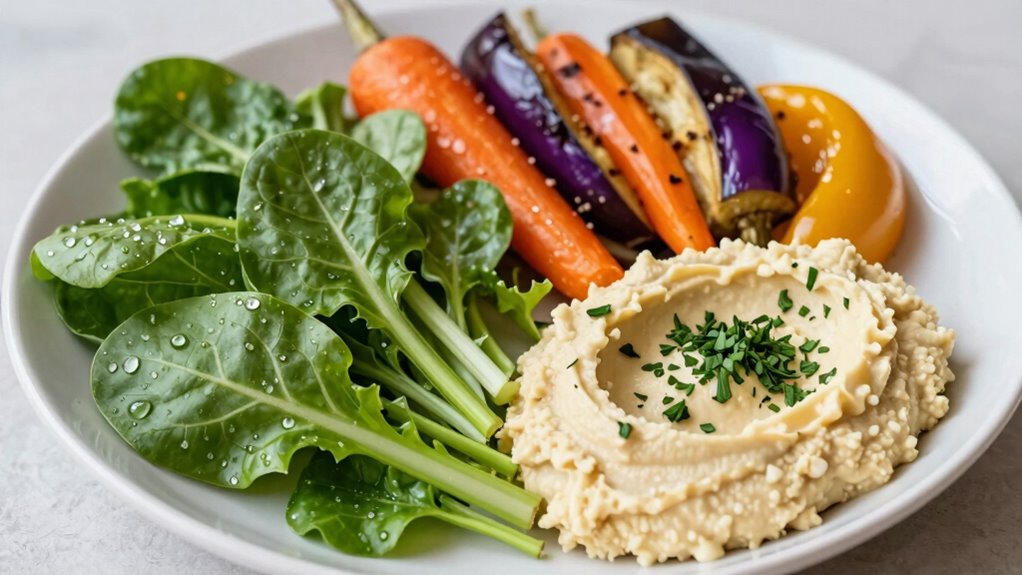
Start your plant-based journey with the 3-part plate, a simple guide to balance your meals. Fill half your plate with colorful fruits and vegetables for fiber and nutrients. Allocate a quarter to plant-based proteins like beans or tofu, and the remaining quarter to whole grains or starchy vegetables for energy. This visual tool makes planning easy and satisfying. Keep exploring to discover more tips for making plant-based eating enjoyable and sustainable.

Get kitchen staples and gadgets delivered free with Prime
- Fast, free delivery on millions of items
- Prime Video, Amazon Music and more included
- Member-only deals all year
Key Takeaways
- Use the 3-part plate to balance vegetables/fruits, plant-based proteins, and whole grains for easy, nutritious meal planning.
- Fill half your plate with colorful vegetables and fruits to maximize vitamins, minerals, and fiber intake.
- Allocate a quarter of the plate to plant-based proteins like beans, tofu, or lentils for muscle support and satiety.
- Include whole grains or starchy vegetables in the remaining quarter for sustained energy and blood sugar stability.
- Prepare in advance with tips like bulk cooking and pre-cut produce to simplify and maintain consistent plant-based eating habits.
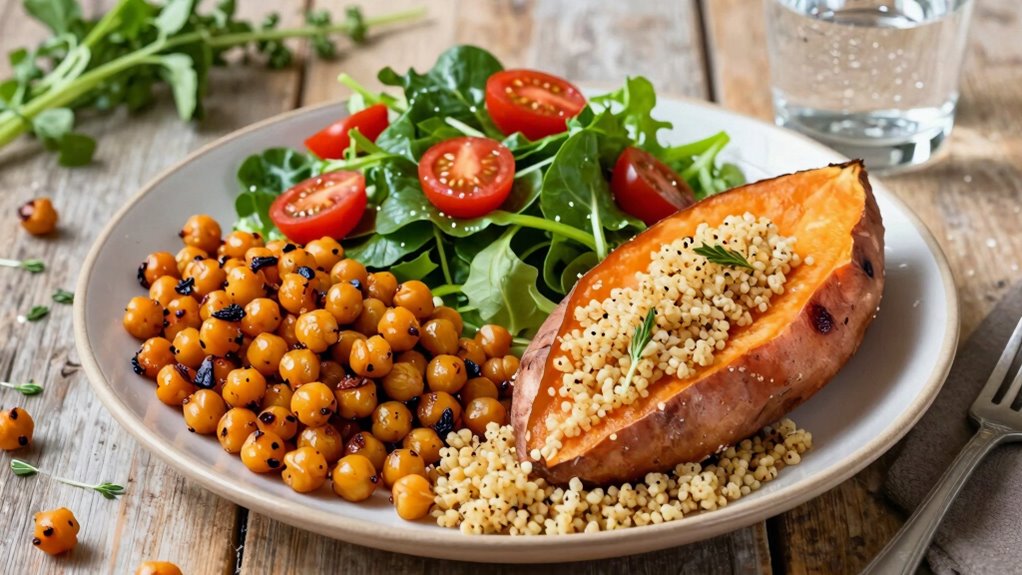
Starting a plant-based meal plan can seem overwhelming at first, but with a little guidance, it becomes an enjoyable and rewarding journey. One effective way to simplify your planning is by focusing on the concept of the 3-part plate. This approach helps ensure nutrient balance, making it easier to create satisfying, nutritious meals without overthinking each ingredient. Think of your plate as divided into three sections: half for vegetables and fruits, a quarter for plant-based proteins, and a quarter for whole grains or starchy vegetables. This visual guide keeps your meals balanced and provides the essential nutrients your body needs.
Use the 3-part plate: half vegetables and fruits, a quarter plant-based proteins, and a quarter whole grains or starchy vegetables for balanced meals.
To start, fill half of your plate with colorful vegetables and fruits. These are packed with vitamins, minerals, and fiber, which support digestion and overall health. Fresh, seasonal produce is often more affordable and flavorful, so plan your shopping around what’s available locally. Incorporate a variety of textures and colors to make your meals more appealing and to ensure you’re getting a broad spectrum of nutrients. When it comes to meal prep tips, chopping vegetables in advance or roasting larger batches can save you time during busy weekdays. Pre-cut fruits and vegetables also make it easy to assemble quick salads, stir-fries, or snacks, keeping your diet diverse and exciting.
Next, allocate a quarter of your plate to plant-based proteins like beans, lentils, tofu, tempeh, or edamame. These proteins are vital for muscle repair and growth, and they help keep you full longer. To keep your nutrient intake well-rounded, pair these proteins with a variety of grains, nuts, or seeds. Whole grains such as brown rice, quinoa, or oats provide complex carbohydrates and fiber, fueling your day and stabilizing your blood sugar levels. Meal prep tips here include cooking grains in bulk and storing them in the fridge, so you can quickly add them to salads or bowls throughout the week. Incorporating a diversity of plant-based ingredients supports not only your health but also sustainable agricultural practices.
Finally, fill the remaining quarter of your plate with healthy whole grains or starchy vegetables. These serve as the energy source for your meals. Combining all three sections ensures you’re covering your bases for a balanced diet, helping you meet your nutritional goals without feeling deprived. As you become more comfortable with the 3-part plate, you’ll learn to customize it based on your preferences and nutritional needs. Remember, consistency is key, and planning ahead makes sticking to your plant-based goals easier. With practice, this simple visual guide becomes second nature, transforming meal prep into a satisfying and healthful routine.
As an affiliate, we earn on qualifying purchases.
Frequently Asked Questions
How Do I Ensure I Get Enough Protein on a Plant-Based Diet?
To guarantee you get enough protein on a plant-based diet, focus on incorporating diverse protein sources like beans, lentils, tofu, tempeh, nuts, and seeds into your meals. Nutrient balancing is key, so combine these with whole grains and vegetables for complete amino acid profiles. Regularly vary your choices to meet your protein needs and maintain a well-rounded, satisfying diet that supports your health goals.
What Are Easy Plant-Based Snacks for Busy Days?
For quick snack ideas, grab a handful of nuts or trail mix, which are portable and protein-rich. Fresh fruit with nut butter makes a satisfying, on-the-go option. Veggie sticks with hummus are easy to prepare and pack. Energy balls or granola bars made from oats and seeds also work well for busy days. These portable snack options keep you energized without fuss, perfect for when you’re on the move.
Can I Eat Out While Following a Plant-Based Plan?
Yes, you can eat out while following a plant-based plan. Just pay attention to dining etiquette and communicate your dietary needs clearly to restaurant staff. Choose restaurants known for vegetarian or vegan options, and review menus beforehand. Don’t hesitate to ask for modifications or ingredient details to guarantee your meal aligns with your plant-based goals. With a little planning, dining out can be enjoyable and stress-free.
How Do I Handle Cravings for Non-Plant Foods?
When cravings hit, try satisfying sweet cravings with fruit or a small piece of dark chocolate, and for savory alternatives, opt for roasted chickpeas or veggie-stuffed wraps. For example, Sarah craved cheesy pizza but replaced it with a loaded veggie flatbread topped with vegan cheese, which curbed her cravings. These swaps help you enjoy your favorite flavors without compromising your plant-based goals.
Are There Affordable Plant-Based Meal Options?
Yes, you can find budget-friendly options for plant-based meals. Focus on staples like beans, rice, oats, and seasonal vegetables, which are often affordable. Use meal prep tips like batch cooking and freezing portions to save time and money. Shop sales, buy in bulk, and choose versatile ingredients to stretch your budget further. These strategies help you enjoy nutritious, plant-based meals without overspending.
Conclusion
By embracing the 3-part plate, you’re not just simplifying plant-based meal planning—you’re aligning with nutritional science that suggests balanced plates promote better health and sustainability. While some skeptics argue that plant-based diets lack essential nutrients, research consistently shows they can meet all your nutritional needs when thoughtfully planned. So, trust the science, keep experimenting, and enjoy the vibrant variety of plant foods. Your journey toward a healthier, more sustainable lifestyle is both achievable and backed by expert knowledge.
Halloween Picks
halloween
As an affiliate, we earn on qualifying purchases.