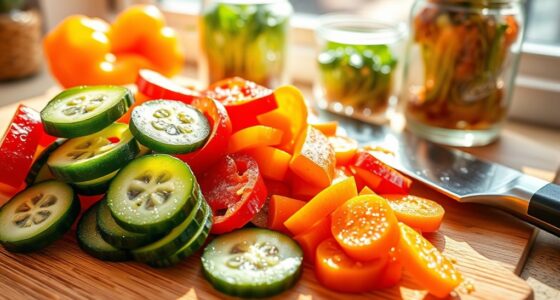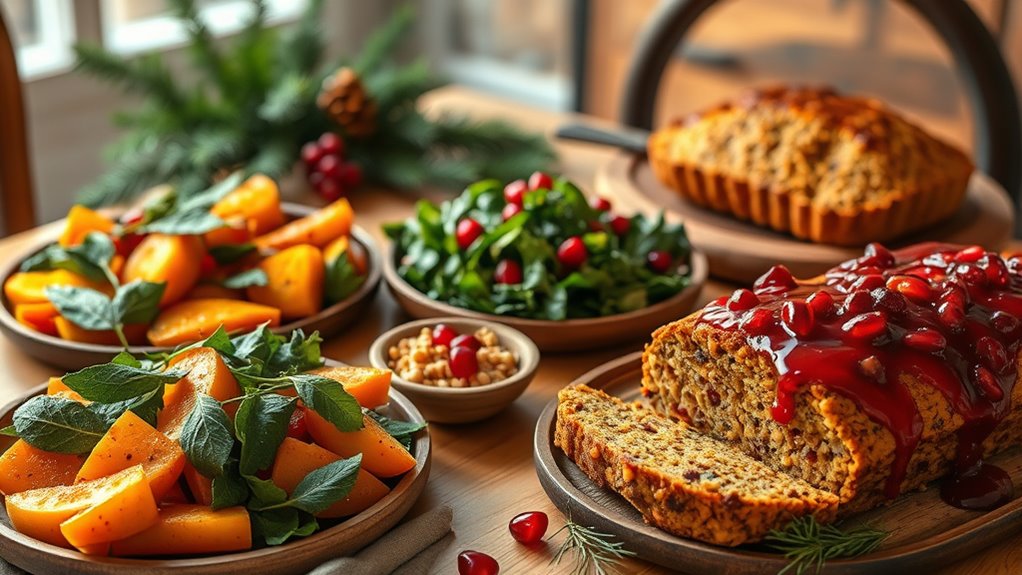

This beginner’s guide helps you embrace plant-based holiday meals by using seasonal ingredients like cranberries, sweet potatoes, and root vegetables to create flavorful, festive dishes. You can adapt traditions with options such as mushroom Wellington or stuffed acorn squash, highlighted by herbs like rosemary and sage. Focus on fresh, seasonal ingredients to simplify shopping and make your meal both beautiful and nourishing. Keep exploring to discover more tips for crafting delicious, sustainable holiday celebrations.
Key Takeaways
- Incorporate seasonal ingredients like cranberries, sweet potatoes, and root vegetables for fresh, flavorful holiday dishes.
- Use herbs such as rosemary, thyme, and sage to enhance plant-based recipes with festive aroma and taste.
- Adapt traditional holiday dishes by replacing meat with plant-based options like mushroom Wellington or stuffed squash.
- Focus on simple, cost-effective shopping by selecting seasonal produce available during the holidays.
- Create colorful, nourishing meals that celebrate sustainability, creativity, and holiday tradition for all guests.
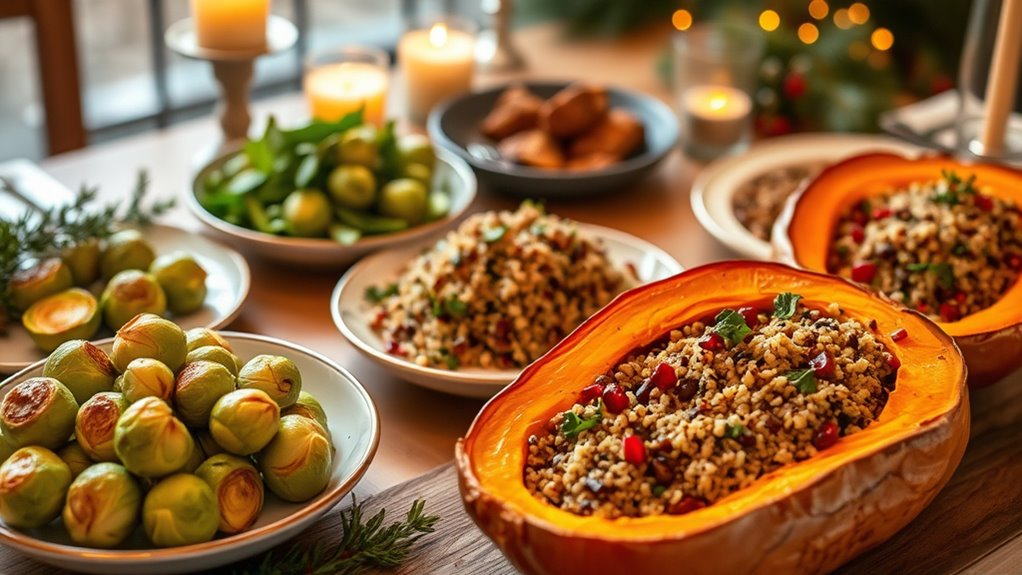
As more people embrace plant-based diets, holiday meals are evolving to feature delicious, meat-free options that everyone can enjoy. This shift offers a fresh way to honor holiday traditions while exploring new flavors and ingredients. You might worry that skipping traditional dishes means losing the festive spirit, but there are plenty of ways to keep your holiday table vibrant and meaningful. Incorporating seasonal ingredients not only enhances flavor but also ties your meal to the time of year, creating a cozy, festive atmosphere. Think roasted root vegetables, hearty squash, Brussels sprouts, and cranberries—all of which are staples during the holidays and naturally plant-based.
Holiday traditions often revolve around specific dishes passed down through generations, but you can adapt these recipes to suit a plant-based approach. For example, replace the usual turkey with a savory mushroom Wellington or a stuffed acorn squash. These dishes can become new favorites, allowing you to honor tradition while making the meal accessible to everyone, including vegans and vegetarians. When planning your menu, focus on seasonal ingredients that are at their peak, ensuring maximum flavor and freshness. Fresh cranberries add tartness to sauces, while sweet potatoes bring natural sweetness and creaminess, perfect for mash or casserole. Root vegetables like carrots and parsnips can be roasted to bring out their earthy sweetness, offering satisfying sides that complement any main course.
Transform holiday menus with seasonal ingredients like cranberries, sweet potatoes, and roasted root vegetables for vibrant, plant-based celebrations.
Using seasonal ingredients also simplifies shopping and meal prep, as these items are readily available and often more affordable during the holidays. Plus, they add a touch of authenticity and freshness to your dishes. You can create a colorful vegetable medley or a hearty soup that highlights these ingredients. Incorporating herbs like rosemary, thyme, and sage, which are abundant during this season, elevates the flavors and ties your meal together. These herbs are not only aromatic but also traditional, helping you preserve that holiday spirit even without the meat.
In addition, utilizing natural materials such as fresh herbs and seasonal produce enhances the overall presentation and flavor of your meal, aligning with the farmhouse aesthetic of warmth and authenticity. Ultimately, embracing plant-based holiday meals allows you to celebrate sustainably and healthfully without sacrificing the joy of holiday traditions. By thoughtfully selecting seasonal ingredients and reimagining classic dishes, you craft a meal that’s both nourishing and festive. Your guests will appreciate the effort and innovation, and you might discover new favorites along the way. With a little creativity and a focus on seasonal bounty, your holiday table can become a beautiful, inclusive celebration that respects tradition while embracing plant-based living.
Frequently Asked Questions
Can I Make Plant-Based Holiday Meals Ahead of Time?
Yes, you can definitely make plant-based holiday meals ahead of time. Focus on meal prep by preparing dishes in advance and storing them properly. Use airtight containers and refrigerate or freeze according to storage tips for freshness. Reheat dishes gently to preserve flavors and textures. Planning ahead not only saves time on the holiday but also guarantees your plant-based meals stay delicious and fresh for when you’re ready to serve.
How Do I Ensure My Dish Is Protein-Rich?
Imagine you’re in a bustling Victorian kitchen, but today’s goal is a modern, protein-rich plant-based dish. To do this, you should incorporate ingredients like lentils, chickpeas, tofu, tempeh, quinoa, edamame, and seitan into your recipes. These ingredients pack a punch of protein, ensuring your meal is satisfying and nutritious. Mix and match them in salads, stews, or grain bowls to keep your holiday spread both delicious and nourishing.
Are There Suitable Plant-Based Options for Traditional Holiday Desserts?
Absolutely, you have plenty of holiday dessert alternatives that are plant-based. You can enjoy vegan sweet treats like fruit crisps, chocolate avocado mousse, and coconut milk-based puddings. Many bakeries now offer vegan pies and cookies, or you can make your own using ingredients like almond milk, coconut oil, and natural sweeteners. These options let you indulge without compromising your plant-based lifestyle, making your holiday celebrations both delicious and compassionate.
What Are Some Tips for Feeding Non-Vegans at the Table?
Feeding non-vegans is like hosting a party where everyone’s invited and feels welcome. Offer a variety of dishes with meat alternatives that mimic familiar flavors, and use flavor enhancers like herbs and spices to boost taste. Keep some traditional favorites on hand, and be open to sharing your plant-based creations. Your guests will appreciate the effort, and everyone can enjoy a delicious, inclusive holiday meal together.
How Can I Make Holiday Meals More Visually Appealing?
To make your holiday meals more visually appealing, focus on a colorful presentation by using a variety of vibrant vegetables and fruits. Incorporate decorative garnishes like fresh herbs, edible flowers, or drizzles of sauce to add elegance. You can also play with contrasting colors and shapes on your plate, creating an inviting and festive look that delights the eyes and enhances the overall dining experience.
Conclusion
As you discover new plant-based recipes, you might find yourself unexpectedly inspired by a holiday tradition or a friend’s story. Sometimes, the most memorable meals come from simple beginnings—like a shared laugh or a unexpected ingredient. So, as you embrace these flavorful dishes, remember that the joy of holiday eating often comes from the little coincidences that turn a meal into a heartfelt celebration. Happy cooking and happy holidays!