
To start a high-fiber diet without stomach drama, begin gradually by adding small servings of fiber-rich foods like fruits, vegetables, oats, or nuts daily. Increase your intake over one to two weeks to give your body time to adjust, and always drink plenty of water to help digestion. Being patient and consistent makes it easier to enjoy the benefits of fiber without discomfort. Keep exploring to discover even more helpful tips for a smooth progression.

Get kitchen staples and gadgets delivered free with Prime
- Fast, free delivery on millions of items
- Prime Video, Amazon Music and more included
- Member-only deals all year
Key Takeaways
- Start with small portions of fiber-rich foods and gradually increase over one to two weeks.
- Drink plenty of water to help fiber move smoothly through your digestive system.
- Incorporate a variety of soluble and insoluble fibers from fruits, vegetables, and whole grains.
- Avoid sudden large boosts in fiber intake to prevent bloating and gas.
- Listen to your body’s response and adjust fiber intake accordingly for comfortable digestion.
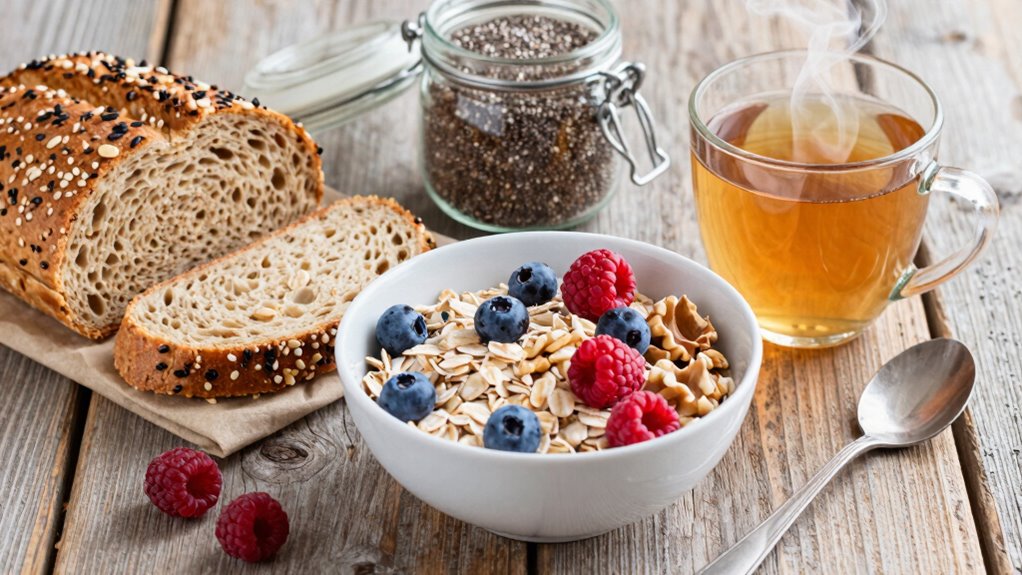
Are you looking for an easy way to improve your health? Focusing on fiber is one of the simplest and most effective steps you can take. Fiber benefits your body in many ways—helping digestion, controlling blood sugar, lowering cholesterol, and supporting weight management. But jumping into a high-fiber diet too quickly can lead to uncomfortable stomach drama, like bloating or gas. That’s why it’s smart to start slow and build up gradually.
Starting a high-fiber diet gradually helps your digestion adapt comfortably and avoid discomfort.
Your first move should be understanding the dietary sources of fiber. Good sources include fruits, vegetables, whole grains, nuts, seeds, and legumes. For example, apples, berries, carrots, and broccoli are rich in fiber, as are oats, brown rice, and whole wheat bread. Incorporating these into your meals can boost your fiber intake naturally. It’s best to diversify your sources so your body gets a mix of both soluble and insoluble fiber, which work together to keep your digestion smooth. Recognizing the importance of dietary diversity can help ensure you get the full range of fiber’s benefits. Additionally, understanding how different fibers function in your body can help you tailor your diet more effectively. Incorporating a variety of fiber-rich foods also supports gut health by promoting a balanced microbiome. Moreover, paying attention to fiber’s impact on digestion can help you make more informed choices about your diet. Including fiber-rich foods in every meal can make it easier to meet your daily goals without feeling overwhelmed.
When you begin adding more fiber, don’t do it all at once. If you suddenly increase your intake, your digestive system might struggle to adapt, leading to cramps or excessive gas. Instead, add small portions of fiber-rich foods into your diet each day. For example, start your morning with a bowl of oatmeal topped with berries, or snack on a handful of nuts or seeds. Gradually, you can increase your servings over a week or two. Remember to drink plenty of water, as fiber absorbs water and helps keep everything moving smoothly in your gut.
Listening to your body is key. If you notice discomfort, scale back a little and then slowly ramp up again. Incorporate fiber-rich foods consistently, and over time, your digestive system will become more accustomed. Not all fiber works the same way—soluble fiber dissolves in water and forms a gel-like substance, aiding in lowering cholesterol and stabilizing blood sugar. Insoluble fiber adds bulk to stool and helps prevent constipation. Mixing both types into your diet provides all-encompassing support for your gut health. Being aware of fiber’s different types can help you optimize your dietary choices for better health outcomes.
Products Worth Considering

Cuisinart ICE-100 1.5-Quart Automatic Ice Cream and Gelato Maker

Traeger Woodridge Pro Wood Pellet Grill and Smoker, 970 sq. in., WiFIRE

KitchenAid Artisan 5-Quart Tilt-Head Stand Mixer, Almond Cream
As an affiliate, we earn on qualifying purchases.
Frequently Asked Questions
Can Fiber Intake Cause Sudden Weight Loss?
Yes, increasing your dietary fiber intake can lead to sudden weight loss, especially initially. Fiber adds bulk to your meals, helping you feel full longer, which can reduce overall calorie intake. This boost in fiber consumption supports weight loss efforts by curbing hunger and promoting digestion. However, it is crucial to introduce fiber gradually to avoid stomach discomfort and ensure your body adapts smoothly to these changes.
Are All Fiber Sources Equally Beneficial?
Not all fiber sources are equally beneficial, as nutrient diversity plays a key role. You should include a variety of fiber sources like fruits, vegetables, whole grains, and legumes to maximize health benefits. Different sources provide unique nutrients and types of fiber, supporting digestion, heart health, and weight management. By diversifying your fiber intake, you guarantee a balanced approach that enhances overall well-being without missing out on essential nutrients.
How Does Fiber Affect Blood Sugar Levels?
Did you know that soluble fiber can slow down sugar absorption, helping blood sugar regulation? When you eat fiber-rich foods, your insulin response becomes more balanced, preventing spikes. This means your body manages blood sugar levels better, reducing fatigue and cravings. By including fiber in your diet, you support steady energy throughout the day, making it easier to maintain a healthy weight and overall well-being.
Can Fiber Help With Cholesterol Management?
Yes, fiber can help manage your cholesterol levels. Soluble fiber, found in foods or fiber supplements, binds to cholesterol in your digestive system, reducing its absorption into your bloodstream. Incorporating fiber supplements or high-fiber foods into your diet can lower bad cholesterol (LDL) and support heart health. Make sure to drink plenty of water, as fiber works best when it’s properly hydrated.
Is It Safe to Increase Fiber Intake Rapidly?
Jumping into high fiber intake is like venturing into uncharted territory—risky if you don’t proceed cautiously. Rapidly increasing fiber can overwhelm your digestive system, leading to gastrointestinal discomfort and disrupting fiber digestion. To avoid this, ramp up your fiber gradually, giving your body time to adapt. This way, you prevent stomach drama and enjoy the benefits of fiber without unnecessary discomfort.
Conclusion
Now that you’re equipped with the basics, embracing fiber isn’t as intimidating as it seems. Remember, slow and steady wins the race—gradually add more fiber to your diet to avoid stomach drama. Stick with it, and you’ll soon enjoy better digestion and overall health. Don’t put all your eggs in one basket; diversify your fiber sources to keep things interesting. With a little patience, you’ll be reaping the benefits before you know it!