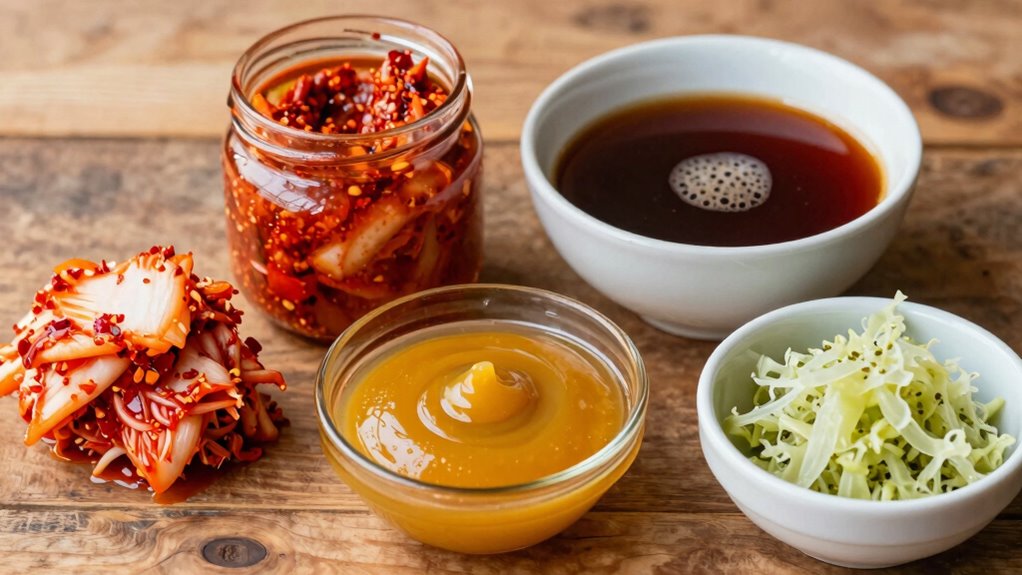
Start with simple fermented condiments like sauerkraut or kimchi, which are easy to make with minimal equipment. These lacto-fermentation options offer tangy flavors and a crisp texture, perfect for beginners. They are straightforward, quick to prepare, and pair well with many dishes. As you become more comfortable, you can try more complex ferments like hot sauces or miso. Keep exploring, and you’ll soon master the art of fermentation.

Get kitchen staples and gadgets delivered free with Prime
- Fast, free delivery on millions of items
- Prime Video, Amazon Music and more included
- Member-only deals all year
Key Takeaways
- Start with simple lacto-fermented vegetables like sauerkraut or kimchi for easy, tangy flavors.
- Use minimal equipment, such as glass jars with breathable lids, for beginner-friendly fermentation.
- Keep fermentation environment steady at 65-75°F and observe for bubbling and smell changes.
- Begin with small batch sizes to learn and troubleshoot without waste.
- Patience and regular monitoring are key to developing safe, flavorful fermented condiments.
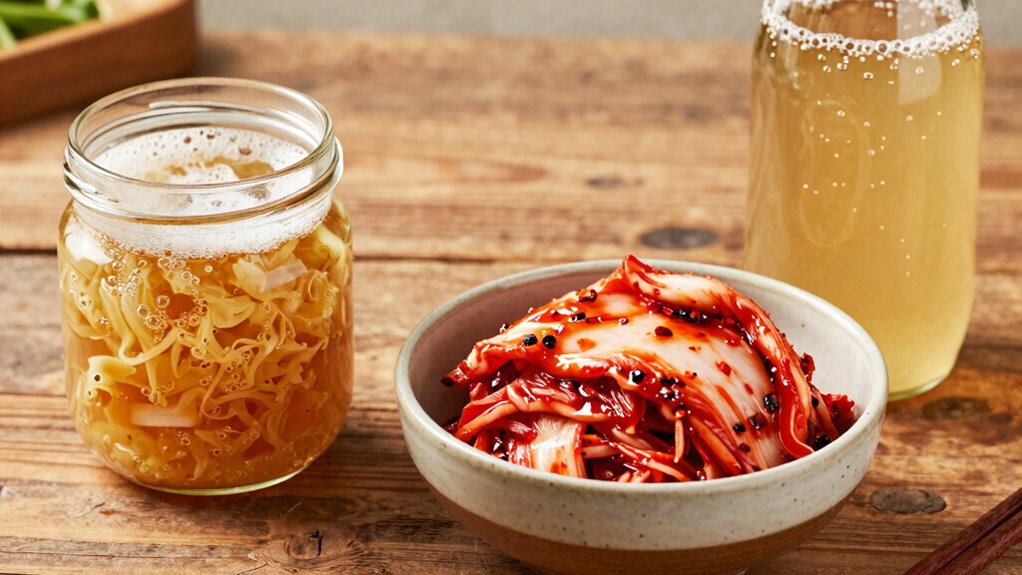
Fermented condiments are a flavorful way to enhance your meals and support your gut health, making them a popular choice for home cooks. When you’re just starting out, it’s helpful to understand how different fermentation methods influence flavor profiles. Some techniques create tangy, sour tastes, while others develop more complex, umami-rich notes. For example, lacto-fermentation, which involves fermenting vegetables in a salt brine, produces a bright acidity and crisp texture—perfect for kimchi or sauerkraut. On the other hand, wild fermentation relies on naturally occurring yeasts and bacteria, leading to more layered and unpredictable flavors, like those found in traditional miso or fermented hot sauces.
Fermented condiments boost flavor and gut health, with methods like lacto- and wild fermentation creating diverse, vibrant tastes.
Choosing your first fermented condiment depends on your flavor preferences and how much effort you’re willing to put in. If you want a straightforward, tangy addition to your dishes, starting with sauerkraut or simple fermented veggies is an excellent choice. These are easy to make, require minimal equipment, and offer a clean, sharp taste that pairs well with sandwiches, salads, or as a side. For those interested in experimenting with more complex flavors, fermented hot sauces or miso can be rewarding. They often involve longer fermentation times and specific fermentation environments, but the depth of flavor they develop makes the effort worthwhile.
Understanding fermentation methods helps you anticipate the process and flavor outcomes. Lacto-fermentation, which uses salt and natural bacteria, is beginner-friendly because it relies on simple ingredients and natural processes. You just need vegetables, salt, and patience. Wild fermentation, however, involves more variables—such as ambient temperature and natural yeasts—making it slightly more unpredictable but also richer in flavor. Mastering fermentation techniques helps you better control the process and achieve consistent results. It’s also beneficial to familiarize yourself with fermentation safety, so you can prevent spoilage and ensure your condiments are both delicious and safe to enjoy. Additionally, learning about proper fermentation environment can significantly improve your success rate and flavor consistency. Moreover, understanding how beneficial microbes develop during fermentation can motivate you to explore different recipes and techniques, knowing how they support your health. Whichever method you choose, maintaining proper hygiene and controlling fermentation conditions are key to avoiding spoilage and ensuring a safe, tasty result.
When you’re trying your hand at fermented condiments, start with small batches to minimize waste and troubleshoot easily. Use glass jars with breathable lids or cloth covers to allow gases to escape while preventing contaminants from entering. Keep the environment at a steady temperature, usually around 65-75°F, to promote steady fermentation. As you observe the process, you’ll notice bubbling, changes in smell, and flavor development—signs that fermentation is progressing well. Over time, you’ll learn to recognize which flavors you enjoy most and how to adjust ingredients or fermentation times to suit your taste.
Ultimately, exploring different fermentation methods and flavor profiles will open up a world of delicious, healthful condiments. Starting simple allows you to build confidence and refine your technique. With patience and experimentation, you’ll soon be creating fermented condiments that elevate your meals and support your gut health.
fermentation starter kit for vegetables
As an affiliate, we earn on qualifying purchases.
As an affiliate, we earn on qualifying purchases.
Frequently Asked Questions
How Long Does It Take for Fermented Condiments to Develop Flavor?
Fermented condiments typically develop their full flavor during the fermentation timeline, which usually takes about one to four weeks. You’ll notice flavor maturation as the fermentation progresses, with sharper, more complex tastes emerging over time. It’s best to taste your condiments periodically to find the perfect balance. Keep in mind that factors like temperature and ingredient freshness can influence the fermentation timeline, so patience yields the best results.
Are Fermented Condiments Suitable for People With Gluten Sensitivities?
Imagine you’re stepping into a time machine—fermented condiments can be suitable if you choose gluten-free alternatives. You should look for labels that specify gluten-free, as cross-contamination risks exist during fermentation or processing. Many homemade options are naturally gluten-free, but always double-check ingredients. By doing so, you enjoy flavorful condiments safely while avoiding gluten-related issues. So, yes, with careful selection, fermented condiments can be a tasty, safe addition for those with gluten sensitivities.
Can I Make Fermented Condiments at Home Without Special Equipment?
Yes, you can make fermented condiments at home without special equipment. For homemade fermentation, all you need are basic items like jars, a cloth cover, and a rubber band. Equipment alternatives include using a glass jar with a loose lid or covering the jar with cheesecloth secured with a rubber band. These methods allow natural fermentation to occur safely without specialized tools, making it accessible for beginners.
What Are Common Signs of Spoilage in Fermented Condiments?
You’ll want to watch out for spoilage indicators like foul odors, mold, or slimy textures to guarantee fermentation safety. If your fermented condiment develops an off-putting smell, unusual color, or bubbles that smell rotten, it’s best to discard it. While some surface mold can be removed carefully, persistent spoilage signs mean the product isn’t safe to consume. Trust your senses to keep your ferments safe and delicious.
How Do I Store Fermented Condiments to Maintain Freshness?
You should store fermented condiments in airtight containers in the refrigerator to slow down the fermentation process and preserve flavor development. Keep them away from direct sunlight and temperature fluctuations, which can disrupt the fermentation process. Ensuring a consistent, cool environment helps maintain their freshness and flavor, preventing spoilage. Regularly check for signs of over-fermentation or spoilage, so you can enjoy their unique flavors longer and safely.
Conclusion
As you start exploring fermented condiments, you’ll find each jar tells a story of patience and transformation. Just like life, fermentation requires time to develop its true flavor, reminding you that some of the best things come with patience. Keep experimenting and savoring the surprises—sometimes, the smallest changes lead to the most delightful discoveries. In embracing these condiments, you might just find that patience and curiosity turn everyday meals into extraordinary moments.
Halloween Picks
halloween
As an affiliate, we earn on qualifying purchases.