
Starting a zero-waste kitchen is simple. Switch from single-use plastics to reusable containers for storage and snacks. Compost food scraps like peels and coffee grounds to reduce waste and create natural fertilizer. Shop in bulk with jars or cloth bags to minimize packaging. Focus on mindful choices and small steps, like using reusable containers and composting, to make a big impact over time. Keep exploring to discover more tips for a sustainable kitchen.
Key Takeaways
- Start by replacing single-use plastics with reusable containers made of glass or stainless steel.
- Incorporate composting to recycle food scraps and yard waste into nutrient-rich soil.
- Use bulk shopping and bring your own jars or cloth bags to reduce packaging waste.
- Store leftovers and prepped ingredients in reusable containers to minimize single-use packaging.
- Make gradual, consistent changes and focus on mindful decisions to build sustainable zero-waste habits.
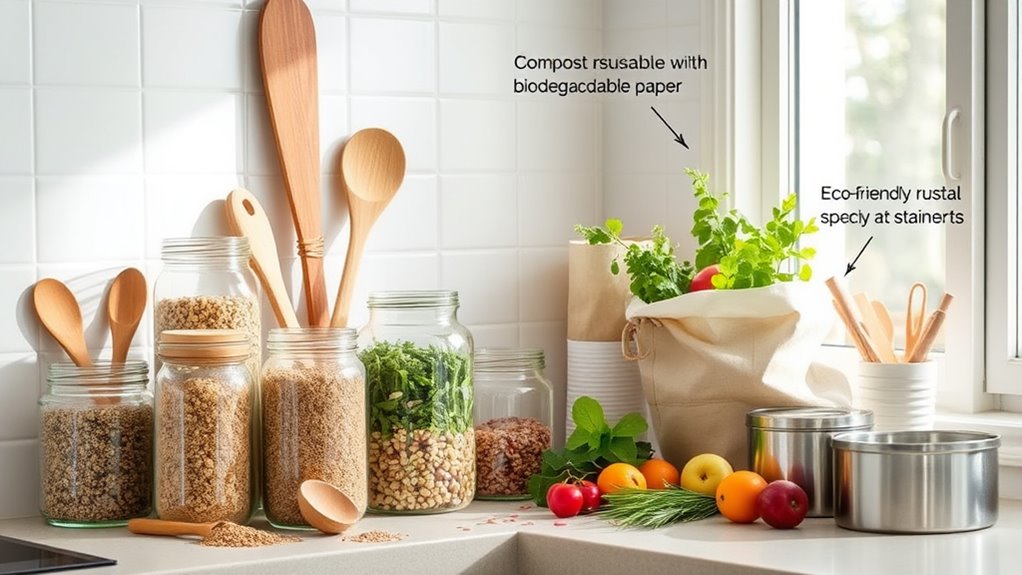
Are you ready to transform your kitchen into an eco-friendly space? Starting your zero-waste journey might seem overwhelming at first, but small changes can make a big difference. One of the easiest ways to reduce waste is by switching to reusable containers. Instead of relying on single-use plastic bags and wraps, invest in high-quality glass or stainless steel containers. These not only keep your food fresh longer but also eliminate the need for disposable packaging. Use them to store leftovers, prepped ingredients, or snacks. Reusable containers are versatile and durable, making them a practical choice for everyday use. Over time, you’ll notice less trash piling up, and you’ll feel good about reducing your environmental impact.
Another pivotal aspect of a zero-waste kitchen is composting. Composting allows you to turn food scraps and yard waste into nutrient-rich soil, closing the loop on your food’s lifecycle. If you’re new to composting, start with simple composting tips: keep a dedicated bin in your kitchen or yard, and make sure it’s accessible. Use a bin with a lid to contain odors, and line it with newspaper or compostable bags if necessary. Collect fruit and vegetable peels, coffee grounds, eggshells, and garden waste—these are excellent for compost. Avoid adding meat, dairy, or oily foods, as they can attract pests and cause odors. Regularly turn or aerate your compost to help it decompose efficiently. Incorporating composting best practices can optimize the process and reduce potential issues. By composting, you’ll reduce the amount of waste sent to landfills and create natural fertilizer for your plants. It’s a rewarding process that connects you to your food and waste in a meaningful way.
To make your zero-waste kitchen truly effective, incorporate composting tips into your routine and choose reusable containers for everything from shopping to storage. When shopping, opt for bulk bins and bring your own jars or cloth bags to minimize packaging waste. Label your reusable containers clearly so you always know what’s inside, making meal prep and storage easier. Keep a compost bin in an accessible spot to encourage regular use, and empty it frequently to prevent odors. Remember, shifting to a zero-waste kitchen doesn’t happen overnight. It’s about making consistent, mindful choices that add up over time. Every small step — from using reusable containers to composting leftovers — contributes to a healthier planet. Embrace the process, and soon, your kitchen will become a model of sustainability and efficiency.
Frequently Asked Questions
How Can I Start a Zero-Waste Kitchen on a Tight Budget?
You can start a zero-waste kitchen on a tight budget by using reusable containers for storing leftovers and buying in bulk. Visit local bulk stores or co-ops to save money and reduce packaging waste. Bring your containers to fill with grains, nuts, or spices. Focus on simple swaps like these to gradually cut trash without spending much, making eco-friendly choices affordable and straightforward.
What Are Common Pitfalls for Beginners in Zero-Waste Cooking?
You might think zero-waste cooking is effortless, but overcoming skepticism is your biggest hurdle. Many beginners fall into the trap of avoiding single-use items only to replace them with less sustainable options. Stay aware, plan ahead, and don’t get discouraged when habits don’t change overnight. Remember, consistency beats perfection. Avoid common pitfalls by embracing progress over perfection and trusting that small steps lead to big change.
How Do I Store Leftovers Sustainably Without Plastic?
You can store leftovers sustainably by using reusable containers made from glass or stainless steel instead of plastic. These options are durable and eco-friendly. When you’re finished, practice composting tips by composting food scraps like vegetable peels and coffee grounds, reducing waste. This way, you keep your leftovers fresh and limit plastic use, making your kitchen more zero-waste friendly and environmentally conscious.
Are There Specific Brands That Support Zero-Waste Products?
Yes, you can find brands that support zero-waste products with eco-friendly packaging. Look for companies like Package Free, Zero Waste Store, and Life Without Plastic, which prioritize sustainable brand options. These brands use biodegradable, reusable, or compostable materials, helping you reduce waste. Always check product descriptions for eco-friendly packaging to confirm you’re making the most sustainable choice. Supporting these brands helps promote a more environmentally conscious lifestyle.
How Can I Involve My Family in Reducing Kitchen Waste?
You can involve your family by encouraging participation in sustainability education and making waste reduction fun. Share tips on composting, compost meals together, and set family goals for reducing plastic use. Get everyone involved in meal planning, shopping, and recycling. By fostering open conversations about sustainability, you create a team effort that makes reducing kitchen waste enjoyable and effective, inspiring lasting habits for a greener future.
Conclusion
By now, you’re well on your way to creating a sustainable, waste-free kitchen. Remember, every small change adds up—will you let convenience or conscience guide your choices? Embracing a zero-waste mindset isn’t about perfection but progress. With mindful habits and intentional swaps, you can make a real difference for the planet. So, why not start today and turn your kitchen into a greener, cleaner space for generations to come?