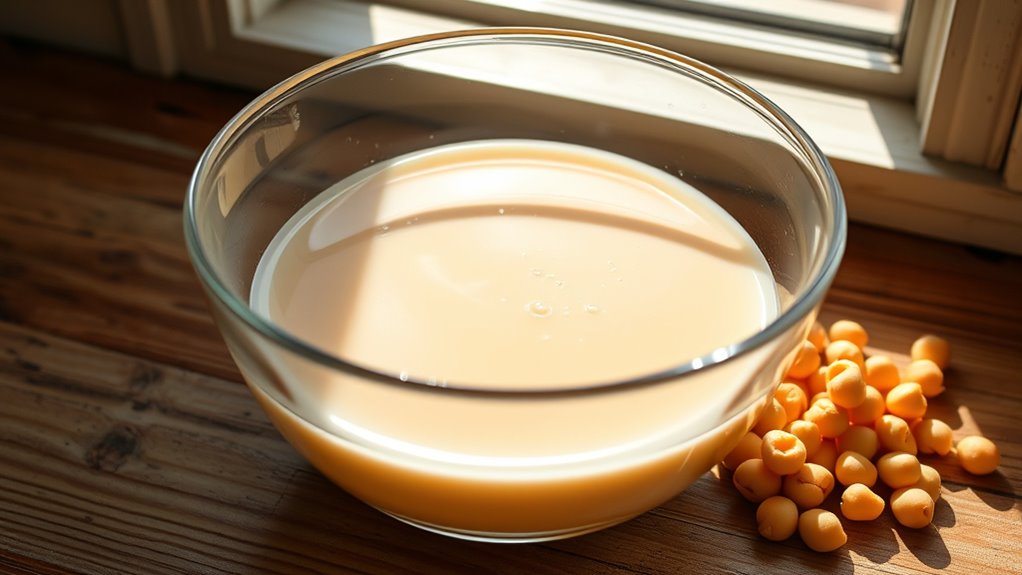

Aquafaba, the cooking water from chickpeas, works as a versatile, plant-based egg substitute in many recipes. You can use it to mimic egg’s binding and leavening properties, whip it into fluffy peaks for meringues, or fold it into batters for cakes and cookies. Typically, three tablespoons replace one egg. Experimenting with aquafaba can add moisture and lightness to your dishes while promoting eco-friendly cooking—continue exploring to discover more ideas and tips.
Key Takeaways
- Aquafaba is the cooking liquid from chickpeas, used as a vegan egg substitute in various recipes.
- Measure about three tablespoons of aquafaba to replace one egg in baking and cooking.
- Whip aquafaba with a mixer until stiff peaks form for meringues, mousses, or as a topping.
- Incorporate whipped aquafaba into batters to add lightness and achieve a fluffy texture.
- Use drained chickpea water in recipes to reduce waste and create plant-based, eco-friendly dishes.
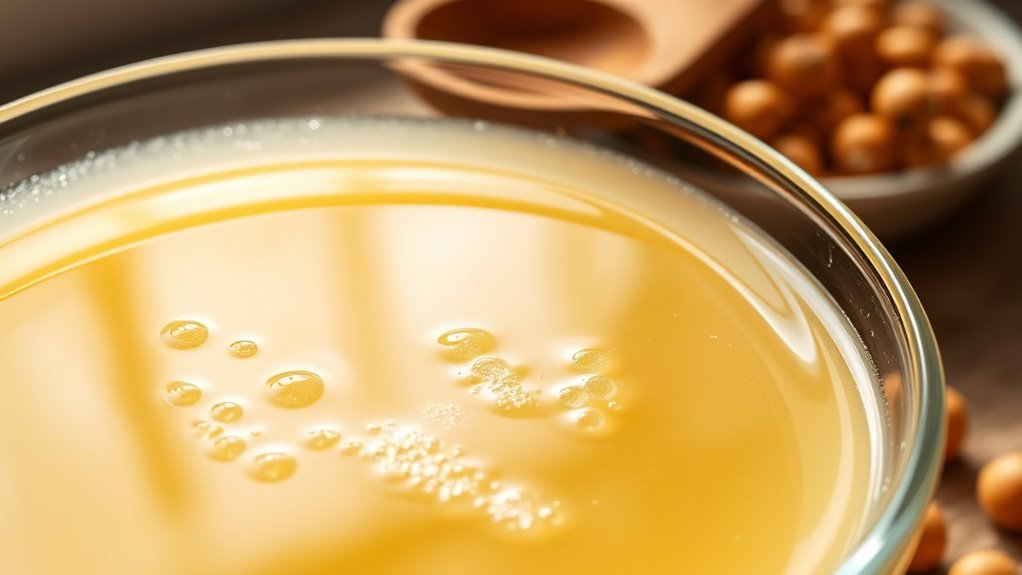
Have you ever wondered what aquafaba is and how it can transform your cooking? You’re not alone. Aquafaba, the liquid from cooked chickpeas or other legumes, has gained popularity among home cooks and professional chefs alike for its surprising versatility. It acts as an effective egg substitute, making it an excellent ingredient for vegan baking and other dishes where eggs traditionally provide structure and moisture. If you’re exploring plant-based options or simply want to reduce your reliance on eggs, aquafaba offers a natural, affordable solution.
Discover the versatile, plant-based liquid from legumes that replaces eggs in baking and cooking.
When you use aquafaba as an egg substitute, you’re tapping into a liquid that mimics the binding and leavening properties of eggs. For baking, this means you can whip aquafaba into a fluffy foam, similar to beaten egg whites, to create light, airy textures in cakes, meringues, and mousses. Its neutral flavor won’t overpower your recipes, and it’s a great way to keep baked goods moist and tender without eggs. Many vegan baking recipes rely on aquafaba to achieve the same rise and texture as traditional baked goods, making it a crucial ingredient for plant-based chefs. Plus, since aquafaba is derived from chickpeas, it’s packed with plant-based protein and fiber, adding nutritional value to your creations.
Getting started with aquafaba is simple. You can use the liquid from canned chickpeas—just drain and measure it. Typically, three tablespoons of aquafaba can replace one egg in most recipes. To use it as a whip, you need to beat the liquid with a mixer until it reaches stiff peaks, similar to egg whites. This whipped aquafaba can then be folded into batters or used to top desserts like pies, tarts, or even layered in vegan cheesecakes. Its ability to hold air makes it especially useful for creating light, fluffy textures in vegan meringues and cookies.
In essence, aquafaba is a game-changer for anyone interested in vegan baking or looking for reliable egg substitutes. It’s cost-effective, easy to use, and versatile enough to replace eggs in a wide range of recipes. Whether you’re making a vegan sponge cake, meringue cookies, or a creamy mousse, aquafaba delivers impressive results. Incorporating sustainable ingredients like aquafaba aligns with environmentally conscious cooking practices and reduces waste, making it an eco-friendly choice. Once you start experimenting with it, you’ll find it becoming a staple in your kitchen, helping you craft delicious, plant-based dishes that are both satisfying and environmentally friendly.
Frequently Asked Questions
Can Aquafaba Be Flavored or Scented?
Yes, you can flavor or scent aquafaba to enhance its taste and aroma. You might add a splash of vanilla extract, a hint of citrus zest, or a sprinkle of spices like cinnamon for flavor enhancement. For scent infusion, steep herbs or flowers like lavender or rosemary in the aquafaba before using it. Just remember to strain out any solids and adjust the amount to suit your recipe.
How Long Does Aquafaba Last in the Fridge?
Aquafaba lasts about 3 to 5 days in your fridge. Keep it in an airtight container to prevent spoilage. Watch for spoilage indicators like an off smell, mold, or a slimy texture. While it may still seem okay, discard it if you notice these signs. Proper storage helps maintain its quality and safety, ensuring you can use it within the recommended duration without worries.
Is Aquafaba Suitable for People With Soy Allergies?
If you have a soy allergy, aquafaba is generally safe because it’s made from chickpeas, not soy. However, consider soy allergy considerations, as some brands process chickpeas in facilities that handle soy, risking cross-contact. If you’re concerned about chickpea allergy concerns, avoid aquafaba altogether. Always check labels and consult with an allergist if you’re unsure, since cross-contamination can pose risks.
Can Aquafaba Replace Eggs in All Recipes?
You might think aquafaba can replace eggs in every recipe, but it’s not magic—it’s an egg substitute, perfect for vegan baking, yet falls short in recipes requiring structure or leavening like soufflés or meringues. While it’s a versatile, plant-based option, don’t expect it to perform miracles in all dishes. Use it thoughtfully, understanding its strengths and limits, and you’ll elevate your vegan baking game considerably.
What Are the Environmental Benefits of Using Aquafaba?
Using aquafaba benefits the environment by promoting water conservation, since you repurpose chickpea water instead of wasting it. It also supports sustainable farming practices by reducing the need for eggs, which often require resource-intensive production. When you choose aquafaba, you’re helping lower the environmental impact of food production, conserving water, and making eco-friendly choices that support healthier ecosystems.
Conclusion
Once you start exploring aquafaba, you’ll find it’s like a hidden gem in your kitchen. Its gentle magic can transform your recipes, adding a surprising touch that delights without overwhelming. Embrace this versatile ingredient, and you’ll discover new ways to elevate your cooking gracefully. With a little curiosity, aquafaba becomes your secret partner, quietly enhancing your dishes and making every bite a little more special. Keep experimenting, and let your culinary journey unfold beautifully.