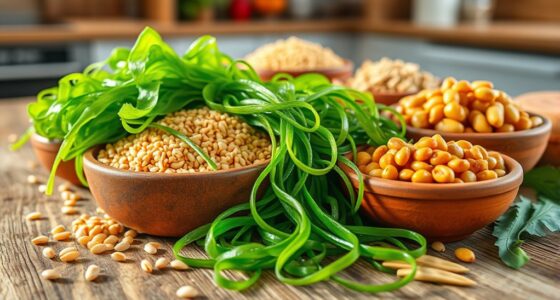
Ancient grains are truly nutritional powerhouses, offering you dense, minimally processed sources of essential nutrients. They preserve natural fiber, vitamins, minerals, and antioxidants, helping you boost your overall diet. With their rich protein, healthy fats, and lower glycemic index, these grains support digestion, energy, and weight management. Incorporating them into your meals adds flavor and variety. Keep exploring—you’ll find how these versatile grains can elevate your health and nutrition even further.
Key Takeaways
- Ancient grains retain their natural nutrients and fiber through minimal processing, enhancing overall diet quality.
- They are rich in protein, fiber, healthy fats, vitamins, and antioxidants, supporting optimal nutrition.
- Many are naturally gluten-free or low in gluten, making them suitable for gluten sensitivities.
- Their lower glycemic index helps regulate blood sugar and promotes sustained energy.
- Versatile in cooking, they add flavor and texture to a variety of healthy dishes.

Have you ever wondered why ancient grains are gaining popularity in modern diets? It’s not just a passing trend; it’s because these grains offer impressive nutritional benefits that appeal to a wide range of dietary needs. Unlike many highly processed modern grains, ancient grains often undergo minimal grain processing, which helps preserve their natural nutrients and fiber. This minimal processing means you’re getting more than just empty calories—you’re consuming a dense source of vitamins, minerals, and antioxidants. For individuals with specific dietary restrictions, ancient grains can be a game-changer. Many are naturally gluten-free or low in gluten, making them suitable for those with gluten sensitivities or celiac disease. Additionally, they tend to have a lower glycemic index, which helps in managing blood sugar levels, a vital factor for those with diabetes or insulin resistance.
When you incorporate ancient grains into your diet, you’re choosing foods that are closer to their natural form. They are often less refined than common grains like white rice or refined wheat products, which have been stripped of their bran and germ during processing. This means you’re benefiting from the full spectrum of nutrients that nature intended. For example, grains like quinoa and millet retain their germ, providing healthy fats and additional fiber, and their minimal grain processing helps maintain these nutrients. This not only boosts your overall nutrient intake but also supports digestion and promotes sustained energy release throughout the day. Proper grain processing plays a crucial role in preserving these nutrients and maximizing health benefits.
Furthermore, ancient grains are incredibly versatile. You can use them in salads, stews, or as a base for various dishes, making them easy to incorporate into your weekly meal prep. Their hearty texture and nutty flavor add depth to your meals without requiring extensive preparation or complicated cooking techniques. For those managing dietary restrictions, these grains can serve as a nutritious alternative to more processed carb sources, helping diversify your diet while meeting your nutritional needs. The fact that many are naturally rich in protein and fiber means you stay full longer, reducing cravings and aiding in weight management.
Frequently Asked Questions
Are Ancient Grains Suitable for Gluten-Free Diets?
Yes, ancient grains are suitable for gluten-free diets, but you should check the specific grain varieties. Many, like quinoa, amaranth, and millet, naturally contain little to no gluten, making them safe choices. However, some ancient grains, such as spelt and farro, have higher gluten content. Always read labels or verify with your supplier to avoid cross-contamination and confirm the grain varieties you choose are truly gluten-free.
How Do Ancient Grains Compare in Price to Modern Grains?
Ancient grains tend to be pricier than modern grains due to limited production, higher cultivation costs, and their niche market appeal. When you compare prices, you’ll notice affordability factors like sourcing from specialty stores or organic options can drive costs up further. While they offer nutritional benefits, you might find that modern grains are more budget-friendly for everyday use, making them a practical choice if you’re mindful of your grocery budget.
Can Ancient Grains Help With Gluten Intolerance?
Imagine you’re in a medieval village, but today, ancient grain varieties might just be your secret weapon against gluten sensitivity. These grains, like quinoa and millet, often contain less gluten or are naturally gluten-free. For those with gluten intolerance, incorporating ancient grains can help reduce symptoms while still enjoying hearty, nutritious meals. Just remember to check labels carefully, as some ancient grains may still contain trace gluten.
What Are the Best Ways to Store Ancient Grains?
To store your ancient grains properly, keep them in airtight containers to prevent moisture and pests. Use grain storage methods like glass jars or sealed plastic bins. Store them in a cool, dark place to extend their shelf life. Regularly check for signs of spoilage, and consume within 6-12 months for maximum freshness. Following these shelf life tips ensures your grains stay nutritious and ready whenever you need them.
Are There Any Potential Allergens in Ancient Grains?
You should be aware that ancient grains can trigger allergies in some people, especially those with ancient grain allergies. Cross reactivity with wheat is common, so if you’re sensitive to wheat, you might also react to grains like spelt or Kamut. Always check labels carefully and consult with a healthcare professional if you have known allergies or suspect sensitivity. Being cautious helps prevent allergic reactions and ensures safe consumption.
Conclusion
Don’t dismiss ancient grains just because they’re old-fashioned. They’re packed with nutrients, fiber, and flavor that can boost your health and keep your meals exciting. Sure, they might seem unfamiliar at first, but once you give them a try, you’ll see how easily they fit into your diet. So, embrace these nutritional powerhouses—your body and taste buds will thank you for it. Give ancient grains a chance, and enjoy the benefits they bring!