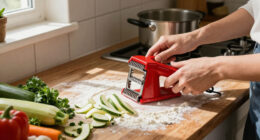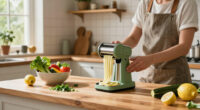
Shopping for unique kitchen gadgets often means choosing between two very different kinds of purchase: a specialized tool that makes a recurring task easier, and a novelty device whose appeal comes from an unusual design or entertaining result. Both can look clever on a product page, but only one may earn a permanent place in a drawer. The real question is whether a gadget will change how you cook often enough to justify its cost and storage space.

Get kitchen staples and gadgets delivered free with Prime
- Fast, free delivery on millions of items
- Prime Video, Amazon Music and more included
- Member-only deals all year

OTOTO Red The Crab Silicone Spoon Rest for Stove Top
- ✔ Brand: OTOTO
- ✔ Material: Silicone
- ✔ BPA free: Yes

OTOTO Splatypus Jar Spatula, Silicone Spatula and Bowl Scraper
- ✔ Brand: OTOTO
- ✔ Model: OT887
- ✔ Material: Silicone

OTOTO Sir Peels A-Lot Medieval Knight Vegetable Peeler
- ✔ Brand: OTOTO
- ✔ Model: OT1264
- ✔ Recommended use: Fruit and vegetables
Practical specialty gadgets are the stronger choice for cooks who regularly tackle a specific job, such as spiralizing vegetables, removing corn kernels, or making evenly portioned dumplings. Novelty gadgets make more sense when the experience itself is part of the appeal, such as preparing themed snacks for parties or choosing a memorable gift. This comparison weighs the two on usefulness, frequency, effort saved, storage, cleanup, durability, price, and gift appeal so you can decide whether distinctive means genuinely helpful for you.
At a Glance
| Criteria | Practical specialty kitchen gadgets | Novelty kitchen gadgets | Winner |
|---|---|---|---|
| Everyday usefulness | Designed to improve a defined cooking task | Often entertaining or decorative, with narrower utility | A |
| Frequency of use | Often worthwhile if the task recurs | May be used mainly for occasions | A |
| Time and effort saved | Can meaningfully simplify repetitive work | Can be slower than a familiar tool | A |
| Storage footprint | Usually modest, though form varies | Can be awkwardly shaped or single-purpose | Depends |
| Cleanup | Often straightforward, but depends on moving parts | Novel mechanisms may take extra cleaning | Depends |
| Durability | Generally tied to a simple, focused design | Varies widely; complexity can add failure points | A |
| Price and value | Good value when it replaces repeated manual effort | Worthwhile for enjoyment, less so for practical savings | A |
| Gift appeal | Best for cooks with a known need | Strong for playful or themed gifts | B |
OTOTO Red The Crab Silicone Spoon Rest for Stove Top
Red The Crab makes the clearest case for a novelty gadget that earns counter space. Its pincers hold ladles, tongs, spatulas, and other utensils between cooking steps, helping keep drips off the countertop. The more distinctive feature is its second job: it can grip a compatible pot lid and leave a gap for steam to escape. That gives it a practical edge over Splatypus, which excels at one precise scraping task, and over Sir Peels A-Lot, whose central job is familiar vegetable prep.The heat-resistant, BPA-free silicone construction is suited to contact with warm cookware and can go in the dishwasher, while its roughly four-inch footprint is easy to put away. The tradeoff is that compactness also limits what it can hold: very large spoons or oversized lids may not fit securely. We would choose it for a kitchen that benefits from a handy landing spot for utensils and a simple way to vent compatible lids. If your cookware is unusually large or you already have dedicated rests and lid props, its extra function may matter less.
Pros:
- Holds multiple cooking utensils to keep drips off countertops.
- Can create a steam-release gap beneath a compatible pot lid.
- BPA-free, heat-resistant silicone is dishwasher safe.
- Compact footprint and playful crab shape add function and character.
Cons:
- May not accommodate very large spoons or oversized pot lids.
- Its compact form may be less convenient when several bulky utensils are in use.
Best for: Cooks who want a compact utensil rest that can also prop a compatible pot lid open.
Not ideal for: Anyone who regularly uses oversized utensils or pot lids, or already has dedicated tools for both jobs.
Bottom line: Choose Red The Crab for the lineup’s broadest mix of everyday utility and playful design, provided your utensils and lids fit its compact form.
“Choose Red The Crab for the lineup’s broadest mix of everyday utility and playful design, provided your utensils and lids fit its compact form.”
OTOTO Splatypus Jar Spatula, Silicone Spatula and Bowl Scraper
Where Red The Crab stands out by doing two jobs, the Splatypus Jar Spatula earns its place through a narrow, specific one: scraping spreads from tight jar corners and bowls. Its flexible silicone shape can follow surfaces that a broad spoon or spatula may leave behind. That makes it the more targeted choice for jams and soft spreads, and a better fit for small containers than either the Crab or the full vegetable peeler.At just over eight inches long and about 1.34 inches wide, it offers reach while staying slim enough for jar work. The food-grade, BPA-free silicone is dishwasher safe, so cleanup is straightforward after sticky ingredients. Its playful platypus form adds personality, but the functional limits matter more: this is a small scraper, not a heavy-duty scoop or a tool for chunky foods. We would pick it for anyone who often struggles to empty narrow jars. For larger mixing and serving jobs, the Crab’s utensil-holding role or a full-size spatula is more useful.
Pros:
- Slim, flexible design reaches into tight jar corners.
- Useful for scraping and spreading soft foods.
- Food-grade, BPA-free silicone is dishwasher safe.
- Long handle provides reach while keeping the head compact.
Cons:
- Small size is not suited to large scooping tasks.
- Not intended for heavy or chunky foods.
Best for: People who often scrape jam, nut butter, or other soft spreads from narrow jars and small bowls.
Not ideal for: Cooks who need a full-size spatula, heavy scooping tool, or implement for chunky ingredients.
Bottom line: Choose Splatypus when jar corners are the problem you want to solve; skip it if you expect one spatula to cover broader kitchen tasks.
“Choose Splatypus when jar corners are the problem you want to solve; skip it if you expect one spatula to cover broader kitchen tasks.”
OTOTO Sir Peels A-Lot Medieval Knight Vegetable Peeler
Sir Peels A-Lot is the most straightforward tool in this roundup: a vegetable peeler with a medieval knight theme. Its swivel stainless-steel blade is described for peeling potatoes, carrots, and fruit, while the cushioned silicone handle is designed to provide a non-slip grip. Compared with Splatypus, which is built to reach into tight containers, this pick focuses on a regular prep task. It is also less of a multitasker than Red The Crab, but may make more sense for someone who wants a characterful version of a tool they already use.The design offers a practical point beyond appearance: a cushioned grip may help the handle feel more secure during repeated strokes, and the swivel blade can follow the surface of common produce. It is dishwasher safe for convenient cleanup. The product details describe one blade and a small overall form, so we would not choose it for specialized cutting or very large root vegetables. Heavy use may also make blade upkeep more relevant over time. It is the best fit for someone seeking a familiar peeling tool with a whimsical presentation; shoppers looking for the most unusual added function should start with the Crab instead.
Pros:
- Swivel stainless-steel blade is intended for fruits and vegetables.
- Cushioned silicone handle is designed for a non-slip grip.
- Dishwasher safe for convenient cleanup.
- Knight-themed design gives a familiar prep tool a distinctive look.
Cons:
- Single-blade design offers less versatility than tools with interchangeable blades.
- Small form may be less effective on very large root vegetables.
- Frequent heavy use may call for regular blade sharpening.
Best for: Home cooks who want a conventional fruit and vegetable peeler with a playful character design and cushioned grip.
Not ideal for: Anyone seeking interchangeable blades, a multi-function prep tool, or a peeler optimized for very large vegetables.
Bottom line: Choose Sir Peels A-Lot for playful, familiar peeling; choose Red The Crab if you want the more distinctive functional twist.
“Choose Sir Peels A-Lot for playful, familiar peeling; choose Red The Crab if you want the more distinctive functional twist.”
As an Amazon Associate we earn from qualifying purchases.
Key Differences
The central difference is repeat value. A practical specialty gadget earns its keep when it makes a job you already do easier, faster, or more consistent. A novelty gadget may offer a more unusual result, but if that result only suits one holiday or party, its value comes from entertainment rather than daily convenience. Frequency matters more than the number of features: a small tool used every week can be a better purchase than a versatile-looking device used once.
Practical tools tend to be easier to justify on function, but they still need a real place in your routine. A gadget that duplicates a knife, grater, or peeler you already use well can become clutter even if it is well made. Novelty tools can be the better choice when amusement, presentation, or gift impact is the goal. Their tradeoff is that unusual shapes and mechanisms may take more storage and cleanup, and their appeal may fade after the first use.
Price should be judged against the benefit you expect to receive. Paying more for a durable specialty tool can make sense if it saves effort on a regular task. Paying extra for a novelty feature is sensible when the fun or presentation is itself worth the price to you. If neither option solves a recurring annoyance or reliably adds enjoyment, skip the purchase and use the kitchen tools you already own.
Detailed Comparison
Everyday usefulness (Practical specialty kitchen gadgets wins — moderate)
Practical specialty gadgets win by targeting a specific job cooks already need to do. A good corn stripper or herb chopper can reduce effort without changing the meal. Novelty gadgets may produce a distinctive shape or playful result, but that feature often has less effect on ordinary cooking. The gap is moderate: novelty can be useful, though it usually serves a narrower purpose.
Frequency of use (Practical specialty kitchen gadgets wins — major)
A is more likely to be used regularly when its task appears in your routine. B often peaks at a party, holiday, or first try, then sits unused. This is a major difference for anyone with limited drawer space or a strict kitchen budget; occasional use is fine when planned, but it should not be mistaken for an everyday improvement.
Time and effort saved (Practical specialty kitchen gadgets wins — moderate)
A wins when it reduces repetitive work or helps produce consistent results. A novelty device may save time too, but many are bought for the special result rather than efficiency and can take longer to assemble or operate. The advantage is moderate and depends on the exact task: check whether the gadget replaces effort or simply adds a step.
Storage footprint (minor difference)
Neither category always wins. Compact specialty tools can fit in a utensil drawer, while bulky practical appliances can consume valuable counter space. Novelty tools range from tiny molds to awkward single-use machines. The difference is minor until storage is tight; measure the item and decide where it will live before buying.
Cleanup (minor difference)
Simple practical tools often have fewer crevices and parts, giving A a slight edge. However, a basic novelty cutter may rinse clean more easily than a specialty gadget with blades or attachments. The gap is minor and product-specific. Look for dishwasher guidance, removable parts, and areas where food can lodge before deciding.
Durability (Practical specialty kitchen gadgets wins — moderate)
A modestly wins because focused tools often use simpler construction and have fewer mechanisms to break. Novelty devices can be durable, but unusual moving parts or lightweight construction may shorten their useful life. The difference is moderate when a gadget will be used often; for an occasional party item, long-term durability may matter less.
Price and value (Practical specialty kitchen gadgets wins — major)
A usually offers stronger practical value when it saves time on a recurring task or replaces a less effective tool. B earns value through enjoyment, presentation, or a memorable shared activity. Neither is automatically a bargain: a cheap novelty purchase can still be wasteful if unused, while a more expensive specialty tool can pay off through repeated use. The gap is major for utility-focused shoppers.
Gift appeal (Novelty kitchen gadgets wins — moderate)
B often wins as a gift because an unexpected shape or playful function makes the item more memorable at first glance. A can be a better present when you know the recipient has a specific cooking habit or frustration. The difference is moderate: novelty helps with surprise, while practical tools reward a more personal match.
Practical specialty kitchen gadgets: Pros and Cons
Pros:
- Solves a recurring, identifiable kitchen task
- More likely to justify its price through repeated use
- Often saves effort or improves consistency
- Focused designs can be simple to store and clean
Cons:
- May duplicate a standard tool you already use
- Some specialty devices still take up substantial space
- Less exciting as a surprise gift
- Value depends on how often the task occurs
Novelty kitchen gadgets: Pros and Cons
Pros:
- Offers a playful or distinctive cooking experience
- Can make a memorable gift for the right person
- Useful for parties, themed meals, or occasional treats
- The fun can be valuable even without frequent use
Cons:
- Often has a narrower range of uses
- May be used only a few times a year
- Unusual shapes can complicate storage and cleanup
- Price may be hard to justify if the novelty fades
Who Should Choose What
Choose Practical specialty kitchen gadgets if:
- You cook often and have a repeated task that feels slow or tedious.
- You want a gadget to earn its space through regular use.
- You value function, consistency, and practical time savings.
- You already know the recipient has a specific kitchen need.
Choose Novelty kitchen gadgets if:
- You want an entertaining tool for parties, holidays, or themed cooking.
- You are shopping for someone who enjoys unusual kitchen items.
- You value presentation and fun enough to accept occasional use.
- You have checked that the device will fit your storage and cleanup habits.
Skip both if: Skip both if the gadget duplicates tools you use comfortably, addresses no recurring problem, and does not offer enough enjoyment to justify its cost and storage.
Value for Money
For most cooks buying for their own kitchen, practical specialty gadgets are the better value when they address a task that comes up regularly. Paying more is reasonable if the tool is sturdy, easy to clean, and saves effort each time you use it. A premium price does not make sense for a device that merely repeats what a knife or peeler already does well.
Novelty gadgets can be worth paying for when the experience is part of the point: a family activity, a themed gathering, or a gift chosen for someone who enjoys playful cooking. In that case, measure value by the enjoyment it brings, not by how many weekday meals it helps prepare. If the novelty is the only selling point and you cannot name a likely occasion, keep the money and drawer space.
Final Verdict
Choose practical specialty kitchen gadgets if you cook regularly and can name a repeated job they will improve. They are the safer purchase for most home cooks because regular use turns convenience into lasting value. Choose novelty gadgets when fun, presentation, or gift appeal matters more than everyday utility, and when you have a clear occasion or recipient in mind. The biggest deciding factor is not how unusual the gadget looks; it is whether you will reach for it often enough—or enjoy it enough—to make its space and price worthwhile.
Frequently Asked Questions
Are unique kitchen gadgets worth buying?
They can be, if a gadget solves a repeated problem or reliably adds enjoyment. Before buying, identify what task it handles, how often you do that task, and where the item will be stored. If you cannot answer those questions, it may become clutter.
Which type is better for everyday cooking?
Practical specialty gadgets are generally better for everyday cooking because they focus on tasks that recur. A novelty gadget can still be useful, but its special feature often matters more for a particular recipe or occasion than for routine meals.
Should I pay more for a premium kitchen gadget?
Pay more when better construction and easy cleaning matter across frequent uses. For an occasional novelty item, a high price is harder to justify unless its entertainment or gift value is worth that amount to you.
What makes a kitchen gadget a good gift?
A good gift fits the recipient. Choose a practical tool when you know a task they do often; choose a novelty item when they enjoy playful cooking and have room to store it. Avoid assuming that unusual automatically means useful.