TL;DR

Get kitchen staples and gadgets delivered free — and shop member deals
- Fast, free delivery on millions of items
- Access to Prime Big Deal Days deals on October 6–7
- Prime Video, Amazon Music and more included
Sour food and beverage sales increased across retail in the 52 weeks ending Aug. 9, while convenience-store sales rose more modestly, according to Circana. Industry experts say stores can build on established sour candy sales with newer flavors, energy drinks and cross-category pairings, though not every sour product is gaining ground.
Sour food and beverage sales grew across retail in the 52 weeks ending Aug. 9, and convenience stores are testing ways to capture more of that demand through new flavors and formats, according to Circana data and industry experts cited by Food Dive. Sour sales in c-stores rose more slowly than the overall market, leaving room for retailers to build on candy sales and extend the flavor into drinks and snacks.
Across all retail types, sales of sour foods and beverages rose 10.8% in dollar terms and 6.9% by units, according to Circana. In convenience stores, dollar sales increased 5.5% and unit sales grew 1.5%. The figures cover the 52 weeks ending Aug. 9. The source report does not specify the calendar year for that period.
Nonchocolate candy accounted for about 64% of sour product dollar sales in c-stores, with energy drinks the next-largest category. Sour blue raspberry products were the fastest-growing c-store flavor, up 33% over the prior year, Circana data showed. That growth does not mean every sour product is gaining: Circana’s Sally Lyons Wyatt said some sour gummy products are declining, while newer options such as sour black cherry are performing well.
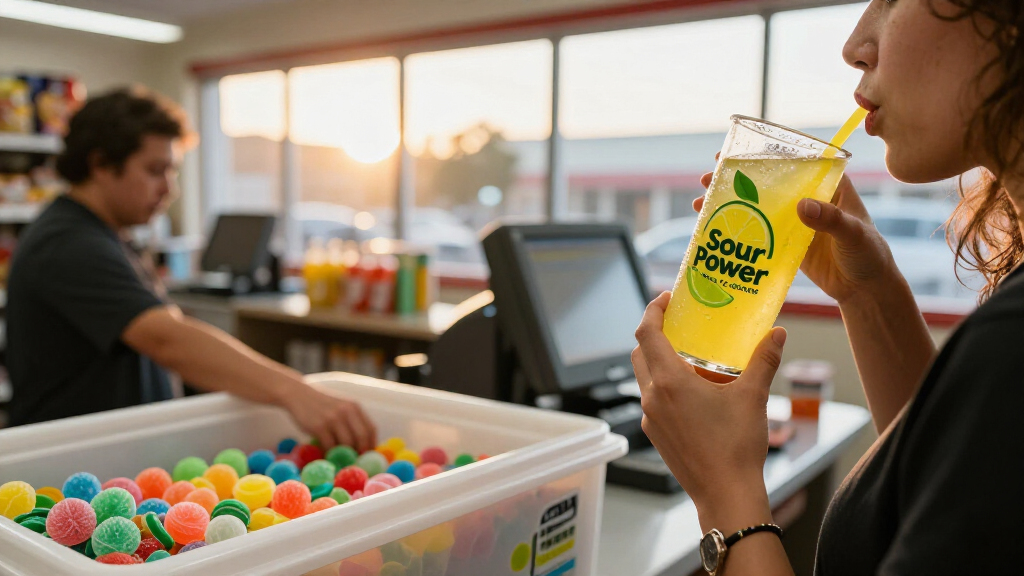
Retailers are also using sour flavors in prepared drinks and other categories. Wawa’s Shark Splash Lemonade includes tart cherry syrup, Datassential research and insights manager Emily Murawski told Food Dive; customers can also add the syrup to custom beverages. 7-Eleven said sour flavors remain popular in candy and Slurpee drinks, citing its 7-Select Sour Neon Gummi Worms and freeze-dried candy varieties.
A Wider Role for Sour Flavors
The data suggest that sour is a well-established flavor with continued areas of growth, rather than a short-lived novelty, according to Lyons Wyatt. For convenience stores, the opportunity lies in linking familiar candy purchases with drinks, salty snacks and prepared desserts. Those additions could give shoppers more ways to encounter a flavor they already know.
Stores can also use sour to test unusual combinations in a compact retail setting. Lyons Wyatt said c-stores have a wide assortment of candy and beverages and can make connections between them visible with displays or simple signs. She recommended placing complementary flavors together, including sour candy and energy drinks, to make a second purchase easier to spot. That is a merchandising suggestion, not evidence that a particular display has increased sales.
The potential extends beyond candy. Murawski pointed to margarita-inspired citrus, key lime and other familiar flavor cues that could appear in desserts such as ice cream, shakes, cookies or donuts. Sour and spicy combinations, as well as dill-pickle flavors in salty snacks, are other areas experts identified for experimentation.
Candy Anchors the C-Store Trend
Sour has expanded into multiple food and beverage categories, including energy drinks, but candy remains the core of the convenience-store market for the flavor. 7-Eleven described consumer interest in sour candy as strong, attributing it to demand for bolder experiences and products that offer surprise. That is the retailer’s assessment of shopper interest; the sales figures come from Circana.
Lyons Wyatt described sour as a mature trend with active areas of growth and reinvention. Her suggested assortment has three roles: keep proven options such as assorted sour fruit, watermelon and blue raspberry; give more visibility to emerging flavors such as black cherry and intense sour; and set aside a controlled share for limited editions and experiments such as spicy-sour, chamoy, pickle and tropical flavors.
The approach reflects a distinction in the report: sour has broad recognition, but individual flavors and formats do not perform uniformly. Retailers therefore face a choice between maintaining familiar products and testing new combinations, with sales data offering a way to track which options gain traction.
““Consumer interest in sour candy continues to be strong, driven by shoppers who are seeking bolder flavor experiences, sensory excitement and products that deliver an element of surprise.””
— 7-Eleven
Which Sour Products Will Grow?
The available figures do not explain why sour sales grew, identify the number of stores or products covered, or show how results varied by retailer. The report also does not give dollar or unit totals, so readers cannot calculate market size from the percentages alone. It is not clear whether the c-store gap compared with overall retail reflects differences in shopper demand, product availability, pricing or other factors.
Individual products may also move in different directions: Lyons Wyatt reported declines in some sour gummies alongside stronger performance for newer flavors such as sour black cherry. The source does not provide sales figures for those specific products or a breakdown of how much each category contributed to growth.
Retailers Test New Pairings
Convenience-store operators can use forthcoming product and sales results to judge whether emerging flavors and cross-category displays merit more space. Lyons Wyatt suggested pairing sour candy with complementary drinks, highlighting sour energy drinks in the cold vault, and using secondary displays or signs to group flavors. The report does not name a rollout schedule or specific commitments from retailers.
Further expansion is forecast: sour ranks in the 85th percentile for future growth potential in Datassential Menucast, which predicts that its growth will outperform 85% of foods, beverages and ingredients over the next four years. That is a forecast, not a guarantee of future sales. How much of the projected opportunity convenience stores capture remains to be seen.
Key Questions
How much did sour sales grow?
Across retail types, sour food and beverage sales rose 10.8% in dollars and 6.9% by units in the 52 weeks ending Aug. 9, according to Circana. In c-stores, dollar sales grew 5.5% and units increased 1.5%. The source does not specify the calendar year for the period.
Which sour flavors are growing in convenience stores?
Circana data identifies sour blue raspberry as the fastest-growing c-store flavor, up 33% over the prior year. Lyons Wyatt also said newer options such as sour black cherry are performing well, while some sour gummy products are declining.
What products account for most sour sales in c-stores?
Nonchocolate candy accounts for about 64% of sour product dollar sales in convenience stores. Energy drinks are the next-largest category, according to the report.
How might stores expand sour beyond candy?
Experts cited sour energy drinks, tart cherry beverages, sour-and-spicy combinations, pickle-flavored snacks and desserts with citrus or key-lime notes. These are suggested opportunities; the report does not provide sales results for each proposed product.
Is sour expected to keep growing?
Datassential Menucast places sour in the 85th percentile for future growth potential, meaning its growth is forecast to outperform 85% of foods, beverages and ingredients over the next four years. This is a forecast, not a confirmed outcome.
Source: rss
NFL season / tailgating Picks
team gear
As an affiliate, we earn on qualifying purchases.