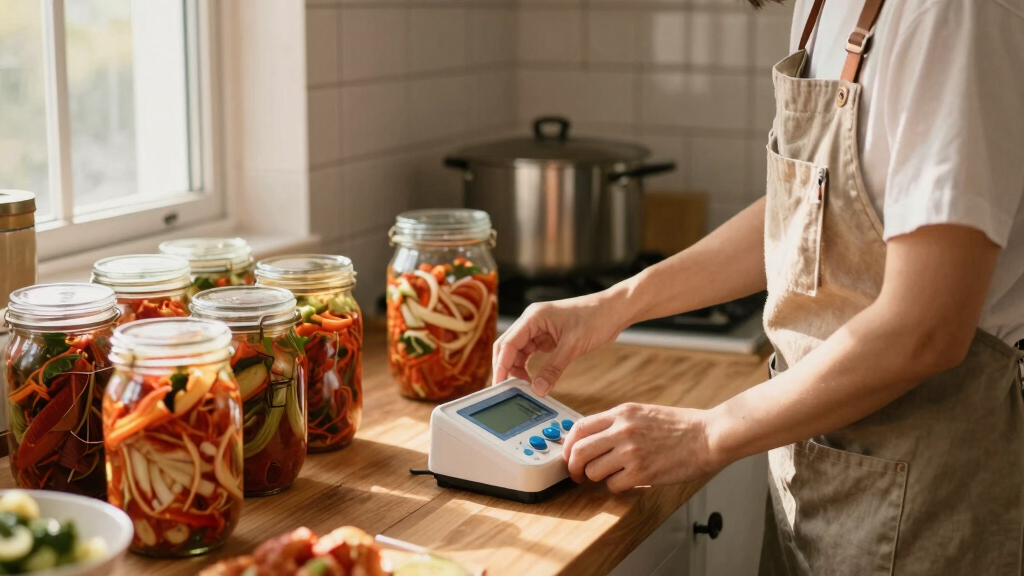
Finding the best fermentation temperature controller for kimchi can make all the difference in achieving the perfect tang and texture. The top choice for overall performance is the Inkbird ITC308, thanks to its reliable dual-stage heating and cooling, which keeps kimchi at a consistent temperature. For budget-conscious fermenters, the Tellegloww Brew Fermentation Heating Belt offers simplicity and portability, though it may lack advanced features. The main tradeoffs are between advanced digital controls versus basic heating solutions, and between versatility and ease of use. Keep reading to see how these options compare and which best fits different needs.

Get kitchen staples and gadgets delivered free with Prime
- Fast, free delivery on millions of items
- Prime Video, Amazon Music and more included
- Member-only deals all year
Key Takeaways
- The best controllers combine precise temperature regulation with user-friendly interfaces.
- Many affordable options lack advanced features like dual-stage heating and cooling controls.
- Flexible solutions such as heating belts are ideal for small-scale or space-limited fermenters.
- More expensive models tend to offer better durability, accuracy, and automation features.
- Understanding your fermentation setup and technical comfort level helps in selecting the right controller.




More Details on Our Top Picks
Fermentation Heater Carboy Warmer – Kombucha Heating Wrap with Thermostat for Temperature Control – Electric Heat Pad Belt for Home Fermenting & Brewing – Fits Most Fermenter Vessels 2 to 8 Gallons
This product stands out for its ability to maintain temperatures within one or two degrees of the target, outperforming more expensive setups like the Inkbird ITC-308. Its flexible wrap design allows it to snugly fit most 2-6 gallon carboys, providing even heat distribution essential for kimchi fermentation. Compared to simpler heating belts, this wrap offers a thermostat that turns on only when needed, reducing energy waste and temperature fluctuations. While it is easy to use and durable, it does require a power outlet nearby and may be less suited for very small or irregularly shaped vessels. Its main tradeoff is a slightly higher price and bulkier setup than mini heat pads, but those are minor compared to its temperature stability. This pick makes the most sense for serious kimchi fermenters looking for reliable, precise control.
Pros:- Maintains temperature within 1-2°F of set point
- Flexible wrap fits most 2-6 gallon vessels
- Intelligent thermostat reduces energy waste
Cons:- Requires a nearby power outlet
- Bulkier than small heating pads
Best for: Home kimchi fermenters who prioritize consistent temperature control and even heating for large batches.
Not ideal for: Small-scale fermenters with limited space or those needing a compact, portable solution.
- Power Source:110V
- Size:32 x 11 inches
- Temperature Range:Set and maintain specific temps
- Temperature Control:Thermostat with probe
- Vessel Compatibility:2-6 gallons
- Energy Efficiency:Minimizes energy consumption
Bottom line: This product is best for serious fermenters who want precise, reliable temperature control for large batches of kimchi.
2 Pack Kombucha Heating Pad with Digital Temperature & Timer Kombucha Sourdough Carboy Starter Fermentation Heat Mat for 1-3 Gallon Vessels 2 in 1 Plug Home Brewing Essential
This set makes the list for its high versatility, providing two large heating pads with digital controls that cover multiple fermentation vessels up to 3 gallons, unlike the single-unit products like the Saillong. Its adjustable temperature range of 45-113°F and 24-hour timer give precise control, ensuring kimchi ferments at optimal warmth, especially in colder environments. The innovative 2-in-1 plug design helps save outlet space when managing several batches simultaneously, a feature the Inkbird ITC-308 lacks. Although it’s slightly bulkier and requires some setup, its waterproof and flame-retardant surface adds durability. The main tradeoff is a need for manual calibration and monitoring, but the included digital controls compensate for that. This pick makes sense for home brewers handling multiple fermenters or those on a budget needing reliable heating.
Pros:- Controls multiple vessels simultaneously
- Adjustable temperature with timer
- Waterproof, flame-retardant surface for durability
Cons:- Requires manual setup and calibration
- Larger footprint than small pads
Best for: Brew enthusiasts fermenting several small batches of kimchi or other ferments at once, seeking flexible, adjustable heat sources.
Not ideal for: Single-batch fermenters or those needing a compact, space-saving solution.
- Power:110V
- Size:24.8 x 5.12 inches
- Temperature Range:45-113°F
- Timer:0-24 hours
- Vessel Capacity:1-3 gallons
- Surface Material:Waterproof PVC
Bottom line: Ideal for multi-batch fermenters seeking reliable, adjustable heating at a good value.
KETOTEK Digital Temperature Controller AC110V 10A Fahrenheit Thermostat with 2m Waterproof Sensor 2 Relays Heating Cooling Incubator
This product is well-suited for fermenters requiring both heating and cooling capabilities, unlike the single-mode controllers like the Saillong heat pad. Its dual relay design allows simultaneous control of temperature points, making it excellent for kimchi that benefits from controlled warm or cool phases. The waterproof probe ensures accuracy even in moist environments typical of fermentation setups. Its ±1°F accuracy surpasses many basic thermostats, providing stable conditions essential for high-quality fermenting. However, this unit needs proper wiring and is more complex to set up than plug-and-play options, which might be a barrier for beginners. Its main tradeoff is a higher learning curve but the result is greater control and flexibility. This makes the most sense for experienced fermenters needing precise temperature regulation with the ability to adjust for different stages.
Pros:- Controls both heating and cooling
- Waterproof sensor for moisture resistance
- High accuracy with ±1°F
Cons:- Requires wiring and setup
- More complex installation
Best for: Advanced home fermenters or those fermenting sensitive projects like kimchi with specific temperature needs.
Not ideal for: Beginners or those without electrical wiring experience seeking simple plug-in solutions.
- Voltage:110V
- Power Output:10A
- Temperature Range:-58 to 212°F
- Sensor:Waterproof NTC probe
- Control Mode:On/Off
- Relays:2
Bottom line: Best for experienced fermenters who need dual-mode temperature control for kimchi and other ferments.
Digital Temperature Controller 2-Stage Outlet Thermostat Heating and Cooling Mode Carboy Homebrew Fermenter Greenhouse Terrarium 110V 10A (S10B-B)
The MEISAIL S10B offers versatile dual relay operation, making it suitable for fermenters that require both heating and cooling, unlike single-mode controllers like the Saillong. Its digital display simplifies setting and monitoring temperatures, critical for delicate kimchi fermentation. While it supports a broad temperature range from -58°F to 212°F with ±1°F accuracy, its setup involves wiring and manual calibration, which might be less convenient for casual users. The robust ABS shell and 1100W capacity make it durable and powerful enough for most fermentation environments. Its major tradeoff is a steeper learning curve compared to plug-and-play models, but it provides reliable, precise control for experienced users. This is ideal for seasoned fermenters needing flexible, accurate temperature regulation across different stages.
Pros:- Dual relay for heating and cooling
- Digital display for easy control
- High power capacity (1100W)
Cons:- Requires wiring and calibration
- Less suitable for quick setups
Best for: Homebrewers or fermenters needing both heating and cooling control with a digital interface.
Not ideal for: Beginners or those preferring simple, plug-and-play solutions for kimchi fermentation.
- Power:110V 10A
- Control Type:Digital
- Temperature Range:-58°F to 212°F
- Relays:2
- Dimensions:11.81 x 11.81 x 0.2 inches
- Material:ABS plastic
Bottom line: Perfect for experienced fermenters who want flexible, digital, precise control over their kimchi fermentation environment.
Kombucha Heating Pad with Digital Temperature Control, 11.8″ Fermentation Heating Pad, 45-113°F Adjustable Temperature, Proofing Mat for Glass and Plastic Carboy Fermentors(1 Piece)
This small, straightforward heating pad makes the list for its simplicity and effective temperature control, comparable to the Saillong but more compact and portable. Its 11.8-inch size fits most small fermenters, and the digital control allows precise adjustment between 45-113°F, ideal for maintaining optimal kimchi fermentation temperatures. Its energy consumption of only 15W makes it highly efficient, and its waterproof surface adds durability. The main drawback is limited vessel size and the lack of a built-in thermostat—users must monitor and adjust manually, which is less ideal for long, stable fermentations. Still, this pad offers excellent control for small batches with minimal setup. This pick is perfect for home fermenters who want an easy, reliable heat source for small jars or fermenters.
Pros:- Compact and portable
- Digital temperature control
- Low power consumption (15W)
Cons:- Limited vessel size (up to 3 gallons)
- No automatic temperature regulation
Best for: Small-scale kimchi fermenters or beginners seeking an affordable, simple heating solution.
Not ideal for: Large batches or those needing highly precise temperature stability over long periods.
- Size:11.8 x 11.8 inches
- Power:15W
- Temperature Range:45-113°F
- Vessel Capacity:up to 3 gallons
- Material:PVC
- Control:Digital
Bottom line: Ideal for small batches and beginners wanting a reliable, easy-to-use heat source for kimchi fermentation.
12.8L Smart Yogurt Maker Machine & Fermentation Kit, Kombucha, Kimchi, Natto, tempeh, Sourdough Maker, Temp Control 50-115°F, Timer 1 Hr -30 Day, Post-Ferment Cooling
This all-in-one fermenter stands out for its large 12.8L capacity and precise temperature control in a versatile range of 50°F–115°F. Compared to simpler options like the Brewing Heat Pad Sourdough Proofing Heat Mat, it offers automated cooling post-fermentation, which helps avoid over-fermentation and maintains probiotic quality—an advantage for those making multiple batches. The built-in digital timer and smart presets ensure consistent results, but this added complexity means a higher price and a larger footprint, which might not suit small kitchens. The app integration, developed by a microbiologist, supports detailed fermentation processes, making it ideal for serious home fermenters. However, the need for multiple jars and potential cleaning complexity could be drawbacks for casual users. Best suited for experienced fermentation enthusiasts seeking reliable, scalable results with minimal oversight.
Pros:- Large 12.8L capacity supports high-volume fermentation
- Advanced temperature control with 5 presets and cooling feature
- Supports various ferment types including yogurt, kombucha, and tempeh
- Free app provides step-by-step guidance and recipes
Cons:- Relatively bulky and requires significant counter space
- Higher cost compared to basic fermentation tools
- Cleaning multiple jars can be time-consuming
Best for: Home fermenters who prioritize large capacity, precision control, and multi-product versatility.
Not ideal for: Small kitchens or beginners who prefer a simple, single-purpose device without app dependencies.
- Capacity:12.8L
- Temperature Range:50°F–115°F
- Timer:Up to 36 hours
- Control Method:Digital presets, app support
- Size:11.4 x 9.5 x 7.2 inches
Bottom line: This pick makes the most sense for dedicated home fermenters who need a high-capacity, multi-use, precision device with automation.
Brewing Heat Pad Sourdough Proofing Heat Mat with Temperature Controller Auto Off Timer for Home Beer Brewing Kombucha Yogurt Kefir Fermentation Sourdough Bread Proofing (With Controller, 1 Pack)
This heated pad offers accurate temperature control between 50°F and 115°F, making it suitable for a variety of fermenting tasks like sourdough proofing or yogurt making. Unlike the Fermentation Heater Carboy Warmer, it is more compact and easier to place on countertop or inside a fermentation chamber. The included temperature controller with an auto-off timer simplifies process management, though it lacks the large capacity of more advanced fermenters. Its small size and flexible design make it ideal for home brewers with limited space or those starting out in fermentation, but it may not be ideal for high-volume batches or multi-stage fermenting. The adjustable temperature and timer provide good control, but its capacity is limited to smaller vessels. Best suited for hobbyists and small-scale fermenters seeking precise control in a minimal footprint.
Pros:- Accurate temperature control with a wide range (50°F–115°F)
- Compact size fits easily on countertops or inside fermentation chambers
- Includes auto-off timer for convenience
- Flexible for various fermenting projects
Cons:- Limited to small vessels, not suitable for large batches
- No humidity or humidity control features
- Requires manual placement and monitoring
Best for: Home brewers or fermenters with small vessels who need reliable temperature control without bulk.
Not ideal for: Large-scale or multi-product fermenters requiring bigger capacity and automation.
- Size:12 inches diameter
- Temperature Range:50°F–115°F
- Timer:Up to 24 hours
- Power:25W
- Material:Vinyl enclosure
Bottom line: This pick is perfect for small-scale, space-conscious fermenters who want precise temperature regulation without extra bulk.
Inkbird ITC308 Freezer Thermostat Heating Cooling Plug Temperature Controller Outlet 110V 1200W
The Inkbird ITC308 stands out for its simplicity and affordability, supporting a temperature range from 32°F to 212°F, making it suitable for both heating and cooling in fermentation setups. Compared to the Inkbird ITC-308 with dual relays, it offers straightforward single-stage control, which is often enough for kimchi fermentation but less versatile for complex multi-stage processes. Its easy-to-calibrate digital display and support for both Celsius and Fahrenheit make it accessible for beginners, though some users report occasional calibration drift over long periods. Its 1200W capacity ensures it can handle most small to medium fermenting vessels, but it lacks advanced features like app control or data logging. Still, for a basic temperature controller, it offers reliable performance at a low cost. Ideal for budget-minded home fermenters who need dependable temperature regulation without extra bells and whistles.
Pros:- Affordable price with reliable basic control
- Supports a wide temperature range (32°F–212°F)
- Supports both heating and cooling modes
- Easy to calibrate and operate
Cons:- Limited to single-stage control, not multi-stage
- No smartphone app or remote monitoring
- Basic features may lack precision for some applications
Best for: Entry-level fermenters or hobbyists looking for a straightforward, affordable device for kimchi or similar ferments.
Not ideal for: Advanced users needing multi-stage control, app integration, or detailed data logging.
- Temperature Range:32°F–212°F
- Power Capacity:1200W
- Display:Digital
- Control Type:Single-stage
- Support:Celsius and Fahrenheit
Bottom line: This model makes the most sense for beginners or budget-conscious fermenters who need straightforward, dependable temperature regulation.
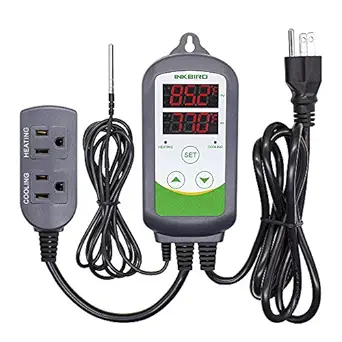
Inkbird ITC-308 Digital Temperature Controller 2-Stage Outlet Thermostat Heating and Cooling Mode Carboy Homebrew Fermenter Greenhouse Terrarium 110V 10A 1100W
The Inkbird ITC-308 offers dual-stage temperature control, supporting both heating and cooling simultaneously, which is especially useful for maintaining delicate fermentation environments like kimchi or yogurt. This makes it a step up from single-stage controllers like the INkbird ITC308 Freezer Thermostat, providing more precise regulation and stability. Its 1100W capacity handles most home fermentation setups, but its control relies on manual calibration and does not offer app connectivity. The digital display and buzzer alarms enhance usability, although some users find the delay times for compressor restart could be improved. Its robust build and precise control make it suitable for those needing tight temperature regulation for sensitive ferments. However, it lacks advanced data logging and remote control features, which are present in more sophisticated models. This is ideal for serious home brewers and fermenters who need reliable dual-stage control without extra complexity.
Pros:- Supports both heating and cooling with dual relays
- Digital display with real-time temperature reading
- Buzzer alarms for high/low temperature alerts
- Supports up to 1100W load
Cons:- No remote or app connectivity
- Manual calibration needed for accuracy
- Delay in compressor restart can affect temperature stability
Best for: Home brewers or fermenters requiring tight control with heating and cooling in a compact, reliable device.
Not ideal for: Users seeking app control or advanced data tracking for fermentation history.
- Control Type:Dual-stage
- Wattage:1100W
- Voltage:110V
- Display:Digital
- Support:Heating and cooling
Bottom line: This pick makes sense for home fermenters needing dual-stage, precise temperature control with straightforward operation.
Tellegloww Brew Fermentation Heating Belt Warming Belt with 5 Black Thermometer Strip for Fermenting, Brewing, Wine, Kombucha
The Tellegloww Brew Fermentation Heating Belt provides a flexible, adjustable heating method with a control knob, making it suitable for resin 3D printing resins or small fermenting vessels. Unlike the Fermentation Heater Carboy Warmer, which maintains a constant temperature, this belt allows the user to fine-tune temperature precisely via the knob, ideal for delicate processes such as kimchi fermentation or resin curing. The included temperature strips give instant visual feedback, helping users monitor temperature changes effectively. The belt’s adjustable length and straightforward control make it highly adaptable, but it’s less suitable for large batches or high-temperature applications that require more uniform heating. Its manual control and limited data logging make it less ideal for automation but excellent for localized, precise control. Best suited for resin printers or small fermentation setups where manual adjustment is manageable and precise temperature control is needed.
Pros:- Adjustable control knob for precise temperature setting
- Flexible belt fits different vessel sizes
- Includes thermometer strips for visual monitoring
- Durable silicone rubber construction
Cons:- Manual adjustment required, no automatic control
- Limited to small-scale or localized heating
- Not suitable for high-volume or continuous fermentation
Best for: Resin 3D printing enthusiasts or small fermenters requiring adjustable, manual temperature control.
Not ideal for: Large fermentation projects or users seeking automated, data-logged control systems.
- Size:Adjustable length
- Temperature Range:45°F–113°F
- Power:About 20mm width belt
- Includes:5 thermometer strips
- Material:Silicone rubber
Bottom line: This device makes the most sense for resin printers or small fermenters where manual, fine-tuned temperature control is desired.
3 Pack Fermentation Adhesive Strip Thermometer – Displays Temperature in Degrees Celsius & Fahrenheit – Great for Kombucha, Beer, Wine, Vegetable Fermentation
This adhesive strip thermometer offers a straightforward way to monitor fermentation temperatures without complex setups. Compared with digital controllers like the Moongiantgo 6L Fermenter, these strips are less precise but incredibly easy to attach and read. They excel for those who want a no-fuss, visual cue to keep their kimchi within the ideal 65-72°F range. The broad temperature display from 46° to 93°F makes it versatile for various fermenting environments. However, they lack the ability to actively control temperature, so they rely on manual adjustments. This makes them less suitable for people needing precise, automatic regulation like with the Moongiantgo unit, which can maintain exact temps with its digital controls. The tradeoff is simplicity versus accuracy—these strips are perfect for beginners or those with stable ambient conditions. bestFor: Home fermenters who want an inexpensive, easy-to-apply temperature indicator for kimchi. notIdealFor: Serious brewers or those needing consistent, precise temperature control during extended fermentation periods. pros: Easy to install on glass surfaces, visual temperature reference in both °C and °F, reusable and flexible for different containers, broad temperature range. cons: No active temperature regulation, less precise than digital controllers, can only indicate temperature, not control it. verdict: This pick makes the most sense for beginners or casual fermenters prioritizing simplicity over exact temperature regulation. specs:
- Display Type: Analog
- Temperature Range: 46°F to 93°F
- Number of Strips: 3
- Material: Adhesive-backed plastic
- Application: Stick-on surface
- Dimensions: 25.4 inches per strip
Not ideal for: Fermentation enthusiasts who need precise, automatic temperature regulation for consistent results.
Moongiantgo 6L Black Garlic Fermenter, Automatic Intelligent Fermenter Machine for Natto, Yogurt, Kimchi, Fruit Wine, Garlic Cooker with Precise Time Temperature Control, 110V
This fermenter offers integrated, automatic temperature and time control, making it ideal for those who want consistent, hassle-free kimchi fermentation. Unlike the adhesive strip thermometer, the Moongiantgo unit actively maintains precise temperature settings, usually in the 50-70°F range critical for kimchi. Its 6L capacity suits small batches and provides even heating through 360° airflow, which helps preserve nutrients and flavor. The device’s digital controls allow for easy adjustments, making it suitable for more serious home fermenters or small commercial setups. The main drawback is its size and price—it’s bulkier and more expensive than simple thermometers. Also, it requires electricity, so it’s less suited for ambient temperature control in variable environments. The tradeoff is automation and consistency versus portability and simplicity. bestFor: Dedicated home fermenters wanting precise temperature control for consistent kimchi flavors. notIdealFor: Occasional fermenters or those with limited space who prefer a more manual, budget-friendly approach. pros: Automatic temperature and time regulation, even heating with airflow circulation, easy digital controls, suitable for small batches. cons: Larger footprint, higher cost, dependency on electricity, limited capacity for larger batches. verdict: This device is best for those seeking dependable, automated fermentation with minimal effort and precise results. specs:
- Capacity: 6 liters
- Voltage: 110V
- Temperature Control Range: Adjustable (specific range not listed)
- Heating Method: 360° airflow circulation
- Material: Non-stick coated inner pot
- Additional Features: Adjustable timer, easy-to-clean design
- Size: 11.5 x 11.5 x 11 inches

How We Picked
Products were selected based on their ability to maintain stable temperatures suitable for kimchi fermentation, with an emphasis on accuracy, reliability, and ease of use. We prioritized controllers with adjustable temperature ranges, clear displays, and robust build quality. Cost-effectiveness was also considered, ensuring options are accessible without sacrificing essential features. The ranking reflects a balance between high-performance models suitable for experienced fermenters and simpler options for beginners, with a focus on value and versatility.Factors to Consider When Choosing Best Fermentation Temperature Controller For Kimchi
Choosing the right fermentation temperature controller involves understanding several key factors that influence your kimchi’s quality and ease of process. Beyond basic features, it’s important to consider how the device integrates into your fermentation setup, your technical comfort, and specific needs such as heating or cooling. Making a well-informed decision can prevent issues like temperature fluctuations, which may impact flavor or safety.Temperature Range and Precision
Kimchi ferments best within a specific temperature window, usually around 50-68°F (10-20°C). A controller with a wide and precise temperature range allows for flexibility, especially if you experiment with different recipes or fermentation stages. Look for models with fine adjustment controls to prevent temperature swings, which could lead to inconsistent flavor development or spoilage.
Ease of Use and Interface
Controllers with clear digital displays, simple controls, and easy-to-read settings reduce frustration and errors. For beginners, a straightforward interface minimizes setup mistakes, while advanced users may appreciate programmable features. Consider whether the device has remote monitoring capabilities or alerts, which can be helpful for maintaining optimal conditions over long fermentation periods.
Heating and Cooling Capabilities
Some controllers are designed for heating only, while others can manage both heating and cooling — crucial if you need to prevent temperature spikes or drops. Dual-stage controllers provide greater stability, especially in variable environments. However, they tend to be more expensive and complex; weigh whether your fermentation space requires this level of control.
Build Quality and Durability
Fermentation involves long durations, often weeks, so a sturdy, well-made device reduces the risk of failure. Waterproof sensors, solid casing, and reliable relays contribute to longevity. Cheaper models may work initially but can break down quickly or malfunction, risking your fermentation batch. Investing in a durable controller pays off over repeated use.
Size, Compatibility, and Setup
Consider the physical size of the controller and whether it fits into your fermentation space. Compatibility with your vessel size and type is also critical; some controllers work better with certain fermenters or setups. Wireless or remote options can add convenience, especially if you ferment in a dedicated cellar or out-of-the-way location. Avoid overly complex setups if you prefer simplicity.
Frequently Asked Questions
Can I use a standard thermostat for fermenting kimchi?
While a basic thermostat might regulate temperature, it likely lacks the precision and stability needed for optimal kimchi fermentation. Fermentation benefits from consistent temperatures, which specialized controllers provide through fine adjustments and reliable sensors. Basic thermostats may cause fluctuations that affect flavor and texture, so investing in a dedicated fermentation controller is generally worthwhile for better results.
Is it necessary to have cooling capability in my fermentation controller?
Having cooling capabilities isn’t always essential but can be beneficial if your environment tends to get warm or fluctuates significantly. Cooling helps maintain a stable temperature during hot weather, preventing over-fermentation or spoilage. If you ferment in a climate-controlled space or during cooler seasons, a heating-only device might suffice, saving money and complexity.
How precise does the temperature control need to be for kimchi?
Kimchi fermentation generally requires maintaining a temperature within about 2°F (1°C) of your target to develop proper flavor without overgrowth of undesirable bacteria. Precise control minimizes temperature swings, ensuring consistent results across batches. Controllers with digital displays and fine adjustment increments are better suited for this level of precision.
Are digital controllers more reliable than analog or manual options?
Digital controllers typically offer greater accuracy, programmability, and ease of monitoring compared to analog or manual solutions. They reduce guesswork and allow for more consistent fermentation conditions. However, they can be more prone to electronic failure if not built well, so choosing a reputable brand with good reviews remains important.
What features should I prioritize if I am new to fermentation?
If you’re new to fermenting kimchi, look for a simple, plug-and-play digital controller with an easy interface, adjustable temperature range, and reliable sensor. Features like automatic shut-off, alerts, or timers can help prevent mistakes. Avoid overly complex systems unless you enjoy technical setups, as simplicity often leads to better initial success.