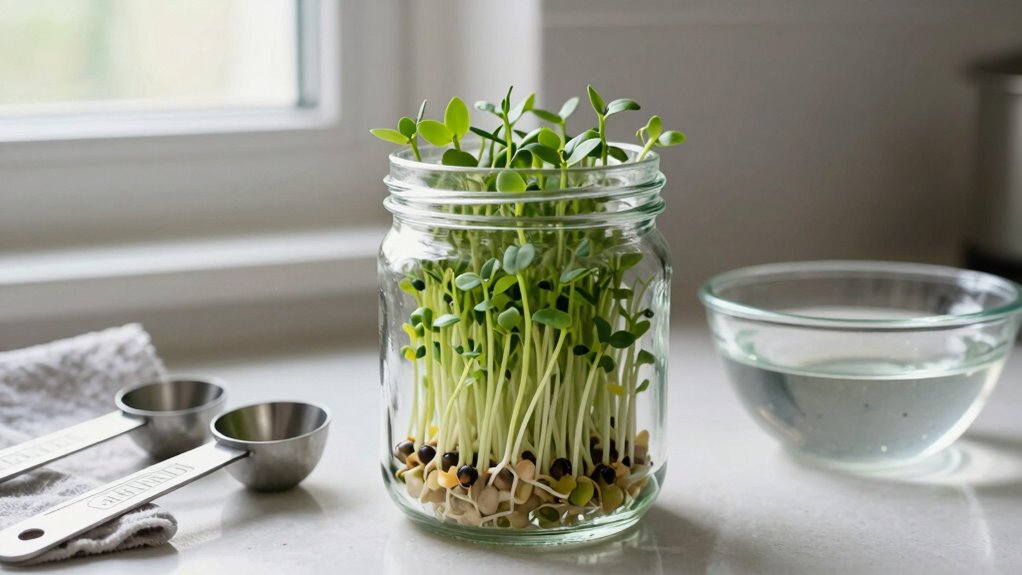
To sprout safely at home, choose easy-to-clean containers with good drainage, like glass jars or food-grade trays. Keep your sprouts in a warm, well-ventilated spot away from direct sunlight, and rinse seeds twice daily with cool water. Discard any mold immediately to prevent spreading. Always wash your hands and use high-quality seeds from trusted sources. Following these tips guarantees healthy, safe sprouts—stay with us to discover more expert tricks for successful sprouting.

Get kitchen staples and gadgets delivered free with Prime
- Fast, free delivery on millions of items
- Prime Video, Amazon Music and more included
- Member-only deals all year
Key Takeaways
- Choose containers with proper drainage, such as glass jars with mesh lids or food-grade plastic trays.
- Maintain a warm (around 70°F), well-ventilated environment, avoiding direct sunlight.
- Rinse seeds thoroughly twice daily and discard immediately if mold appears.
- Ensure good hygiene by washing hands and using food-grade seeds from trusted sources.
- Regularly monitor and control humidity and environmental conditions to prevent mold and bacterial growth.
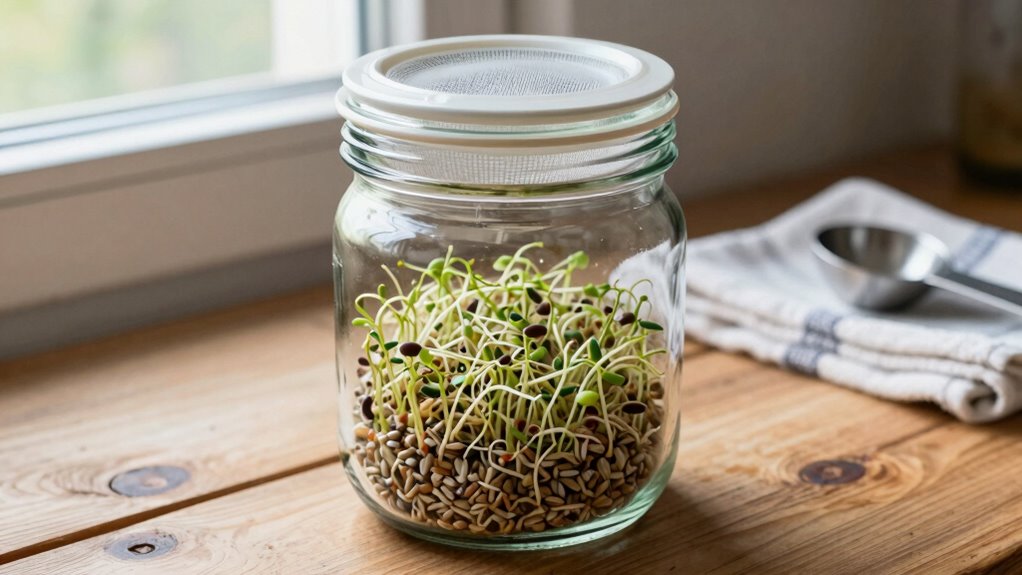
Sprouting at home is a simple and rewarding way to boost your diet with fresh, nutrient-rich greens. Whether you’re new to sprouting or looking to refine your process, safety should always come first. The foundation of a safe sprouting practice begins with choosing the right sprouting containers. You want containers that are easy to clean and allow for proper drainage, such as glass jars with mesh lids or food-grade plastic sprouting trays. These options prevent mold and bacteria buildup by ensuring excess water can escape, keeping your sprouts healthy. Avoid containers with narrow openings or airtight seals, as they can trap moisture and promote bacterial growth.
Choose easy-to-clean containers with proper drainage, like glass jars with mesh lids, to keep sprouts healthy and prevent mold.
Once you’ve selected your containers, the next step is to understand ideal sprouting conditions. Your sprouts need a warm, well-ventilated environment to grow safely and quickly. Keep your sprouting area away from direct sunlight to prevent overheating and mold development. A consistent temperature around 70°F (21°C) is perfect for most sprouting seeds. Good air circulation is essential—placing your containers in a spot with gentle airflow helps prevent mold formation and keeps your sprouts fresh. Additionally, maintaining high humidity levels can encourage sprouting but be cautious not to let excess moisture linger, as it can lead to spoilage. Ensuring proper environmental conditions is crucial for safe sprouting. Monitoring humidity levels can help prevent mold and bacteria growth during the process.
Proper rinsing is indispensable for safety. You should rinse your seeds thoroughly at least twice a day with clean, cool water. This keeps bacteria at bay and prevents mold growth. After rinsing, drain well to avoid water pooling at the bottom of your container. If you notice any signs of mold—such as fuzzy white or green patches—discard the entire batch immediately. Always wash your hands before handling sprouts or seeds to prevent introducing bacteria. Using food-grade seeds from reputable sources can further reduce the risk of contamination and ensure safe sprouting.
glass sprouting jars with mesh lids
As an affiliate, we earn on qualifying purchases.
As an affiliate, we earn on qualifying purchases.
Frequently Asked Questions
How Long Does It Take for Sprouts to Fully Grow?
Sprouts typically take about 3 to 7 days to fully grow, depending on the sprout variety and your growing conditions. During this time, you’ll notice their sprout nutrition becoming more concentrated, making them a healthy addition to your diet. Keep in mind that different sprout varieties, like alfalfa or radish, may sprout faster or slower. Regular rinsing and proper air circulation help guarantee healthy, safe sprouts.
Can I Use Tap Water for Sprouting?
You can use tap water for sprouting, but it’s best to take into account hydroponic techniques and organic sprouting practices for safety. Tap water may contain chlorine or other chemicals, so let it sit uncovered for 24 hours to allow chlorine to evaporate. Using filtered or spring water is even better. This guarantees your sprouts stay healthy and safe, aligning with organic sprouting principles and promoting ideal growth without harmful contaminants.
Are There Any Common Pests or Bugs in Sprouting?
You might find tiny pests or bugs in your sprouts, but don’t panic. Pest prevention starts with clean equipment and proper rinsing. Common bugs include fungus gnats or tiny mites, which are easy to identify with a close look. Regular bug identification helps you catch issues early. If you see pests, a gentle rinse or a vinegar solution can help keep your sprouts safe and healthy without risking contamination.
What Are Signs of Mold or Spoilage?
You’ll want to watch for mold or spoilage indicators like fuzzy white, green, or black spots on your sprouts or in the jar. If you notice a sour smell, slimy texture, or discoloration, these are signs of spoilage. To prevent mold, make sure proper airflow and avoid overwatering. Regularly rinse and drain your sprouts thoroughly, and discard any batch showing signs of mold or unusual odor to keep your sprouting safe.
How Do I Store Sprouts Safely After Harvesting?
Think of sprout storage as guarding your delicate treasure. After harvesting, rinse your sprouts thoroughly and let them dry completely. Store them in a breathable container, like a paper towel-lined jar, in the refrigerator. For safe handling, keep them away from raw meats and other foods to avoid cross-contamination. Make sure your sprouts stay cool and dry, maintaining freshness and safety until you’re ready to enjoy their crisp goodness.
Conclusion
Now that you’ve mastered the art of sprouting at home, you’re practically a botanical superhero! With just a few simple steps, you can create a never-ending supply of fresh, crunchy greens that will transform your meals and boost your health like a rocket-powered upgrade. Remember, safety is your secret weapon—so stay vigilant. Soon, you’ll be sprouting like a pro, turning your kitchen into a lush, green jungle of deliciousness that’s impossible to resist!
Fall Picks
fall essentials
As an affiliate, we earn on qualifying purchases.