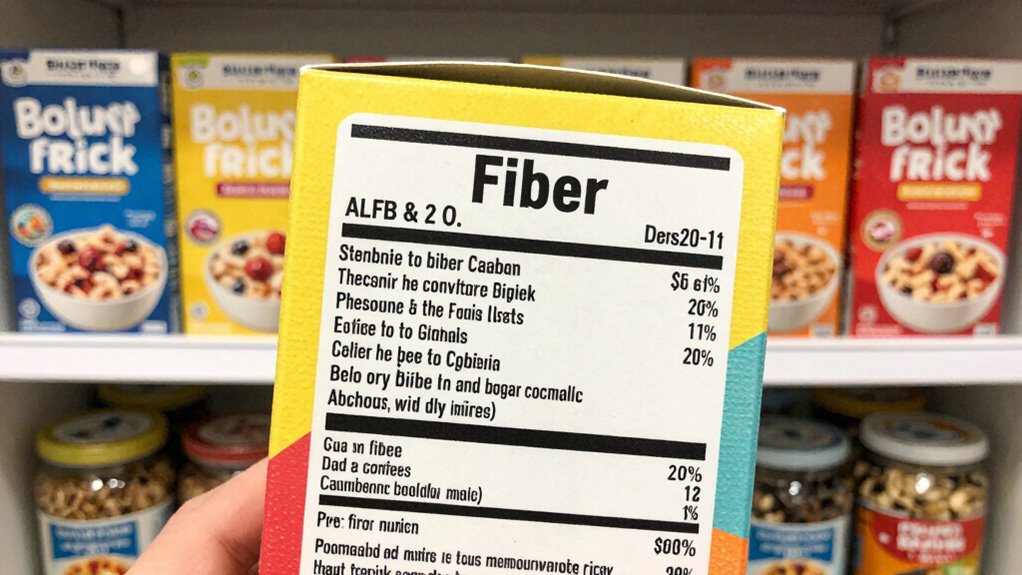
To start, look at the nutrition facts panel and find the carbohydrates section, where fiber is listed. Make sure to choose foods with at least 3 grams of fiber per serving to meet your needs. Check labels on whole grains, fruits, vegetables, nuts, and seeds, and compare products to find higher-fiber options. By practicing these steps regularly, you’ll develop better habits and easily find foods that support your health goals. Keep going to learn even more tips.

Get kitchen staples and gadgets delivered free with Prime
- Fast, free delivery on millions of items
- Prime Video, Amazon Music and more included
- Member-only deals all year
Key Takeaways
- Locate dietary fiber in the carbohydrates section of the nutrition facts panel.
- Foods with at least 3 grams of fiber per serving are considered good sources.
- Differentiate fiber from sugars and starches, noting it isn’t digested.
- Regularly check fiber content to help meet daily intake goals.
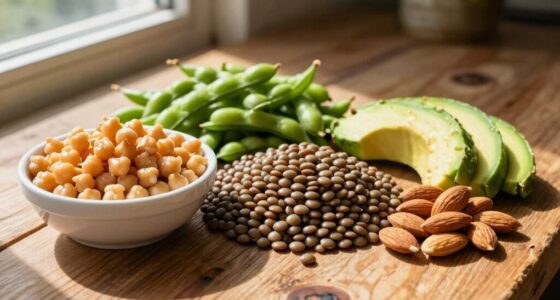
- Choose whole grains, fruits, vegetables, nuts, and seeds to naturally boost fiber intake.
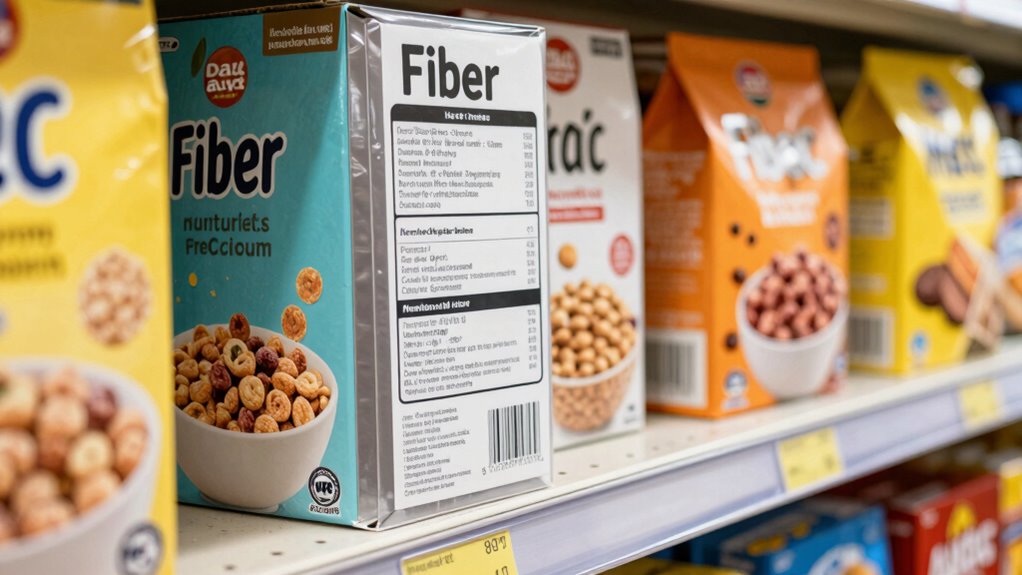
Understanding nutrition labels can seem overwhelming at first, but focusing on fiber is a great place to start. When you look at a food package, the fiber content listed on the label can tell you a lot about how healthy that choice is. Fiber sources include whole grains, fruits, vegetables, nuts, and seeds, so paying attention to these can help you meet your daily intake goals. The general recommendation is about 25 grams for women and 38 grams for men each day, but most people fall short of this target. By reading labels carefully, you can identify which products help you reach those numbers easily.
The nutrition facts panel usually lists dietary fiber under the carbohydrates section. It’s important to distinguish fiber from other carbs because fiber isn’t digested like sugars or starches. Instead, it passes through your digestive system largely intact, helping with digestion and keeping you full longer. When you see a food item with a high fiber content, you can feel confident that it contributes positively to your daily intake and overall health. Look for foods with at least 3 grams of fiber per serving, as these are considered good sources. Some foods, like oatmeal, whole wheat bread, and beans, naturally have higher fiber levels, making them excellent choices.
If you’re trying to increase your fiber intake, start by swapping out refined grains for whole grains. For example, choose whole wheat bread instead of white bread or opt for brown rice over white rice. Incorporating a variety of fiber-rich foods can also help diversify your nutrient intake and improve gut health. Fruits and vegetables are easy options—berries, apples, carrots, and leafy greens are all fiber-rich options. Nuts and seeds, like almonds and chia seeds, are also good sources that can be added to yogurt or salads. Being aware of the fiber content on nutrition labels can help you make healthier choices and meet your goals more effectively. Developing this habit can make it easier to manage your diet over time. By regularly checking the fiber content on nutrition labels, you develop a habit of selecting foods that contribute to your daily goals. Over time, this awareness helps you make better choices effortlessly.
As an affiliate, we earn on qualifying purchases.
Frequently Asked Questions
How Much Fiber Should I Aim for Daily?
You should aim for about 25 to 30 grams of fiber daily, depending on your age and gender. Tracking your fiber intake helps meet your daily goals and supports overall health. To reach this, include plenty of fruits, vegetables, whole grains, and legumes in your meals. Gradually increasing your fiber intake can prevent discomfort, and reading nutrition labels helps you stay aware of your fiber consumption throughout the day.
Are All Fiber Types Equally Beneficial?
Not all fiber types are equally beneficial. Dietary sources offer both soluble and insoluble fibers, each providing unique health benefits. Soluble fiber, found in oats and fruits, helps lower cholesterol and stabilize blood sugar. Insoluble fiber, present in whole grains and vegetables, aids digestion and prevents constipation. Including a variety of fiber types from diverse dietary sources guarantees you get the maximum health benefits and supports overall digestive health.
How Do I Identify Added Fibers on Labels?
To identify added fibers on labels, look for ingredients like inulin, chicory root, or soluble corn fiber under the ingredients list. Label reading tips include checking the nutrition facts for total fiber and reading the ingredients carefully, as added fibers are often listed separately. Recognizing these sources helps you distinguish between naturally occurring fiber and added fiber, so you can make healthier, more informed choices.
Can High-Fiber Foods Be High in Sugar?
Yes, high-fiber foods can be high in sugar, but it’s often from natural sources like fruits or sweeteners added during processing. Don’t assume all high-fiber foods are low in sugar—check the label’s sugar content and fiber sources. You might find cereals or snack bars packed with fiber but also loaded with sugar, so choose wisely to balance fiber benefits with sugar intake for better health.
Does Fiber Content Vary Between Organic and Non-Organic Products?
Fiber content doesn’t necessarily differ between organic and non-organic products, as it depends more on the food type than farming methods. Organic farming emphasizes avoiding synthetic chemicals, but it doesn’t guarantee higher fiber levels. To make informed choices, look for label transparency, which helps you compare fiber content accurately. Remember, whether organic or not, reading nutrition labels provides clarity about fiber and other nutrients in your food.
Conclusion
Now that you’ve deciphered the secret code of nutrition labels, you’re practically a fiber whisperer! With this knowledge, you can spot fiber-rich foods faster than a superhero dodges villains, transforming your diet into an unstoppable fortress of health. Remember, every label is a treasure map leading you to the fiber goldmine—so explore and conquer those food choices like a true nutritional ninja. Your gut and energy levels will thank you for this epic, label-reading adventure!
Fall Picks
fall essentials
As an affiliate, we earn on qualifying purchases.