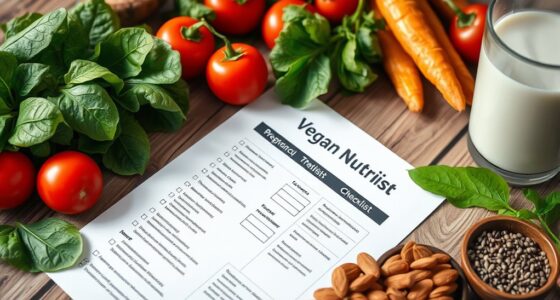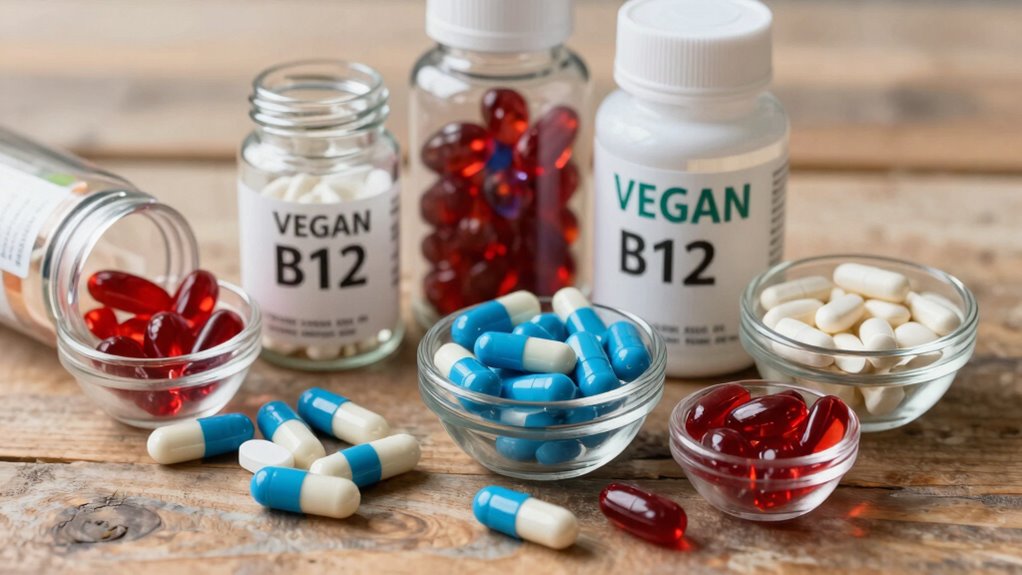

If you’re vegan, getting enough B12 is essential for your nerve, blood, and DNA health, but it’s mainly found in animal products. You should include fortified foods like plant-based milks, cereals, or nutritional yeast, and consider taking supplements to guarantee reliable intake. Absorption can be tricky if you have gut issues, so higher doses or injections might be needed. Stay proactive and keep track of your levels—more helpful tips are just ahead.

Get kitchen staples and gadgets delivered free — and shop member deals
- Fast, free delivery on millions of items
- Access to Prime Big Deal Days deals on October 6–7
- Prime Video, Amazon Music and more included
Key Takeaways
- Vegans should rely on fortified foods and supplements to meet their B12 needs, as it’s primarily found in animal products.
- B12 absorption varies; higher doses or injections may be necessary if absorption is impaired.
- Regular testing helps monitor B12 levels and prevent deficiency symptoms like fatigue and neurological issues.
- Incorporating diverse plant-based foods and maintaining gut health can support better B12 absorption.
- Consistent supplementation and proper monitoring are essential for maintaining optimal B12 status in a vegan diet.

If you’re following a vegan diet, you might wonder about your B12 intake and whether you need supplements. Vitamin B12 is essential for nerve function, red blood cell production, and DNA synthesis, but it’s primarily found in animal products. Since vegans avoid these sources, guaranteeing adequate B12 levels can be a challenge. Fortunately, there are supplement sources available that can help you meet your needs. These include fortified foods like plant-based milks, cereals, and nutritional yeast, as well as standalone supplements such as tablets, sublingual drops, or injections. Relying on fortified foods might seem convenient, but it’s important to check labels carefully to verify they contain sufficient B12. Many vegans turn to supplements because they offer a consistent, reliable dose, which is essential for maintaining ideal B12 levels.
However, absorption challenges can complicate the process. Even if you consume enough B12 through supplements or fortified foods, your body may not absorb it efficiently. B12 absorption depends on a protein in your stomach called intrinsic factor, which binds to B12 and allows it to be absorbed in your small intestine. Conditions like gastrointestinal issues, aging, or certain medications can impair intrinsic factor production, leading to poor absorption. In such cases, you might not get the benefits of B12 from food sources alone, and higher or more direct supplementation methods, like injections, might be necessary. It’s also worth noting that some supplements are designed to bypass absorption challenges altogether, such as sublingual tablets or injections, which deliver B12 directly into your bloodstream. Additionally, understanding the role of biodiversity in food sources can help highlight the importance of varied plant-based options in supporting overall health. Incorporating a diverse range of plant foods can also help promote a healthier gut microbiome, which may support better nutrient absorption. Ensuring a diverse plant-based diet can contribute to better overall nutrient intake, including B12.
To guarantee you’re getting enough B12, regular testing can help detect deficiencies early. If your levels are low, your healthcare provider might recommend higher doses or different forms of supplementation. The key is consistency—taking your B12 supplement daily or as prescribed helps maintain steady levels, preventing deficiency symptoms like fatigue, neurological issues, or anemia. While absorption challenges can be a hurdle, they shouldn’t discourage you from supplementing. With the right supplement sources and appropriate dosing, you can effectively meet your B12 needs on a vegan diet. Just remember, staying informed and regularly checking your levels are essential steps in maintaining ideal health and avoiding deficiencies.
As an affiliate, we earn on qualifying purchases.
Frequently Asked Questions
Can Vegans Get Enough B12 Solely From Plant-Based Foods?
You can’t reliably get enough B12 solely from plant-based foods, as natural sources are limited. To meet your needs, you should consider taking a B12 supplement, which has proven high supplement efficacy. Look for fortified foods or supplements specifically designed for vegans to guarantee you’re getting adequate B12. Regular testing can also help monitor your levels, ensuring you maintain ideal health on a plant-based diet.
How Can I Tell if My Vegan B12 Supplement Is High Quality?
You can spot a high-quality vegan B12 supplement by checking the label for proper dosage accuracy and bioavailability. Ironically, many supplements claim to be top-tier but skimp on absorption. Look for certifications, reputable brands, and clear ingredient lists. If the supplement promotes ideal supplement absorption, it’s more likely to deliver the B12 your body needs. Trust your instincts, but verify the details to guarantee you get genuine, effective support.
Are There Any Natural Vegan Sources of B12?
Natural vegan sources of B12 are rare, but you can find some in fermented foods like tempeh, miso, and sauerkraut. These foods contain B12 produced by bacteria during fermentation, but the amounts can vary and may not meet daily needs. To maximize B12 absorption, make sure you’re consuming these in moderation alongside fortified foods or supplements, as relying solely on fermented foods might not provide enough B12 for peak health.
How Long Does It Take to See B12 Level Improvements?
You might notice B12 level improvements within a few weeks, but it varies. B12 absorption depends on your body’s ability to process supplements, so consistent intake matters. Typically, taking your supplement at the same time daily optimizes absorption. While some see progress in 4-6 weeks, others may need 2-3 months. Regular testing helps track your levels, ensuring your supplement routine effectively boosts B12 over time.
Is B12 Deficiency Common Among All Vegans?
B12 deficiency isn’t necessarily common among all vegans, but it can occur if you don’t pay attention to B12 absorption and vegan supplementation. Since plant-based diets lack natural B12 sources, you need to actively include fortified foods or supplements. Regularly monitoring your B12 levels guarantees you catch deficiencies early, so make sure to stay consistent with supplementation and consult your healthcare provider for personalized advice.
Conclusion
So, after all these questions about vegan B12, it’s almost ironic how something so essential seems to be overlooked. You’d think a simple supplement or fortified food would be a no-brainer, yet many still doubt or neglect it. Remember, staying informed and proactive isn’t just about avoiding deficiency—it’s about respecting your body’s needs, even when they seem so tiny. Because sometimes, the smallest details make the biggest difference, don’t they?
NFL season / tailgating Picks
team gear
As an affiliate, we earn on qualifying purchases.