To achieve the perfect texture for gluten-free flours, you need to adjust your grain mill carefully. Start with a medium setting and tweak the gap between the burrs or plates based on the grain type. Finer settings create powdery flour, ideal for cakes, while coarser ones work better for bread or pancakes. Keep small, incremental changes and test often. If you keep experimenting, you’ll learn precisely how to optimize your mill for every gluten-free grain.
Key Takeaways
- Adjust mill gap settings to control coarseness or fineness, depending on the gluten-free grain and desired flour texture.
- Start with a medium setting and fine-tune gradually for optimal grind consistency.
- Coarser settings suit hearty baked goods; finer settings are ideal for cakes and pastries.
- Grain characteristics like moisture and hardness influence optimal mill adjustments.
- Experiment with small batches to find the perfect setting for each gluten-free grain type.
Are you looking for a way to freshly grind gluten-free grains at home? If so, understanding how to make precise grain mill adjustments is crucial to achieving the perfect flour consistency. When working with gluten-free grain types like rice, millet, buckwheat, or quinoa, the settings on your mill can dramatically influence the texture and quality of your flour. Your goal is to fine-tune these adjustments to match each grain’s unique characteristics, ensuring your baked goods turn out just right every time.
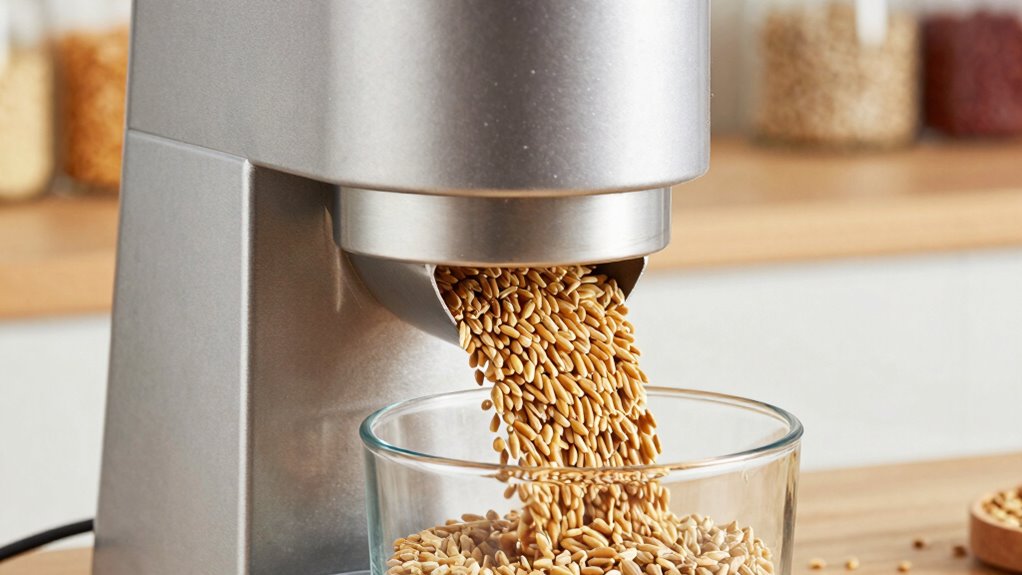
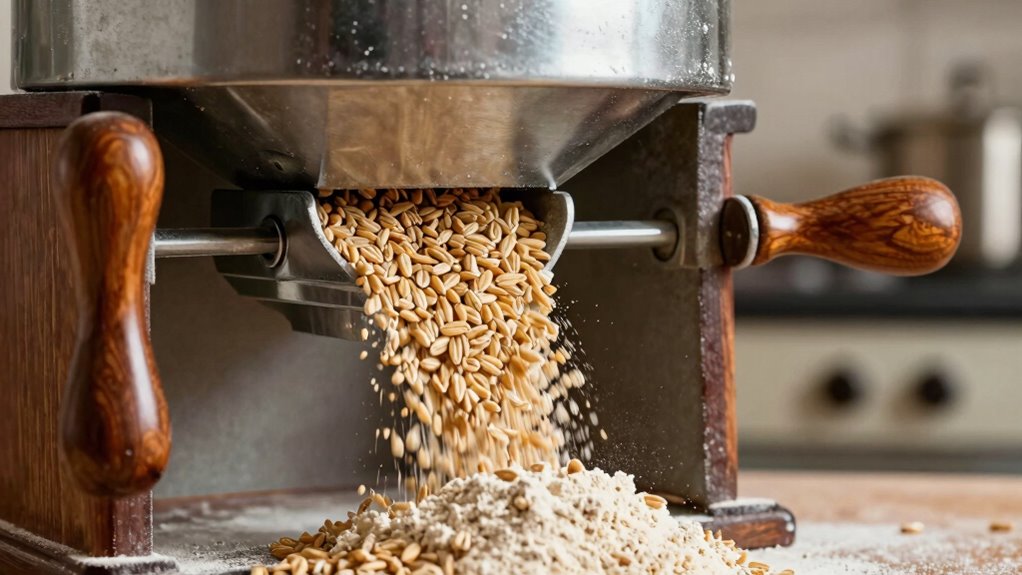
Adjusting your grain mill involves controlling the gap between the grinding plates or burrs. Many mills have a dial or knob that allows you to shift from coarse to fine settings. For gluten-free grains, start with a medium setting and gradually refine it. Coarser settings produce a flour with larger particles, suited for recipes like bread with a hearty texture or pancakes, whereas finer settings yield smooth, powdery flour ideal for cakes and pastries. Remember, different gluten-free grain types respond better to specific adjustments; rice flour often benefits from a very fine grind, while millet may require a slightly coarser grind to prevent a powdery texture that could affect baking.
Start with a medium setting and adjust for desired flour texture based on grain type and recipe needs.
It’s essential to experiment with your mill adjustments before making large batches. Small tweaks—turning the adjustment dial slightly—can make a significant difference in flour texture. Pay attention to how the grain flows through the mill and how the resulting flour feels. If the flour is too coarse, try a finer setting; if it’s too powdery and clumps easily, you might need a slightly coarser grind. Keep in mind that some gluten-free grains, like buckwheat, can produce a delicate flour that might require more frequent grain processing adjustments to maintain consistency. Additionally, understanding the grain types you are working with can help you optimize your mill settings for different grain types. Being familiar with the grain characteristics, such as kernel size and moisture content, can further refine your approach and improve outcomes. Recognizing the grain moisture content can be particularly important, as it affects how easily grains are ground and the final flour texture.
The key to mastering your grain mill adjustments lies in understanding the specific gluten free grain types you’re working with. Each type has a unique kernel size, moisture content, and hardness, all of which influence the ideal grinding setting. By paying close attention to these factors and making small, incremental changes, you’ll be able to produce high-quality, consistent flour tailored to your baking needs. Over time, you’ll develop an intuitive sense of how to set your mill for different grains, saving time and ensuring your baked goods always come out perfect. The right adjustments make a noticeable difference, turning fresh gluten-free flour into the foundation of delicious, healthy recipes.
grain mill for gluten free grains
As an affiliate, we earn on qualifying purchases.
As an affiliate, we earn on qualifying purchases.
Frequently Asked Questions
Can I Mill Fresh Gluten-Free Grains Without Pre-Soaking?
Yes, you can mill fresh gluten-free grains without pre-soaking. Grain freshness impacts milling speed and flour quality, so milled grains are best used soon after milling. Skipping pre-soaking might make milling slightly harder, but it doesn’t harm the process. Adjust your mill’s speed for ideal results—slower speeds can help handle tougher grains, while faster speeds work well with fresh, soft grains, ensuring a fine, consistent flour.
How Do Humidity Levels Affect Gluten-Free Grain Milling?
High humidity impacts your gluten-free grain milling by increasing grain moisture, which can clog your mill or result in uneven flour. Low humidity, on the other hand, keeps grains dry and easier to mill, producing finer flour. You need to monitor humidity impact and adjust your milling process accordingly. Keep grains in a dry environment, and consider using dehumidifiers to maintain ideal grain moisture, ensuring consistent, high-quality gluten-free flour.
Are There Safety Concerns Specific to Gluten-Free Grain Milling?
Yes, there are safety concerns specific to gluten-free grain milling. You need to carefully manage cross-contamination risks, ensuring your equipment is thoroughly cleaned to prevent gluten exposure. Proper allergen management is essential, so always designate dedicated milling tools and spaces for gluten-free grains. Regularly inspect your mill for residue, and follow hygiene protocols to protect those with gluten sensitivities. This minimizes health risks and maintains the integrity of your gluten-free products.
How Often Should I Clean My Grain Mill When Switching Grains?
Did you know that cross-contamination can affect up to 80% of gluten-free products? You should clean your grain mill every time you switch grains to prevent this. Proper mill maintenance includes thorough cleaning of all parts involved in grain storage and grinding. This guarantees no residual particles compromise your gluten-free flour’s purity, maintaining quality and safety. Regular cleaning keeps your mill functioning smoothly and extends its lifespan.
Can I Grind Small Quantities of Gluten-Free Grains Effectively?
Yes, you can grind small quantities of gluten-free grains effectively. Just make certain your grain storage is clean and dry to prevent contamination, and perform regular mill maintenance to keep it functioning smoothly. When grinding small batches, adjust the settings for finer or coarser flour as needed. Properly stored grains reduce clumping, and routine cleaning prevents flavor transfer, making small-scale grinding efficient and producing consistent results.
Conclusion
Now that you know how to tweak your grain mill for gluten-free grains, you’re all set to create perfect, customized flours. Did you know that gluten-free baking has surged by over 50% in the last five years? With the right settings, you can enjoy fresh, nutritious bread and treats tailored to your taste. So, experiment confidently—your gluten-free baking journey just got a whole lot easier and more delicious!