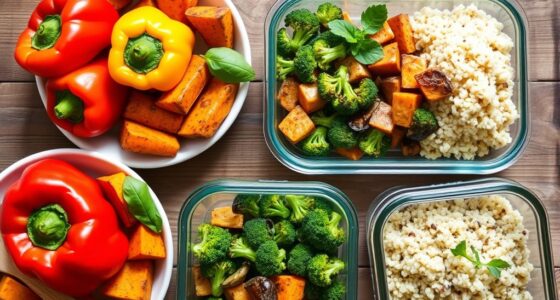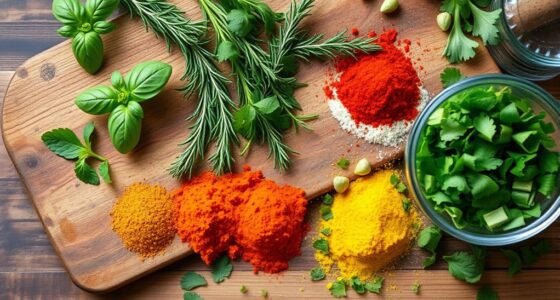

To make vegetables taste better without cheese, start by using fresh herbs like basil or cilantro, and add spices such as cumin or paprika early in cooking for rich aroma. Enhance flavor with acid like lemon juice or vinegar, and boost umami with soy sauce or miso. Roast or grill vegetables to deepen sweetness and develop smoky notes. Proper seasoning, including salt and tasting as you cook, helps bring out natural flavors. Keep exploring to reveal even more tasty tips!

Get kitchen staples and gadgets delivered free — and shop member deals
- Fast, free delivery on millions of items
- Access to Prime Big Deal Days deals on October 6–7
- Prime Video, Amazon Music and more included
Key Takeaways
- Enhance vegetables with fresh herbs and dried spices, toasted for richer aroma and flavor.
- Use acidifiers like lemon juice or vinegar to brighten and balance earthy flavors.
- Roast or grill vegetables at high heat to develop natural sweetness and smoky depth.
- Properly season with salt during cooking, tasting frequently to achieve harmony.
- Incorporate umami boosters like soy sauce or miso to deepen savory flavors without cheese.
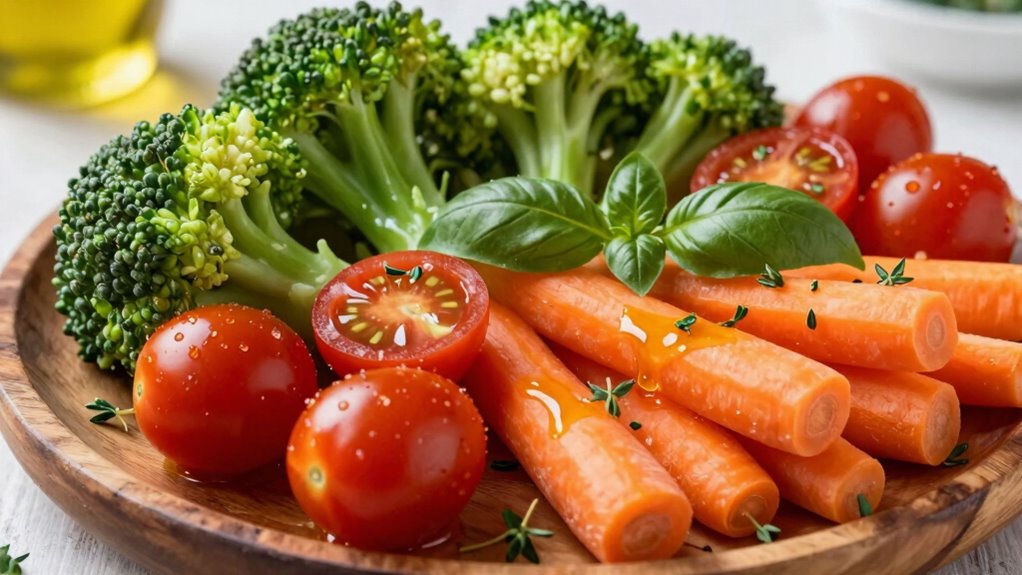
Eating vegetables doesn’t have to be boring or bland. With a few simple tricks, you can turn even the most modest veggies into flavorful dishes that excite your taste buds. The key lies in understanding how to use flavor enhancement and seasoning techniques effectively. Instead of relying on cheese or heavy sauces, focus on bringing out natural flavors through smart seasoning choices and cooking methods.
Start by experimenting with herbs and spices. Fresh herbs like basil, cilantro, or thyme can add brightness and a fresh aroma, making vegetables feel vibrant. Dried spices such as cumin, paprika, or turmeric bring warmth and depth. When you season, do it early in the cooking process; this allows flavors to meld and develop, rather than just sprinkling them on at the end. Toast spices lightly in a pan before adding vegetables—this enhances their aromatic qualities and creates a more complex flavor profile.
Another seasoning technique is the use of acids and umami boosters. A splash of lemon juice or vinegar right before serving can brighten the taste and cut through any earthiness or bitterness. Soy sauce or miso paste can provide a savory umami kick that makes vegetables taste richer and more satisfying. These ingredients work as flavor enhancers, amplifying the natural taste of the produce without overwhelming it. Incorporating umami boosters can make a noticeable difference in flavor depth.
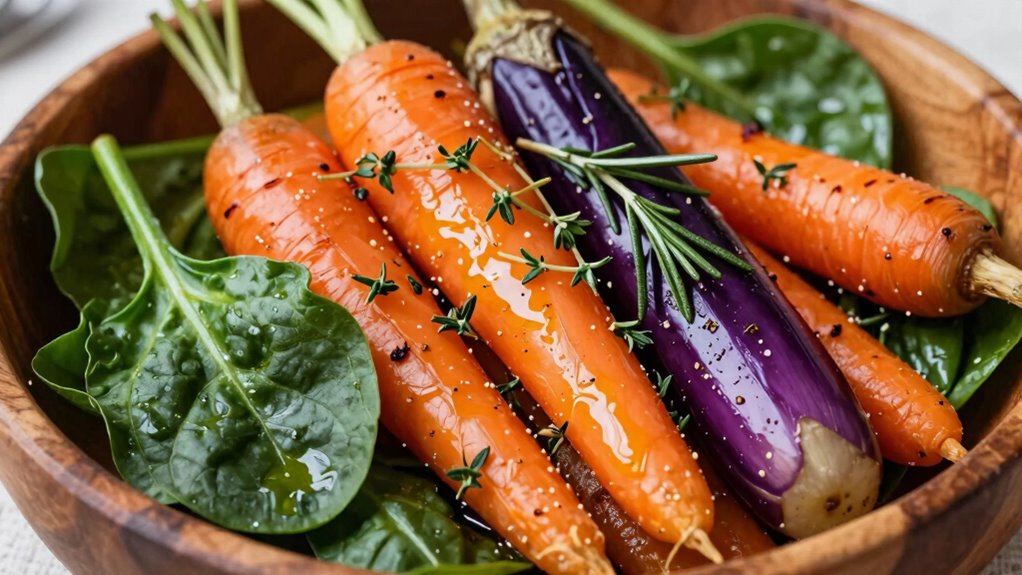
Roasting vegetables is one of the best ways to bring out their inherent sweetness and add a smoky, caramelized dimension. Toss your veggies with a bit of oil, salt, and your favorite seasonings, then roast at high heat until tender and slightly charred. This method intensifies flavors and adds a lovely texture that’s far more appealing than steaming or boiling. Grilling is another excellent technique, imparting a smoky depth that elevates the simplest vegetables. Additionally, proper seasoning techniques such as salting during cooking and tasting frequently can significantly improve flavor development.
Finally, don’t underestimate the power of proper salt. Salt is a flavor enhancer that can make a significant difference. Season your vegetables during cooking and taste as you go, adjusting the salt to bring out their best qualities. Remember, seasoning techniques are not just about adding salt; they include balancing sweet, sour, salty, and spicy elements to create a harmonious dish. Incorporating cooking methods like roasting or grilling can also significantly boost flavor development. Additionally, understanding seasoning balance can help you craft more flavorful and well-rounded vegetable dishes. Developing an awareness of flavor pairing can further elevate your vegetable dishes by combining ingredients that naturally complement each other.
As an affiliate, we earn on qualifying purchases.
Frequently Asked Questions
Can I Use Alternative Oils for Roasting Vegetables?
Yes, you can definitely use alternative oils like olive oil or coconut oil for roasting vegetables. Olive oil adds a rich, savory flavor and is great for high-heat roasting, while coconut oil offers a sweet, tropical touch and withstands high temperatures well. Both options are healthy choices that can enhance your vegetables’ taste without relying on traditional oils, giving you variety and flavor in your dishes.
What Herbs Complement Specific Vegetables Best?
You should pair herbs like basil with tomatoes for vibrant flavor, rosemary with carrots for earthy notes, and thyme with green beans for a subtle aroma. Herb pairings enhance the natural taste of vegetables and add depth to your dishes. Use fresh herbs for bright flavor and dried ones for more intense flavor. Experiment with different combinations to find your favorites and elevate your vegetable dishes effortlessly.
Are There Quick Methods to Enhance Vegetable Flavor?
Yes, you can quickly boost vegetable flavor with simple techniques. Start by spice blending—mix herbs and spices like garlic, cumin, or paprika for instant flavor. Use flavor boosting methods such as roasting vegetables to caramelize natural sugars or sautéing with a splash of broth or citrus juice. These quick tricks enhance taste without extra cheese, making your vegetables more delicious and satisfying in minutes.
How Do I Prevent Vegetables From Becoming Bland?
Think of your vegetables as blank canvases waiting for a splash of flavor. To prevent them from becoming bland, use seasoning techniques like salt, pepper, and herbs generously. Add flavor boosters such as lemon juice, garlic, or a splash of vinegar to brighten their taste. Stir-fry or roast vegetables to develop natural sweetness and depth. These simple tricks turn ordinary veggies into a delicious, savory dish.
Can Marinating Improve the Taste Without Added Cheese?
Yes, marinating can improve the taste without added cheese. Using effective marinating techniques allows you to infuse vegetables with rich flavors, making them more appealing. By soaking veggies in a flavorful mixture of herbs, spices, and acidic ingredients like vinegar or citrus, you enhance their natural taste. This flavor infusion process tenderizes the vegetables and creates a delicious, satisfying dish without relying on cheese or extra calories.
Conclusion
So, there you have it—delicious veggies without drowning them in cheese or drowning in regret. Who knew that a little seasoning, a splash of acid, or a quick roast could turn your veggie game from sad to spectacular? Now, go forth and conquer those greens! Remember, the secret to loving vegetables isn’t hiding them behind cheese—it’s giving them a chance to shine. Your taste buds (and waistline) will thank you.
NFL season / tailgating Picks
team gear
As an affiliate, we earn on qualifying purchases.